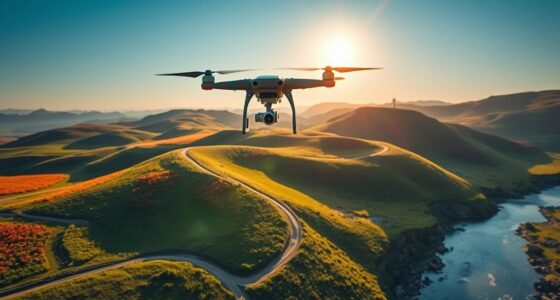

To create stunning aerial shots, start by applying the rule of thirds to place your main subject dynamically and avoid centering everything. Use leading lines like roads or rivers to guide the viewer’s eye toward focal points, and incorporate natural or architectural frames for added depth. Emphasize symmetry, patterns, and negative space to simplify your composition. Play with lighting and textures to enhance mood and dimension. Keep exploring these techniques to elevate your sky shots even further.
Key Takeaways
- Use the rule of thirds to position subjects dynamically and create balanced, engaging compositions.
- Incorporate leading lines, natural frames, and visual pathways to guide viewers’ focus and add depth.
- Utilize symmetry, patterns, and negative space to emphasize simplicity and visual harmony.
- Enhance scenes with warm lighting, contrast, and texture to add depth and visual interest.
- Optimize elevation, shadow play, and scene elements to create dramatic, impactful aerial shots.
Understanding the Rule of Thirds for Aerial Shots
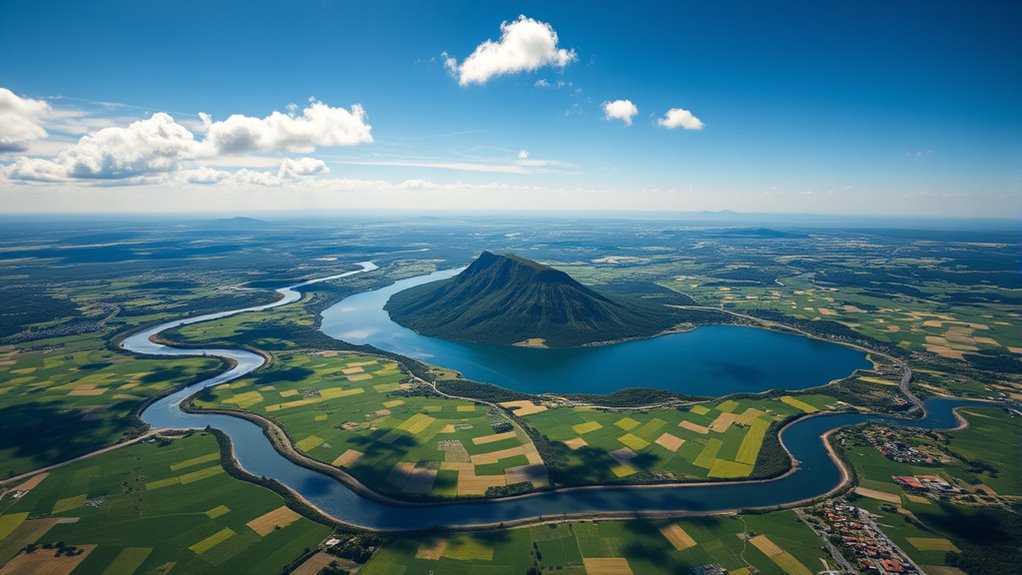
Understanding the Rule of Thirds is essential for creating balanced and visually appealing aerial shots. You divide your frame into nine equal parts with two horizontal and two vertical lines. Placing your main subject along these lines or at their intersections helps achieve harmony and draws viewers’ eyes naturally. Instead of centering your subject, position it off-center to add interest and dynamic composition. Keep the horizon line away from the middle of your frame to avoid imbalance and create a more engaging scene. Whether capturing natural landscapes or urban environments, applying the Rule of Thirds guides your framing decision-making. It encourages you to think intentionally about placement, making your aerial images more compelling and professionally composed. Incorporating visual balance principles further enhances the overall impact of your shots. Additionally, understanding projector technology can help you assess how your equipment influences image quality and framing options when reviewing your aerial footage.
Using Leading Lines to Guide the Viewer’s Eye
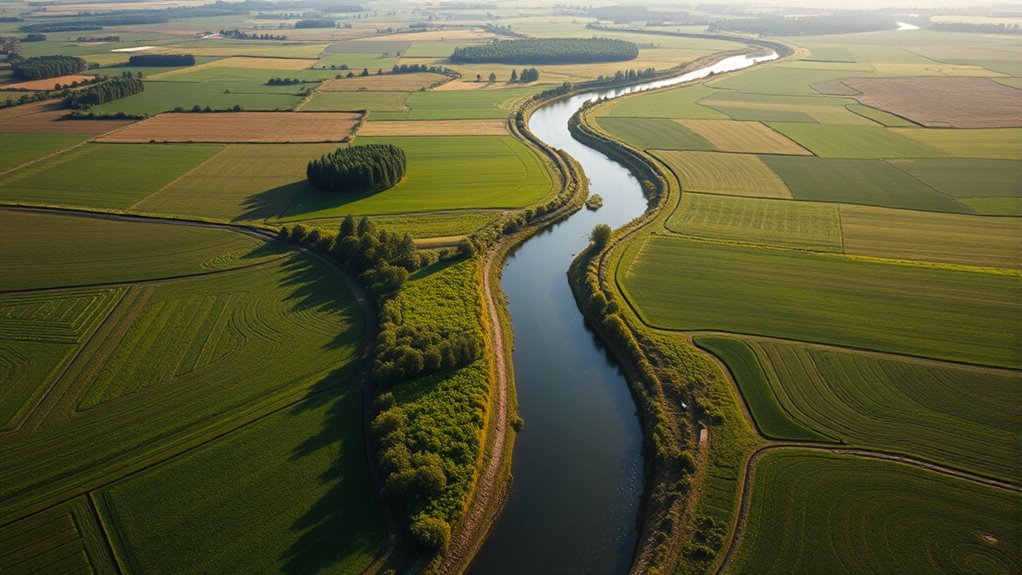
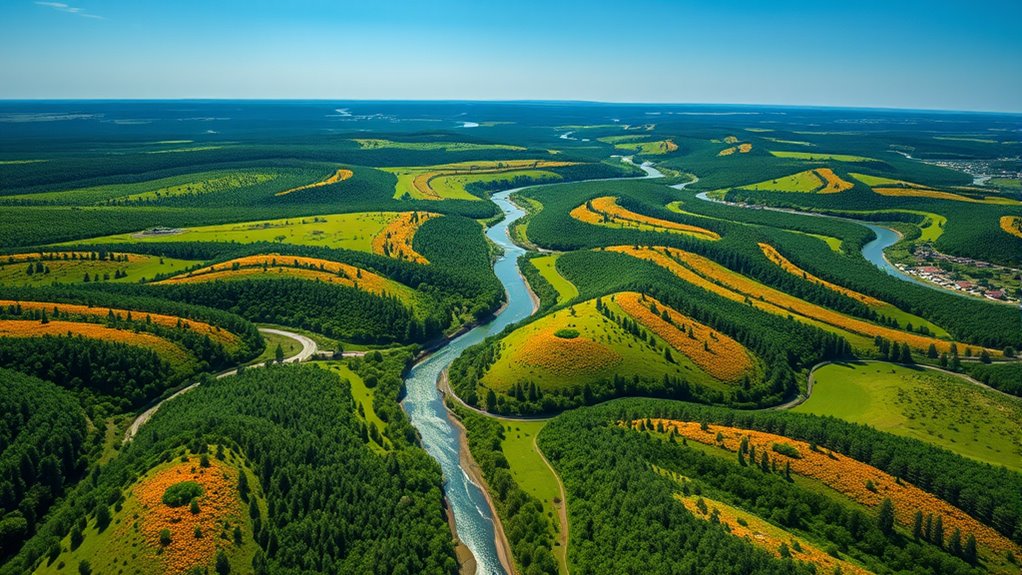
Leading lines are powerful tools in aerial photography that naturally direct the viewer’s eye through the scene. Roads, rivers, power lines, and shoreline curves serve as visual pathways, guiding attention from foreground to background or toward a focal point. When these lines are clearly visible from above, they create a sense of movement and depth, making your shot more engaging. Converging lines can lead the eye toward a specific subject or horizon, emphasizing importance. Extend lines into the distance to add a feeling of vastness. Position yourself to capture these lines at an angle that highlights their directional flow. Effective use of leading lines transforms a flat aerial scene into a dynamic, visually compelling composition that pulls viewers into the scene.
Emphasizing Symmetry and Patterns From Above
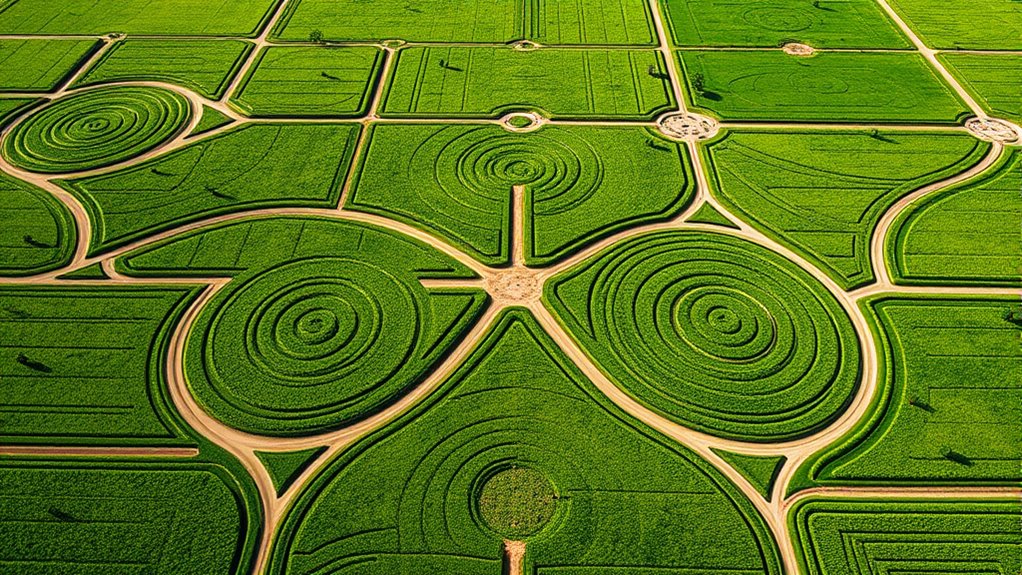
Capturing symmetry and patterns from above creates visually striking aerial images that highlight order and repetition within a scene. To do this effectively, position your drone directly above the subject to ensure balanced compositions. Look for natural or man-made elements that form repeating shapes, such as fields, urban grids, or reflections in water. Focus on clean lines and clear shapes to maximize visual impact. Symmetry can evoke feelings of harmony and stability, while patterns add rhythm and movement. Be mindful of how elements align within the frame, using the rule of thirds or central placement for balance. Avoid clutter or distracting elements that break the pattern. Emphasizing these features from above transforms ordinary scenes into mesmerizing, geometric masterpieces. Understanding how visual balance influences composition can further enhance the impact of your aerial shots, especially when incorporating natural and man-made elements that reinforce the pattern. Additionally, paying attention to regulatory guidelines ensures safe and compliant drone operation during your shoots. Recognizing the importance of vetted tools in planning your shoots can also help optimize your results, especially when using proper drone accessories to improve stability and image quality.
Creating Depth Through Color and Contrast

Using warm lighting, like during golden hour, adds a soft glow that enhances depth in your aerial shots. Contrast in colors and textures makes elements stand out, drawing the viewer’s eye into the scene. Shadows also play a vital role by creating layers and a sense of dimension that makes your composition more dynamic. Incorporating lighting techniques can further elevate the mood and visual interest of your aerial photographs. Additionally, understanding aerial composition principles can help you arrange elements harmoniously for more compelling images. Recognizing the importance of visual hierarchy ensures that your focal points guide the viewer through the scene effectively. Employing depth cues like foreground, middle ground, and background can also strengthen the perception of depth in your images. Exploring sneaker culture trends for 2024 can inspire creative framing techniques that highlight the textures and details of footwear within aerial compositions.
Warm Lighting Effects
Warm lighting effects can transform aerial images by adding depth and richness through subtle color shifts and contrast. During golden hour, the soft, warm light bathes your scene, creating natural highlights and shadows that enhance textures and shapes. This gentle glow emphasizes the three-dimensionality of buildings, landscapes, and waterways, making your shot more engaging. By increasing contrast slightly, you guide the viewer’s eye toward key elements while maintaining a harmonious palette. Warm tones also evoke feelings of comfort and nostalgia, drawing viewers into the scene. Additionally, understanding lighting conditions can help you plan shots that maximize the impact of warm illumination. Avoid flat lighting by scheduling shoots when the sun is low, and use warm light to enrich your composition’s visual depth. Recognizing the importance of shot timing ensures you capture the scene at its most flattering and impactful moment. Incorporating aesthetic principles can further improve your images by balancing elements and guiding viewer attention. Being aware of lighting quality can also help you select the best moments to shoot, ensuring consistent warm effects across your images. Paying attention to natural light patterns can help you optimize your shoot time and achieve the most captivating results. These effects elevate an ordinary aerial shot into a compelling, vibrant image full of life and dimension.
Contrasting Textures and Colors
Have you ever noticed how contrasting textures and colors can make an aerial image pop? You can use vivid color differences—like lush green fields against brown earth or bright rooftops amid muted surroundings—to draw attention and create visual interest. Combining rough textures, such as rocky terrain, with smooth water surfaces adds depth, making your shot feel layered and dynamic. During golden hour, warm, soft light enhances color contrast, emphasizing the scene’s richness. Avoid flat, evenly lit scenes, which can make the image feel dull and uninteresting. Instead, seek out areas where natural or man-made elements differ in tone and texture. These contrasts guide the viewer’s eye, deepen the scene, and make your aerial composition more engaging and memorable.
Shadows for Depth
Shadows play a crucial role in creating depth in aerial compositions by adding contrast and dimension to flat scenes. They help reveal the topography and textures that might otherwise go unnoticed. To maximize this effect, seek out scenes during golden hour when long shadows cast a sense of depth and warmth. Look for ways shadows interact with colors and textures to guide the viewer’s eye inward. Incorporate these techniques:
- Capture shadows that highlight elevation changes
- Use contrasting light and dark areas to create visual separation
- Position your drone to emphasize shadow angles
- Wait for soft, warm lighting for gentle shadow play
- Avoid evenly lit scenes that lack shadow definition
- Pay attention to lighting conditions that enhance shadow effects.
- Understanding visual language can also help you interpret how shadows contribute to storytelling in your compositions.
Strategic Subject Placement for Visual Impact

You can boost your aerial shots by placing your subject using the rule of thirds, avoiding centering for a more dynamic look. Leverage leading lines like roads or rivers to guide viewers’ eyes directly to your focal point. Balance your off-center placement with background elements to create a compelling, visually impactful composition. Incorporating visual storytelling techniques can further enhance the emotional connection and overall effectiveness of your aerial imagery. Additionally, understanding composition fundamentals can help you craft more balanced and engaging shots that resonate with viewers.
Use Rule of Thirds
How can you create more compelling aerial images? Use the rule of thirds to elevate your compositions. Imagine dividing your frame into nine equal parts with two horizontal and two vertical lines. Position your main subject along these lines or at their intersections to achieve balance. Avoid centering your subject, which can make the shot feel static. Instead, place horizons along the top or bottom third to add depth and interest. This technique guides the viewer’s eye naturally through the scene. Keep these tips in mind:
- Align key elements with intersection points
- Place the horizon on a third line for balance
- Off-center subjects create dynamic compositions
- Use negative space to emphasize the subject
- Combine with leading lines for added impact
Leverage Leading Lines
Leveraging leading lines effectively enhances the visual impact of your aerial compositions by guiding the viewer’s eye directly to the subject. Use roads, rivers, power lines, or shorelines that naturally extend into the frame. These lines create a sense of depth, movement, and three-dimensionality in flat aerial shots. Position the lines so they converge toward your main subject or lead into the distance, drawing attention smoothly. Guarantee the lines are clearly visible from above to maximize their effect. When used strategically, leading lines can emphasize the subject’s importance and add dynamic energy to your image. Always look for natural or built features that create strong, clean lines, and incorporate them to craft compelling, eye-guiding compositions.
Balance Off-Center Focus
Why settle for placing your subject dead center when off-center positioning can boost visual interest? Strategic placement creates a more dynamic composition that guides the viewer’s eye naturally through the shot. Off-center focus allows other elements, like leading lines, patterns, or negative space, to complement the subject. It adds balance and tension, making the image feel more engaging. Use these tips to enhance your aerial shots:
- Position the subject along the rule of thirds or at intersections.
- Align the subject with leading lines for a natural flow.
- Balance the subject with background elements for harmony.
- Experiment with near edges to create a sense of movement.
- Leave space around the subject to suggest motion or interaction.
This approach makes your images more compelling and visually appealing from above.
Framing Your Scene With Natural and Architectural Elements
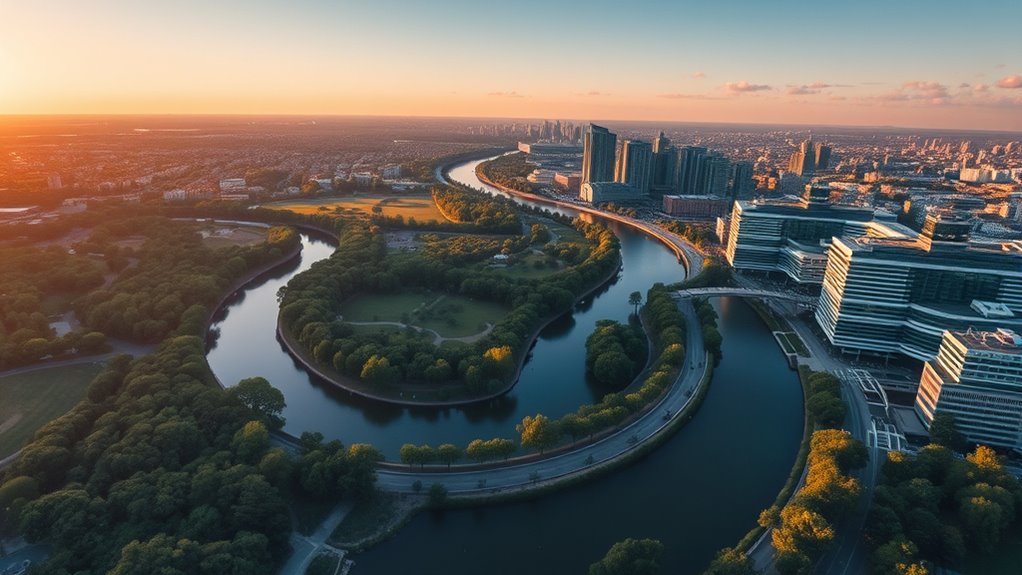
Framing your scene with natural and architectural elements can considerably enhance the visual impact of your aerial shots. Use trees, bridges, or buildings to create natural frames that draw attention to your main subject. Archways, overhanging branches, or doorways can serve as effective borders, adding depth and context. Architectural features like towers, walls, or bridges can also act as framing devices, guiding the viewer’s eye inward. Incorporate these elements thoughtfully to add layers and dimension, making your composition more engaging. Be mindful of their placement; positioning these frames to lead toward your subject creates a sense of focus and harmony. Natural and architectural frames not only direct attention but also add richness and storytelling to your aerial imagery.
Utilizing Negative Space for Minimalist Compositions
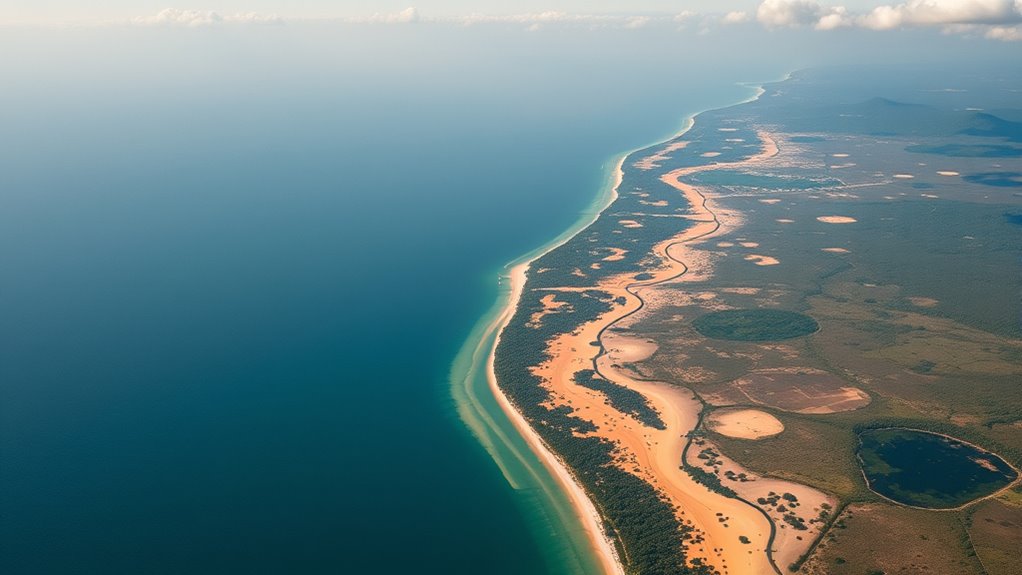
Building on the idea of framing your scene with natural and architectural elements, incorporating negative space can elevate your aerial compositions by emphasizing simplicity and focus. Negative space allows your main subject to stand out, creating a clean, minimalist look that draws the viewer’s eye directly to the focal point. To effectively utilize negative space:
Use negative space to highlight your subject and create minimalist, captivating aerial images.
- Keep your subject off-center to maximize empty areas.
- Use vast open skies or water for a sense of openness.
- Leave plenty of room around your subject to suggest movement or interaction.
- Simplify the scene by removing clutter and distractions.
- Balance negative space with your subject for visual harmony.
Enhancing Your Shots With Dynamic Composition Techniques

To make your aerial shots more engaging, incorporating dynamic composition techniques can transform simple images into compelling visuals. Use the rule of thirds to position your main subject along lines or intersections, avoiding centering for a more balanced look. Incorporate leading lines like roads or rivers to guide the viewer’s eye and create depth, making the scene feel more three-dimensional. Seek symmetry and patterns in architecture or natural formations to add visual rhythm. Play with contrast in colors and textures, especially during golden hour, to enhance depth and draw attention. Lastly, experiment with subject placement—off-center or near edges—to create a sense of movement and interest. Combining these techniques keeps your compositions lively and mesmerizing from the sky.
Frequently Asked Questions
How Can I Effectively Combine Multiple Composition Techniques in One Shot?
To combine multiple techniques, start by choosing a strong focal point using the rule of thirds or leading lines. Frame it with natural elements like trees or architecture for depth and context. Use symmetry or patterns to add visual interest, and incorporate contrasting colors or textures for depth. Keep negative space to emphasize your subject, balancing all elements for a cohesive, mesmerizing shot that guides the viewer’s eye effortlessly.
What Camera Settings Optimize Aerial Composition During Different Lighting Conditions?
You should adjust your camera settings based on lighting conditions to optimize your aerial shots. Use a lower ISO in bright daylight to reduce noise, set a narrow aperture (f/8 to f/11) for sharpness, and choose a fast shutter speed to freeze motion or a slower one for motion blur in low light. During golden hour, open the aperture slightly and lower shutter speed to capture warm, soft light and enhance depth.
How Does Drone Altitude Affect the Impact of Compositional Elements?
Your drone’s altitude acts like a painter’s brush, shaping the scene’s story. Higher altitudes reveal expansive patterns, emphasizing symmetry and leading lines that guide the eye. Lower altitudes create intimacy, highlighting details and subject placement. Adjusting altitude influences depth, perspective, and balance, making your composition more dynamic. Think of altitude as your tool to craft visual poetry—each height offering a new narrative, a fresh way to captivate viewers.
What Are Common Mistakes to Avoid When Framing Aerial Scenes?
When framing aerial scenes, avoid centering your main subject or horizon line, as it can create static, less engaging images. Don’t neglect leading lines that guide the viewer’s eye or ignore balancing elements like symmetry and patterns. Steer clear of flat lighting, which flattens depth, and overly cluttered frames that distract. Remember to use negative space wisely and experiment with off-center placement for a more dynamic composition.
How Can I Create a Sense of Scale in Aerial Photography?
To create a sense of scale, include elements of known size like roads, trees, or buildings to provide context. Use wide-angle lenses and shoot from higher altitudes to capture more of the scene. Incorporate leading lines that guide viewers through the landscape, emphasizing depth. Position your subject off-center and contrast textures to highlight differences in size. These techniques help viewers grasp the vastness and grandeur of the scene.
Conclusion
Mastering aerial composition is like painting with the sky as your canvas—you hold the brush to craft breathtaking views. By applying these techniques, you’ll turn ordinary flights into extraordinary stories that captivate and inspire. Remember, every shot is a chance to reveal a new perspective, so keep experimenting and trusting your eye. With practice, you’ll find yourself soaring above the mundane, turning your aerial shots into stunning symphonies of visual art.