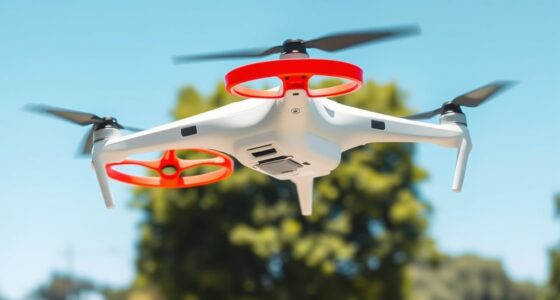
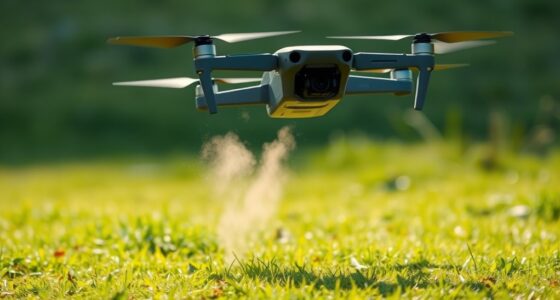
To extend your drone’s flight time and battery life, choose compatible, reputable batteries and always use manufacturer-approved chargers. Charge batteries at room temperature, monitor their temperature, and avoid overcharging or charging in hot environments. Store batteries at 40-60% charge in a cool, dry place and check them regularly. Follow safe flying habits, perform routine inspections, and maintain temperature controls. Keep your batteries in top shape and discover more tips to optimize performance.

Get the latest gadgets delivered free — and shop member deals
- Fast, free delivery on millions of items
- Access to Prime Big Deal Days deals on October 6–7
- Prime Video, Amazon Music and more included
Key Takeaways
- Use reputable, compatible batteries with built-in safety features and match them to your drone’s specifications.
- Charge batteries at room temperature with recommended chargers, avoiding overcharging and heat buildup.
- Store batteries at 40-60% charge in a cool, dry environment, checking and maintaining charge every few months.
- Plan flights to conserve battery life, fly steadily, and monitor battery levels to prevent over-discharge.
- Regularly inspect and balance batteries, perform full charge-discharge cycles, and avoid damaging or swollen cells.
Choosing the Right Batteries for Your Drone

Choosing the right batteries for your drone is essential to guarantee ideal performance and safety. Start by selecting batteries compatible with your drone model and intended use. Opt for reputable brands known for quality and safety features. Consider the battery type; LiPo batteries are common due to their high energy density, but make certain they match your drone’s specifications. Check capacity (mAh) to determine flight time, balancing it with weight and your drone’s power needs. Pay attention to voltage ratings—higher voltages deliver more power but require compatible hardware. Additionally, choose batteries with built-in safety features like balance connectors and thermal protection. Properly matching your drone with suitable batteries enhances flight stability, maximizes efficiency, and reduces the risk of malfunctions or accidents. Understanding battery technology can help you make more informed choices for optimal performance, especially since advancements in battery safety features continue to improve overall reliability. Staying informed about European cloud innovation also ensures you are aware of the latest developments in secure and sustainable energy solutions. Moreover, selecting batteries with advanced monitoring systems can provide real-time data on battery health, further ensuring safe and reliable drone operation.
Proper Charging Techniques to Maximize Battery Life

To maximize your drone battery’s lifespan, always use the charger recommended by the manufacturer. Make sure to unplug the battery once it’s fully charged to prevent overcharging, which can cause damage. Additionally, charge your batteries at room temperature within the specified range to avoid thermal stress that can shorten their life. To further protect your batteries, store them in a cool, dry place when not in use, and avoid exposing them to extreme temperatures or humidity, which can negatively impact their overall battery health. Incorporating proper storage practices can also help extend the longevity of your batteries. Ensuring your batteries are kept in a controlled environment minimizes the risk of damage from environmental factors. Being aware of environmental considerations helps maintain optimal battery performance and safety over time. Following these guidelines, informed by reliable safety principles, will help ensure your batteries remain safe and effective over time.
Use Manufacturer Chargers
Using manufacturer-recommended chargers is essential for maintaining your drone’s battery health. These chargers are specifically designed to match your battery’s chemistry and capacity, ensuring safe and efficient charging. When you use the original charger, you reduce the risk of overvoltage, overheating, and improper current flow that can damage the battery. Avoid third-party chargers that aren’t certified or recommended, as they may lack necessary safety features. Always connect your battery properly and follow the manufacturer’s charging instructions. Using the correct charger helps maintain consistent voltage levels across cells, prolonging overall battery life. Additionally, it minimizes the chance of thermal stress and internal damage caused by incompatible charging equipment. Stick to manufacturer chargers for a safe, reliable, and long-lasting drone battery. Proper charger selection is also crucial for battery safety and maintaining optimal performance over time. Ensuring compatibility with your specific drone model supports the overall longevity of your battery and enhances safety during every charge. Regularly inspecting your battery and charger for signs of wear can further prevent potential issues and extend the battery lifespan. Incorporating proper charging techniques can also help prevent overcharging and extend your battery’s usable life.
Avoid Overcharging
Overcharging your drone battery can substantially reduce its lifespan and performance. To prevent this, always remove the battery once it’s fully charged. Use a charger that automatically stops charging at the recommended voltage, avoiding the risk of overvoltage damage. Never leave your battery plugged in overnight or for extended periods after reaching full charge. Keep an eye on the charging process, and disconnect promptly when the indicator shows full capacity. Overcharging causes heat buildup and chemical stress, which degrade battery cells over time. Prioritize using manufacturer-approved chargers designed for your specific battery type. Additionally, understanding electrical safety practices helps prevent hazards associated with improper charging. Proper storage of batteries when not in use can further prolong their life and prevent issues related to overcharging. Maintaining optimal battery health through these practices is essential for ensuring long-term performance and safety. By practicing these simple steps, you’ll extend your drone’s battery life, maintain ideal performance, and reduce the risk of damage caused by overcharging.
Charge at Ambient Temperature
Charging your drone batteries at the right temperature helps preserve their health and maximize lifespan. Always charge within the manufacturer’s recommended temperature range, typically between 15°C and 25°C. Avoid charging in extreme cold or heat, as low temperatures can slow chemical reactions, reducing capacity, while high temperatures can cause overheating and swelling. If your battery is cold after a flight, let it warm up to room temperature before charging. Similarly, don’t charge in direct sunlight or hot environments, which can increase thermal stress. Using a stable, well-ventilated area guarantees consistent temperatures during charging. Maintaining proper temperature control prevents damage caused by thermal expansion or contraction, helping your batteries perform reliably and last longer. Proper temperature management is crucial for preventing thermal degradation and ensuring optimal battery performance. Additionally, monitoring the thermal stability of your batteries during charging can further extend their lifespan and enhance safety. Keeping an eye on battery temperature during charging can help detect potential issues early and prevent overheating or damage. Being aware of ambient conditions can also assist in optimizing charging practices and safeguarding your batteries.
Effective Storage Strategies for Long-Term Battery Health

To keep your drone batteries healthy during long-term storage, you should aim to keep them at 40-60% charge. Store them in a cool, dry environment where temperature fluctuations are minimal. Regularly check and maintain their charge levels to prevent capacity loss over time.
Optimal Storage Charge Levels
Maintaining ideal storage charge levels is essential for preserving your drone batteries’ long-term health. You should store batteries at around 40-60% charge, which minimizes natural capacity loss during extended periods without use. Avoid storing them fully charged or completely discharged, as both can accelerate degradation. Keep batteries in a cool, dry, and well-ventilated environment, away from direct sunlight and heat sources. Fluctuations in temperature can harm cell chemistry, so avoid storing them in places like vehicles or garages exposed to extreme conditions. Periodically check and recharge your batteries to about 50% every 2 to 3 months, preventing capacity loss and ensuring they’re ready for your next flight. Proper storage at advantageous charge levels helps extend your drone batteries’ lifespan considerably.
Temperature-Controlled Environment
Storing drone batteries in a temperature-controlled environment is essential for long-term health. Maintaining stable temperatures prevents capacity loss and reduces the risk of damage. Ideally, store batteries between 15°C and 25°C, avoiding extreme cold or heat. Fluctuations can cause expansion or contraction, leading to internal damage. Use insulated containers or dedicated storage spaces to keep temperatures consistent. Regularly check storage conditions and ventilate the area to prevent moisture buildup. Proper temperature management minimizes chemical degradation, ensuring your batteries stay healthy longer.
| Temperature Range | Environment Tips | Risks of Improper Storage |
|---|---|---|
| 15°C – 25°C | Use climate-controlled storage | Capacity loss, swelling, leakage |
| Below 0°C | Avoid freezing, insulate | Freezing damage, reduced capacity |
| Above 30°C | Use ventilation, avoid sunlight | Overheating, swelling |
| Fluctuating Temps | Keep in stable environment | Internal stress, degradation |
| Humidity Levels | Keep dry, avoid moisture | Corrosion, short circuits |
Regular Maintenance Checks
Regular maintenance checks are essential for ensuring your drone batteries remain in top condition over time. You should regularly inspect batteries for swelling, leaks, or corrosion, and replace any damaged units immediately. Keeping terminals and connectors clean with compressed air or a dry cloth helps maintain reliable connections. Check cables and connectors for kinks, burns, or corrosion to prevent short circuits. Balancing cells during charge ensures even voltage distribution, boosting overall efficiency. Performing full charge-discharge cycles every three months calibrates the cells and maintains capacity. Additionally, periodically examining for physical damage helps catch issues early. By sticking to these checks, you prevent unexpected failures, extend your battery’s lifespan, and ensure safer, more reliable flights every time.
Best Practices for Safe and Efficient Flight Operations

To guarantee safe and efficient drone flights, you should plan your operations carefully and stay within recommended flight parameters. This minimizes risks and preserves battery life. Before each flight, check weather conditions to avoid wind or rain, which can strain your battery. Keep your drone within visual line of sight to prevent unnecessary power drain. Limit high-speed maneuvers and excessive payloads that increase energy consumption. Monitor your battery levels regularly through onboard software to prevent sudden shutdowns. Finally, always follow local regulations and no-fly zones to avoid interruptions or penalties.
- Plan routes to avoid long, energy-draining flights
- Fly at steady speeds to conserve power
- Use flight modes optimized for efficiency
- Keep software updated for better performance
- Land proactively before low battery levels
Routine Maintenance and Inspection for Battery Longevity

Performing routine maintenance and inspections is essential to guarantee your drone batteries stay in ideal condition and last longer. Regularly check for physical damage such as swelling, leaks, or corrosion, and replace any compromised batteries immediately. Clean terminals and connectors with compressed air or a dry cloth to ensure good contact and prevent power issues. Inspect cables for kinks, burn marks, or corrosion that can cause shorts or failures. Balance charge cells regularly to ensure even voltage distribution, which enhances performance and prolongs lifespan. Conduct full charge-discharge cycles every three months to calibrate cells and prevent capacity loss. By staying vigilant with these inspections and maintenance routines, you’ll keep your batteries in top shape, ensuring safe, reliable flights and maximizing your drone’s operational lifespan.
Managing Temperature and Safety During Charging and Use

Monitoring and managing temperature during charging and use is essential to maintaining your drone batteries’ safety and performance. Excessive heat can cause swelling, capacity loss, or even fires, while cold temperatures hinder performance. To stay safe and extend battery life, always follow these practices:
Monitor and manage battery temperature to ensure safety, performance, and longevity during drone operation.
- Allow batteries to cool to room temperature before charging after flights.
- Never charge in hot environments or under direct sunlight.
- Keep charging within manufacturer-recommended temperature ranges, typically 15°C to 25°C.
- Use fireproof LiPo bags and always charge on non-flammable surfaces.
- Avoid sealed containers during charging, as trapped heat or gas buildup can cause explosions.
Keeping these safety measures in mind helps prevent accidents, preserves battery health, and ensures longer, more reliable flight sessions.
Frequently Asked Questions
How Often Should I Replace My Drone Batteries for Optimal Performance?
You should replace your drone batteries every 300 to 500 charge cycles or when you notice a significant drop in flight time and performance. Keep an eye on capacity and voltage levels, and don’t ignore signs of swelling, leaks, or physical damage. Regular inspections help catch issues early, but don’t delay replacing batteries once they show persistent deterioration. Doing so guarantees your drone remains safe, dependable, and functions at its best.
Can Using Third-Party Chargers Damage My Drone Batteries?
Using third-party chargers can damage your drone batteries if they’re not compatible or don’t meet manufacturer standards. They might overcharge, undercharge, or cause thermal stress, leading to reduced battery life or safety hazards. Always choose chargers recommended by the manufacturer or ones that meet the same specifications. This way, you protect your batteries from damage, maintain ideal performance, and ensure safe charging practices.
What Are Signs of a Failing or Damaged Drone Battery?
You’ll notice your drone battery is failing if it won’t hold a charge or drains quickly. Swelling or bloating indicates damage, and leaks or corrosion are clear signs of deterioration. If the battery heats up excessively during charging or flight, or if you experience sudden power loss, these are warning signs. Also, decreased flight time and inconsistent performance signal your battery may be compromised. Always inspect your battery regularly for these issues.
Is It Safe to Leave Batteries Partially Charged for Extended Periods?
Yes, it’s safe to leave batteries partially charged for extended periods if you follow proper storage guidelines. You should store them at around 40-60% charge in a cool, dry place, avoiding extreme temperatures. Make sure to check on them every few months, recharging to 50% if needed. This practice helps minimize degradation and keeps your batteries healthy, ensuring they perform well when you need them.
How Does Ambient Temperature Affect Battery Charging and Flight Efficiency?
A stitch in time saves nine, so keeping your drone’s batteries within optimal temperatures is essential. When ambient temperatures are too hot or cold, charging becomes less efficient, and flight performance drops. Cold temperatures reduce battery capacity, leading to shorter flights, while heat can cause overheating and damage. Always charge and fly within the recommended temperature range, ideally between 15°C and 25°C, to maximize efficiency and extend battery life.
Conclusion
By following these simple tips, you’ll gently nurture your drone’s batteries, allowing them to perform their best. Think of it as giving your batteries a little extra care and kindness—helping them stay happy and healthy longer. With mindful charging, proper storage, and regular checks, you’ll enjoy more flight time and smoother adventures. After all, a well-cared-for battery is like a loyal companion, ready to take you where you want to go, whenever you’re ready.
Fall Picks
fall essentials
As an affiliate, we earn on qualifying purchases.