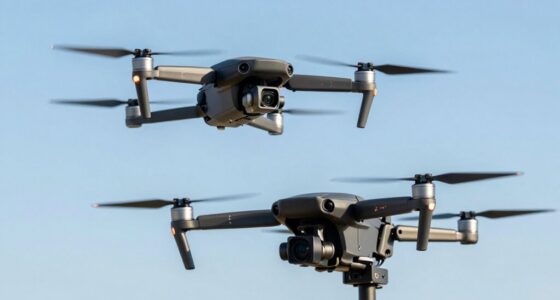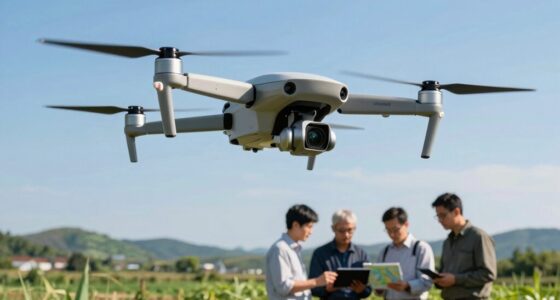
To decide if you need a heavy-lift drone, first assess your payload requirements and whether your tasks involve heavy equipment or large cameras. Consider flight safety, your operational skills, and local regulations to guarantee safe handling. Evaluate the project scope and costs, weighing if the added capacity justifies the investment. If you keep exploring, you’ll discover more about how to match your needs with the right drone setup.
Listen free for 30 days with Audible
Thousands of audiobooks and originals — cancel anytime.
As an affiliate, we earn on qualifying purchases.
Key Takeaways
- Assess the weight and size of items regularly needing transportation to determine if heavy-lift capacity is necessary.
- Consider your drone operator’s experience and safety protocols, especially for complex, heavy-load operations.
- Evaluate project scope and whether frequent or substantial payloads justify investing in a heavy-lift drone.
- Balance battery capacity and flight time requirements against the increased weight of heavy-lift drones.
- Ensure compliance with regulations and safety standards relevant to operating larger, more powerful drones.
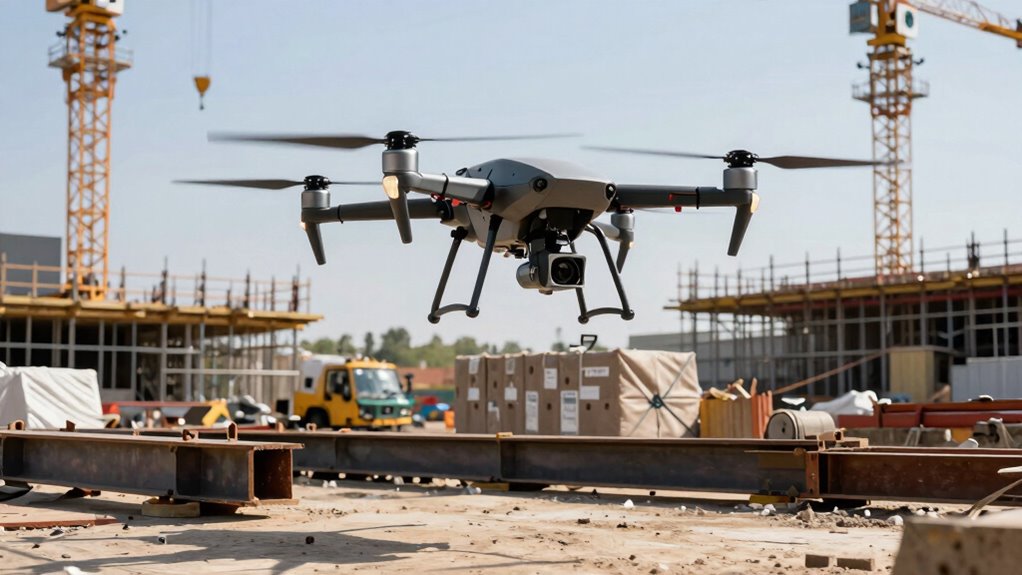
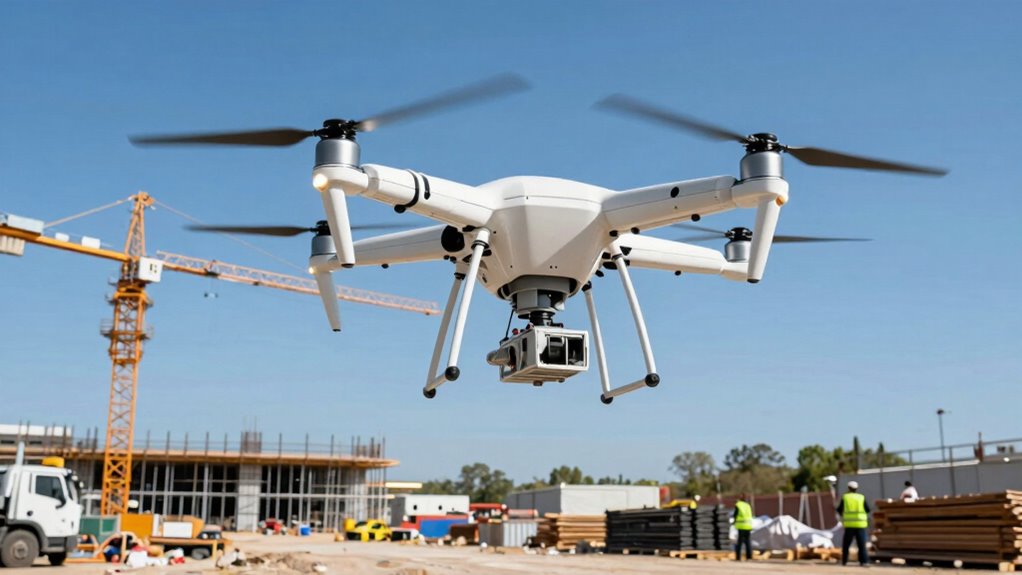
Deciding whether a heavy-lift drone setup is right for you depends on understanding your specific needs and the tasks you want to accomplish. Heavy-lift drones are designed to carry larger payloads, but whether they’re necessary hinges on the scope of your projects. Start by evaluating the weight of items you need to transport regularly. If your tasks involve lifting heavy equipment, construction materials, or sizable cameras, a heavy-lift drone might be essential. Conversely, if your payloads are light and infrequent, a standard drone could suffice, saving you money and complexity.
Assess your payload needs carefully to determine if a heavy-lift drone is necessary for your projects.
Battery capacity plays an essential role in this decision. Heavy-lift drones typically require larger batteries to support their increased power demands, which can extend flight times but also add weight. Consider how much flight time you need for your applications. If your tasks involve long, uninterrupted flights or transporting heavy loads over considerable distances, a drone with higher battery capacity becomes indispensable. However, remember that larger batteries add weight, which might reduce overall flight time if not balanced properly. Confirming your drone’s battery capacity aligns with your workload allows you to maintain efficiency without sacrificing safety or performance. Additionally, understanding the trade-offs between battery size and flight duration can help optimize your operational planning. Being aware of battery management is crucial for maximizing performance and safety. A thorough understanding of drone technology can further enhance your ability to select the right setup.
Flight safety is another key factor. Heavy-lift drones are inherently more complex and can pose greater safety risks if not operated properly. You need to evaluate your experience level and whether you have the skills to handle such equipment. Proper training and adherence to safety protocols are non-negotiable to prevent accidents or damage. Additionally, consider the environment in which you’ll be flying. Wind, obstacles, and remote locations can impact flight safety, especially with heavier loads. Investing in drones equipped with advanced stability and obstacle avoidance systems can mitigate some risks, but only if you are confident in your ability to operate them safely. Proper training and familiarity with your drone’s capabilities are crucial for safe operation. Furthermore, staying updated on regulations related to drone operations ensures compliance and minimizes legal risks.
Ultimately, deciding on a heavy-lift drone setup requires balancing your payload needs, battery capacity, and safety considerations. If your projects demand lifting substantial weights and you’re prepared to manage the operational complexities, investing in a heavy-lift drone makes sense. But if your needs are modest or occasional, a lighter, more manageable drone might serve you just as well. Carefully evaluate your specific tasks, confirm your equipment can handle the workload efficiently, and prioritize safety at every step. This approach will help you make an informed decision that aligns with your goals and capabilities.

Heavy-Lift Drone up to 110 lb (50kg) Payload, Waterproof, 5 mile (8 Km) Long Range UAV, Take-Off Weight 200 lb (90 kg), Delivery Quadcopter
- Heavy Lift Capacity: Up to 110 lb (50 kg) payload
- Waterproof Design: Suitable for various weather conditions
- Long Range Flight: Up to 5 miles (8 km) range
As an affiliate, we earn on qualifying purchases.
As an affiliate, we earn on qualifying purchases.
Frequently Asked Questions
What Is the Maximum Payload Capacity of Heavy-Lift Drones?
Heavy-lift drones typically have payload capacities ranging from 10 to over 100 pounds, depending on their design and size. You should consider payload limitations when evaluating drone scalability for your projects, ensuring the drone can handle your required weight. If your tasks involve heavier loads, investing in a drone with a higher maximum payload capacity makes sense. Always check specific drone specs to match your needs effectively.
How Long Can Heavy-Lift Drones Operate on a Single Charge?
Heavy-lift drones typically operate between 20 to 40 minutes on a single charge, depending on battery life and payload weight. You can extend flight time by optimizing power management—using efficient batteries, reducing payload weight, and avoiding rapid maneuvers. Keep in mind, heavier loads drain batteries faster, so plan your flights accordingly and consider extra batteries for longer missions. Proper power management guarantees maximum operational efficiency.
Are There Legal Restrictions for Using Heavy-Lift Drones Commercially?
Yes, there are legal restrictions for using heavy-lift drones commercially. In fact, over 90 countries have regulations that require you to obtain permits and adhere to specific operational rules. You must navigate legal considerations like licensing, flight restrictions, and regulatory compliance. Ignoring these can lead to penalties or even drone confiscation. Before starting, check local laws to make certain your heavy-lift drone operations stay within legal boundaries.
What Maintenance Is Required for Heavy-Lift Drone Setups?
You need to regularly check your heavy-lift drone’s battery lifespan and perform calibration procedures to guarantee peak performance. Keep batteries charged correctly, avoid over-discharging, and store them properly to extend their life. Regularly inspect motors, propellers, and wiring for wear or damage. Updating firmware and calibrating sensors help maintain stability and safety. Consistent maintenance keeps your drone dependable, reduces downtime, and prolongs its overall lifespan.
How Cost-Effective Are Heavy-Lift Drones for Large Projects?
Heavy-lift drones can be cost-effective for large projects if their flight stability and battery life meet your needs. They reduce labor costs and save time, especially when transporting heavy loads. However, initial investments are high, and maintenance costs can add up. If your project requires frequent, large payloads, the long-term savings often outweigh the upfront expenses. Carefully evaluate your project’s scale and drone capabilities before deciding.

V168 Pro MAX GPS Drones with Camera for Adults 4K, RC Drone with 4.5" HD Screen on Controller, 60 Mins Flight, Long Range Transmission, 360° Obstacle Avoidance, Follow Me, Auto Return, Brushless Motor, QuickShots, Lightweight and Foldable Quadcopter for Beginner Toy Gifts
- 4K Adjustable Camera: Capture from multiple angles with SD card
- Obstacle Avoidance: 4-way indoor obstacle detection
- GPS Auto Return: Safely returns on signal loss
As an affiliate, we earn on qualifying purchases.
As an affiliate, we earn on qualifying purchases.
Conclusion
So, you’ve weighed the pros and cons, considered your budget, and still wonder if heavy-lift drones are worth it. Turns out, the only thing heavier than the drone might be your doubts. But hey, if you crave those epic aerial shots or need to haul big loads, maybe it’s time to embrace the power. After all, who knew that lifting heavy could be so lighthearted? The sky’s the limit—literally.
Heavy-Lift Drone up to 110 lb (50kg) Payload, Waterproof, 5 mile (8 Km) Long Range UAV, Take-Off Weight 200 lb (90 kg), Delivery Quadcopter
- Heavy Lift Capacity: Up to 110 lb (50 kg) payload
- Waterproof Design: Suitable for various weather conditions
- Long Range Flight: Up to 5 miles (8 km) range
As an affiliate, we earn on qualifying purchases.
As an affiliate, we earn on qualifying purchases.

Industrial Eyes in the Sky: How to Break into Drone Work for Construction, Inspections, and Infrastructure (The Drone Advantage Series)
As an affiliate, we earn on qualifying purchases.
As an affiliate, we earn on qualifying purchases.
Back to school Picks
back to school
As an affiliate, we earn on qualifying purchases.