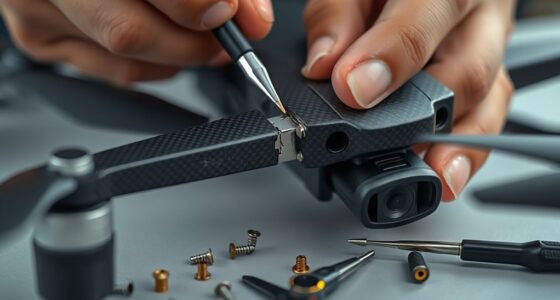
To balance your drone’s propellers for smoother flight, start by inspecting each one for cracks or warping. Use a propeller balancer or create a DIY setup by placing the prop on a stand and spinning it freely. Observe for wobbling or dips, then add small weights like tape to the heavier side until it stays level. Proper balancing reduces vibrations and extends your drone’s lifespan. Keep going to discover more tips for ideal drone performance.
Key Takeaways
- Inspect propellers for cracks, warping, or damage before balancing to prevent vibrations.
- Use a propeller balancer or a DIY setup to detect tilt and uneven rotation.
- Place the propeller on the stand and spin freely to observe wobbling or dips.
- Add small weights like tape or putty to the heavier side to correct imbalance.
- Regularly balance propellers to ensure stable flight, better footage, and longer drone lifespan.

Ever wondered why your drone wobbles or drifts unexpectedly? One common cause is unbalanced propellers, which can lead to unstable flight and increased wear on your drone’s motors. To fix this, you need to understand how to properly balance your propellers, ensuring smoother flight and better performance. A vital step in this process involves considering the propeller materials and conducting vibration analysis. Different propeller materials, like plastic, carbon fiber, or wood, have distinct properties that influence how they behave during rotation. Plastic propellers are lightweight and affordable but can flex or warp over time, affecting balance. Carbon fiber propellers are stronger and more rigid, offering higher stability but also being more sensitive to imperfections. Wood propellers, often used for aesthetic or specific flight characteristics, require careful inspection because natural materials can have inconsistencies that impact balance.
Before you start balancing, it’s essential to inspect your propellers thoroughly. Look for cracks, warping, or any deformities. Even tiny imperfections can cause vibrations that throw off your drone’s stability. Once you’ve inspected your propellers, the next step is vibration analysis. This process involves testing how your propellers behave when spinning at operational speeds. You can do this by spinning them on a balancing stand or by observing vibrations during flight. If you notice excessive wobbling or shaking, it indicates your propellers are out of balance. Vibration analysis helps identify the specific areas that need correction, whether it’s adding weight to a certain side or smoothing out surface imperfections. Proper balancing techniques are essential to achieve optimal flight performance.
To balance your propellers properly, you’ll need a balancing tool—either a dedicated propeller balancer or a simple DIY setup. Place the propeller on the stand or balance tool and spin it freely. Watch for where it tilts or dips. If it’s leaning to one side, you’ll need to add a small bit of weight, like tape or putty, to the heavier side until it spins smoothly without wobbling. This process may take a few tries, especially with different propeller materials, but patience pays off. For carbon fiber or premium materials, maintaining strict balance is essential, as these materials tend to amplify vibrations if slightly off. Regular vibration analysis and balancing not only improve your drone’s flight stability but also extend the lifespan of your motors and other components. Once balanced, your drone should glide more smoothly, with less noise and jitter, giving you cleaner footage and a more enjoyable flying experience.
Frequently Asked Questions
How Often Should I Check My Drone’s Propeller Balance?
You should check your drone’s propeller balance every 10 to 15 flights or whenever you notice unusual vibrations. Regular maintenance, including balancing and inspecting for damage, guarantees smooth flights. If a propeller shows signs of wear or damage, replace it promptly instead of trying to rebalance. Keeping a consistent maintenance schedule helps prevent unnecessary propeller replacements and maintains ideal flight performance, saving you time and frustration.
Can Unbalanced Props Cause Damage to My Drone?
Unbalanced props can definitely cause damage to your drone. They create extra vibration, which leads to increased propeller noise and strain on the motors. This vibration can also reduce battery life since your drone works harder to stabilize itself. Over time, unbalanced props may damage the motor bearings or other components, risking costly repairs. Always guarantee your props are balanced for a smoother, quieter flight and longer-lasting drone.
What Tools Are Best for Balancing Drone Propellers?
Imagine precision in your hands—propeller balancing tools like a digital balancer or a bubble level are your best choices for this task. These drone maintenance gear essentials help identify imbalance with clarity, ensuring smooth flight and safe operation. Using the right tools, you maintain your drone’s performance and longevity. Don’t settle for less; invest in quality propeller balancing tools to keep your drone flying perfectly.
Does Propeller Material Affect Balancing Procedures?
Yes, propeller material affects balancing procedures because different materials like plastic or carbon fiber have varying durability and flexibility. Flexible materials may require gentler balancing techniques to avoid damage, while rigid materials need precise adjustments for ideal stability. When balancing, consider the propeller’s durability and material flexibility to prevent warping or cracking, ensuring smoother flight and longer-lasting propellers. Proper handling based on material helps achieve the best results.
Can I Balance Props While They Are Attached to the Drone?
You can’t quite have your cake and eat it too; balancing props while attached isn’t ideal. It’s best to eliminate the propellers first for precise balancing. In-flight balancing isn’t recommended either, as it’s difficult to achieve and could be dangerous. Always remove the propellers during balancing to guarantee accuracy, then reattach them securely. This approach keeps your drone stable and prevents mishaps, helping you get the smooth flight you’re after.
Conclusion
Balancing your drone’s propellers is like tuning a fine instrument—you’ll notice the difference in flight smoothness instantly. When your props are perfectly balanced, your drone will glide through the air like a leaf on a breeze, not a hurricane. Take the time to check and fine-tune them regularly; it’s a small step that makes a big difference. Keep your flights steady and your footage crystal clear by giving your propellers the attention they deserve.