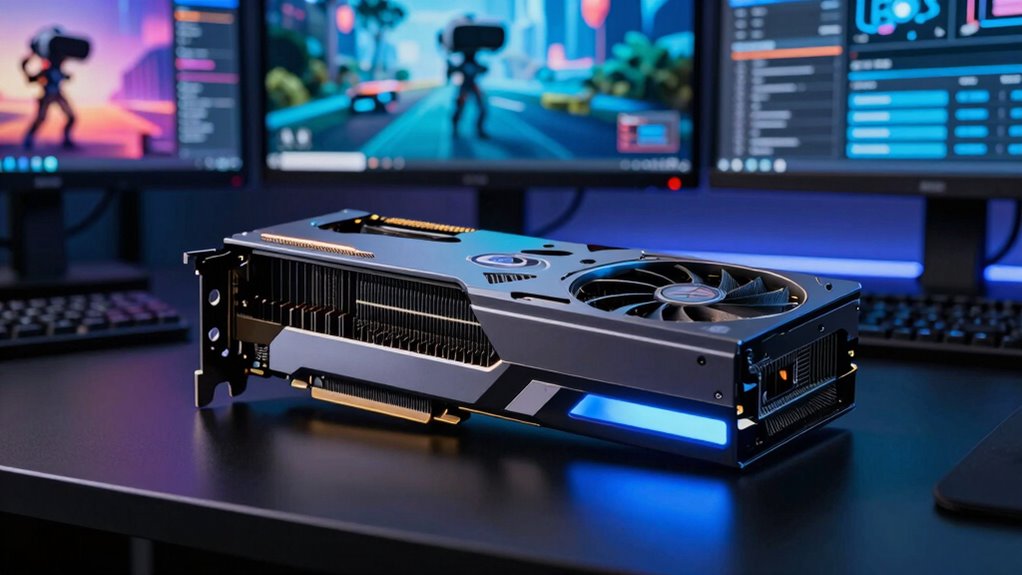
Choosing a GPU for VR productivity in 2026 requires balancing performance, compatibility, and budget. The best options deliver smooth, high-fidelity VR experiences for both gaming and professional workloads. The NVIDIA RTX A2000 stands out for its excellent value and compact design, while the PNY RTX A6000 offers premium performance for demanding tasks. Many users face tradeoffs between raw power, cost, and system compatibility. Continue reading for a detailed breakdown of the top contenders and what makes each suitable for different needs.

Get the latest gadgets delivered free with Prime
- Fast, free delivery on millions of items
- Prime Video, Amazon Music and more included
- Member-only deals all year
Complete the kit



Key Takeaways
- High-end professional GPUs like the PNY RTX A6000 excel in complex VR workflows but come at a premium cost.
- Mid-range options such as the GIGABYTE RTX 3050 provide decent VR performance for budget-conscious users.
- Memory capacity and bandwidth significantly impact VR multitasking and high-resolution rendering.
- Size and cooling solutions vary widely, affecting compatibility in smaller or custom builds.
- The most balanced options deliver strong performance without excessive price tags, ideal for most VR creators.
| GIGABYTE GeForce RTX 3050 WINDFORCE OC V2 6G Graphics Card |  | Best Budget for Entry-Level VR Productivity | Memory: 6GB GDDR6 | Memory Interface: 96-bit | Cooling: 2X WINDFORCE Fans | VIEW ON AMAZON | See Our Full Breakdown |
| NVIDIA RTX A1000 |  | Best Compact Professional GPU for VR and AI Workloads | CUDA Cores: 2304 | Memory: 8 GB GDDR6 | Video Output Interface: Mini DisplayPort | VIEW ON AMAZON | See Our Full Breakdown |
| ASRock Radeon RX 9060 XT Challenger 16GB OC |  | Best for High-Performance 1440p VR and Creative Work | GPU Architecture: RDNA 4 | Memory: 16GB GDDR6 | Boost Clock: 3290 MHz | VIEW ON AMAZON | See Our Full Breakdown |
| PNY NVIDIA RTX A2000 12GB |  | Best Low-Power Compact Card for VR and Productivity | CUDA Cores: 3328 | Memory: 12GB GDDR6 | RT Cores: 26 third generation | VIEW ON AMAZON | See Our Full Breakdown |
| ASRock Radeon AI PRO R9700 Creator 32GB |  | Best for Professional AI and Content Creation in VR | Memory: 32 GB GDDR6 | GPU Clock Speed: 2920 MHz | Display Output Interface: DisplayPort | VIEW ON AMAZON | See Our Full Breakdown |
| GIGABYTE Radeon RX 9070 XT Gaming OC 16G Graphics Card |  | Best for High-Performance VR Workstations | GPU Model: Radeon RX 9070 XT | Memory: 16GB GDDR6 | Interface: PCIe 5.0 | VIEW ON AMAZON | See Our Full Breakdown |
| NVIDIA Titan RTX Graphics Card |  | Best for Demanding Creative and AI Workloads | CUDA Cores: 4609 | Boost Clock: 1770 MHz | RT Cores: 72 | VIEW ON AMAZON | See Our Full Breakdown |
| PNY RTX A6000 Ada Lovelace 48GB GDDR6 Graphics Card |  | Best for Large-Scale Professional VR Workstations | Memory: 48GB GDDR6 | Memory Clock: 960GB/s | Interface: PCI Express 4.0 | VIEW ON AMAZON | See Our Full Breakdown |
| NVIDIA Titan RTX Graphics Card (Renewed) |  | Best for Budget-Conscious High-End VR Users | CUDA Cores: 4608 | Boost Clock: 1770 MHz | RT Cores: 72 | VIEW ON AMAZON | See Our Full Breakdown |
| PNY NVIDIA Quadro RTX 4000 – Ray Tracing GPU |  | Best for Professional VR Rendering and Visualization | GPU Architecture: NVIDIA Turing | RT Cores: 36 | Features: Real-time rendering, advanced shading | VIEW ON AMAZON | See Our Full Breakdown |
| gpu for vr productivity | Memory |
|---|---|
| GIGABYTE GeForce RTX 3050 WIND | 6GB GDDR6 |
| NVIDIA RTX A1000 | 8 GB GDDR6 |
| ASRock Radeon RX 9060 XT Chall | 16GB GDDR6 |
| PNY NVIDIA RTX A2000 12GB | 12GB GDDR6 |
| ASRock Radeon AI PRO R9700 Cre | 32 GB GDDR6 |
| GIGABYTE Radeon RX 9070 XT Gam | 16GB GDDR6 |
| NVIDIA Titan RTX Graphics Card | — |
| PNY RTX A6000 Ada Lovelace 48G | 48GB GDDR6 |
| NVIDIA Titan RTX Graphics Card | — |
| PNY NVIDIA Quadro RTX 4000 | — |
More Details on Our Top Picks
GIGABYTE GeForce RTX 3050 WINDFORCE OC V2 6G Graphics Card
This model stands out for offering solid NVIDIA Ampere architecture at a lower price point, making it suitable for those new to VR productivity but who don’t require the highest-end specs. Compared to the NVIDIA RTX A1000, it lacks the same AI capabilities and multi-display support but compensates with a more familiar gaming-oriented design. Its 6GB GDDR6 memory suffices for basic VR workflows, though it may struggle with very complex projects or future VR resolutions. The dual WINDFORCE fans help keep thermals in check during moderate workloads, yet this card’s limited VRAM and potential power draw could bottleneck more demanding tasks. Overall, this is a good pick for budget-conscious hobbyists or entry-level creators, provided they don’t push beyond modest VR environments.
Pros:- Affordable entry point with NVIDIA Ampere architecture
- Effective cooling with dual WINDFORCE fans
- Adequate for basic VR productivity tasks
Cons:- Limited to 6GB GDDR6, which may be insufficient for advanced VR workflows
- Potentially high power consumption relative to its performance
Best for: Beginners or hobbyists starting out with VR design and moderate productivity tasks
Not ideal for: Power users working on large, complex VR projects or professional VR content creators needing maximum GPU memory and AI features
- Memory:6GB GDDR6
- Memory Interface:96-bit
- Cooling:2X WINDFORCE Fans
- GPU Architecture:NVIDIA Ampere
Our verdict“This card is best for newcomers who want decent VR performance without breaking the bank.”
NVIDIA RTX A1000
The NVIDIA RTX A1000 excels in small form factor setups, offering a high-performance GPU with 2,304 CUDA cores and 8GB GDDR6 memory, making it ideal for professional VR productivity, especially where space is limited. It surpasses the GIGABYTE GeForce RTX 3050 in AI capabilities, ray tracing, and multi-display support, providing the reliability demanded in professional environments. Its compact size (6.42″L x 2.72″W) makes it perfect for tight spaces, but its 8GB VRAM might fall short for very large VR projects or future VR resolutions. The PCIe x8 interface ensures broad system compatibility, though some users with older systems may face fitment issues. This GPU is tailored for content creators and AI developers needing a reliable, space-efficient solution.
Pros:- Compact design fits tight spaces and small cases
- High CUDA core count with AI and ray tracing support
- Supports up to 8K resolution multi-display setups
Cons:- Limited to 8GB VRAM, potentially restricting large VR datasets
- Requires PCIe x8 slot, not compatible with all systems
- Lacks detailed performance benchmarks in marketing materials
Best for: Small-form-factor workstation users focusing on VR content creation and AI acceleration
Not ideal for: Enthusiasts or gamers seeking maximum VRAM or raw gaming performance in larger setups
- CUDA Cores:2304
- Memory:8 GB GDDR6
- Video Output Interface:Mini DisplayPort
- GPU Series:NVIDIA Quadro
Our verdict“Ideal for professionals needing a small, powerful GPU for VR and AI tasks without occupying much space.”
ASRock Radeon RX 9060 XT Challenger 16GB OC
Compared with the GIGABYTE RTX 3050, this Radeon RX 9060 XT provides a significant boost with 16GB GDDR6 memory and a high boost clock of 3290 MHz, making it a strong contender for VR productivity at 1440p and even 4K. Its RDNA 4 architecture supports modern AI and rendering workloads, and dual fans offer quiet operation during intense tasks. However, its larger size (249 mm long) and the need for a compatible 8-pin power connector mean it’s less suited for compact builds. The 16GB VRAM makes it more future-proof for demanding VR environments, though users should verify their case clearance and power supply capacity. This card is tailored for creative professionals and serious gamers upgrading their VR setup.
Pros:- Large 16GB GDDR6 memory supports demanding VR and creative workloads
- High boost clock for speedy performance
- Silent operation with dual fans
Cons:- Requires substantial case clearance (249 mm length)
- Needs a dedicated 8-pin power connector
- Power supply of 550W may limit some upgrades
Best for: Creative professionals and serious gamers seeking high VR performance at 1440p or 4K resolutions
Not ideal for: Small systems or those with limited power supply capacity, due to size and power requirements
- GPU Architecture:RDNA 4
- Memory:16GB GDDR6
- Boost Clock:3290 MHz
- Power Connector:1 x 8-pin
Our verdict“A strong choice for creators and gamers who need high VR performance without compromise on memory or speed.”
PNY NVIDIA RTX A2000 12GB
The PNY NVIDIA RTX A2000 offers a compelling balance between size, power efficiency, and performance, with 3,328 CUDA cores and 12GB GDDR6 memory. Its low-profile design makes it suitable for small or space-constrained systems, and with just 70W power consumption, it’s energy-efficient while still capable of handling demanding VR projects. Compared to the ASRock Radeon RX 9060 XT Challenger, it provides a more streamlined form factor, though its performance might lag behind in extremely large datasets or intensive workflows. Its 12GB VRAM is a moderate upgrade from the 8GB options, better supporting complex VR environments without requiring high power. This GPU is perfect for professionals working in multi-purpose, space-limited workstations.
Pros:- Low-profile, space-saving design fits small systems
- Power-efficient with only 70W consumption
- High CUDA core count for demanding graphics tasks
Cons:- Limited information on ports and additional features
- Performance may not match larger, higher-power GPUs
- Potential compatibility considerations in some systems
Best for: Space-constrained professionals needing capable VR and AI processing without high power demands
Not ideal for: High-end VR content creators or gamers who require maximum VRAM and performance in large-scale projects
- CUDA Cores:3328
- Memory:12GB GDDR6
- RT Cores:26 third generation
- Power Consumption:70W
Our verdict“An excellent choice for professionals needing efficient, capable VR hardware in compact setups.”
ASRock Radeon AI PRO R9700 Creator 32GB
Compared with the GIGABYTE RTX 3050, the ASRock Radeon AI PRO R9700 provides a massive 32GB GDDR6 memory, making it ideal for large AI models, complex VR simulations, and high-resolution video editing. Its AMD RDNA 4 architecture includes AI accelerators, offering advanced capabilities beyond typical gaming cards. The blower cooler ensures effective thermal management in multi-GPU setups or enclosed cases, but its design is tailored more for workstation environments, which could limit flexibility for casual VR users. The 2920 MHz boost clock supports high-speed processing, yet users must confirm compatibility with their existing systems, especially regarding PCIe 5.0 support and power supply requirements of 550W or more. This GPU is best suited for professionals pushing the boundaries of VR content creation and AI-driven workflows.
Pros:- Massive 32GB VRAM supports large models and high-res VR
- Advanced AI accelerators enhance productivity in AI workflows
- Efficient blower cooling for multi-GPU configurations
Cons:- Designed primarily for workstations, not gaming desktops
- Single fan may be less effective under sustained heavy loads
- Requires careful compatibility checks regarding system power and slots
Best for: AI researchers, VR developers, and content creators managing large datasets and complex workflows
Not ideal for: Casual VR users or gamers seeking high frame rates in standard gaming setups
- Memory:32 GB GDDR6
- GPU Clock Speed:2920 MHz
- Display Output Interface:DisplayPort
- Interface:PCI-Express x16
Our verdict“This GPU is tailored for professionals working on demanding AI and VR projects requiring extensive memory and processing power.”
GIGABYTE Radeon RX 9070 XT Gaming OC 16G Graphics Card
The GIGABYTE Radeon RX 9070 XT Gaming OC 16G stands out for its robust gaming and high-performance capabilities, making it a strong choice for VR productivity that demands GPU power. Compared to the PNY RTX A6000, it offers a more accessible price point while still delivering excellent performance, but it may fall short in professional-grade memory capacity. Its advanced cooling with WINDFORCE technology and RGB customization enhance operational stability and aesthetics, yet the lack of detailed specs and potentially high power draw are considerations. This card is well-suited for users who want top-tier VR performance without stepping into professional workstation territory, but it might require a PCIe 5.0 slot and high wattage power supply. Overall, it’s ideal for high-end gaming and demanding VR applications where performance outweighs professional features.Pros:- High-performance gaming and VR capabilities
- Advanced cooling system for thermal management
- RGB lighting for customizable aesthetics
Cons:- Limited detailed specifications available
- Potentially high power consumption
- Requires PCIe 5.0 slot
Best for: Enthusiast VR content creators and high-performance gaming setups that need cutting-edge graphics
Not ideal for: Casual VR users or professionals who need certified stability and extensive memory for large datasets
- GPU Model:Radeon RX 9070 XT
- Memory:16GB GDDR6
- Interface:PCIe 5.0
- Cooling System:WINDFORCE
- Lighting:RGB
Our verdict“This card is best suited for enthusiasts seeking premium VR productivity with high gaming performance.”
NVIDIA Titan RTX Graphics Card
The NVIDIA Titan RTX excels in raw computational power, with 4609 CUDA cores and AI acceleration, making it ideal for VR productivity that leverages AI or complex rendering. Unlike the PNY RTX A6000, it offers a more accessible price range while still providing robust performance, though it requires a high-wattage 650W power supply and can be costly. Its ray tracing and Tensor Cores deliver realistic VR visuals and faster workflows, but the high power draw and premium price tag are notable tradeoffs. This GPU is perfect for high-end VR creators or researchers who need powerful AI and rendering capabilities, but less so for budget-conscious users or those with limited power supply capacity. It’s a strong choice for demanding VR environments where performance is paramount.Pros:- High CUDA core count for demanding tasks
- Supports real-time ray tracing and AI acceleration
- Compatible with multiple operating systems
Cons:- Requires a high wattage power supply (650W)
- Potentially high cost for premium performance
Best for: Power users in VR development, AI-driven workflows, and complex rendering tasks
Not ideal for: Casual VR users or small-scale setups with limited power capacity
- CUDA Cores:4609
- Boost Clock:1770 MHz
- RT Cores:72
- Tensor Cores:577
- Power Supply:650 watts
- Supported OS:Windows 7/10, Linux
Our verdict“This GPU is best for professionals who need exceptional computational power for demanding VR and AI workloads.”
PNY RTX A6000 Ada Lovelace 48GB GDDR6 Graphics Card
The PNY RTX A6000 offers an enormous 48GB of GDDR6 memory, making it ideal for VR workflows involving massive datasets or complex simulations. It surpasses the RTX Titan RTX in memory capacity, but its high cost and professional focus can make it less appealing for casual or small-scale VR setups. The 960GB/s memory clock and PCIe 4.0 interface ensure fast data throughput, supporting demanding multi-application VR environments, although it’s primarily designed for enterprise use. This card is best suited for large VR labs, research institutions, or studios with intensive rendering needs, but it’s overkill for typical consumer-grade VR tasks. It stands out as a professional-grade option for those prioritizing data capacity and stability over affordability.Pros:- Massive 48GB GDDR6 memory capacity
- Fast 960GB/s memory clock speed
- PCIe 4.0 for high data transfer rates
Cons:- Likely very expensive for casual use
- Designed primarily for professional workloads
Best for: Large enterprise VR studios, researchers, and professionals handling extensive datasets
Not ideal for: Casual VR enthusiasts or small business users who don’t need extensive memory
- Memory:48GB GDDR6
- Memory Clock:960GB/s
- Interface:PCI Express 4.0
- Warranty:3 years
Our verdict“This GPU is tailored for large-scale professional VR environments demanding extensive memory and high data throughput.”
NVIDIA Titan RTX Graphics Card (Renewed)
The NVIDIA Titan RTX (Renewed) retains much of the original’s high CUDA core count and AI capabilities, making it attractive for demanding VR tasks at a potentially lower cost. Compared to new models like the RTX A6000, it offers similar performance but with limited warranty and possible wear. Its ray tracing and Tensor Cores support immersive VR visuals, yet the renewal status raises questions about longevity and reliability. This makes it suitable for users who want high performance but are willing to accept some risk, especially if budget constraints are tight. For those needing consistent, enterprise-grade stability, newer or professional cards may be preferable, but this card remains a solid choice for high-end VR at a reduced price.Pros:- High CUDA core count for demanding VR tasks
- Supports ray-tracing and AI acceleration
- Affordable alternative to new high-end GPUs
Cons:- Limited warranty on renewed products
- Potential for wear or previous usage effects
- Requires high power supply
Best for: VR developers or enthusiasts seeking high performance on a budget with an understanding of renewal risks
Not ideal for: Professional studios or users needing guaranteed longevity and warranty support
- CUDA Cores:4608
- Boost Clock:1770 MHz
- RT Cores:72
- Tensor Cores:576
- OS Compatibility:Windows 7/10, Linux
Our verdict“This GPU is suitable for budget-conscious users who need high-end VR performance but can accept some uncertainty from a renewed product.”
PNY NVIDIA Quadro RTX 4000 – Ray Tracing GPU
The PNY Quadro RTX 4000 is tailored for professional VR workflows, offering real-time rendering, advanced shading, and 36 RT cores for photorealistic visuals. While it doesn’t match the gaming prowess of the GIGABYTE RX 9070 XT or the raw AI power of the RTX A6000, it excels in stability and certified compatibility for professional applications. Its focus on rendering and shading makes it ideal for VR content creation that demands precision, but its higher price and professional orientation may deter casual users. This card suits VR studios or architects needing reliable, high-quality visuals with advanced ray tracing features, though it might be overkill for simple or gaming VR tasks.Pros:- High-performance ray tracing capabilities
- Suitable for professional rendering and visualization
- Advanced shading features
Cons:- Designed primarily for professional use
- Potentially expensive for casual users
- Less gaming-oriented performance
Best for: Professionals in VR content creation, visualization, and rendering who need reliable, high-quality output
Not ideal for: Casual VR users or those seeking budget-friendly gaming performance
- GPU Architecture:NVIDIA Turing
- RT Cores:36
- Features:Real-time rendering, advanced shading
Our verdict“This GPU is best for professional VR creators needing dependable, photorealistic rendering capabilities.”

How We Picked
These products were selected based on their ability to support demanding VR workloads, measured through performance benchmarks, VR-specific features, and driver stability. We prioritized models that offer a good balance of price, power consumption, and compatibility with VR platforms. The ranking reflects not only raw performance but also factors like build quality, driver updates, and versatility for both gaming and professional use. Our goal was to identify GPUs that give users a reliable, smooth VR experience across different budgets and use cases.Factors to Consider When Choosing Gpu For Vr Productivity
Selecting the right GPU for VR productivity involves understanding key factors that influence performance and usability. Beyond raw power, considerations like memory capacity, form factor, and ecosystem compatibility play vital roles. Avoiding common pitfalls—such as overestimating your needs or ignoring system limitations—can save money and frustration. Here are the main factors to consider when choosing a GPU for VR work in 2026.Performance and VR Optimization
Look for GPUs with high frame rates and low latency in VR applications. Features like VR Ready certification, support for high refresh rates, and optimized drivers ensure a smoother experience. Overestimating your requirements can lead to unnecessary expenses, so match your GPU to your workload—professional design, simulation, or gaming—to avoid bottlenecks.
Memory Capacity and Bandwidth
VR workloads benefit from larger VRAM, especially at higher resolutions or when multitasking multiple applications. A GPU with 12GB or more of VRAM can handle detailed textures and complex scenes without stuttering. However, more memory often comes with increased cost and power consumption, so consider your typical project size and future expansion needs.
Compatibility and System Fit
Ensure your system can physically fit the GPU, including length, width, and cooling clearance. Compatibility with your motherboard’s PCIe slot and power supply is crucial. Some professional GPUs demand specific connectors or power delivery solutions—ignoring these details can cause installation issues or performance drops.
Price-to-Performance Ratio
While high-end models deliver top-tier performance, they often come with steep prices. Mid-range GPUs can provide sufficient VR productivity at a more accessible cost, but may lack certain professional features. Identifying your actual needs and balancing budget against performance helps avoid overspending on features you won’t utilize.
Ecosystem and Driver Support
A robust software ecosystem with regular driver updates enhances stability and compatibility with VR platforms and creative software. NVIDIA generally offers more mature driver support for VR and professional applications, but AMD has made significant improvements. Consider the ecosystem that aligns best with your workflow to reduce troubleshooting.
Frequently Asked Questions
Is it better to choose a professional GPU or a gaming GPU for VR productivity?
Choosing between a professional GPU and a gaming GPU depends on your specific needs. Professional GPUs, like the PNY RTX A6000, offer optimized drivers and features tailored for CAD, simulation, and content creation, providing stability and reliability. Gaming GPUs, such as the GIGABYTE RTX 3050, often deliver higher raw performance at a lower price, suitable for VR gaming and lighter productivity. For heavy workloads and professional use, investing in a professional card can reduce compatibility issues and improve longevity.
How much VRAM do I need for high-resolution VR content?
For high-resolution VR content, a GPU with at least 12GB of VRAM is advisable. This ensures smooth rendering of detailed textures and complex scenes without stuttering. If your work involves large datasets or multi-monitor VR setups, opting for 16GB or more provides additional headroom, preventing performance bottlenecks. However, more VRAM usually means higher cost and power consumption, so match it to your workload.
Can I upgrade my current GPU for VR productivity, or should I build a new system?
Upgrading your GPU can often enhance VR productivity without a full system overhaul, provided your current setup meets the power and size requirements. Check compatibility with your motherboard, power supply, and case before upgrading. For older systems, a new build might be necessary to support newer, more powerful GPUs and ensure future-proofing, especially if you plan to run demanding VR applications regularly.
Are professional GPUs worth the extra cost for VR work?
Professional GPUs tend to be more expensive but offer advantages like optimized drivers, better stability, and dedicated features suited for intensive workloads. If your VR tasks involve CAD, 3D modeling, or simulations, these benefits can translate into fewer crashes and more consistent results. For casual or gaming-focused VR, high-quality gaming GPUs can often deliver comparable performance at a lower price.
How do I choose a GPU that will stay relevant for future VR developments?
To ensure your GPU remains capable as VR technology advances, prioritize models with ample VRAM, high compute performance, and support for emerging standards like PCIe 5.0 and DisplayPort 2.1. Investing in slightly more powerful hardware now can extend its usefulness, especially if you plan to upgrade other system components gradually. Keeping an eye on upcoming VR specifications and ensuring your GPU supports future standards helps maintain compatibility.
Conclusion
For most users seeking a balance of performance and value, the NVIDIA RTX A2000 offers reliable VR productivity without breaking the bank. Creative professionals requiring maximum stability and rendering power should consider the PNY RTX A6000, despite its high price. Beginners or casual users can start with mid-range options like the GIGABYTE RTX 3050, which provides decent performance at a lower cost. Advanced users or those working on demanding projects will find the NVIDIA Titan RTX or PNY RTX A6000 best suited for their needs. Ultimately, your choice hinges on your budget, workload, and future-proofing goals—match accordingly to get the most out of your VR setup in 2026.
As an affiliate, we earn on qualifying purchases.Halloween Picks
halloween