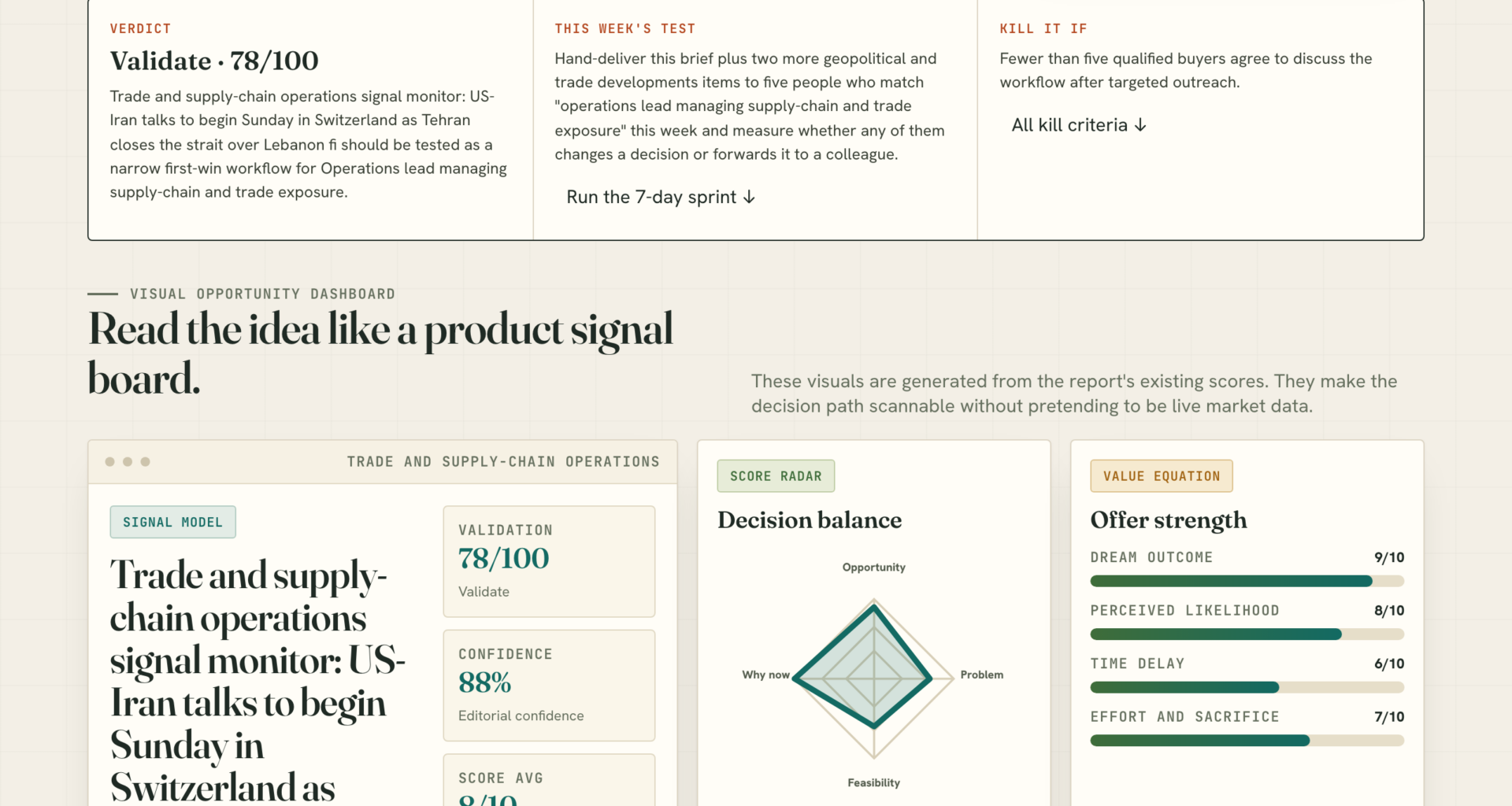

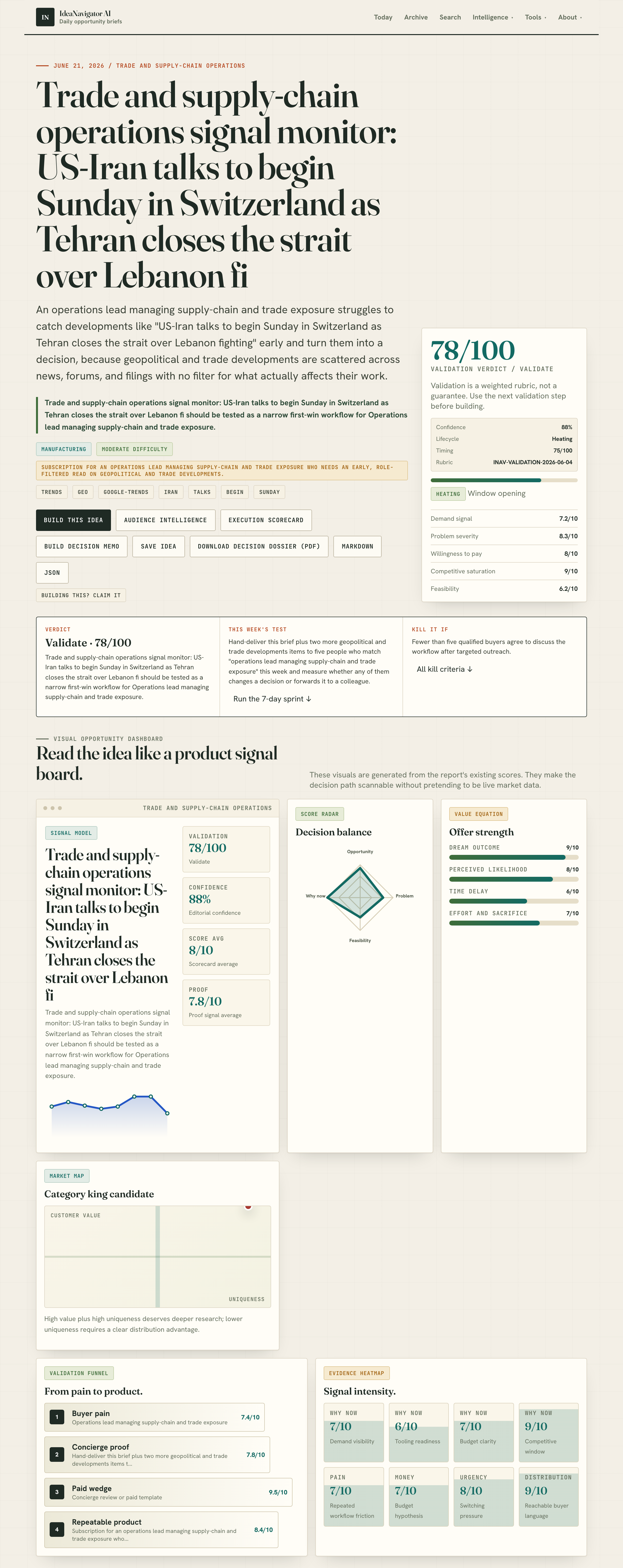
📊 Full opportunity report: Trade and supply-chain operations signal monitor: US-Iran talks to begin Sunday in Switzerland as Tehran closes the strait over Lebanon fi on IdeaNavigator AI — validation score, market gap, and execution plan.

Get the latest gadgets delivered free — and shop member deals
- Fast, free delivery on millions of items
- Access to Prime Big Deal Days deals on October 6–7
- Prime Video, Amazon Music and more included
TL;DR
US and Iran are scheduled to begin talks in Switzerland this Sunday, with trade and supply-chain operations closely monitoring the development. Tehran has also closed the Strait of Hormuz, raising concerns about regional stability and trade disruptions.
Negotiations between the United States and Iran are scheduled to commence in Switzerland this Sunday, according to sources familiar with the matter. This development is significant for global trade and supply chains, as Tehran has also announced the closure of the Strait of Hormuz over ongoing conflicts related to Lebanon. The talks, if successful, could influence regional stability and trade flows, making them a key focus for operations managers and geopolitical analysts alike.
Sources confirm that US and Iranian representatives will meet in Switzerland starting this Sunday to discuss ongoing tensions and potential pathways toward de-escalation. The timing follows recent escalations, including Iran’s decision to close the Strait of Hormuz, a critical maritime route for global oil and trade shipments. This closure has raised concerns among international traders and supply-chain managers about possible disruptions, especially given the strategic importance of the strait.
Trade and supply-chain operations are actively monitoring these developments, with signals indicating that the negotiations could lead to a temporary easing of tensions or further escalation depending on the outcomes. Trade and supply-chain operations signal monitor. The US has expressed a desire to de-escalate, while Iran’s actions suggest a willingness to leverage regional conflicts to advance its interests. The negotiations are viewed as a potential first step toward broader diplomatic solutions, but details remain sparse about the agenda or expected results.
Implications for Global Trade and Supply Chains
The upcoming US-Iran talks and Tehran’s closure of the Strait of Hormuz could significantly impact global trade routes, especially for oil and energy supplies. For more on operational impacts, see the technology operations signal monitor. Disruptions in this critical maritime corridor may lead to increased shipping costs, delays, and heightened market volatility. Supply chain managers should stay alert by consulting the trade and supply-chain operations signal monitor. For operations managers, early awareness and response planning are essential to mitigate risks associated with these geopolitical tensions.
As an affiliate, we earn on qualifying purchases.
Recent Escalations and Historical Tensions in Iran-US Relations
Relations between the US and Iran have been strained for decades, with recent escalations including Iran’s increased regional activities and US sanctions. The Strait of Hormuz, a vital chokepoint for nearly one-fifth of the world’s oil trade, has been a focal point of tension, with Iran threatening to close it during periods of heightened conflict. The upcoming negotiations in Switzerland are seen as a potential turning point, but historical mistrust and ongoing regional conflicts complicate the prospects for a swift resolution.
“The talks in Switzerland are a critical step, but their success depends on both sides managing their expectations and regional tensions.”
— an anonymous source familiar with the negotiations
supply chain risk management software
As an affiliate, we earn on qualifying purchases.
As an affiliate, we earn on qualifying purchases.
Uncertain Outcomes and Potential Escalations
It remains unclear whether the negotiations will lead to a de-escalation or further escalation of tensions. Details about the specific agenda, potential compromises, or timelines are still emerging. The possibility of Iran maintaining or expanding its closure of the Strait of Hormuz, or the US responding with increased sanctions or military posturing, adds to the unpredictability of the situation.
As an affiliate, we earn on qualifying purchases.
Next Steps and Monitoring Developments
Following the Sunday start of negotiations, stakeholders will be closely watching for any signs of progress or setbacks. Key indicators include statements from US and Iranian officials, updates on the status of the Strait of Hormuz, and regional security assessments. Supply-chain managers should prepare contingency plans for potential disruptions, while analysts will track diplomatic signals for any shifts in regional stability.
As an affiliate, we earn on qualifying purchases.
Key Questions
What is the main purpose of the US-Iran talks in Switzerland?
The talks aim to address ongoing tensions, seek de-escalation, and explore pathways toward diplomatic solutions to regional conflicts.
Why is the closure of the Strait of Hormuz significant?
The Strait of Hormuz is a vital maritime route for global oil and trade shipments; its closure could disrupt supply chains and increase transportation costs worldwide.
What are the risks if the negotiations fail?
Failure could lead to increased regional conflict, prolonged sanctions, or even military confrontations, further destabilizing global markets.
How should supply-chain managers respond to these developments?
They should monitor geopolitical signals closely, prepare contingency plans for potential disruptions, and stay informed through trusted news and updates.
When will the outcomes of the negotiations be known?
It is uncertain; the first developments are expected after the Sunday talks, with full outcomes potentially taking days or weeks to emerge.
Source: IdeaNavigator AI
Fall Picks
fall essentials
As an affiliate, we earn on qualifying purchases.