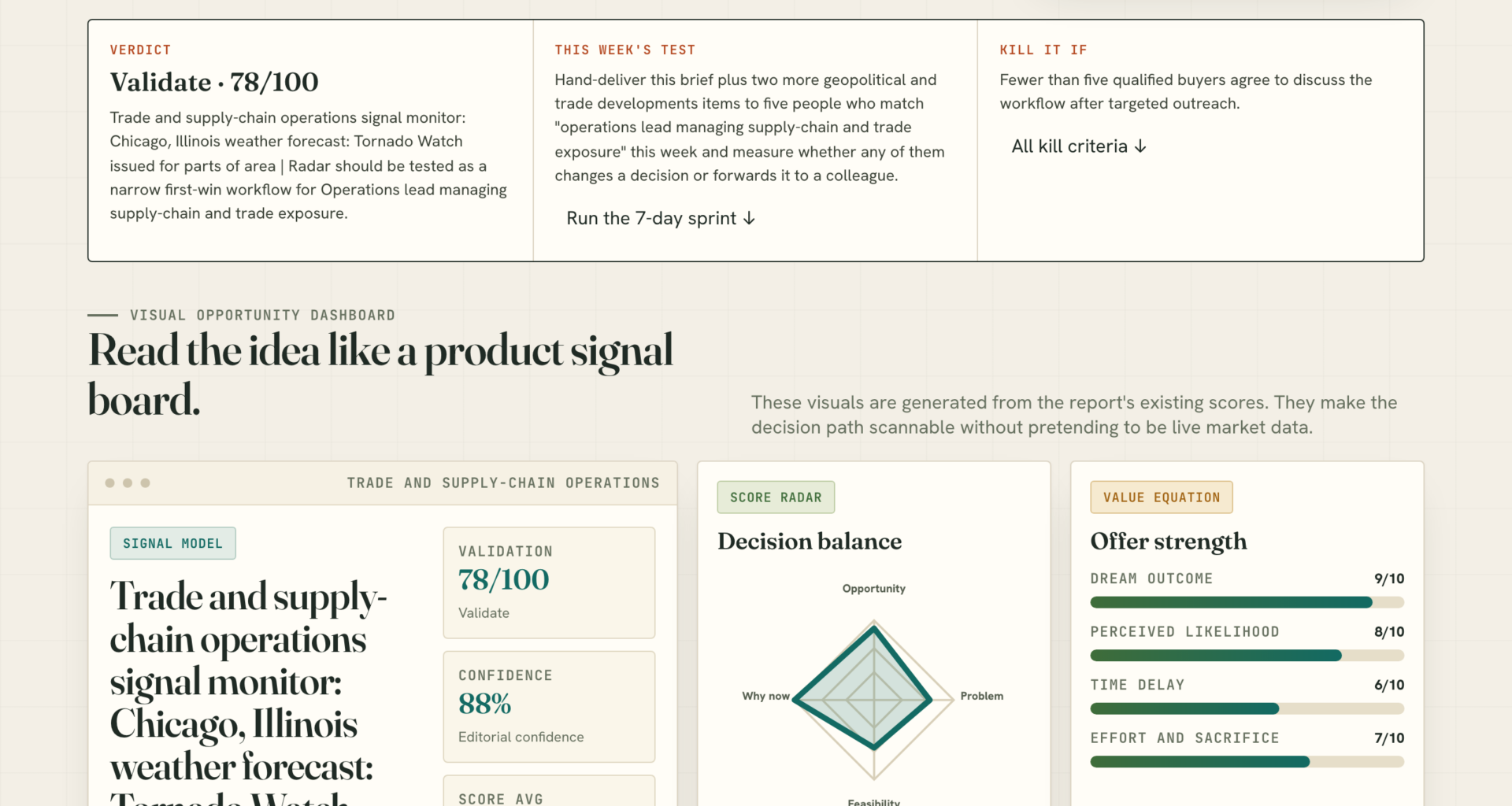

📊 Full opportunity report: Trade and supply-chain operations signal monitor: Chicago, Illinois weather forecast: Tornado Watch issued for parts of area | Radar on IdeaNavigator AI — validation score, market gap, and execution plan.

Get the latest gadgets delivered free — and shop member deals
- Fast, free delivery on millions of items
- Access to Prime Big Deal Days deals on October 6–7
- Prime Video, Amazon Music and more included
TL;DR

A tornado watch for parts of Chicago has been detected by supply-chain signal monitoring tools, emphasizing the need for real-time weather alerts for operations managers. The event underscores the importance of role-specific intelligence in trade and logistics.
An active tornado watch has been issued for parts of Chicago, Illinois, according to weather alerts, and has been flagged by a specialized supply-chain signal monitor aimed at operations managers overseeing trade exposure. This development directly impacts logistics planning and risk management for companies operating in the region, especially as supply-chain security becomes more critical.
The National Weather Service issued a tornado watch for several counties in the Chicago metropolitan area earlier today. This alert was detected by a dedicated trade and supply-chain operations signal monitor, which filters real-time weather alerts and geopolitical developments relevant to logistics managers. The monitor identified this event as a potential disruption point, prompting immediate review of technology operations signal monitoring and contingency plans.
According to the monitor, the tornado watch was issued at 10:30 AM local time and remains in effect. The system uses data from weather radar and official alerts to generate role-specific briefs for operations leads managing trade exposure, helping them respond swiftly to emerging hazards, as highlighted in technology operations signal monitoring. The alert emphasizes the importance of timely, filtered information in high-stakes supply-chain management.
Implications for Supply-Chain Risk Management During Weather Events
This development highlights the critical need for real-time, role-specific weather alerts in managing supply chain risks. For operations leaders, early detection of severe weather like tornado watches enables faster decision-making, such as rerouting shipments or activating contingency plans, reducing potential delays and losses. As trade and logistics are highly sensitive to weather disruptions, such targeted monitoring tools are becoming essential for maintaining resilience in volatile conditions.
real-time weather alert system for supply chain
As an affiliate, we earn on qualifying purchases.
As an affiliate, we earn on qualifying purchases.
Chicago Weather Alerts and Supply-Chain Monitoring Trends
Chicago, a major logistics hub, frequently experiences severe weather events that can disrupt transportation and trade flows. Traditionally, companies relied on general weather forecasts and weekly updates. However, recent advances in signal monitoring—using AI and real-time data filtering—allow for more precise alerts tailored to logistics operations. The current tornado watch aligns with a broader trend of integrating weather alerts into supply chain risk management systems, especially as geopolitical and climate-related disruptions increase.
“Our system filters official alerts and radar data to deliver actionable intelligence directly to operations teams, reducing information overload.”
— a weather monitoring system developer
As an affiliate, we earn on qualifying purchases.
Extent of Disruption and Response Measures Still Unclear
It is not yet confirmed how severely the tornado watch will impact specific supply routes or logistics operations in Chicago. The effectiveness of companies’ contingency plans and the precise timing of any disruptions remain to be seen as the weather situation develops.
supply chain risk management tools
As an affiliate, we earn on qualifying purchases.
As an affiliate, we earn on qualifying purchases.
Monitoring Weather Developments and Supply Chain Adjustments
Supply-chain managers will continue to monitor the weather alert and assess potential impacts on transportation routes. Companies are expected to activate contingency plans if the tornado watch escalates or if severe weather occurs. Further updates from weather agencies and supply-chain signal monitors are anticipated throughout the day.
As an affiliate, we earn on qualifying purchases.
Key Questions
How does the supply-chain signal monitor work?
The monitor uses AI algorithms to filter real-time weather alerts, radar data, and official notices, generating role-specific briefs for logistics and operations managers to aid quick decision-making.
What should companies do in response to a tornado watch?
Companies should review and activate contingency plans, reroute shipments if possible, and stay updated with official weather alerts to minimize disruptions.
Is this monitoring system standard across all logistics firms?
Most large logistics and supply-chain firms are adopting such role-specific alert systems, but implementation varies. This specific system is part of a growing trend toward AI-driven, real-time weather intelligence.
Could this alert lead to supply chain delays?
Potentially, if severe weather impacts transportation routes, but early alerts aim to mitigate delays through proactive planning.
Will the tornado watch necessarily lead to disruptions?
Not necessarily; it depends on the severity and progression of the weather event, as well as the response measures taken by logistics operators.
Source: IdeaNavigator AI
Fall Picks
fall essentials
As an affiliate, we earn on qualifying purchases.