📊 Full opportunity report: Enhancing Facility Operations With Phone-Photo Gauge Reading Technology on IdeaNavigator AI — validation score, market gap, and execution plan.

Get the latest gadgets delivered free — and shop member deals
- Fast, free delivery on millions of items
- Access to Prime Big Deal Days deals on October 6–7
- Prime Video, Amazon Music and more included
TL;DR

A new technology enables facility staff to photograph analog gauges with smartphones, allowing automated reading, error detection, and trend tracking. Pilot testing shows promising results for improving maintenance efficiency.
Industrial facilities are beginning to adopt phone-photo gauge reading technology to replace traditional clipboard-based rounds, aiming to improve data accuracy, reduce errors, and enable trend analysis without costly sensor retrofits. This development is currently being tested in pilot programs across multiple sites, with early results indicating significant potential for operational improvements.
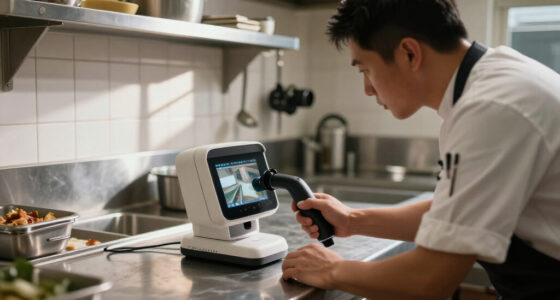
The new system involves technicians photographing analog gauges, sight glasses, and counters with their smartphones during routine rounds. An AI-powered app then automatically reads the gauge value, compares it against expected ranges, logs the data with timestamp and location, and flags anomalies immediately. This process replaces manual transcription, which is prone to errors and often results in data that is not easily analyzed or tracked over time.
According to an anonymous industry expert involved in the pilot, the technology leverages recent advances in vision models that reliably interpret analog dials and sight glasses from ordinary phone images. The pilot program is currently running parallel to traditional clipboard rounds at three facilities for a month, with plans to compare error rates and early anomaly detection capabilities. The goal is to validate whether this approach can deliver more accurate, timely, and actionable data for maintenance teams.
Potential Impact on Maintenance and Operations
This technology could significantly improve the accuracy of gauge readings, which are critical for early detection of equipment failures. By automating data collection and providing real-time anomaly alerts, it allows maintenance teams to address issues proactively, potentially reducing downtime and maintenance costs. Additionally, the digitized trend data creates a historical record that can inform predictive maintenance strategies, ultimately leading to more efficient facility operations.
Furthermore, this approach offers a cost-effective alternative to retrofitting legacy equipment with IoT sensors, which can be expensive and disruptive. Since the system works with existing analog gauges, facilities can adopt it without extensive infrastructure changes, making it accessible for a wide range of operations.
As an affiliate, we earn on qualifying purchases.
Legacy Equipment and the Need for Better Data Capture
Many industrial facilities rely on analog gauges for monitoring critical parameters such as pressure, temperature, and flow. Traditionally, staff perform manual rounds, transcribing readings onto paper logs that are stored and rarely analyzed systematically. This process is labor-intensive, error-prone, and often results in data that is not used effectively for maintenance planning.
Recent technological advances, particularly in computer vision, have made it feasible to interpret analog gauges from photographs reliably. This capability opens the door for a low-cost, scalable solution that transforms existing infrastructure into a source of continuous, accurate data. The pilot programs aim to validate whether this approach can deliver operational benefits comparable to or exceeding those of more invasive sensor installations.
As an affiliate, we earn on qualifying purchases.
Pending Validation and Broader Adoption Challenges
It is not yet clear how the system will perform across diverse facility types, gauge conditions, and lighting environments. The pilot program’s results are preliminary, and further testing is needed to confirm accuracy, reliability, and integration with existing maintenance workflows. Additionally, questions remain about scalability, data security, and user acceptance in broader deployment.
As an affiliate, we earn on qualifying purchases.
Next Steps in Pilot Testing and Evaluation
The pilot programs will continue for at least one month, with detailed analysis comparing error rates, anomaly detection timeliness, and overall operational impact against traditional methods. If results are favorable, facilities may adopt the system more widely, and vendors could develop commercial offerings. Further research will explore integration with maintenance management systems and potential enhancements such as batch photo processing and automated reporting.
As an affiliate, we earn on qualifying purchases.
Key Questions
How accurate is the phone-photo gauge reading technology?
Preliminary tests indicate high reliability, with vision models correctly reading gauges in controlled conditions. Further validation is ongoing to assess performance across various environments and gauge types.
Can this system replace all manual rounds?
Initially, the system is intended as a supplement or replacement for manual transcription of analog gauges. Broader replacement depends on further validation, integration, and user acceptance.
What are the cost implications for facilities?
The system offers a low-cost alternative to sensor retrofits, relying on existing analog gauges and smartphones. Subscription fees are expected to be tiered by gauge count, making it scalable for different facility sizes.
What are the main challenges for wider deployment?
Challenges include ensuring accuracy across diverse conditions, integrating with existing maintenance systems, data security concerns, and training staff to adopt the new workflow.
When might this technology become widely available?
If pilot results are positive, commercial deployment could occur within the next year, with broader adoption depending on validation outcomes and customer feedback.
Source: IdeaNavigator AI
Fall Picks
fall essentials
As an affiliate, we earn on qualifying purchases.