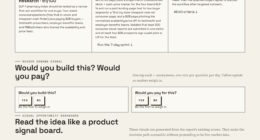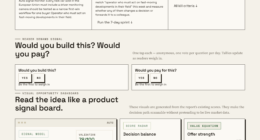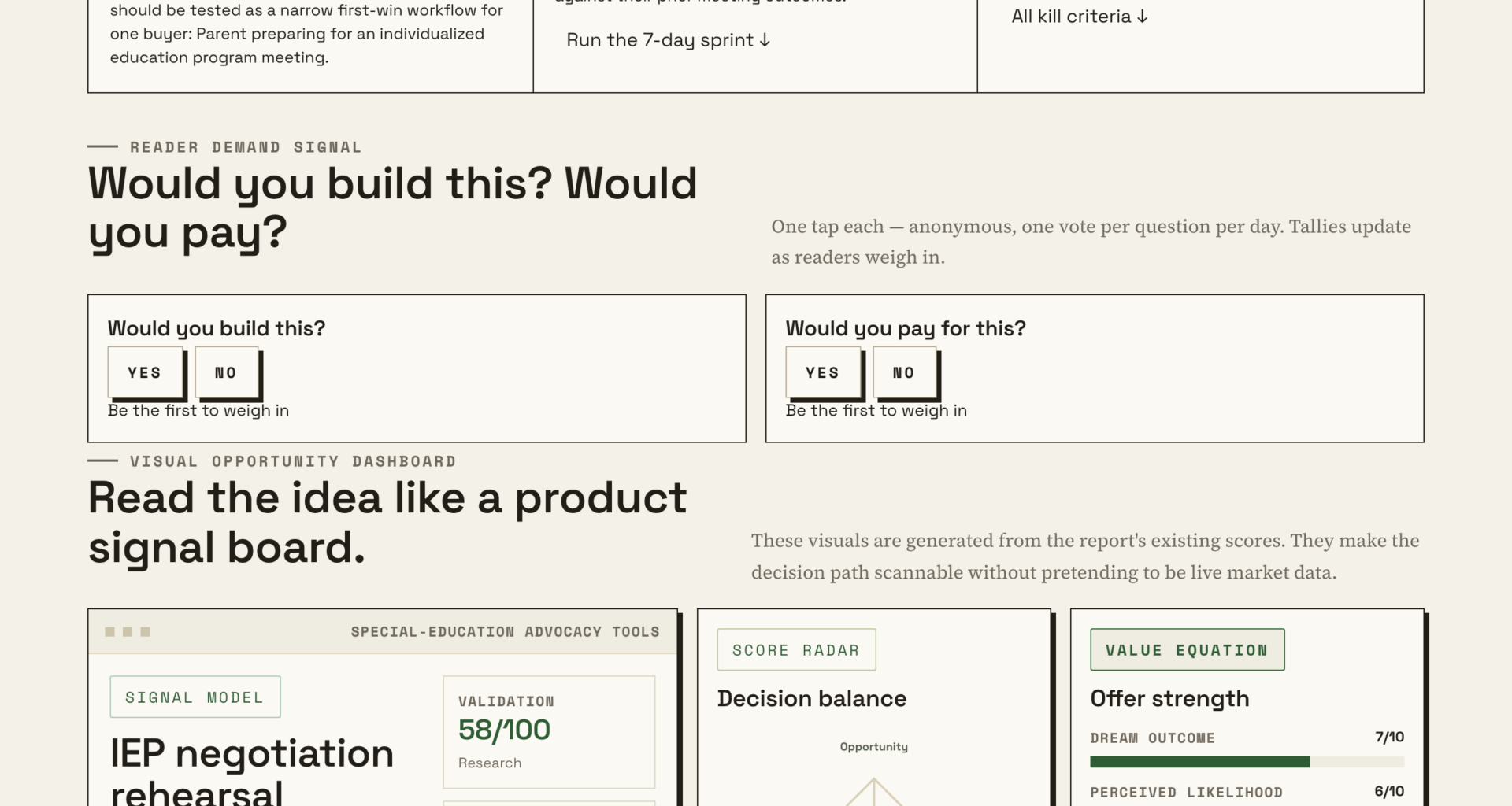

📊 Full opportunity report: How Simulation Helps Parents Speak Up In IEP Negotiations on IdeaNavigator AI — validation score, market gap, and execution plan.

Get the latest gadgets delivered free — and shop member deals
- Fast, free delivery on millions of items
- Access to Prime Big Deal Days deals on October 6–7
- Prime Video, Amazon Music and more included
TL;DR
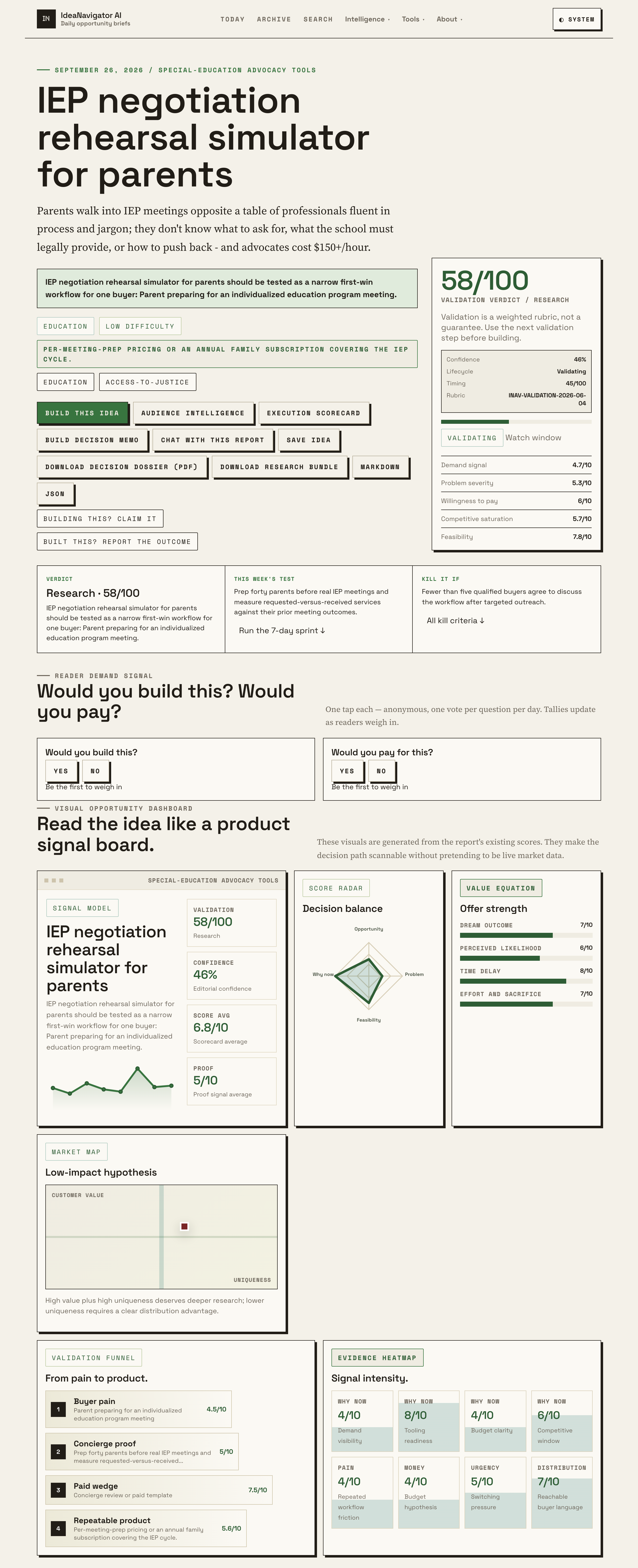
IdeaNavigator AI describes a proposed simulator that would help parents review IEP documents, prepare service requests and rehearse meetings with simulated school responses. The proposal does not report a launched product, a completed parent study or evidence that rehearsal improves services received.
IdeaNavigator AI has proposed an AI role-play simulator to help parents prepare for individualized education program (IEP) meetings, where families discuss a student’s special education services with school staff. The concept would turn a child’s existing IEP and evaluation reports into plain-language explanations, suggested requests and practice conversations, but the proposal does not report a finished product or evidence of its effectiveness.
The proposed tool is aimed at a specific point in the IEP process: a parent preparing for a meeting. A family would upload the current IEP and evaluation reports. The simulator would explain the documents in everyday language, generate a list of possible requests with legal grounding, and let the parent practice responding to realistic pushback in a simulated meeting. The proposal does not specify which laws or jurisdictions the tool would cover, how it would check its legal explanations, or what safeguards would apply to sensitive student records.
IdeaNavigator AI frames the need around an imbalance between parents and school professionals who may be more familiar with meeting procedures and special education terminology. It also points to the cost of hiring an advocate, citing rates of $150 or more per hour. Those points are part of the proposal’s case for the product; it provides no survey, market study or other supporting data on how many families face these circumstances or how commonly they hire advocates.
The proposed business model would charge per meeting preparation or offer an annual family subscription covering an IEP cycle. To test the idea, the proposal suggests preparing 40 parents before real IEP meetings and comparing the services they request and receive with outcomes from their earlier meetings. That is a suggested validation plan, not a completed trial. No participant recruitment, comparison method, results or independent evaluation are reported.
Preparation Before the IEP Meeting
If built and tested, a rehearsal tool could give parents a structured way to review documents and practice explaining what they want before sitting down with school staff. It could allow parents to prepare questions and responses for discussions involving unfamiliar terms and procedures. The proposal offers no evidence that users would obtain more services, reach agreement more often or report less stress.
IEP meetings help determine the special education supports a student will receive. The proposal suggests that preparation could affect how families discuss a child’s educational needs with school staff. A software-generated request list does not establish what a particular student is entitled to, and role-play cannot predict how a school team will respond. The tool’s usefulness would depend on the accuracy of its explanations and how well they apply to each family’s circumstances.
The proposal outlines per-meeting fees or an annual subscription covering an IEP cycle, but gives no prices, eligibility rules or plans for free access. Without those details, the cost relative to other forms of support and the product’s accessibility to families unable to pay for private advocacy cannot be assessed.
A Proposal, Not a Product Launch
The concept comes from IdeaNavigator AI’s description of a potential product in the special education advocacy tools market. It calls for a narrow initial use: preparing one buyer, a parent, for one event, an IEP meeting. The suggested feature sequence moves from reviewing a child’s existing records to preparing requests and then practicing a conversation. The material describes what to build; it does not establish that those features have been developed or made available to families.
The proposal says recent progress in large language models makes realistic role-play possible, and argues that rising special education identification rates and tighter district resources may make meetings more difficult. It does not provide dates, statistics or named studies for those claims, so their scale and connection to demand for a simulator are not established here. The product concept rests on the expectation that simulated conversation can help a parent prepare; whether families find the exchanges realistic enough to be useful remains untested.
Its suggested 40-parent study would compare requested and received services with each participant’s prior meeting outcomes. That comparison could offer an early signal, but the proposal does not explain how it would account for differences between students, meetings, schools or the services requested. It also does not describe a comparison group or how researchers would measure preparation, accuracy or family experience. Those details matter before results could support a broad claim about the tool’s effect.
Accuracy, Privacy and Test Design
No product, trial or outcome data are reported. It is unclear whether IdeaNavigator AI plans to build the simulator, when it might become available, or whether any parents or schools have tested a prototype. The proposed 40-parent exercise is a validation idea; there is no reported enrollment or finding to assess.
Several design questions remain open. The proposal does not say how the simulator would keep legal explanations current, distinguish general information from advice about an individual case, or handle disagreements between its suggestions and a family’s understanding of a student’s needs. It also gives no information about data storage, access, deletion or protection for uploaded evaluations and IEPs, which may contain sensitive information about children.
It is also unknown whether simulated pushback would reflect the range of real school meetings, or whether parents would find the tool accessible and helpful across different languages, disabilities and levels of familiarity with the process. The proposal provides no independent review, user feedback or evidence comparing the suggested service requests with what schools ultimately provide.
Evidence Needed Before Wider Use
The next stated step is to prepare 40 parents for actual IEP meetings and compare requested and received services with each family’s prior meeting outcomes. Before that could show whether the simulator helps, a study would need to explain how it selects participants, measures outcomes and accounts for differences among students and meetings. The proposal does not give a schedule or say that recruitment has begun.
Any further development would also need to clarify the tool’s legal coverage, document-handling practices, pricing and limits. For families considering such a product, the current information describes a proposed workflow rather than an available service with demonstrated results. Whether the idea proceeds, and what evidence its test produces, remains unknown.
Source: IdeaNavigator AI
Key Questions
Is the IEP simulator available now?
The proposal describes a product concept. It does not report a launch, prototype or date when families could use it.
What would the proposed tool do?
Parents would upload an existing IEP and evaluation reports. The proposed simulator would explain the documents in plain language, suggest requests with legal grounding and provide role-play practice for a meeting.
Has it been shown to improve services?
No results are reported. IdeaNavigator AI suggests testing the concept with 40 parents and comparing requested and received services with their prior meeting outcomes.
How much would it cost?
No price is given. The proposed models are a fee for each meeting preparation or an annual family subscription.
Source: IdeaNavigator AI
Fall Picks
fall essentials
As an affiliate, we earn on qualifying purchases.