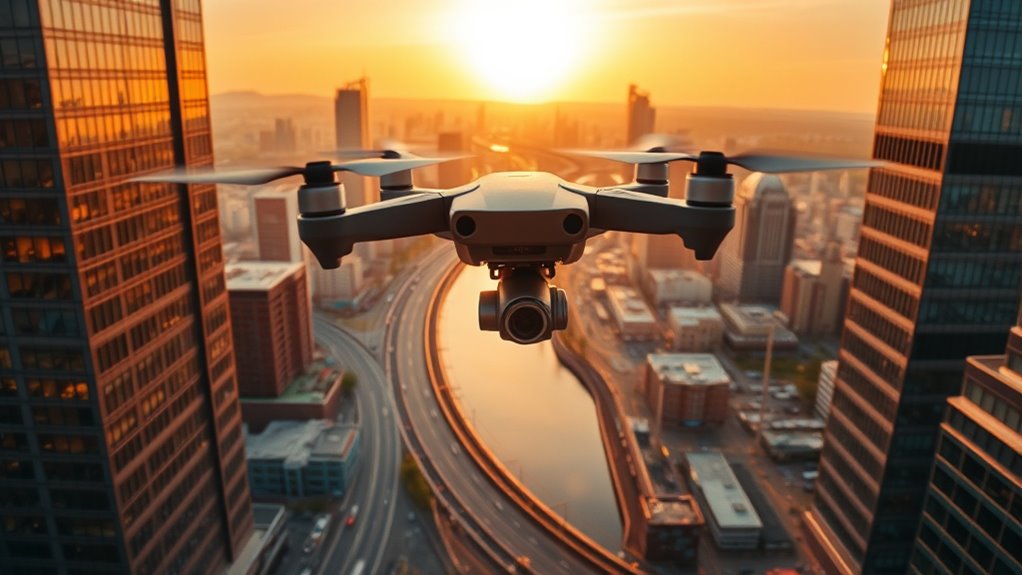

Cinematic FPV drones let you capture breathtaking, one-take shots with incredible agility and control, transforming your footage into immersive visual stories. By mastering safety protocols and regular maintenance, you can push creative boundaries while minimizing risks. These drones enable smooth, dynamic shots that traditional cameras can’t achieve, delivering breathtaking visuals effortlessly. Focusing on proper prep, safety, and care guarantees your flights are smooth and reliable. Keep exploring to learn how to maximize your FPV drone’s cinematic potential.
Key Takeaways
- Master precise flying techniques and smooth camera movements to capture seamless, one-take cinematic shots.
- Prioritize safety by conducting thorough pre-flight checks and using protective gear to prevent accidents.
- Maintain and inspect drone equipment regularly to ensure reliability and high-quality footage during complex shots.
- Plan complex flight paths in advance, considering obstacles and timing to execute flawless, uninterrupted takes.
- Practice and develop piloting skills to confidently perform dynamic, breathtaking shots in a single continuous flight.
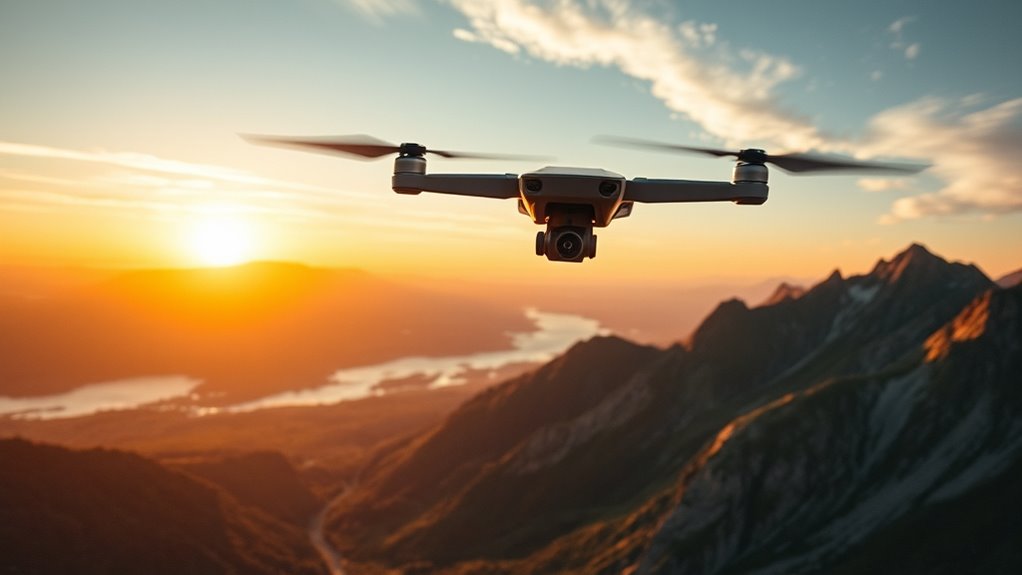
Cinematic FPV has revolutionized drone filmmaking by allowing pilots to capture breathtaking, immersive footage with unprecedented agility and control. With this technology, you can execute smooth, dynamic shots that were once nearly impossible, transforming ordinary scenes into captivating visual stories. However, to truly harness the potential of FPV drones, you need to prioritize drone safety and equipment maintenance. These elements are essential for ensuring your flights are not only spectacular but also safe and reliable.
Cinematic FPV transforms drone filmmaking by enabling immersive, dynamic shots—prioritize safety and maintenance for reliable, breathtaking results.
When flying FPV drones, safety should always come first. You’re pushing your craft to its limits, which increases the risk of crashes or accidents. Before each flight, double-check your surroundings—look out for people, obstacles, and restricted zones. Always wear protective gear, especially goggles, to stay aware of your drone’s movements and avoid any surprises. Remember, a responsible pilot minimizes risks for themselves and others, preserving the integrity of your equipment and the reputation of FPV filmmaking. Incorporating proper safety procedures can significantly reduce the chance of mishaps during your flights.
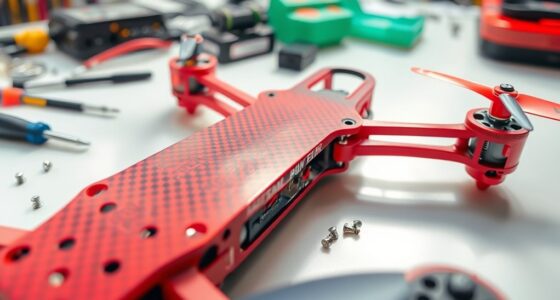
Equipment maintenance is equally indispensable. FPV drones are complex machines with many moving parts, and neglecting regular care can lead to malfunctions mid-flight. Keep your motors, propellers, and batteries in top condition by inspecting them before every shoot. Clean your camera lens and check for firmware updates to guarantee peak performance. Proper maintenance not only prolongs the lifespan of your gear but also guarantees precise control during those tight, one-take shots. A well-maintained drone responds better to your commands, resulting in smoother footage and fewer disruptions.
Balancing safety and maintenance is key to mastering cinematic FPV. As you refine your skills, you’ll find that meticulous preparation pays off. Learning to troubleshoot common issues, like battery drain or motor overheating, helps you avoid surprises that could ruin a shot or cause damage. Incorporate routine safety checks into your pre-flight routine, and always fly within your skill level and legal boundaries. This approach minimizes risks and maximizes your creative potential.
Ultimately, your success with cinematic FPV hinges on your commitment to safety and equipment care. When you respect these principles, you can focus entirely on executing those jaw-dropping, one-take shots that captivate audiences. With the right mindset and diligent maintenance, you’ll unlock the full power of FPV drones, pushing the boundaries of what’s possible in aerial filmmaking.
Frequently Asked Questions
What Are the Best Drones for Cinematic FPV Filming?
You should consider drones like the DJI FPV Combo or the iFlight Nazgul5 for cinematic FPV filming. They offer impressive image quality and stability, perfect for one-take shots. Keep in mind, their drone battery life varies, so plan your shots accordingly. Also, be aware of propeller noise, which can affect audio quality. These drones strike a good balance between performance and quiet operation for cinematic footage.
How Do You Plan a One-Take FPV Shot Effectively?
Imagine your shot as a dance—smooth, planned, and precise. Start with storyboarding techniques to map your movements and visualize the flow. Then, do thorough location scouting to identify obstacles and ideal routes. Practice rehearsals help refine your timing and camera angles, ensuring a seamless execution. By combining detailed planning with on-site prep, you’ll capture stunning, fluid one-take FPV shots that feel both natural and cinematic.
What Safety Precautions Are Necessary When Flying Cinematic FPV Drones?
When flying cinematic FPV drones, you need to conduct a thorough risk assessment before each flight to identify potential hazards. Always have emergency procedures in place, like quick landings or safe shutdowns, in case something goes wrong. Keep your environment clear of bystanders, wear protective gear, and check your equipment regularly. Staying vigilant and prepared minimizes risks, ensuring safe and breathtaking shots every time.
How Do You Achieve Smooth, Cinematic Footage With FPV Drones?
Perfectly panning and progressing, you prioritize precise flight planning and camera stabilization. Start by mapping out your route, practicing smooth, steady movements, and minimizing abrupt turns. Use gimbals or electronic stabilization to keep footage fluid. Fly deliberately, maintaining calm, controlled control inputs. With patience, focus, and proper planning, your footage transforms into a stunning, seamless saga of cinematic splendor, capturing emotion and energy in every elegant motion.
What Editing Techniques Enhance FPV Drone Footage?
To enhance your FPV drone footage, focus on color grading to establish mood and consistency, making your shots pop. Use motion stabilization during editing to smooth out any jitters or abrupt movements, creating a more cinematic feel. Combining these techniques helps your footage look polished and professional, drawing viewers into the breathtaking perspectives you capture. Don’t forget to experiment with contrast and saturation for even more impactful visuals.
Conclusion
So, next time you’re stuck watching endless drone footage, just remember: with FPV drones, you’re basically getting a Hollywood blockbuster in your backyard. Who needs steady cams or expensive rigs when a tiny drone can replicate the magic? Just don’t be surprised if, after witnessing these breathtaking shots, you start eyeing your ceiling fan as your new camera crew. Because, really, why settle for normal when you can have cinematic chaos in one take?