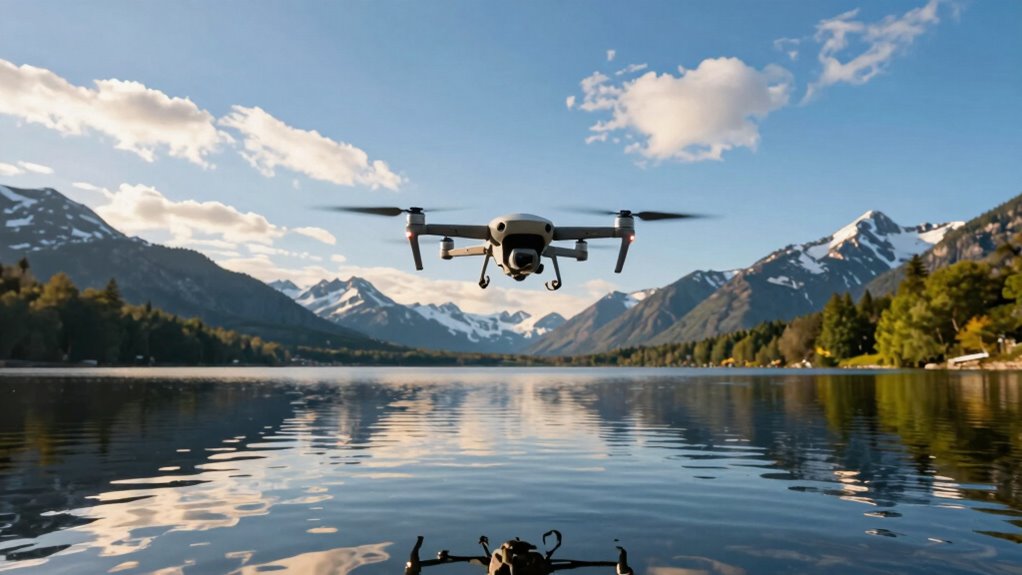
Even in perfect weather, unseen wind turbulence and subtle air currents can cause your drone to drift or become unstable, ruining smooth footage. Clear conditions don’t guarantee calm air—gusts and swirling currents can appear unexpectedly. Proper calibration of sensors and awareness of your environment are essential to maintain stability. Ignoring these factors can lead to frustrating flights, even when the sky looks clear. Keep exploring how to master these hidden challenges for better drone performance.
Key Takeaways
- Even in clear weather, wind turbulence can cause drone instability and affect footage quality.
- Perfect weather does not guarantee stable flight due to unseen air currents and environmental factors.
- Proper calibration of sensors and IMUs is essential for maintaining stability in calm conditions.
- External structures and terrain can influence drone behavior despite ideal weather.
- Awareness of environmental conditions and regular calibration improve safety and flight performance.
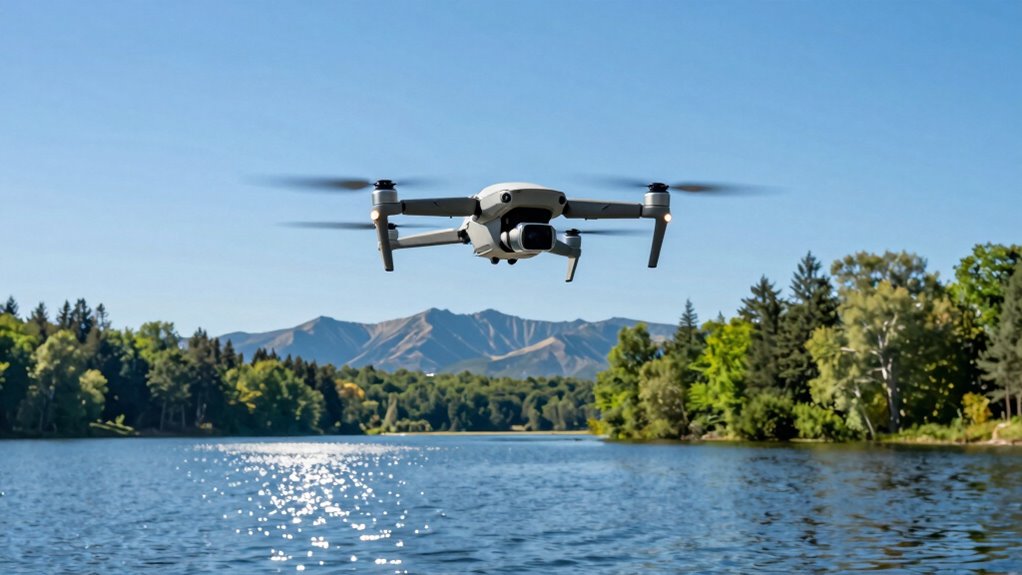
Have you ever thought that flying a drone in perfect weather guarantees flawless footage and smooth flights? It’s a common assumption, but the reality is a bit more nuanced. Even on clear, sunny days with little to no visible wind, subtle factors can disrupt your flight and compromise your footage. One of the main culprits is wind turbulence. It might seem calm on the ground, but just a few feet above, gusts can swirl unpredictably. These invisible air currents can cause sudden shifts or instability, making your drone jerk or drift unexpectedly. If you’re not prepared, wind turbulence can turn what seems like ideal conditions into a frustrating experience, especially if you’re aiming for smooth, cinematic shots.
Even perfect weather can’t guarantee smooth drone footage—hidden wind turbulence can cause unexpected instability.
Beyond the weather itself, equipment calibration plays a critical role in how well your drone performs, even on perfect days. Proper calibration ensures your drone’s sensors, IMUs (Inertial Measurement Units), and compass are aligned correctly. Without this, your drone might not respond accurately to your controls, leading to erratic movements or difficulty maintaining stable hover. Calibration is a step many pilots overlook, but it’s essential for optimal performance. Even slight misalignments can be amplified by wind turbulence or minor air disturbances, causing instability. Before every flight, take the time to calibrate your drone’s compass and IMUs according to the manufacturer’s instructions. This step will help your drone interpret its environment correctly and respond smoothly, reducing the risk of drift or unintended movements. Additionally, understanding how wind turbulence impacts your drone can help you better anticipate and mitigate these issues during flight. Being aware of other environmental factors, such as nearby structures or terrain, can also influence your flight stability unexpectedly. Recognizing how sensor calibration can improve your drone’s response is crucial, especially when facing subtle disturbances. Furthermore, regularly checking your drone’s GPS stability can help prevent drifting caused by weak signals or interference, ensuring your drone stays precisely where you want it.

Drone Cleaning Kit for DJI, Holy Stone, Scoot, FPV Drone, Hobby RC Quadcopters Multirotors – with Spray Cleaner for Screen Lens
【Comprehensive Cleaning Solution】: Our cleaning kit is meticulously designed to address every cleaning pain point of your drone….
As an affiliate, we earn on qualifying purchases.
As an affiliate, we earn on qualifying purchases.
Frequently Asked Questions
How Do Different Drone Models Perform in Ideal Weather Conditions?
You’ll find that different drone models perform well in ideal weather conditions, but their wind resistance and camera stability vary. High-end drones usually handle wind better and maintain camera stability, giving you smooth footage. Budget models may struggle with even slight breezes, affecting flight and video quality. So, choose a drone with strong wind resistance and excellent camera stability if you want reliable performance in perfect weather conditions.
What Advanced Safety Features Are Available for Drones in Perfect Weather?
In perfect weather, advanced safety features like obstacle avoidance, GPS-based return-to-home, and automated flight path adjustments are common. These features help you maintain visual clarity and minimize risks caused by weather-related maintenance issues. You can rely on sensors and real-time data to navigate safely, ensuring your drone stays stable and secure. Always keep an eye on weather conditions, even in ideal settings, to maximize safety and performance.
Can Flying in Perfect Weather Improve Drone Battery Life?
Absolutely, flying in perfect weather boosts your drone’s battery efficiency by reducing stress on its power system. Stable weather conditions minimize turbulence and wind, allowing your drone to operate smoothly. With less effort needed to stabilize, your drone conserves energy, prolonging flight time. So, clear skies and calm conditions not only create stunning shots but also help your drone’s battery last longer, making your flying experience more efficient and enjoyable.
Are There Legal Restrictions for Flying Drones in Ideal Weather?
Yes, there are legal restrictions even in ideal weather. You need to guarantee legal compliance by checking local regulations, which often require flight permissions for certain areas or altitudes. Always verify if you need permits or approvals before flying your drone, especially in public or restricted zones. Ignoring these rules can lead to fines or confiscation, so stay informed about the specific laws governing drone flight in your location.
How Does Perfect Weather Impact Drone Signal Strength and Control?
Like Icarus soaring too close to the sun, in perfect weather, your drone’s signal strength and control usually improve. However, even in calm conditions, wind interference can subtly shake your control, and signal interference from nearby electronics or infrastructure might still cause disruptions. While clear skies boost visibility, don’t forget that external factors can still affect your drone’s responsiveness, so stay vigilant and keep an eye on your signal quality.

6-in-1 Drone Obstacle Course Kit with Carry Bag – 6 Shapes Multi-Configuration FPV Racing Gates, Wind-Resistant Ground Stakes, Training Set for RC Quads & Micro Drones (3-Size Set)
【6-in-1 Versatile Drone Obstacle Course Kit】 Elevate your outdoor flight training! Our modular system allows you to build…
As an affiliate, we earn on qualifying purchases.
As an affiliate, we earn on qualifying purchases.
Conclusion
But remember, even on the clearest day, unseen forces can catch you off guard. As you navigate the skies with confidence, a sudden gust or a subtle shift in wind can turn your perfect flight into chaos. Stay alert, keep your eyes on the horizon, and never underestimate nature’s unpredictable power. Because in drone flying, the calm before the storm is often just a fleeting illusion—are you prepared for what’s lurking just out of sight?

The Anatomy of a Drone: Sensors, Signal and Stability
As an affiliate, we earn on qualifying purchases.
As an affiliate, we earn on qualifying purchases.

VFAN GPS Repeater Signal Booster Amplifier Signal Strength Active Antenna for Car/Trucks/Indoor Use, Gain 30 dB, with Magnetic Base and Waterproof
A GPS repeater system provides live and stronger satellite signals while under cover,roof or indoors.( eg: Yacht, Aircraft…
As an affiliate, we earn on qualifying purchases.
As an affiliate, we earn on qualifying purchases.