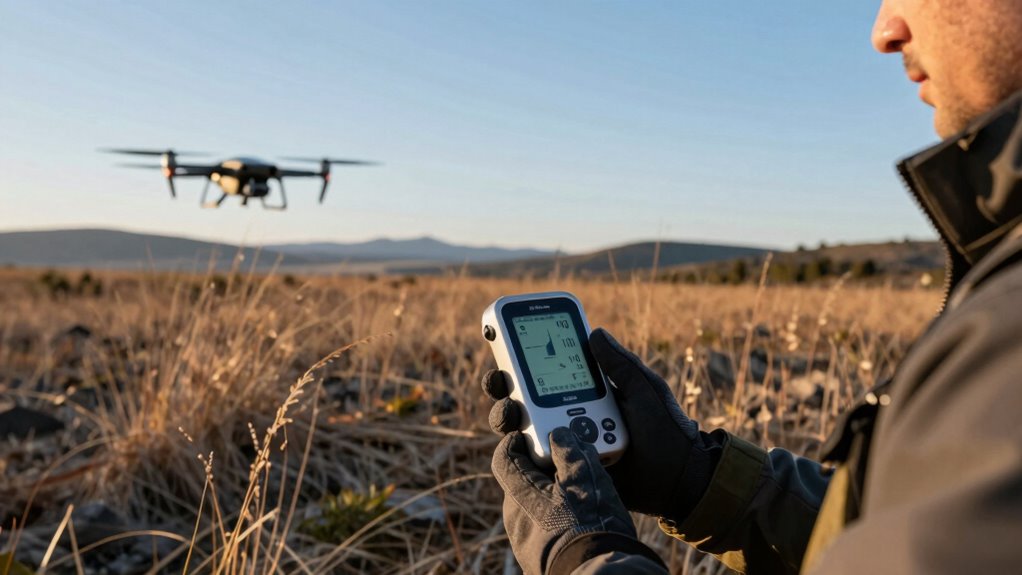
Wind meters help you make better drone flying decisions by providing real-time airflow data about wind speed, turbulence, and wind shear. With this information, you can judge safe flying conditions, avoid turbulence-prone areas, and adjust your flight plan accordingly. Knowing how wind behaves allows you to stay in control and prevent crashes. If you want to learn more about how wind meters enhance your flight safety and efficiency, keep exploring the details below.

Get the latest gadgets delivered free — and shop member deals
- Fast, free delivery on millions of items
- Access to Prime Big Deal Days deals on October 6–7
- Prime Video, Amazon Music and more included
Key Takeaways
- Wind meters provide real-time data on wind speed, aiding pilots in assessing flight safety conditions.
- They help detect turbulence and airflow irregularities that could impact drone stability.
- Monitoring wind patterns enables pilots to anticipate and avoid risky wind shear situations.
- Accurate wind measurements inform adjustments to flight plans for safer navigation.
- Using wind meters enhances decision-making during takeoff, flight, and landing in variable environmental conditions.
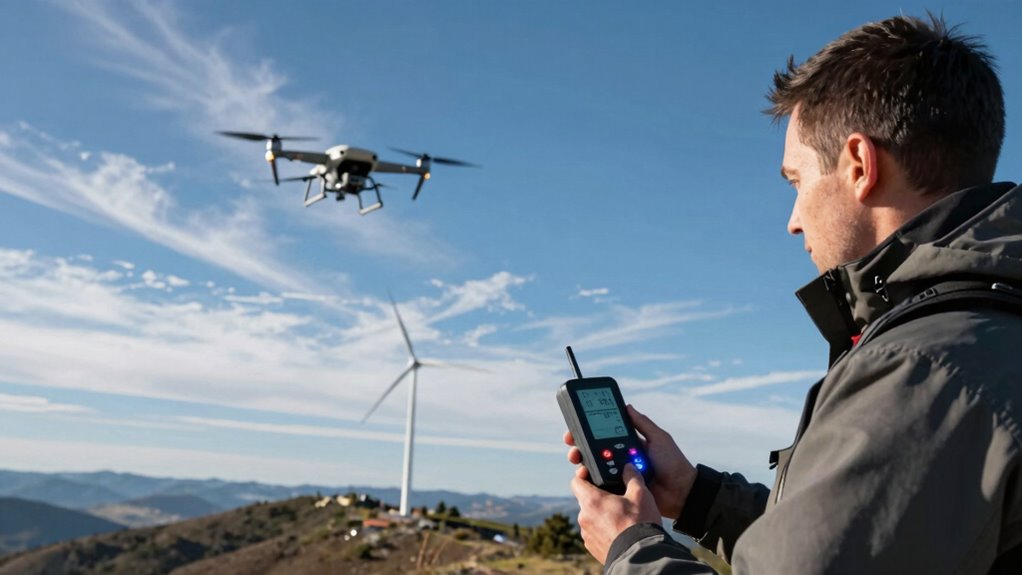
Ever wondered how to guarantee safe and precise drone flights in windy conditions? It all comes down to understanding wind speed and turbulence effects. As a drone pilot, you need to be aware of how these factors influence your flight. Wind speed measures how fast the air is moving, and this directly impacts your drone’s stability and control. Higher wind speeds can cause your drone to drift off course, make it harder to maintain altitude, or even lead to crashes. Knowing the current wind speed allows you to decide if conditions are safe for flying or if you should postpone your mission.
Turbulence effects add another layer of complexity. Even if wind speed seems manageable, turbulent air can create unpredictable movements for your drone. Turbulence is caused by irregular air currents, often due to obstacles like buildings, trees, or terrain variations. It can create sudden jolts or shakes, making precise navigation difficult. When turbulence is present, your drone’s sensors and stabilization systems work overtime to keep it steady, but excessive turbulence can overwhelm these systems, leading to jerky movements or loss of control. Recognizing turbulence effects early helps you adapt your flight plan accordingly. Monitoring airflow patterns with wind meters can further improve your ability to anticipate turbulence and make safer decisions. Being aware of turbulence effects in real time enhances your ability to respond swiftly to changing conditions, ensuring safer flights. Additionally, understanding how airflow dynamics impact drone stability allows you to better interpret wind meter readings and plan your flights more effectively. Recognizing wind shear can help prevent sudden loss of control during rapid changes in wind speed or direction.
A thorough understanding of wind behavior can also help you develop more accurate flight strategies tailored to specific environments.
handheld wind meter for drone flying
As an affiliate, we earn on qualifying purchases.
As an affiliate, we earn on qualifying purchases.
Frequently Asked Questions
How Accurate Are Different Types of Wind Meters for Drone Flight?
Different types of wind meters vary in measurement accuracy for drone flight. Anemometers like cup or vane models typically offer reliable wind speed readings within a few percent error, making them quite accurate. Ultrasonic wind meters provide even higher precision, often within 1-2% of actual wind speed. However, portable handheld units might have slightly less accuracy, so choosing a high-quality wind meter depends on your need for precise measurement accuracy to guarantee safe drone operation.
Can Wind Meters Detect Sudden Gusts or Only Steady Wind?
Wind meters can detect sudden gusts, especially if they have gust detection features designed for high wind variability. These devices measure real-time wind speed changes, alerting you to unexpected gusts that could affect your drone’s stability. While steady wind readings are reliable, gust detection helps you anticipate sudden wind shifts, allowing you to make safer flight decisions. This is essential for maintaining control during unpredictable weather conditions.
How Often Should Drone Pilots Calibrate Their Wind Meters?
You should calibrate your wind meter regularly, ideally before each flight or at least once a week, to guarantee accurate readings. Calibration frequency depends on your weather adaptability and how often you use the device. If you operate in variable conditions or in different environments, more frequent calibration helps maintain precision. Consistent calibration ensures your wind meter provides reliable data, aiding safer drone operation and better decision-making in changing weather conditions.
Are Wind Meters Suitable for All Drone Sizes and Weights?
Wind meters are suitable for most drone sizes and weights, but you should consider device compatibility and wind speed comparison. Larger drones may need more robust, precise meters, while smaller ones can use compact models. Always check if the wind meter matches your drone’s specifications and flying conditions. By comparing wind speeds accurately, you’ll make smarter decisions, regardless of your drone’s size, ensuring safer, more effective flights.
Do Wind Meters Work Effectively in All Weather Conditions?
Wind meters generally work well across various weather patterns, but their effectiveness can be limited in extreme conditions like heavy rain, snow, or storms. Weather can impact the accuracy of readings, so you should check if your equipment is durable enough to withstand harsh elements. In challenging weather, consider additional protective gear or alternative methods to guarantee reliable wind measurements, which are essential for safe drone operation.
ultrasonic anemometer for drone pilots
As an affiliate, we earn on qualifying purchases.
As an affiliate, we earn on qualifying purchases.
Conclusion
By using wind meters, you’ll unleash superpowers that let you conquer the wildest skies. Imagine flying with the precision of a hawk and dodging gusts like a storm chaser—your drone becomes an unstoppable force of nature! Don’t let unpredictable winds sabotage your mission. With a wind meter, you’ll make smarter decisions, avoid crashes, and elevate your flying game to legendary status. Get one today and turn the sky into your personal playground!
portable wind speed meter for drones
As an affiliate, we earn on qualifying purchases.
As an affiliate, we earn on qualifying purchases.
drone wind shear detection device
As an affiliate, we earn on qualifying purchases.
As an affiliate, we earn on qualifying purchases.
Fall Picks
fall essentials
As an affiliate, we earn on qualifying purchases.