
Airspace awareness means you actively understand your environment, such as your position, other aircraft, weather, and ATC instructions, helping you navigate safely. Airspace confidence, on the other hand, comes from familiarity, experience, and trust in your skills and instruments, allowing you to make quick, decisive actions. While awareness builds your foundational knowledge, confidence enables you to act effectively on that knowledge. To deepen your understanding of how both work together, keep exploring.

Get the latest gadgets delivered free with Prime
- Fast, free delivery on millions of items
- Prime Video, Amazon Music and more included
- Member-only deals all year
Key Takeaways
- Airspace awareness involves understanding and interpreting the environment, while airspace confidence is about trusting one’s skills and decisions within that environment.
- Awareness is foundational, providing situational knowledge; confidence is the assurance to act effectively based on that knowledge.
- Developing awareness requires active observation and education; confidence grows through experience and familiarity with procedures.
- Safety protocols support both awareness and confidence by guiding systematic responses and reinforcing decision-making skills.
- Strong awareness enables confident decision-making, ultimately leading to safer and more effective flying experiences.
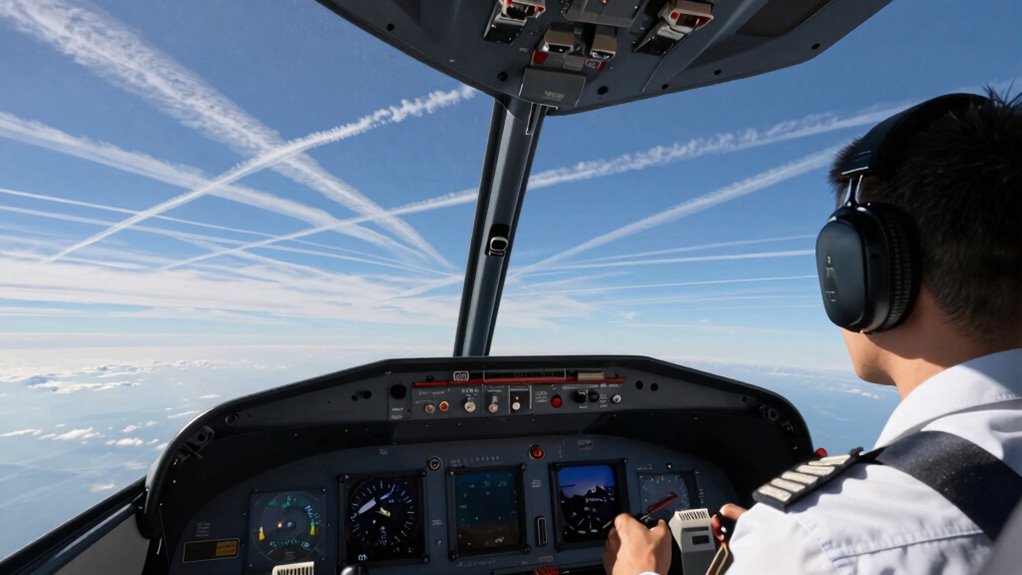
Understanding the airspace around you is essential for safe and confident flying. When you’re navigating through different layers of airspace, awareness isn’t just about knowing where you are; it’s about actively understanding how your position relates to other aircraft, weather patterns, and air traffic control instructions. To do this effectively, you need strong navigation strategies that keep you oriented and precise. These strategies involve constantly scanning your instruments, visual cues, and communicating clearly with ATC to stay on course. At the same time, safety protocols serve as your backbone, guiding your decisions and actions to prevent accidents or misunderstandings. When you combine effective navigation strategies with strict adherence to safety protocols, you develop a solid foundation for understanding your environment in the airspace.
Effective airspace navigation combines constant awareness, clear communication, and strict safety protocols for confident, safe flying.
Airspace awareness is about your knowledge of the environment — recognizing restricted zones, understanding the different classes of airspace, and maintaining situational awareness at all times. You keep track of your altitude, heading, and position relative to other aircraft, which helps you anticipate potential conflicts or hazards. This awareness requires you to be alert and proactive, constantly updating your mental picture of the airspace around you. situational awareness is a critical component that enhances your ability to interpret and respond to dynamic conditions in real-time. Gaining this awareness also depends on your ability to interpret various signals and cues, which can be improved through consistent practice and education. On the other hand, airspace confidence stems from your ability to act decisively and comfortably within that environment. Confidence grows as you gain experience, become familiar with standard procedures, and trust your skills and instruments. When you’re confident, you’re more likely to make quick, correct decisions, especially during unexpected situations, such as sudden weather changes or traffic conflicts. Developing that confidence also depends on your airspace knowledge, which gives you the necessary context to make informed decisions. Building this knowledge can be supported by continuous training and staying updated on regulations and procedures.
To bridge the gap between awareness and confidence, you need to apply well-practiced safety protocols. These protocols serve as a safety net, ensuring you handle each situation methodically and systematically. For example, maintaining proper lookout procedures, following established altitude and route clearances, and communicating promptly with air traffic control all contribute to your sense of control and security. As you develop your awareness, these protocols reinforce your confidence, making you more comfortable in managing complex airspace scenarios. Regularly reviewing your procedures helps reinforce your safety protocols and ensures that your responses remain instinctive during high-pressure situations.
Ultimately, awareness and confidence are interdependent: awareness provides the foundation of knowledge, while confidence allows you to act effectively on that knowledge. By honing your navigation strategies and consistently applying safety protocols, you cultivate both. This balanced approach helps you fly more safely, reduces stress, and enhances your overall flying experience. As you advance, you’ll find that your understanding of the airspace deepens, and your confidence grows naturally from your increased awareness — empowering you to handle diverse flying situations with competence and assurance.
As an affiliate, we earn on qualifying purchases.
Frequently Asked Questions
How Does Airspace Awareness Impact Overall Flight Safety?
Airspace awareness directly impacts your overall flight safety by enhancing your airspace navigation skills and pilot situational awareness. When you’re aware of other aircraft, weather conditions, and airspace restrictions, you make better decisions and avoid potential conflicts. This proactive approach reduces the risk of accidents, guarantees smoother flight operations, and keeps everyone safe. Staying alert and informed helps you respond effectively to changing conditions, maintaining safe separation and control.
What Training Enhances Airspace Confidence for Pilots?
You can enhance your airspace confidence through targeted training that focuses on visual cues and mental exercises. Practice interpreting visual cues like aircraft positions, weather patterns, and navigational aids regularly. Incorporate mental exercises such as scenario-based training and visualization techniques to strengthen decision-making skills. These methods build your confidence by improving your ability to assess, respond, and adapt quickly in various airspace situations, ultimately making you a safer, more assured pilot.
Can Airspace Awareness Prevent Mid-Air Collisions?
Yes, airspace awareness can help prevent mid-air collisions. When you maintain altitude awareness and follow proper communication protocols, you stay informed about nearby aircraft positions and intentions. This vigilance allows you to adjust your course proactively and avoid conflicts. Consistently monitoring your surroundings and communicating clearly with other pilots creates a safer environment, reducing the risk of mid-air collisions.
How Do Technology Tools Improve Airspace Confidence?
Technology tools improve your airspace confidence by providing real-time tracking and enhancing situational analysis. With real-time tracking, you can instantly see other aircraft’s positions, reducing uncertainty. Advanced systems analyze this data, helping you make informed decisions quickly. This continuous flow of accurate information boosts your confidence in steering safely, making you more prepared for potential hazards. Ultimately, these tools foster a sense of control and assurance during flight operations.
What Are Common Challenges in Maintaining Airspace Awareness?
You face challenges like airspace congestion, which makes it harder to keep track of nearby aircraft, and pilot distraction, diverting attention from essential situational awareness. These issues can cause you to miss critical updates or misjudge distances, increasing risk. Staying alert, managing workload, and utilizing real-time technology tools help you maintain better airspace awareness despite these hurdles. Regular training and clear communication also support your ability to stay aware in busy skies.
airspace awareness training tools
As an affiliate, we earn on qualifying purchases.
As an affiliate, we earn on qualifying purchases.
Conclusion
So, next time you’re soaring through the skies, remember: awareness keeps you alert, while confidence makes you feel invincible. Ironically, it’s awareness that truly keeps you safe—yet many mistake confidence for competence. You might think you’re flying high because you feel unbeatable, but without awareness, that confidence can turn into a crash. Stay grounded in knowledge, and let awareness be your wings, not just your ego’s illusion of control.
As an affiliate, we earn on qualifying purchases.
air traffic control communication headset
As an affiliate, we earn on qualifying purchases.
As an affiliate, we earn on qualifying purchases.
Halloween Picks
halloween
As an affiliate, we earn on qualifying purchases.