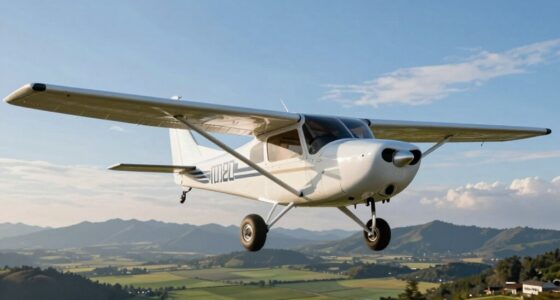

Wind direction impacts your aircraft’s performance more than you might think. It influences takeoff and landing conditions, with headwinds helping lift and reduce distance, while tailwinds have the opposite effect. Crosswinds require precise control to stay on course. Knowing the wind’s origin helps you anticipate turbulence, wind shear, and safety issues near terrain. Understanding these factors can improve your flying safety and efficiency—if you keep exploring, you’ll discover even more about managing winds effectively.

Get the latest gadgets delivered free with Prime
- Fast, free delivery on millions of items
- Prime Video, Amazon Music and more included
- Member-only deals all year
Key Takeaways
- Wind direction influences lift and drag, directly affecting takeoff and landing distances.
- It determines the effectiveness of control inputs during crosswind and headwind conditions.
- Accurate wind direction assessment helps pilots select optimal approach and departure routes.
- Changes in wind direction can cause turbulence and wind shear, impacting flight stability.
- Understanding wind origin aids in predicting weather patterns and ensuring safer flight operations.

Understanding wind direction is vital for pilots because it directly impacts takeoffs, landings, and overall aircraft control. Wind direction influences your aircraft’s performance in several ways, especially during critical phases of flight. When you know exactly where the wind is coming from, you can better anticipate how it will affect your aircraft’s behavior and make the necessary adjustments to ensure safety and efficiency. Meteorological impacts, such as turbulence, wind shear, and crosswinds, are closely tied to wind direction. These factors can significantly alter your aircraft’s response, making a clear understanding of wind patterns essential for smooth operations.
Your aircraft’s performance during takeoff and landing hinges on accurate wind assessments. If the wind blows directly down the runway, you’ll experience a boost in lift during takeoff, allowing you to become airborne sooner. Conversely, a headwind increases your groundspeed, giving you more control and stability. On the other hand, a tailwind can extend your takeoff distance, potentially compromising safety. During landing, a headwind reduces your ground speed, enabling a shorter, safer rollout. A tailwind, however, can cause you to overshoot the runway or make the landing more challenging. Crosswinds, coming from the side, introduce a different set of difficulties, requiring you to apply control inputs to counteract the lateral force. Knowing the wind direction helps you choose the right runway and approach path, optimizing aircraft performance and minimizing risks.
Accurate wind assessment is crucial for safe takeoffs and landings, influencing aircraft control and runway choice.
Meteorological impacts related to wind are often unpredictable, making real-time assessment critical. Wind shear—sudden changes in wind speed or direction—can occur unexpectedly, especially near weather fronts or thunderstorms. This phenomenon can cause sudden altitude loss or gain, impacting your aircraft’s stability. Turbulence, often caused by varying wind patterns, can make flying uncomfortable and potentially hazardous, especially during descent or approach. By constantly monitoring wind direction and speed, you can anticipate these meteorological impacts and adapt your flight plan accordingly. Recognizing the importance of wind pattern analysis can significantly improve flight safety by helping pilots make more informed decisions. Additionally, understanding local topographical effects on wind flow can help pilots better predict wind behavior near specific terrain features, further enhancing safety and control during flight. Being aware of weather changes and their impact on wind can also help in planning diversions or alternate routes when necessary, further supporting safety. Incorporating real-time weather data into decision-making processes can help mitigate unforeseen hazards and ensure smoother operations. This proactive approach minimizes surprises and enhances your ability to maintain control, ensuring safer flights.
As an affiliate, we earn on qualifying purchases.
Frequently Asked Questions
How Does Wind Direction Affect Takeoff and Landing Procedures?
You need to take into account wind direction carefully during takeoff and landing because it impacts safety and control. Crosswinds can push the aircraft sideways, requiring precise handling, while wind shear can cause sudden speed or altitude changes. If the wind shifts unexpectedly, it becomes more challenging to maintain on-course alignment. Understanding wind direction helps you choose the best runway, adjust your approach, and execute safer takeoff and landing procedures.
Can Wind Shifts Unexpectedly Change During a Flight?
Yes, wind shifts can unexpectedly occur during a flight due to wind shear and gust variability. These sudden changes in wind direction and speed can impact your aircraft’s stability and control, especially during critical phases like descent or approach. You must stay alert, monitor weather reports, and communicate with air traffic control to adapt quickly. Being prepared for unexpected wind shifts helps guarantee a safer, smoother flight.
How Do Pilots Determine the Best Approach Considering Wind?
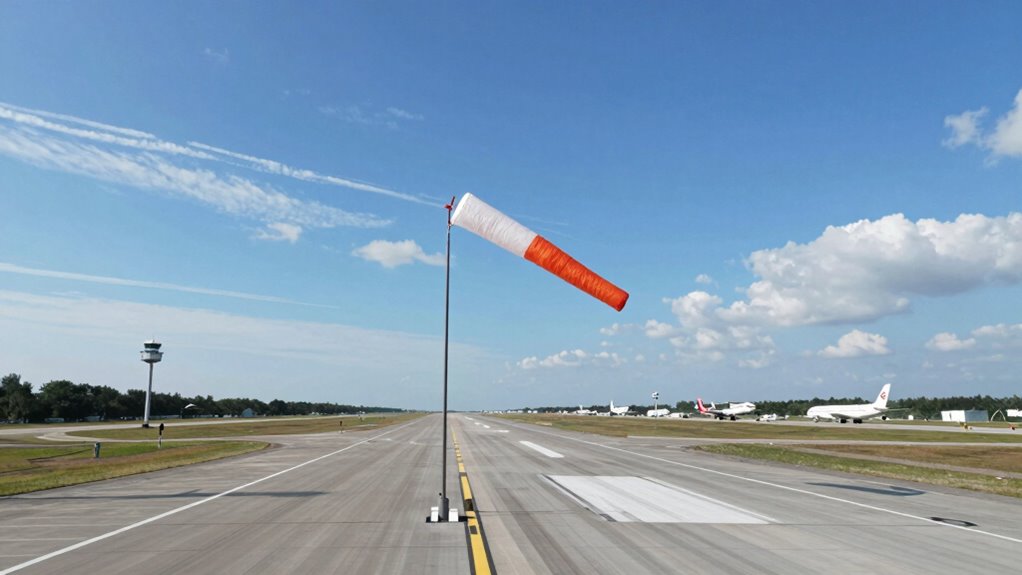
Think of your approach as steering a river’s twist and turn. You determine the best path by analyzing wind shear and crosswind effects with weather reports, windock observations, and onboard instruments. You adjust your angle and speed to counteract shifting winds, ensuring a smooth landing. By staying alert to changing wind conditions, you keep your approach steady, safe, and on course, no matter how the wind tries to sway you.
What Tools Do Pilots Use to Measure Wind Direction Accurately?
You use wind sensors and weather charts to measure wind direction accurately. Wind sensors on aircraft or ground stations provide real-time data, helping you assess the current conditions. Weather charts display forecasted wind patterns, giving you a broader view of upcoming changes. Combining these tools allows you to plan your approach precisely, ensuring safety and efficiency by accounting for wind direction during your flight.
How Does Wind Direction Impact Aircraft Performance in Different Weather Conditions?
Wind direction directly impacts your aircraft’s performance, especially during takeoff and landing. When wind shear occurs, sudden changes in wind direction and speed can destabilize your plane, making control difficult. Crosswind limits are vital; exceeding them can cause runway drift or loss of control. Understanding wind direction helps you anticipate these issues, adjust approach angles, and guarantee safe operations, particularly in adverse weather conditions.
As an affiliate, we earn on qualifying purchases.
Conclusion
So, next time you’re up in the cockpit, remember—it’s not just about the speed or the altitude. That tricky wind direction? It’s the silent boss, quietly dictating your every move. Ironically, what seems minor can be the difference between smooth sailing and a scramble for control. Don’t overlook it; after all, the wind’s direction isn’t just a detail—it’s the master puppeteer behind your flight’s success or failure. Stay aware, stay safe.
As an affiliate, we earn on qualifying purchases.
As an affiliate, we earn on qualifying purchases.
Fall Picks
fall essentials
As an affiliate, we earn on qualifying purchases.