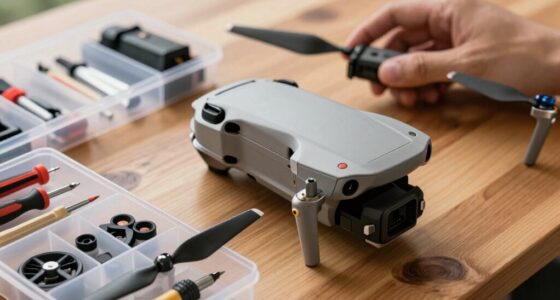

You might overlook faded paint, flickering lights, or loose parts as minor issues, but they’re signs your props need attention. Watch for uneven lighting, strange shadows, or unstable set pieces, which suggest wiring or structural problems. Small cracks or wobbling parts can worsen if ignored, risking safety and scene quality. Regular inspections catch these issues early, saving you time and money. Keep an eye out—there’s more to uncover to keep your set safe and convincing.
Play games included with Prime
Start a Prime free trial and play with Amazon Luna on your devices.
As an affiliate, we earn on qualifying purchases.
Key Takeaways
- Watch for subtle lighting inconsistencies like flickering or uneven glow around props.
- Inspect for tiny cracks, chips, or loose parts indicating structural damage.
- Check for wobbling or misfitting components that suggest wear or damage.
- Notice any strange shadows or odd lighting effects that reveal faulty wiring or connections.
- Conduct regular safety checks to catch hidden wear, tear, or deterioration before issues worsen.

Have you ever noticed how props on stage or in a film can make or break a scene? They’re often the subtle details that bring a story to life, but their importance can be overlooked until something goes wrong. When props aren’t properly maintained, it can lead to lighting issues or even structural damage, both of which can compromise safety and the overall quality of your production. Recognizing the signs early ensures you address problems before they escalate.
One of the easiest-to-miss signs is inconsistent or poor lighting around props. If a prop isn’t properly illuminated, it might seem out of place or unconvincing, affecting the scene’s realism. Sometimes, this issue stems from faulty wiring or loose connections that cause flickering or dimming. These are often subtle at first, like a slight shadow or uneven glow, but over time, they become more noticeable and distracting. If you notice that certain props cast strange shadows or seem oddly lit, it’s probably time to check the lighting setup and connections. Addressing these issues promptly can prevent larger problems and keep the scene visually consistent.
Poor lighting on props can break immersion; check wiring and connections to prevent distractions and maintain scene realism.
Structural damage is another critical, yet easily overlooked, sign that a prop needs attention. Cracks, chips, or loose parts on set pieces or hand props might seem minor at first, but they can indicate deeper issues. Structural damage not only impacts the visual integrity but also poses safety risks—props can collapse or break unexpectedly, potentially harming performers or crew. Pay close attention to the stability of larger set pieces, especially those that are frequently handled or moved. If you notice wobbling, cracks, or parts that aren’t fitting together as they should, it’s essential to repair or reinforce them quickly. Ignoring these signs can result in more extensive damage, increased repair costs, or accidents on set. Proper inspection and maintenance of props and set pieces can help prevent these hazards from developing into serious safety concerns. Additionally, regular maintenance checks can reveal wear and tear that might otherwise go unnoticed until it becomes a problem. Being proactive about maintenance can also extend the lifespan of your props, saving time and money in the long run. Regularly inspecting your props for signs of deterioration is a vital part of preventive maintenance, which helps ensure safety and longevity. Remember that even small issues with props can escalate if left unaddressed, emphasizing the importance of routine evaluations.
Additionally, look out for signs of wear and tear that affect usability. Handles that are loose, moving parts that don’t function smoothly, or surfaces that have become rough or splintered can all indicate that a prop needs maintenance. These issues might not be immediately obvious in the heat of a scene, but they can quickly become problematic if not addressed.
stage prop lighting inspection tools
As an affiliate, we earn on qualifying purchases.
As an affiliate, we earn on qualifying purchases.
Frequently Asked Questions
How Often Should Props Be Inspected for Damage?
You should inspect your props for damage at least once a week, especially before and after each use. During this time, focus on prop cleaning and damage assessment to catch any cracks, chips, or loose parts early. Regular inspections help prevent accidents and prolong prop lifespan. If you notice any damage, repair or replace the prop immediately to guarantee safety and maintain the quality of your production.
Can Weather Affect the Longevity of Props?
Weather can chip away at your props like an aggressive sculptor, substantially impacting their longevity. Climate effects such as rain, sun, and humidity cause wear and tear, weakening materials over time. Exposure to harsh elements accelerates deterioration, so you should regularly check and maintain props exposed to outdoor weather. Protecting your props from extreme weather conditions ensures they stay in good shape longer and continue to impress your audience.
What Are Quick Fixes for Minor Prop Damages?
To fix minor prop damages quickly, start with prop cleaning to remove dirt and debris, which helps assess the damage more clearly. Use appropriate repair kits or glue based on the material, ensuring proper material selection for durability. For small cracks or chips, apply a quick-setting filler or adhesive, then sand or smooth the surface. These steps keep your props in shape and ready for the show without extensive downtime.
Are There Safety Standards for Prop Maintenance?
Yes, there are safety standards for prop maintenance. You should follow historical safety guidelines to guarantee your props meet industry benchmarks, and verify material compliance to prevent hazards. Regular inspections and adhering to these standards help you avoid accidents and ensure safe use. By staying updated on safety regulations and maintaining proper documentation, you can keep your props in excellent condition and protect everyone on set or stage.
How Do I Prevent Props From Deteriorating Over Time?
Did you know that improper storage can cause props to deteriorate by up to 40% faster? To prevent this, focus on material preservation and use proper storage techniques. Keep props in a climate-controlled environment, away from direct sunlight and moisture. Regularly inspect and clean them, and consider using protective coverings. These steps help maintain their integrity, ensuring your props stay in top condition longer.
As an affiliate, we earn on qualifying purchases.
Conclusion
Just like a garden needs careful tending to flourish, your props require regular attention to stay vibrant and effective. Ignoring the signs of wear is like letting weeds take over a once-beautiful landscape—quietly choking out its potential. When you nurture your props, you’re cultivating a stage where everything blooms in harmony. Stay vigilant, tend to the signs early, and watch your production flourish as gracefully as a well-tended garden in full bloom.
set piece structural repair supplies
As an affiliate, we earn on qualifying purchases.
As an affiliate, we earn on qualifying purchases.
lighting wiring tester for props
As an affiliate, we earn on qualifying purchases.
As an affiliate, we earn on qualifying purchases.
Fall Picks
fall essentials
As an affiliate, we earn on qualifying purchases.