
A healthy drone battery routine involves fully charging your battery before use and then flying until it automatically shuts off. Afterward, recharge to full capacity without interruption and calibrate periodically, especially after updates or storage. Properly store batteries at around 50% in a cool, dry place, inspecting for damage and swelling. Regularly monitor and maintain your batteries to extend their lifespan. Keep these habits in mind, and you’ll learn more about keeping your drone flying safely and efficiently.

Get the latest gadgets delivered free — and shop member deals
- Fast, free delivery on millions of items
- Access to Prime Big Deal Days deals on October 6–7
- Prime Video, Amazon Music and more included
Key Takeaways
- Fully charge the battery to 100% before each flight and drain it during use until the drone shuts off automatically.
- Store batteries at around 50% charge in a cool, dry place, checking and recharging periodically.
- Regularly inspect batteries for damage, swelling, or wear before use or storage.
- Recalibrate the battery periodically, especially after updates or long storage periods.
- Replace batteries showing signs of damage or capacity loss to maintain safety and performance.
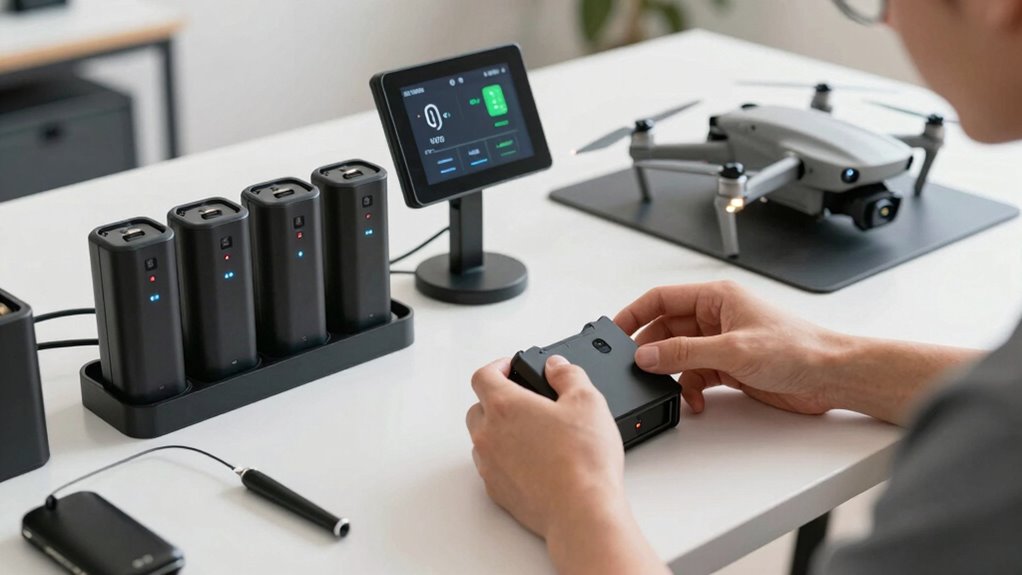
Maintaining your drone’s battery routine is essential for ensuring ideal performance and longevity. A healthy drone battery starts with understanding proper battery calibration. Regular calibration helps your drone’s internal sensors accurately report the remaining charge, preventing unexpected power loss mid-flight. To calibrate, fully charge your battery to 100%, then use your drone until it automatically shuts off due to low power. After this, recharge it to full capacity without interruption. Doing this process periodically, especially after updates or prolonged storage, ensures your battery’s readings stay precise, which translates into safer and more reliable flights.
Additionally, battery calibration is most effective when combined with proper storage practices, as both help maintain overall health and performance. Equally important are storage best practices that help preserve your battery’s health over time. If you’re not planning to fly for an extended period, avoid leaving your drone battery fully charged or completely drained. Instead, aim to store it at around 50% charge, which minimizes stress on the cells and reduces capacity loss. Keep the battery in a cool, dry place, away from direct sunlight and extreme temperatures, as heat accelerates chemical aging. A dedicated storage container or a protective case can shield your battery from physical damage and environmental factors. Regularly check the stored battery’s charge level and recharge it to the optimal storage level if it drops significantly, typically every few months, to keep the cells balanced. Incorporating battery monitoring can help you detect early signs of degradation and plan timely replacements, ultimately extending your drone’s effective lifespan. Proper battery maintenance also involves inspecting the battery for any visible damage or swelling before storage and use, as damage can compromise safety and performance.
It’s also beneficial to stay informed about battery health by monitoring the overall condition of your batteries over time, which can help you detect potential issues early.
As an affiliate, we earn on qualifying purchases.
Frequently Asked Questions
How Often Should I Fully Discharge and Recharge My Drone Battery?
You should fully discharge and recharge your drone battery about once a month to maintain ideal battery lifespan. Avoid doing this too often, as frequent deep discharges can harm the battery. Focus on consistent charging habits, like keeping the battery between 20% and 80%, and only doing full discharges when necessary for calibration. This routine helps extend your drone’s battery lifespan and guarantees reliable performance during flights.
Can I Leave My Drone Battery Charging Overnight?
You shouldn’t leave your drone battery charging overnight. Battery maintenance and charging tips suggest unplugging once it reaches full capacity to prevent overcharging, which can reduce battery life. Keep an eye on the charging process, avoid leaving it unattended for long periods, and always use the recommended charger. By following these steps, you’ll preserve your battery’s health, guarantee safety, and extend your drone’s overall performance.
What Is the Ideal Storage Temperature for Drone Batteries?
You should store your drone batteries at a temperature between 40°F and 70°F (4°C to 21°C) for proper storage safety. This range helps maintain battery chemistry stability and prevents degradation. Avoid exposing batteries to extreme heat or cold, as it can damage the cells and reduce lifespan. Keeping batteries in a cool, dry place ensures they stay in good condition and perform reliably when you need them.
How Do I Know When My Drone Battery Is Degraded?
You’ll know your drone battery is degraded when it holds less charge, drains quickly, or takes longer to charge than usual. Keep an eye on your battery’s lifespan, as it naturally shortens over time. Poor charging habits, like overcharging or frequent deep discharges, accelerate degradation. Regularly monitor performance, and if you notice significant drops, it’s time to think about replacing your battery to guarantee safe and suitable drone operation.
Should I Calibrate My Drone Battery Regularly?
Think of calibrating your drone battery as tuning a fine instrument—you guarantee it performs at its best. You should calibrate regularly to maximize battery lifespan and maintain accurate readings. This process helps optimize charging safety, preventing overcharging or undercharging. By doing so, you keep your drone’s power source in harmony, avoiding sudden drops and extending its life. Regular calibration is a simple step to keep your drone flying smoothly and safely.
As an affiliate, we earn on qualifying purchases.
Conclusion
By following a healthy drone battery routine, you guarantee your flights are smooth and reliable. Think of your batteries as delicate plants—they need careful watering and proper sunlight. Neglecting this care is like leaving a plant in the dark, risking withering. When you prioritize regular charging, storage, and inspections, your drone’s performance blossoms. A well-maintained battery isn’t just a tool; it’s the heartbeat of safe, enjoyable flights—bright, resilient, and ready to soar.
As an affiliate, we earn on qualifying purchases.
As an affiliate, we earn on qualifying purchases.
Fall Picks
fall essentials
As an affiliate, we earn on qualifying purchases.