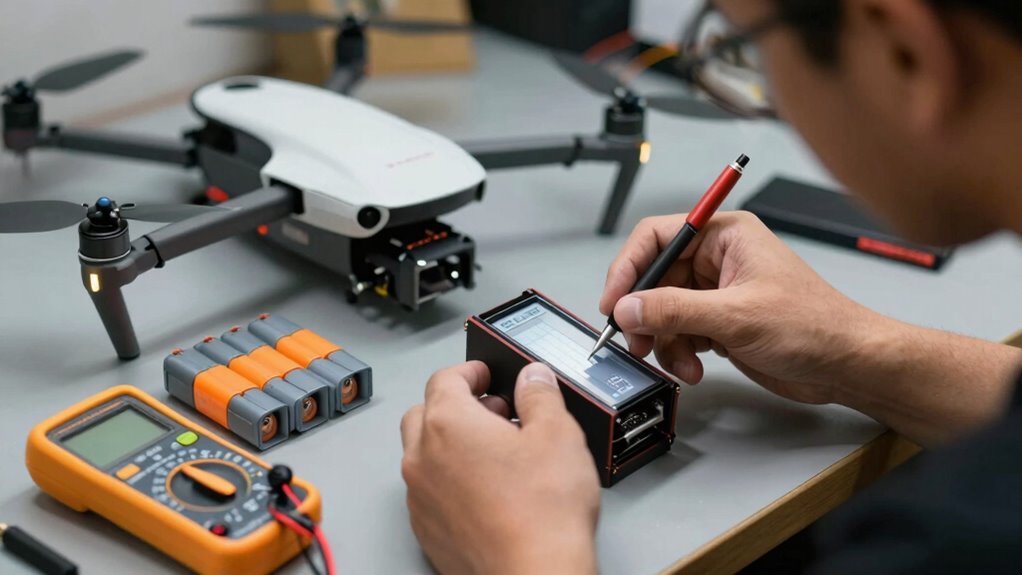

To build a better battery management routine, keep your drone batteries charged between 20% and 80%, using smart chargers designed for your battery type. Develop a consistent routine, avoiding deep discharges and monitoring performance regularly. Store batteries at room temperature and around 50% charge during long-term storage. Conduct routine inspections for damage or leaks, and handle batteries carefully to prevent safety issues. If you continue, you’ll discover more tips to optimize battery longevity and safety.

Get the latest gadgets delivered free — and shop member deals
- Fast, free delivery on millions of items
- Access to Prime Big Deal Days deals on October 6–7
- Prime Video, Amazon Music and more included
Key Takeaways
- Develop a consistent charging schedule, maintaining batteries between 20% and 80% to prolong lifespan.
- Regularly inspect batteries for damage, swelling, or leaks, and stop use if abnormalities are found.
- Store batteries at room temperature and around 50% charge for optimal long-term preservation.
- Use smart chargers with safety features and avoid overcharging or deep discharges.
- Monitor battery performance and temperature to prevent chemical degradation and ensure safe operation.
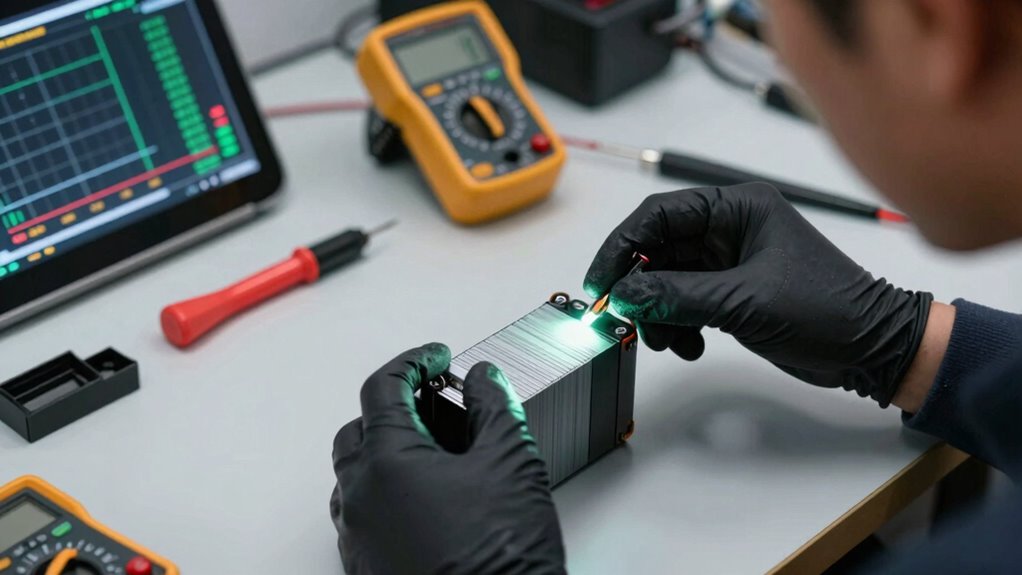
Effective battery management is essential for maximizing your drone’s performance and lifespan. When you pay close attention to how you handle your drone’s battery, you guarantee it stays reliable and delivers optimal power when you need it most. One of the most critical aspects of this is understanding how to extend your battery’s lifespan. Batteries naturally degrade over time, but proper care can substantially slow this process. To do that, you need to adopt effective charging protocols that prevent unnecessary stress on the battery. Avoid leaving your battery fully drained or constantly charging it to 100%, as both extremes can shorten its overall lifespan. Instead, aim to keep your battery charge between 20% and 80%, which reduces wear and tear. Using a charger specifically designed for your drone’s battery type also helps maintain its health because it delivers the correct voltage and current, preventing overcharging or overheating.
Developing a consistent charging routine is vital. Always charge your batteries with a quality charger that offers smart charging features, and avoid using generic or incompatible chargers. When you’re finished flying, unplug the battery promptly once it’s fully charged, and don’t leave it plugged in for extended periods. Overcharging can cause thermal stress and accelerate capacity loss. Similarly, avoiding deep discharges is important; never let your battery completely run out of power before recharging. Instead, recharge it at the first signs of low power, ensuring you don’t push the battery to a critical level that can damage its cells. Additionally, understanding the importance of battery chemistry helps you choose the right maintenance practices for your specific battery type. Being aware of your battery’s performance characteristics allows you to adapt your routine to better suit its needs and avoid common pitfalls. Regularly monitoring battery health and understanding chemical stability can further improve your routine and ensure safety. Recognizing the impact of temperature on battery performance is also crucial, as it can significantly influence the longevity of your batteries.
Charge your drone batteries with quality, smart chargers, unplug promptly, and avoid deep discharges for optimal longevity.
Temperature management also plays an important role in preserving your battery’s health. Charging and storing batteries at room temperature—ideally between 20°C and 25°C—helps prevent thermal stress. Avoid exposing batteries to extreme heat or cold, as this can cause chemical changes inside the cells, reducing their ability to hold a charge. Keeping batteries in a proper storage environment is essential for maintaining their capacity over time. If you’re not flying for a while, store your batteries in a cool, dry place and keep them at a partial charge—around 50%—to prevent capacity loss during downtime. Finally, maintain a routine that involves periodic checkups of your batteries, inspecting for any swelling, leaks, or corrosion. If you notice any abnormalities, stop using the battery immediately. Incorporating these practices into your drone routine not only maximizes your battery’s lifespan but also guarantees safer, more reliable flights. By following proper charging protocols and being mindful of how you handle your batteries, you extend their usability and get the most out of each charge, making your drone flying experience more enjoyable and efficient.
As an affiliate, we earn on qualifying purchases.
Frequently Asked Questions
How Often Should Drone Batteries Be Calibrated?
You should calibrate your drone batteries after every 20-30 charging cycles or if you notice inconsistent flight times. During calibration, fully charge and then fully discharge the battery to guarantee accurate voltage readings. Regular battery calibration helps maintain peak performance and extends battery lifespan. Keep an eye on your drone’s battery health, and calibrate as needed to avoid unexpected power loss during flights.
What Are the Signs of a Failing Drone Battery?
If your drone’s battery starts acting like a drama queen, you’re likely noticing signs of failure. Watch out for rapid power drops, swelling, or inconsistent flight times—these are red flags. Poor charging habits and overuse shorten battery lifespan, making failure more imminent. When your drone struggles to hold a charge or suddenly shuts down mid-flight, it’s time to replace that tired battery before it crashes spectacularly.
Can Temperature Fluctuations Damage Drone Batteries?
Yes, temperature fluctuations can damage drone batteries. Extreme heat or cold impacts your battery chemistry, reducing capacity and lifespan. Proper thermal management is essential; avoid exposing batteries to rapid temperature changes or extreme conditions. Keep your drone batteries within the recommended temperature range, and use thermal management techniques like insulation or cooling systems to prevent damage, ensuring your batteries stay healthy and perform reliably during flights.
How Does Storage Duration Affect Battery Health?
Storing your drone batteries for too long can accelerate battery aging, diminishing performance and lifespan. To preserve power, follow storage best practices like keeping batteries in a cool, dry place and maintaining a partial charge—around 40-60%. Prolonged storage without these precautions can cause capacity decline and damage. Regularly check and recharge batteries, ensuring they stay healthy and ready for flight whenever you need them.
Are Third-Party Chargers Safe for Drone Batteries?
Third-party chargers can be safe for drone batteries if they’re compatible with your drone’s specifications. Always check charger compatibility and guarantee it has proper safety certifications. Using a non-compatible charger risks damaging your battery or causing safety issues. To protect your investment, stick to reputable brands and verify that the charger supports your drone’s battery type and voltage. Prioritizing charger compatibility and battery safety helps extend your drone’s lifespan and performance.
As an affiliate, we earn on qualifying purchases.
Conclusion
Now that you’ve set the foundation for a robust battery management routine, imagine the possibilities. With every flight, you’re not just flying—you’re mastering the art of endurance and performance, pushing boundaries you once thought impossible. But the true test lies ahead: will you reveal the secret to flawless, long-lasting drone flights? The next step could redefine your flying experience forever. Stay vigilant—your journey to drone mastery is just beginning.
battery management system for drones
As an affiliate, we earn on qualifying purchases.
As an affiliate, we earn on qualifying purchases.
As an affiliate, we earn on qualifying purchases.
Fall Picks
fall essentials
As an affiliate, we earn on qualifying purchases.