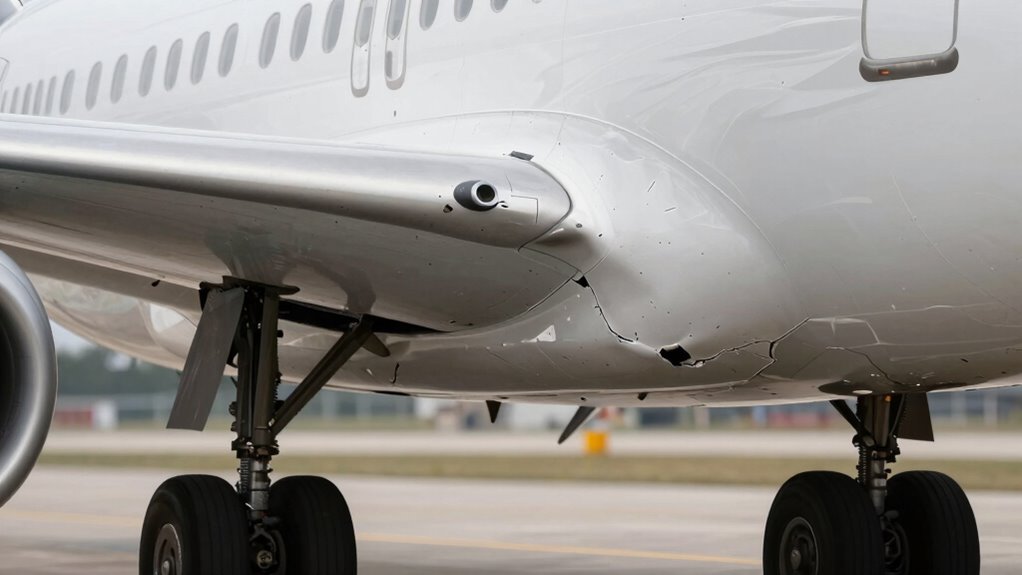

After a hard landing, you should carefully inspect the fuselage, wings, and tail for hairline cracks, dents, or deformations that may not be obvious at first glance. Check the landing gear, especially tires, struts, and locking mechanisms, for damage or leaks. Listen for unusual noises and look for fluid leaks, control linkages, and internal structural issues. Even if everything appears fine, ongoing checks are essential—there’s more to uncover that could affect safety and performance.
Key Takeaways
- Check the fuselage, wings, and tail for hairline cracks, dents, or deformations that may not be immediately visible.
- Inspect landing gear for leaks, cracks, or uneven tire wear, and ensure proper retraction and locking mechanisms.
- Listen for unusual noises or vibrations indicating internal damage or compromised control linkages.
- Examine hydraulic lines and internal structural components for leaks, stress signs, or fatigue.
- Conduct thorough safety checks on locking mechanisms and critical components to confirm overall aircraft integrity.
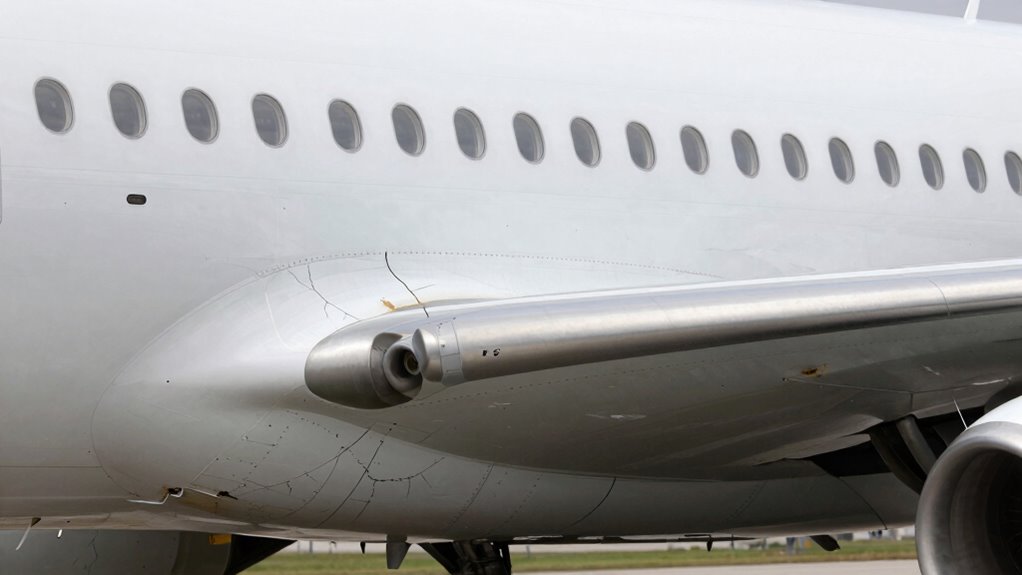
A hard landing might not always show obvious signs of damage, but it’s crucial to thoroughly inspect your aircraft afterward. Even if everything appears normal on the surface, the impact can cause internal issues that aren’t immediately visible. Your primary concern should be ensuring the aircraft’s structural integrity remains uncompromised. Look beyond the exterior; examine the fuselage, wings, and tail for any hairline cracks, dents, or deformations that could weaken the airframe. Small cracks can expand over time and pose serious safety risks, so don’t dismiss minor irregularities. Regular structural inspections are vital to catch these hidden issues early. Equally important is conducting a detailed landing gear inspection. Landing gear absorbs a significant amount of shock during a hard touchdown, and it’s susceptible to damage even if it looks intact. Check the tires for cuts, punctures, or uneven wear. Inspect the struts for any signs of bending, cracks, or leaks. A compromised landing gear could impact your aircraft’s ability to taxi and take off safely, so don’t skip this step. Also, verify that the gear retracts properly if it’s retractable and that all locking mechanisms are secure. Beyond the visible components, pay attention to the internal systems. Vibrations or unusual noises during your post-landing check may indicate internal damage, such as misaligned control surfaces or compromised hydraulic lines. Look for fluid leaks around the landing gear and under the aircraft—these could point to internal damage or seal failures. Check the control linkages and hinges connected to the landing gear and other critical components for any signs of wear or damage. Additionally, internal structural components should be examined for any signs of stress or fatigue caused by the impact. Conducting a thorough damage assessment can help identify potential issues before they escalate.
As an affiliate, we earn on qualifying purchases.
Frequently Asked Questions
How Soon Should I Get My Aircraft Inspected After a Hard Landing?
You should get your aircraft inspected immediately after a hard landing, regardless of how it appears. Prompt aircraft maintenance is essential to identify hidden damages that could compromise safety later. Even if you’re well-trained as a pilot, a professional inspection guarantees all critical components are checked thoroughly. Prioritize timely inspection to prevent further issues, maintain safety standards, and adhere to best practices in pilot training and aircraft maintenance.
Can Minor Damages Cause Major Issues Later?
Minor damages can indeed cause major issues later if left unaddressed. Aircraft maintenance is vital for guaranteeing flight safety, especially after a hard landing. Small cracks or dents might seem insignificant but can weaken structural integrity over time. By promptly inspecting and repairing even minor damages, you prevent potential safety hazards, protect your aircraft’s longevity, and make certain of reliable performance on future flights. Always prioritize thorough assessments for peace of mind.
Are There Specific Signs of Hidden Structural Damage?
Yes, there are signs of hidden structural damage you should watch for. Check wing integrity for any cracks or deformities, even if they seem minor. Inspect tire condition closely, looking for sidewall bulges or uneven wear, which can indicate internal damage. If you notice any irregularities, get a professional inspection promptly. Hidden issues can compromise safety, so don’t ignore subtle signs, especially after a hard landing.
What Tools Are Recommended for a Basic Post-Landing Inspection?
Did you know that nearly 30% of aircraft accidents involve post-landing structural issues? For your damage assessment, start with a pre-flight checklist to identify any irregularities. Use basic tools like a flashlight, mirror, and magnifying glass to inspect for cracks or dents. Employ damage assessment techniques such as visual checks and measuring deformation. These simple tools and methods help verify your aircraft remains safe even after a hard landing.
Should I Report the Landing to Aviation Authorities?
Yes, you should report the landing to aviation authorities. Prioritizing pilot safety is essential, and reporting helps guarantee proper documentation and investigation if needed. Additionally, reporting can be critical for insurance claims, providing official records of the incident. Even if everything seems fine, transparency with authorities helps protect you legally and maintains safety standards, preventing potential issues down the line.
As an affiliate, we earn on qualifying purchases.
Conclusion
Even when everything seems smooth sailing after a hard landing, a gentle check can help you catch any hidden quirks before they become bigger issues. Think of it as giving your aircraft a quick hug, ensuring it’s still in good shape beneath the surface. By taking a few careful moments, you’re not just safeguarding your flight, but also embracing the peace of mind that comes with knowing you’ve done your diligent part. Safe flying always starts with a careful look.
aircraft hydraulic leak detector
As an affiliate, we earn on qualifying purchases.
As an affiliate, we earn on qualifying purchases.
aircraft control linkage inspection kit
As an affiliate, we earn on qualifying purchases.
As an affiliate, we earn on qualifying purchases.