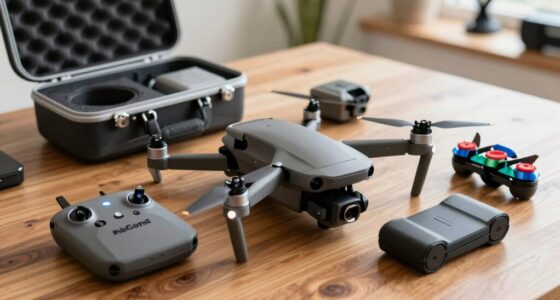
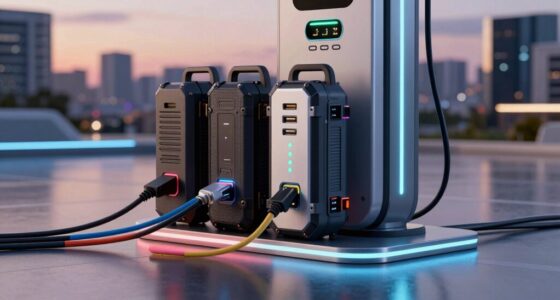
To build a better field charging workflow for drone days, organize charging stations clearly, label zones, and keep spare batteries handy for busy periods. Monitor battery health regularly, stagger charging times, and use timers or smart chargers to prevent overcharging. Maintain detailed logs of battery usage and performance to spot issues early. By optimizing equipment flow and keeping everything organized, you’ll reduce downtime and improve efficiency—if you want to learn more, keep exploring these strategies.
Listen free for 30 days with Audible
Thousands of audiobooks and originals — cancel anytime.
As an affiliate, we earn on qualifying purchases.
Key Takeaways
- Organize designated zones for charging, used batteries, and ready-to-fly batteries to streamline workflow and reduce errors.
- Stagger charging times and use timers or smart chargers to prevent overloads and ensure batteries are fully charged efficiently.
- Implement systematic monitoring and logging of battery status, lifespan, and usage patterns for proactive maintenance.
- Keep spare batteries and chargers readily available to meet high-demand periods and minimize downtime.
- Regularly review and adapt charging procedures based on workflow performance and operational demands.
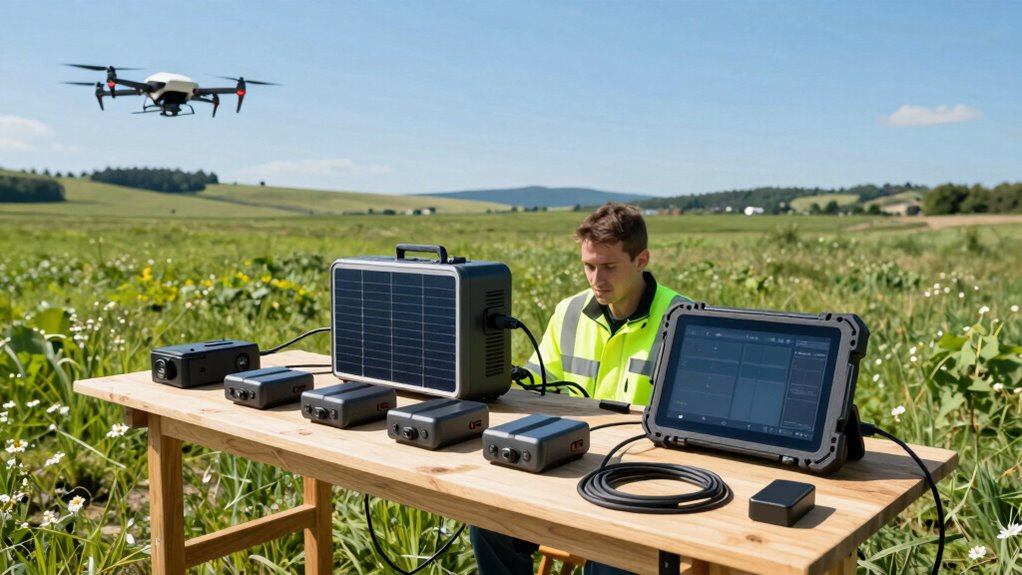
Planning an efficient field charging workflow is vital to maximize your drone operations on busy days. When you’re managing multiple drones, good battery management becomes your top priority. You need to guarantee that each battery is charged, ready, and properly stored to prevent delays. This means setting up a systematic process for monitoring battery statuses, rotating used batteries out of service, and promptly charging depleted ones. Keeping a detailed log of battery usage helps you identify patterns and anticipate when batteries will need recharging, reducing downtime and keeping your workflow smooth.
Equipment logistics also play an essential role in streamlining your drone days. You should organize your charging stations so that batteries and chargers are easily accessible and clearly labeled. This minimizes confusion and prevents errors like connecting the wrong charger to a battery or misplacing charged batteries. Consider creating designated zones for incoming used batteries, charging, and ready-to-fly batteries. This visual organization speeds up your process and helps you keep track of your inventory. Additionally, having spare batteries and chargers on hand ensures you’re prepared for high-demand days, reducing wait times and keeping your operations running seamlessly.
To build a dependable field charging workflow, you also need to plan your charging schedule carefully. Avoid overloading your chargers by staggering charging times, which extends battery life and prevents power surges. Use timers or smart chargers that shut off automatically once batteries are fully charged. This not only protects your batteries but also conserves energy. Incorporating regular checks into your routine to assess the health of your batteries—look for signs of wear, swelling, or decreased capacity—and replace worn-out units promptly to maintain peak performance. Incorporating proper battery maintenance practices can extend the lifespan of your batteries and improve overall efficiency. Additionally, implementing detailed record-keeping allows for better tracking of battery performance and helps in planning replacements proactively. Staying aware of battery health trends is crucial for making informed decisions about replacements and repairs. Conducting regular battery checks can help catch issues early and prevent unexpected failures during critical operations.
Ensuring that your equipment logistics are optimized can further streamline operations and reduce handling errors. Communication and documentation are key to an effective workflow. Guarantee everyone involved understands the process and their responsibilities. Use checklists or digital logs to record which batteries are in use, charging, or ready. This promotes accountability and reduces the chance of operational mistakes. By maintaining clear records, you can quickly troubleshoot issues, track battery lifespan, and plan replacements proactively.
Finally, review and refine your workflow regularly. After each busy day, evaluate what worked well and where bottlenecks occurred. Adjust your equipment logistics and battery management strategies accordingly. A well-organized, adaptable charging workflow minimizes downtime, extends your equipment’s lifespan, and keeps your drone operations efficient and effective on even the busiest days.
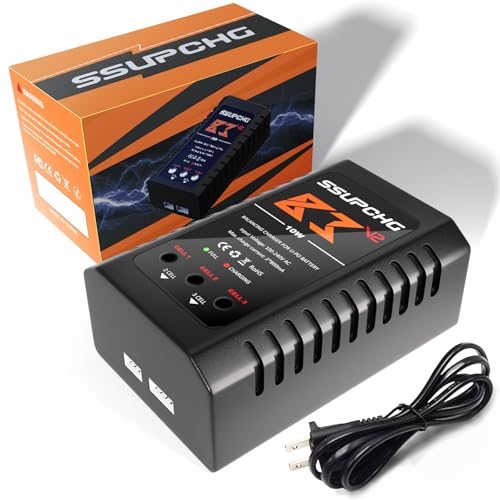
SSUPCHG LiPo Battery Charger, Balance Charger for 2S 3S XHR Plug Battery
- Smart Charging Technology: Ensures safe, optimal cell charging
- Enhanced Safety Features: Over-voltage, over-temperature, over-current protection
- Compatible with RC Batteries: Designed for 2S and 3S XHR plug batteries
As an affiliate, we earn on qualifying purchases.
As an affiliate, we earn on qualifying purchases.
Frequently Asked Questions
What Are the Best Portable Power Sources for Drone Charging?
You should consider portable power sources with high battery capacity, like portable power banks or generators, to keep your drones charged efficiently. Look for devices with advanced power management features to optimize battery life and guarantee quick recharging times. Compact and lightweight options are ideal for field use, enabling you to easily transport and manage power, so your drone operations stay uninterrupted throughout the day.
How Can I Ensure Quick Charging During High-Demand Periods?
Think of your charging process as a well-orchestrated relay race. To guarantee quick charging during high-demand periods, prioritize efficient battery management and strict charging protocols. Keep batteries prepped and cycle them regularly to prevent depletion delays. Use fast chargers compatible with your drone batteries, and stagger charging times to maximize throughput. This approach keeps your team moving smoothly, avoiding bottlenecks and ensuring drones are ready when needed most.
What Safety Precautions Should I Follow During Field Charging?
You should prioritize battery safety by always inspecting batteries for damage before charging and avoiding exposure to extreme temperatures. Follow proper charging protocols, such as using designated chargers and avoiding overcharging. Always wear protective gear, work in a well-ventilated area, and keep a fire extinguisher nearby. Keep batteries upright, away from flammable materials, and never leave charging batteries unattended. These precautions help prevent accidents and guarantee safe, efficient field charging.
How Do Weather Conditions Affect Drone Charging Workflows?
Weather impact can considerably influence your drone charging workflow. High temperatures may cause charging delays due to overheating, while cold weather can slow battery performance and extend charging times. Rain or humidity can also pose risks, potentially damaging equipment or causing safety issues. To stay efficient, monitor weather forecasts closely, plan your charging schedule around favorable conditions, and have contingency plans to handle unexpected weather changes during drone days.
What Are Cost-Effective Solutions for Large-Scale Drone Operations?
You can skyrocket your large-scale drone operations’ savings with cost-effective solutions like boosting battery efficiency and embracing solar integration. Imagine cutting charging costs in half while harnessing endless solar energy—your fleet stays powered without breaking the bank. Installing solar panels on your field not only reduces energy expenses but also makes your operation eco-friendly. These strategies turn your drone days into a powerhouse of efficiency and savings, with minimal investment.

Fytoo 5PCS 3.7V 400mAh Lithium Battery with 5 in 1 Charger for SYMA Q11 H99W H31 H6C H98 AT-96 TR-C385 TR-P51 TR-F22 Quadcopter Spare Parts Aircraft Model Drone Battery (Black)
- Compatible Models: For SYMA Q11 and more
- Simultaneous Charging: Charges 5 batteries at once
- Protection Features: Overcharge and short circuit protection
As an affiliate, we earn on qualifying purchases.
As an affiliate, we earn on qualifying purchases.
Conclusion
Think of your drone charging workflow as a well-tuned orchestra—every instrument must play its part seamlessly. By optimizing your process, you guarantee each drone is ready to take flight when needed, reducing downtime and boosting productivity. With a streamlined system, you’ll navigate your drone days smoothly, like a conductor guiding a harmonious performance. Embrace these strategies, and you’ll turn chaotic charging into a symphony of efficiency that keeps your operations soaring.

Forklift Battery & Charging Maintenance Log Book: OSHA-Compliant Power Unit Inspection & Service Record for Industrial Warehouse Operations
As an affiliate, we earn on qualifying purchases.
As an affiliate, we earn on qualifying purchases.

288W Charging Station for Multiple Devices, 8-Port USB Fast Charging Station with Adjustable Dividers, Multi Device Organizer Charging Dock for iPhone, iPad, Tablets, Drone & More
- High-Capacity Multi-Device Charger: 8 ports with 270W total output
- Fast Charging for Multiple Devices: Supports up to 100W for laptops
- Versatile Power Outputs: Multiple levels from 12W to 100W
As an affiliate, we earn on qualifying purchases.
As an affiliate, we earn on qualifying purchases.
Grilling season Picks
grills
As an affiliate, we earn on qualifying purchases.