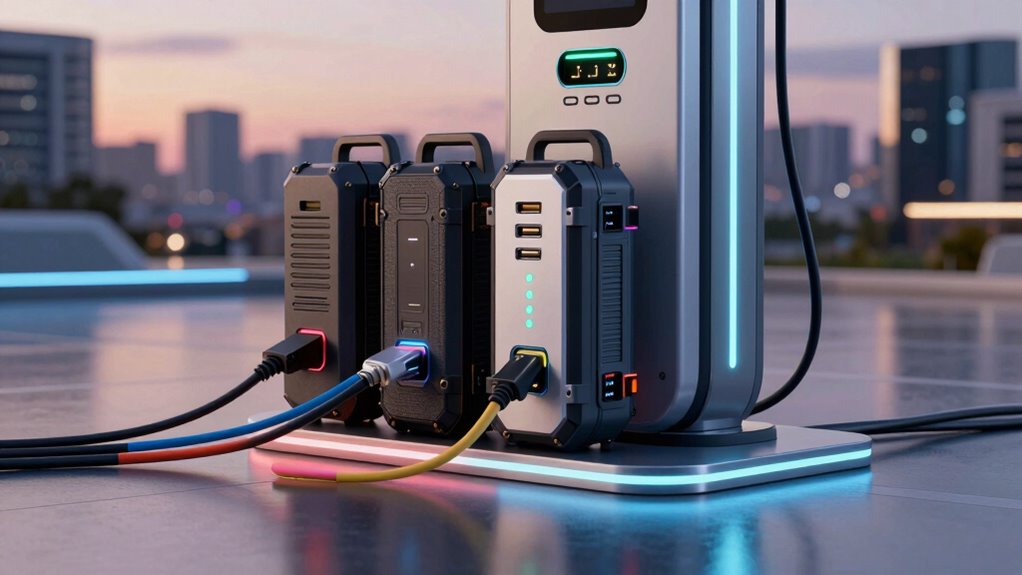

When considering charging hubs, stations, and multi-battery systems, focus on balancing fast charging with battery longevity. Support for multiple standards and smart features guarantees compatibility and better health management. Prioritize thermal control and balanced charging to prevent overheating and uneven wear. Flexible infrastructure and data monitoring help you optimize performance and plan maintenance. If you want to keep batteries healthy and systems efficient, explore how the right solutions can sustain long-term operation—more insights await you.

Get the latest gadgets delivered free — and shop member deals
- Fast, free delivery on millions of items
- Access to Prime Big Deal Days deals on October 6–7
- Prime Video, Amazon Music and more included
Key Takeaways
- Prioritize hubs with smart thermal management and adaptive algorithms to protect batteries during fast charging.
- Ensure compatibility with multiple standards and battery types for flexible infrastructure integration.
- Support multi-battery systems with balanced charging features to extend overall battery lifespan.
- Use data monitoring tools to track charge cycles, health, and optimize maintenance schedules.
- Balance rapid charging capabilities with longevity-focused features for cost-effective, reliable operation.
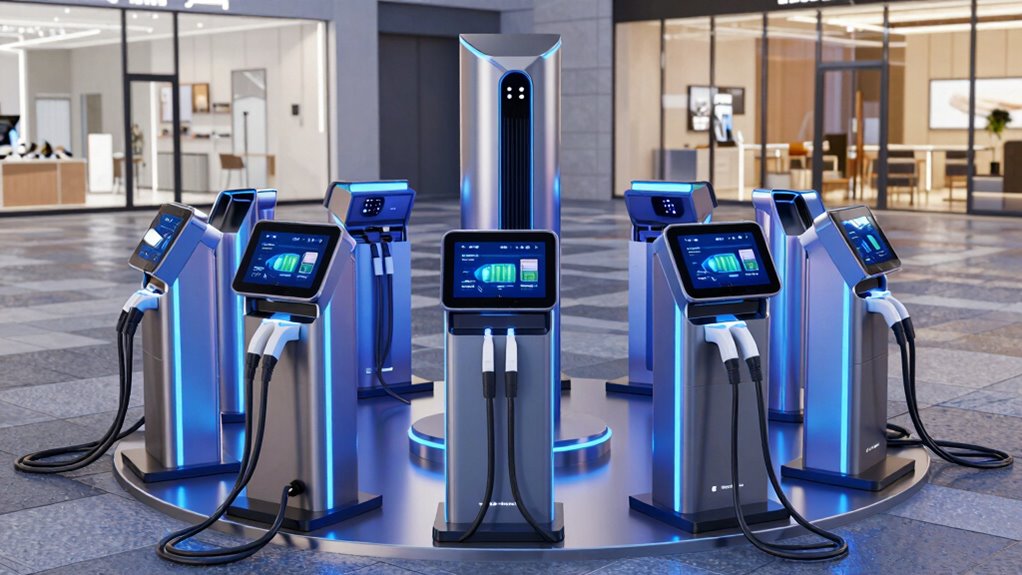
As electric vehicles and portable devices become more prevalent, the need for efficient charging solutions has never been greater. When you’re considering charging hubs, stations, and multi-battery systems, your main focus should be on maximizing battery longevity while minimizing charging time. These factors directly influence how often you’ll need to replace batteries and how quickly you can get back on the road or continue your work.
Charging speed plays a critical role in your experience. Faster charging can save you hours, but it often comes with trade-offs. Rapid charging generates more heat, which, if not managed properly, can degrade your battery over time. To balance charging speed with battery longevity, look for stations that support high-quality fast-charging standards—like DC fast chargers—that include built-in temperature regulation and smart charging algorithms. These features help protect your battery from overheating, ensuring it retains its capacity longer and maintains excellent performance.
Fast charging saves time but risks overheating; choose stations with temperature control and smart algorithms to protect battery health.
When thinking about multi-battery systems, especially for energy-intensive applications, you should consider how these systems are integrated into charging hubs. Efficient multi-battery setups allow you to swap batteries quickly, reducing downtime. However, the key is to guarantee each battery is charged evenly and thoroughly, preventing uneven wear and tear. Smart charging stations equipped with individual cell monitoring can help maintain battery health by providing balanced charging, which extends the overall lifespan of each pack.
Another essential aspect is the infrastructure’s adaptability. As technology advances, charging hubs should support multiple standards and accommodate different battery types. This flexibility ensures that your batteries are charged safely and efficiently, regardless of manufacturer or model. Additionally, look for stations that offer data tracking—such as charge cycles and health status—so you can monitor your batteries’ condition over time and plan replacements proactively. Understanding battery health management is crucial for maintaining optimal performance and avoiding unnecessary replacements. Incorporating predictive analytics can further optimize charging schedules, helping to extend battery life based on usage patterns.
Ultimately, your goal should be to find solutions that offer a harmonious balance between charging speed and battery longevity. Fast charging is invaluable when you’re in a hurry, but it shouldn’t come at the expense of your battery’s health. A well-designed charging hub or multi-battery system will incorporate smart features, thermal management, and flexible standards to keep your batteries performing well for years. By prioritizing these elements, you’ll ensure your energy sources remain reliable, cost-effective, and ready whenever you need them.
smart charging station for electric vehicles
As an affiliate, we earn on qualifying purchases.
As an affiliate, we earn on qualifying purchases.
Frequently Asked Questions
How Do Charging Hubs Affect Local Electricity Grids?
Charging hubs can impact local electricity grids by stressing grid stability if many vehicles charge simultaneously. They draw significant energy, which challenges the distribution system‘s capacity. To manage this, utilities often implement smart charging that balances energy flow, guaranteeing efficient distribution. This helps prevent outages and maintains grid stability while accommodating increased demand from charging hubs. Proper planning ensures these hubs enhance, rather than disrupt, local energy distribution.
What Safety Measures Are Essential for Multi-Battery Systems?
You should prioritize safety measures like proper battery insulation to prevent electrical shorts and leaks. Installing reliable fire suppression systems is also essential, as they can quickly contain any battery fires. Regularly inspect connections and guarantee ventilation to avoid overheating. By implementing these safety measures, you minimize risks and keep your multi-battery system secure and efficient, protecting both your equipment and yourself.
Can Charging Stations Operate Off-Grid Reliably?
Yes, charging stations can operate off-grid reliably if they incorporate renewable integration, such as solar or wind power, and energy storage like multi-battery systems. By harnessing renewable sources and guaranteeing sufficient off-grid independence, you can maintain consistent operation even without grid access. Proper design, backup options, and efficient energy management are essential to optimize off-grid reliability and ensure your charging station remains functional under various conditions.
How Do Charging Hubs Impact Urban Traffic Flow?
Charging hubs can ease urban congestion by reducing the need for drivers to circle blocks searching for parking or fuel. They improve parking dynamics, encouraging more efficient use of available space and decreasing traffic caused by vehicles idling or searching for spots. This streamlined access to charging stations supports smoother traffic flow, minimizes unnecessary stops, and promotes cleaner, more sustainable urban environments, ultimately making city driving less stressful and more efficient.
What Are the Long-Term Maintenance Costs for Multi-Battery Setups?
You might worry about high long-term costs, but focusing on maintenance routines can keep expenses manageable. Multi-battery setups often have a longer battery lifecycle with proper care, reducing replacement frequency. Regular inspections, cleaning, and software updates help prevent costly repairs. Over time, these proactive maintenance routines guarantee your system stays efficient, saving you money and reducing downtime, so you can confidently rely on your setup without fear of unexpected expenses.
multi-battery charging hub with thermal management
As an affiliate, we earn on qualifying purchases.
As an affiliate, we earn on qualifying purchases.
Conclusion
Understanding the nuances of charging hubs, stations, and multi-battery systems helps you make smarter choices for your needs. By considering current technology and future trends, you stay ahead of the curve and avoid getting caught off guard. Remember, in the world of charging infrastructure, it’s wise to keep your ear to the ground and be adaptable. With this knowledge, you’re better equipped to navigate the evolving landscape — because knowledge is power, after all.
balanced fast charger for batteries
As an affiliate, we earn on qualifying purchases.
As an affiliate, we earn on qualifying purchases.
As an affiliate, we earn on qualifying purchases.
Fall Picks
fall essentials
As an affiliate, we earn on qualifying purchases.