While flying, you can still sharpen your editing mindset by quickly evaluating your content for clarity, purpose, and engagement. Focus on whether each element serves your main message and remove anything redundant or distracting. Maintain a mental checklist to assess tone, style, and coherence, ensuring your content flows smoothly and resonates with your audience. As you fine-tune your work, you’ll strengthen your editing skills—keep going to uncover even more practical tips.

Get the latest gadgets delivered free — and shop member deals
- Fast, free delivery on millions of items
- Access to Prime Big Deal Days deals on October 6–7
- Prime Video, Amazon Music and more included
Key Takeaways
- Quickly assess content for clarity, purpose, and engagement during breaks or in-flight to ensure it serves its message.
- Focus on identifying and removing redundancies or weak points to tighten the narrative on the go.
- Maintain a consistent tone and style that aligns with the target audience and message.
- Prioritize edits that enhance coherence, impact, and storytelling flow for maximum audience resonance.
- Develop an intuitive sense for impactful revisions, practicing quick critical evaluation of content in-flight.
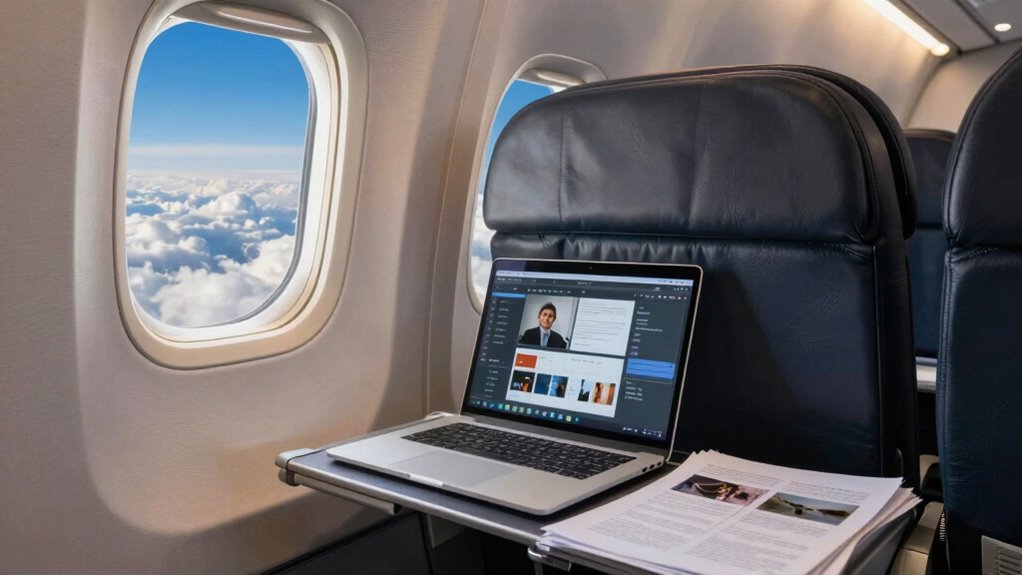
Thinking like an editor means developing a keen eye for detail and understanding how to shape content for maximum impact. Even when you’re flying or on the move, it’s possible to sharpen this mindset. One of the first things to focus on is how storytelling techniques can elevate your perspective. Think about stories as a way to connect with your audience—every piece of content should have a clear beginning, middle, and end, guiding your audience smoothly through your message. As you review your work, ask yourself if each section advances the narrative or if some parts feel redundant. Cutting excess or tightening the flow helps create a compelling story that keeps readers engaged from start to finish.
Paying attention to tone and style is equally essential. Your tone sets the mood, influences how your message is received, and shapes your audience’s perception. Whether you aim for professional, conversational, or playful, consistency is key. As an editor in training, you should constantly evaluate whether your tone aligns with your intended audience and purpose. Style, on the other hand, involves the language, sentence structure, and formatting choices you make. Recognize how these elements can reinforce or undermine your message. For example, short, punchy sentences may energize a piece, while longer, descriptive sentences can add depth. When you’re on the go, quickly assess if the tone and style match your goals, and make adjustments as needed. Developing an understanding of content quality factors can help you prioritize what needs revision most effectively. Additionally, honing your ability to identify editorial priorities ensures your edits serve the overall purpose and impact of your content. Cultivating an awareness of audience engagement can further refine your approach, making your edits more targeted and effective. To do this efficiently, familiarizing yourself with editing principles can provide a solid foundation for quick, effective decisions.
Developing an editor’s mindset also involves questioning and refining your content. Ask yourself critical questions like: Does this piece truly serve its purpose? Is the message clear? Are there opportunities to clarify or emphasize key points? Applying storytelling techniques here can help you see your content from your audience’s perspective—what makes it relatable, interesting, or persuasive? When you’re traveling or pressed for time, these questions can be quick checks that improve your work without requiring hours of revision.
Finally, understanding how to prioritize your edits is essential. As you evaluate your content, identify the most impactful changes you can make—those that enhance clarity, coherence, and engagement. Keep in mind that editing isn’t just about fixing mistakes; it’s about shaping a narrative with purpose. By honing your skills in storytelling techniques and paying close attention to tone and style, you’ll develop an intuitive sense for what makes content resonate. Even while flying, staying mindful of these core editing principles helps you produce sharper, more compelling work every time.
portable in-flight editing checklist
As an affiliate, we earn on qualifying purchases.
As an affiliate, we earn on qualifying purchases.
Frequently Asked Questions
How Can I Capture Ideas Quickly While Traveling?
When traveling, you can capture ideas quickly by carrying a small notebook or using your phone for travel journaling. Whenever inspiration strikes, jot down notes or voice memos to avoid losing thoughts. Engage in spontaneous brainstorming sessions whenever you have a moment—waiting in line or during transit. These habits help you preserve fresh ideas on the go, making it easier to develop your stories and insights later.
What Tools Help With On-The-Go Editing?
You’ll feel like a superhero with tools like Google Drive or Dropbox, transforming your device into a mobile editing powerhouse. These cloud storage options let you access, save, and share files instantly, making remote collaboration effortless. Whether you’re tweaking a document on a plane or reviewing edits in a hotel lobby, these tools keep your workflow seamless. They’re your secret weapons for on-the-go editing, ensuring you’re always prepared to craft your best work anywhere.
How Do I Prioritize Edits When Pressed for Time?
When pressed for time, prioritize edits by focusing on the most impactful changes first. Use your time management skills to identify key areas that improve clarity and flow, rather than perfecting every detail. Maintain mental clarity by setting a timer for each task, so you stay focused and efficient. Remember, quick, strategic edits often make the biggest difference, helping you deliver a polished piece without sacrificing your sanity or schedule.
How Can I Maintain Consistency Across Multiple Drafts?
Maintaining consistency across multiple drafts is like tuning an instrument—each adjustment brings harmony. You focus on creative consistency by setting clear style guidelines and sticking to them. Use a master copy or style sheet to track choices, ensuring draft harmony. Regularly revisit previous versions to align tone, voice, and structure. This disciplined approach helps your work evolve smoothly, creating a cohesive final piece that reflects your initial vision.
What Are Quick Tips for Spotting Mistakes During Travel?
When travel journaling, quick mistake detection is key. You can pause periodically to review your entries, checking for spelling errors or unclear details. Use a different color pen or highlight sections for easier spotting. Reading your notes aloud helps catch mistakes and awkward phrasing. Also, take short breaks to refresh your focus. These simple steps improve your ability to spot mistakes during travel, keeping your journaling accurate and polished.
content editing tools for writers
As an affiliate, we earn on qualifying purchases.
As an affiliate, we earn on qualifying purchases.
Conclusion
By mastering the editor’s mindset, you unlock the power to transform your writing from a mere spark into a blazing inferno of clarity and impact. When you see your work through an editor’s eyes, you wield the ability to cut through chaos like a laser, turning chaos into crystal-clear brilliance. Keep practicing, and soon you’ll be rewriting reality—making your words so sharp and compelling, they could cut glass. Think like an editor, and watch your writing soar beyond the stars!
in-flight writing and editing accessories
As an affiliate, we earn on qualifying purchases.
As an affiliate, we earn on qualifying purchases.
As an affiliate, we earn on qualifying purchases.
Halloween Picks
halloween
As an affiliate, we earn on qualifying purchases.