The best cinewhoop motors balance smooth throttle response, enough lift for a ducted frame, and a KV rating suited to your battery and propellers. My best overall pick is the F1408 II, since its two KV options cover several common cinewhoop voltage setups. The Rcinpower AOS Supernova 1404 is a standout for a lighter build, while the Axisflying C206 1960KV/2500KV offers lower-KV options for builders prioritizing controlled flight. The tradeoff is clear: smaller, higher-KV motors suit lighter setups, while larger motors can better support heavier builds but add weight and demand careful matching. Read on for the full comparison, including where each motor fits and what to check before buying.

Get the latest gadgets delivered free with Prime
- Fast, free delivery on millions of items
- Prime Video, Amazon Music and more included
- Member-only deals all year
Complete the kit



Key Takeaways
- The F1408 II ranks first for flexibility: its 2800KV and 4–6S option differs from its 3850KV and 3–4S option, giving builders distinct voltage paths in one motor family.
- Motor size and KV need to be read together: the 1202.5 GTS V2 and 1303 GTS V3 are compact, high-KV choices, while the 2004, 2006, and 206 options point toward larger builds and lower-KV setups.
- The Supernova 1404 is the compact-build alternative: its 4000KV rating makes it a different fit from the lower-KV Axisflying C206 and Emax ECO II choices.
- The C206 2006 listings are close but not interchangeable by default: one is a 2750KV 6S version and the other a 1960KV version, so battery, propeller, and flight style should drive the choice.
- Pack quantity changes the buying decision: several motors are listed in four-piece sets, while the C206 2006 options are listed as two-piece packs; check how many motors your build needs before ordering.


| cinewhoop motor | Model | Weight | KV | Shaft diameter |
|---|---|---|---|---|
| GTS V2 1202.5 11500KV / 6000KV | GTS V2 1202.5 | 3.9g | 11500KV / 6000KV | 1.5mm |
| F1408 II Cinewhoop Motor 2800K | F1408 II | 14.9g including wire (2800KV); 14.95g including wire (3850KV) | 2800KV / 3850KV | 2mm |
| Rcinpower Aos Supernova 1404 4 | Aos Supernova 1404 4000KV | 10.2g | — | — |
| SmooX 1507 Plus 2680KV / 4200K | 1507 Plus | — | 2680KV / 4200KV | — |
| GTS V3 1303 6000KV / 8000KV Mi | GTS V3 1303 | 5.9g | 6000KV / 8000KV | 1.5mm |
| Axisflying C206 1960KV 2500KV | C206 | 22.06g / 22.88g | — | 1.5mm / 2.5mm |
| Emax ECO II 2004 2000KV 3000KV | 2004 | 16.6g | — | 1.5mm |
| C206 2006 FPV Brushless Motor | C206 2006 | 23.5g | 2750KV | — |
| FPV Brushless 6S Motor C206 20 | — | 22g | 1960KV | — |
More Details on Our Top Picks
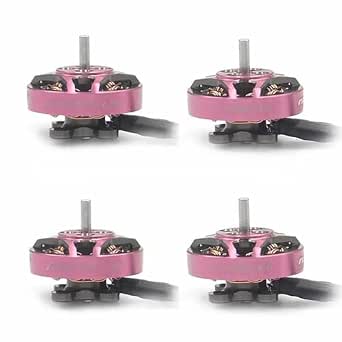
GTS V2 1202.5 11500KV / 6000KV Mini FPV Brushless Motor (4PCS, Pink)
The GTS V2 1202.5 suits tiny cinewhoops where keeping motor weight low matters more than carrying a larger camera or heavier frame. At 3.9g per motor, it is far lighter than the 1404 and 1507 options here, and its two KV variants cover different battery setups: 11500KV for 1–2S or 6000KV for 3–4S. That flexibility is useful, but the two versions are not interchangeable; buyers need to match the KV to their pack and prop load. Its 12mm stator and 70W maximum power also point to a lighter-duty role than the F1408 II. I’d shortlist it for compact, low-mass builds, not a cinewhoop expected to haul heavier payloads. The pink-only finish and 1.5mm shaft narrow cosmetic and propeller choices.
Pros:- Low 3.9g motor weight supports compact, weight-conscious builds
- Two KV options cover specified 1–2S and 3–4S setups
- Dual bearings and durable construction are intended for repeated use
- Efficiency is listed at 83% or higher
Cons:- The two KV variants have distinct voltage ranges that must be matched to the build
- The small motor and 70W maximum power are less suited to heavier cinewhoop payloads
- Pink is the only listed color, and compatible propellers are required
Best for: Builders of very small, lightweight cinewhoops who need a low-mass motor and can match the KV version to a 1–2S or 3–4S setup.
Not ideal for: Pilots building heavier 3–4-inch cinewhoops or wanting broad propeller choices; its 70W rating, small stator, and 1.5mm shaft call for a more carefully matched setup.
- Model:GTS V2 1202.5
- KV:11500KV / 6000KV
- Input voltage:1–2S / 3–4S LiPo
- Stator size:12mm diameter × 2.5mm length
- Shaft diameter:1.5mm
- Weight:3.9g
- Maximum power:70W
- Efficiency current:83%+
Our verdict“Choose the GTS V2 for a very light, small-frame cinewhoop when low motor mass matters more than payload headroom.”
F1408 II Cinewhoop Motor 2800KV 4-6S / 3850KV 3-4S
The F1408 II is the most clearly cinewhoop-focused option in this group for builders who need more power headroom than a tiny 1202.5 can offer. Its 2800KV version supports 4–6S, while the 3850KV version is specified for 3–4S, giving builders a choice of battery setups rather than a single fixed target. The listed peak output—up to 385W for the 2800KV model—sets it apart from the smaller GTS motors, though it also weighs about 15g with its lead. That weight makes it a poor fit for ultralight frames where the GTS V3 1303 is more appealing. The 2mm shaft and 3–4-inch compatibility better suit larger builds, but buyers still need to confirm frame, propeller, and ESC fit before choosing.
Pros:- Two KV versions support distinct 3–4S and 4–6S battery setups
- Listed maximum power reaches 385W on the 2800KV variant
- 2mm shaft and stated 3–4-inch compatibility suit larger builds
- Includes a 150mm motor lead for installation planning
Cons:- About 15g with wire adds meaningful weight compared with the smaller motors here
- KV choice must match the battery range; the variants have different voltage specifications
- ESC, frame, and propeller compatibility must be checked for the specific build
Best for: Cinewhoop builders using 3–4-inch frames who want a choice of 3–4S or 4–6S motor variants and more power headroom than a micro motor provides.
Not ideal for: Ultralight or very compact build owners prioritizing minimum motor weight; at roughly 15g with wire, it is substantially heavier than the GTS V3 1303.
- Model:F1408 II
- KV:2800KV / 3850KV
- Voltage:4–6S for 2800KV; 3–4S for 3850KV
- Configuration:9N12P
- Size:17.9 × 20.2mm
- Shaft diameter:2mm
- Weight:14.9g including wire (2800KV); 14.95g including wire (3850KV)
- Maximum power:385W (2800KV); 371W (3850KV)
- Peak current (60S):15.3A (2800KV); 22.4A (3850KV)
Our verdict“Pick the F1408 II when a 3–4-inch cinewhoop needs more power capacity and can accommodate a heavier motor.”
Rcinpower Aos Supernova 1404 4000KV Brushless Motor
The Rcinpower Aos Supernova 1404 offers a middle ground for cinewhoop builders who want more motor than a 1202.5 without moving to the heavier F1408 II. Its 10.2g weight, 4000KV rating, and stated 3S–4S support fit lightweight builds using 2.5- or 3-inch propellers. The listed 85%+ efficiency and 4–7A current range favor a setup aimed at controlled flight rather than the F1408 II’s much higher power figures. That makes it a sensible match for compact camera-carrying builds, provided the complete aircraft stays within the motor’s intended scale. Unlike the GTS V3 1303, this listing gives one KV option, so there is less room to tune around different packs. Limited detail on shaft dimensions and electrical limits also means I’d verify fit before ordering.
Pros:- Specified for common 2.5- and 3-inch prop sizes
- 10.2g weight sits between the micro GTS motors and the heavier F1408 II
- 3S–4S support pairs with compact cinewhoop battery setups
- Efficiency is listed at 85%+ with a 4–7A current range
Cons:- Only one listed KV option limits setup flexibility
- Available specifications omit shaft dimensions and maximum power
- Intended for lightweight builds rather than larger, higher-load cinewhoops
Best for: Builders of lightweight 2.5- or 3-inch cinewhoops using 3S–4S packs who want a moderate-weight motor with a single 4000KV specification.
Not ideal for: Pilots who need a choice of KV to suit different battery setups or who are building a heavier, higher-power craft like those better matched to the F1408 II.
- Model:Aos Supernova 1404 4000KV
- Voltage:3S–4S LiPo
- Weight:10.2g
- Configuration:9N12P
- Compatible propellers:2.5-inch and 3-inch
- Efficiency:85%+
- Current range:4–7A
Our verdict“Choose the 1404 4000KV for a lightweight 2.5–3-inch cinewhoop if its single KV and incomplete fit details suit your build.”
SmooX 1507 Plus 2680KV / 4200KV Brushless Motor (4PCS)
The SmooX 1507 Plus is the pick for builders who value a more substantial motor format and a stated 3–6S range over the lighter weight of the 1404 or GTS V3. Its 2680KV and 4200KV variants give room to match motor speed to a chosen setup, while the upgraded stator and copper wiring are presented as support for load capacity and durability. Those attributes make it more appealing for a robust cinewhoop build than the tiny GTS V2, but the listing does not provide weight, shaft size, or power figures. That missing fit information makes selection less straightforward than with the F1408 II. I’d treat it as a candidate for builders comfortable confirming dimensions and prop compatibility with the seller, rather than a plug-and-play recommendation.
Pros:- Two KV options provide flexibility across different build targets
- Specified 3–6S voltage range covers several battery configurations
- Upgraded stator is described as supporting stronger load capacity
- Copper wiring and integrated shell rotor are presented as durability features
Cons:- No motor weight, shaft diameter, or maximum power is provided
- Compatibility with specific cinewhoop frames and propellers is not detailed
- Noise information is absent, which can matter for close-range cinematic flying
Best for: Experienced FPV builders seeking a four-motor set with two KV choices and a stated 3–6S range, who can verify frame and propeller fit themselves.
Not ideal for: First-time cinewhoop builders or anyone needing clear weight, shaft, and power data before confirming compatibility.
- Model:1507 Plus
- KV:2680KV / 4200KV
- Voltage range:3–6S
- Material:Copper wiring
- Application:RC FPV racing drones
- Quantity:4 motors
- Listed colors:Black or orange
Our verdict“Consider the SmooX 1507 Plus for a durable, adaptable build only after confirming its missing dimensions and power details.”
GTS V3 1303 6000KV / 8000KV Mini Brushless Motor (4PCS)
The GTS V3 1303 balances low weight with more stated output than the smaller GTS V2, making it a practical choice for lightweight cinewhoops that need a little more capacity without jumping to the F1408 II. At 5.9g per motor, it remains compact, while the 6000KV and 8000KV options let builders choose between different flight setups on 2–4S LiPo. The listing specifies up to 250W on 3S and efficiency above 85% in its 2–5A range, giving more useful electrical detail than the SmooX 1507 Plus. Its 1.5mm shaft and small dimensions still call for careful propeller and frame matching, and the two KV options require deliberate selection. This is a stronger fit for small builds than for a heavier camera setup.
Pros:- 5.9g weight keeps the motor suitable for compact builds
- 6000KV and 8000KV variants support different 2–4S setups
- Efficiency is listed above 85% in the 2–5A range
- Protective shaft design and paddle seat aim to reduce wear and simplify propeller installation
Cons:- 1.5mm shaft and compact size require careful propeller and frame matching
- KV choice affects setup suitability and cannot be treated as interchangeable
- The stated 250W maximum applies to 3S, not every supported battery configuration
Best for: Pilots assembling lightweight 2–4S cinewhoops who want a compact motor with two KV options, stated efficiency, and a protective shaft design.
Not ideal for: Builders of heavier payload cinewhoops or anyone who prefers a larger shaft and motor format, such as the F1408 II’s 2mm shaft and higher listed power capacity.
- Model:GTS V3 1303
- KV:6000KV / 8000KV
- Input voltage:2–4S LiPo
- Configuration:12N14P
- Stator diameter:13mm
- Shaft diameter:1.5mm
- Weight:5.9g
- Maximum power:250W (3S)
- Efficiency current:2–5A (>85%)
Our verdict“Choose the GTS V3 1303 for a compact, lightweight 2–4S cinewhoop when its 1.5mm shaft and KV options match your prop setup.”
Axisflying C206 1960KV 2500KV Brushless Motor for FPV Drones (4PCS)
The Axisflying C206 is the most adaptable pick here for builders who want a coordinated four-motor set for a 3.5-inch cinematic quad. Its 1960KV and 2500KV options let you match motor speed to your battery and prop setup, while the listed 6S compatibility and high-torque design suit controlled camera flights. Compared with the C206 2006 2750KV, this listing offers two KV choices and four motors rather than a fixed higher-KV specification in a two-motor pack. That flexibility comes with a fit constraint: it is aimed at 3.5-inch builds, not a general-purpose motor for varied frame sizes. The listed maximum current also rises to 30A on one version, so I would check ESC capacity and confirm which shaft and dimensions correspond to the KV choice before ordering.
Pros:- Offered in 1960KV and 2500KV versions to suit different 6S build goals.
- Designed for smooth, high-torque control during cinematic flights.
- Four-motor set suits a complete quad build or matched replacement set.
- Mounting pattern and dimensions are supplied for frame-fit checks.
Cons:- Designed around 3.5-inch drones, limiting use on other prop sizes.
- Different KV versions list different shaft diameters, dimensions, weights, and maximum currents, so buyers must verify the exact variant.
- The 30A maximum-current specification on one version calls for an appropriately rated ESC.
Best for: 3.5-inch cinewhoop builders who want a four-motor set and a choice between lower- and higher-KV configurations for their 6S setup.
Not ideal for: Pilots building a different prop size or who need a single, clearly specified motor configuration without checking KV-specific shaft and dimension details.
- Model:C206
- KV options:1960KV / 2500KV
- Working voltage:6S
- Configuration:12N14P
- Weight:22.06g / 22.88g
- Shaft diameter:1.5mm / 2.5mm
- Mounting:4 × M2, 12mm pattern
- Maximum current:21.41A / 30A
- Pack quantity:4 motors
Our verdict“Choose this four-motor C206 set if you are building a 3.5-inch cinematic quad and want KV options, but confirm variant-specific fit and ESC capacity first.”
Emax ECO II 2004 2000KV 3000KV Brushless Motor for RC Drones (4PCS)
The Emax ECO II 2004 is the flexible choice for pilots who want to use a motor across more than one battery class or prop setup. Its stated 3–6S range and 3-to-5-inch prop compatibility make it broader than the 3.5-inch-focused Axisflying C206 options in this lineup. At 16.6g, it is also lighter than the 22g-plus C206 motors, a useful difference when keeping a small quad’s all-up weight down. The tradeoff is that this product is described mainly for racing, so its priorities may suit agility better than the smooth, payload-oriented response cinewhoop builders seek. The listing names 2000KV and 3000KV variants but does not map every specification to each version; I would verify the selected KV and confirm prop, battery, and ESC compatibility before treating it as a cinematic setup.
Pros:- Stated 3–6S LiPo range offers more battery flexibility than the 6S-only C206 listings.
- At 16.6g, it weighs less than the C206 motors listed in this batch.
- Compatible with a broad stated prop range of 3 to 5 inches.
- NSK bearings, anodized casing, and high-purity copper wiring are specified.
Cons:- The product description emphasizes racing rather than cinematic camera payloads.
- The listing does not clearly assign all specifications to the 2000KV and 3000KV variants.
- Its 1.5mm shaft and 12 × 12mm M2 bolt pattern require careful prop and frame fit checks.
Best for: FPV builders who want a lightweight motor that can serve multiple 3-to-5-inch projects and battery configurations, including a cinewhoop tuned for agility.
Not ideal for: Pilots whose priority is a clearly specified, heavy-camera 3.5-inch cinematic setup; the racing focus and variant details leave more setup choices to verify.
- Model:2004
- KV options:2000KV / 3000KV
- Voltage range:3–6S LiPo
- Weight:16.6g
- Propeller size:3–5 inches
- Shaft diameter:1.5mm
- Mounting pattern:M2, 12 × 12mm
- Wire:24 AWG, 120mm
- Pack quantity:4 motors
Our verdict“Pick the ECO II 2004 for a lighter, adaptable build across battery and prop sizes, but choose a C206 if your main goal is a dedicated 3.5-inch cinematic motor.”
C206 2006 FPV Brushless Motor 6S 2750KV for 3.5-inch Cinematic FPV Drone (2 pcs)
This C206 2006 at 2750KV is the focused option for a 3.5-inch cinewhoop builder who wants a fixed, higher-KV motor specification rather than the 1960KV or 2500KV choices in the four-motor Axisflying C206 set. It is listed for 6S operation and described as capable of carrying larger action cameras, with dustproof and waterproof bearings intended to support durability in demanding flight conditions. The listing’s two-motor pack is useful for replacing a pair, but it does not supply a full quad set like the Axisflying four-pack. Its higher KV and stated power figures also make battery, propeller, and ESC matching especially important; those numbers alone do not establish real-world flight time or payload performance. This is a narrower choice than the Emax ECO II, but more directly aimed at a 3.5-inch cinematic build.
Pros:- 2750KV specification gives this listing a distinct higher-KV option beside the lower-KV C206 models.
- Designed specifically for 3.5-inch cinematic FPV drones.
- Dustproof and waterproof bearings are intended to add protection in challenging conditions.
- Described as suitable for carrying action cameras such as GoPro 10 and 11.
Cons:- Two-motor pack is insufficient for a complete quad build.
- Limited to 3.5-inch applications and stated 6S use.
- Detailed mounting, current, and ESC requirements are not provided in the supplied specifications.
Best for: 3.5-inch cinewhoop owners seeking two 2750KV motors for a compatible 6S build or a matched pair of replacements.
Not ideal for: Builders who need four motors in one pack, want a lower-KV setup, or need detailed mounting and current specifications before choosing.
- Model:C206 2006
- KV:2750KV
- Voltage:6S
- Weight:23.5g
- Listed speed:49,243 rpm
- Listed power:811.08W
- Intended prop size:3.5-inch
- Pack quantity:2 motors
Our verdict“Choose this two-motor 2750KV C206 pair for a compatible 6S 3.5-inch cinematic build, not for a full quad purchase or a lower-KV setup.”
FPV Brushless 6S Motor C206 2006 for 3.5-inch Cinewhoop and Cinematic Drone (1960KV) – 2pcs
The C206 2006 1960KV suits a pilot who values a lower-KV specification and cinematic control on a 6S, 3.5-inch build. The listing pairs a 22g motor with a stated thrust figure above 0.9kg and describes support for heavier action-camera setups; that combination makes it more payload-oriented on paper than the lighter, racing-focused Emax ECO II 2004. Its 12N14P configuration, N52H arc magnet, and 12mm M2 mounting pattern give builders useful fit and construction details, while the two-motor pack is best treated as a replacement pair or partial build purchase. Compared with the 2750KV C206, this version is the lower-KV choice, but it still needs compatible props and an ESC, and the listing cautions that calibration matters to avoid overloading the setup.
Pros:- 1960KV rating offers a lower-KV alternative to the 2750KV C206 listing.
- Stated maximum thrust exceeds 0.9kg per motor.
- Mounting pattern, cable gauge, and cable length are specified for build planning.
- Dustproof and waterproof bearings are described as a durability feature.
Cons:- Two-motor pack does not complete a quad build.
- Designed for 3.5-inch cinematic applications rather than varied prop sizes.
- Requires careful calibration and compatible ESC and propeller selection.
Best for: 3.5-inch cinewhoop pilots building a 6S camera-carrying quad who want a 1960KV motor and detailed mounting and wiring information.
Not ideal for: Pilots seeking a complete four-motor set, a broad prop-size motor, or a ready-to-match setup without checking ESC and propeller compatibility.
- Stator size:2006
- KV:1960KV
- Configuration:12N14P, N52H arc magnet
- Dimensions:24.6 × 20.6mm
- Weight:22g
- Mounting:4 × M2, 12mm pattern
- Cable:AWG 20, 150mm
- Maximum thrust:Over 0.9kg
- Pack quantity:2 motors
Our verdict“Choose this 1960KV C206 pair for a 6S 3.5-inch camera build when you want a lower-KV option and can confirm the rest of the powertrain matches.”

How We Picked
I compared the listed motors by the details that shape a cinewhoop build: motor stator size, KV, stated cell range, pack quantity, and the likely balance between weight, control, and available thrust. Those details matter because ducted frames add drag and often carry cameras, so a motor that suits a light micro build may be a poor match for a heavier 3.5-inch setup. I gave preference to options with clearer voltage and KV choices, then considered whether the listing offered a distinct use case rather than simply another similar specification.
The F1408 II ranks first because its two configurations give it broader build relevance than the more specialized options. The 1404 and 1303 motors follow as compact-build alternatives, while the larger 2004 and C206 2006 choices suit different power and battery priorities. The 1507, 1202.5, and 2006 listings each have tradeoffs in fit, listed configuration, or pack quantity, so I ranked them by how clearly a buyer can match them to a specific build—not by treating higher KV or larger stators as automatically better.
Factors to Consider When Choosing Cinewhoop Motors
Motor choice is a system decision, not a spec-sheet contest. Before choosing from this lineup, I would match the motor to the frame, propeller, battery, and all-up weight, then check that the exact version being ordered is the one the build calls for.
Match KV to Battery Voltage and Propellers
KV describes the motor’s speed per volt without a propeller load; it does not directly tell you how much thrust a cinewhoop will produce. A higher-KV motor on a higher-voltage battery can draw excessive current or run hot, especially with a demanding propeller. Start with the motor maker’s recommended cell range and propeller guidance, then check that your ESC can handle the expected current. Lower KV often suits higher voltage, but the right pairing still depends on stator size and prop load. A common mistake is choosing the largest KV number because it sounds faster, then discovering the tune is noisy or the motors overheat. When a listing gives multiple KV versions, verify the exact variant rather than assuming the battery range applies to every version.
Use Stator Size as a Fit Clue, Not a Thrust Guarantee
The motor size code gives a useful first read on stator dimensions, but it cannot predict performance by itself. Larger stators can provide more torque for heavier propellers and payloads, yet they also add mass and may not clear a compact frame or duct. Small motors can keep a micro cinewhoop light and nimble, but may leave less headroom when carrying a camera. Compare motor mounting pattern, shaft dimensions, frame clearance, and propeller size before buying. Builders sometimes select a motor based on its size label alone and miss a mounting or clearance conflict. Treat the stator code as a filter, then confirm the physical drawing and frame specifications.
Estimate All-Up Weight and the Camera Load
A cinewhoop’s motor needs change when the build carries a heavier camera, larger battery, or protective ducts. Estimate the finished drone’s all-up weight, not just the bare frame, and include the payload you expect to fly. A motor that feels lively on an empty test build may have poor reserve once the camera and battery are installed. Extra headroom can help with controlled recovery and throttle response, but oversized motors add weight and can reduce flight efficiency. Avoid solving every lift concern by choosing the biggest motor available; propeller and battery choices also affect current and handling. If the payload may change, favor a setup with a sensible margin rather than one tuned only for a minimum-weight build.
Check ESC Capacity, Wiring, and Build Compatibility
Motor selection has to fit the electronics around it. Check the ESC’s current rating, battery support, connector or solder-pad setup, and the motor’s wire length before ordering. Higher-load combinations can exceed an ESC’s comfortable operating range even when the motor physically fits. Confirm the mounting screws are the right length; screws that reach too far can damage windings. Also compare the motor’s shaft and propeller attachment style with the props you plan to use. Compatibility checks may feel less exciting than comparing KV figures, but they prevent costly rework and can avoid damage on the first powered test.
Balance Motor Mass Against Flight Time and Control
Adding motor mass at each corner changes more than the drone’s total weight: it also affects how quickly the quad responds to corrections. A heavier motor can be appropriate for a demanding payload, but the added mass may reduce flight time and make a small build feel less agile. Lighter motors can suit indoor or close-proximity filming where gentle, precise movement matters more than carrying a large camera. Compare the full build’s battery capacity and expected flight duration alongside motor weight. Do not assume a stronger motor automatically improves cinematic footage; propeller noise, frame vibration, and tune quality also shape the result. The best fit is the lightest motor that still has enough reserve for your intended payload and flight style.
Compare Pack Quantity and Keep a Matched Set
Listings in this roundup include both four-motor packs and two-piece packs, which changes how many orders a full quad may require. Verify the count and exact motor variant before checkout, especially when replacing a damaged motor. A mismatched motor can create differences in response or thrust, so a replacement should match the other motors as closely as possible in model and KV. Keep a spare from the same batch or configuration when practical, and label motors if you own several builds. Pack count does not tell you motor quality, but it affects build planning and repair readiness. Check the listing details rather than relying on a product title that may combine multiple variants.
Frequently Asked Questions
Can I use a 6S cinewhoop motor on a 4S battery?
Often, a motor’s KV and recommended voltage range determine whether a 4S setup is a sensible match, not the phrase “6S motor” by itself. A lower-KV motor designed around 6S may feel underpowered on 4S, particularly on a heavy ducted build. Check the manufacturer’s cell range and propeller recommendations for the exact version. The C206 2006 listings show why this matters: the 2750KV option is identified as 6S, while the 1960KV listing has a different configuration. Do not assume the two can be swapped onto the same battery and props without checking current draw and flight performance.
Should I choose a higher-KV motor for more cinewhoop lift?
Not on KV alone. Higher KV can raise motor speed for a given voltage, but lift also depends on the stator, propeller, battery, and total build weight. A higher-KV choice paired with the wrong battery or prop can draw too much current and create heat rather than useful control. For a heavier camera build, compare thrust data and recommended prop combinations when available, and confirm the ESC can handle the setup. A well-matched lower-KV motor may provide more usable control than a higher-KV motor pushed outside its intended range.
Is a 2006 motor automatically better for a 3.5-inch cinewhoop than a 1404?
No; the larger motor may offer more torque potential, but it also adds weight and must fit the frame. A 2006 can make sense for a heavier 3.5-inch build if the battery, propellers, and ESC support it. A 1404 may suit a lighter setup where keeping mass down matters more than carrying a substantial payload. Compare the motor’s specified voltage range and KV with your propeller and finished weight rather than choosing by size alone. Frame clearance and mounting compatibility can settle the question before performance does.
How many motors should I order for a complete quad?
A standard quadcopter uses four motors, so a two-piece listing does not cover a full build by itself. In this roundup, several products are listed as four-piece packs, while both C206 2006 options are listed as two-piece packs. Check whether the seller offers a matching second pair and confirm that both orders use the same KV and version. For a repair, a two-piece pack can provide a spare, but a replacement should match the remaining motors as closely as possible. Read the current listing details because pack contents can vary by seller or selected option.
Which motor choice makes the most sense for a beginner building a cinewhoop?
I would start with the motor whose voltage range, KV, and frame fit are easiest to verify, rather than the one with the most aggressive specification. The F1408 II offers clearly differentiated configurations, but a beginner still needs to select the correct version for the battery and propellers. A compact option such as the 1404 may suit a lighter build, while a larger C206 or 2006 setup can add compatibility and weight questions. Before ordering, confirm the mounting pattern, ESC capacity, and complete motor count. A conservative, well-matched setup is easier to tune and troubleshoot than a high-output combination assembled from mismatched parts.
Conclusion
For most builders comparing cinewhoop motors, I would choose the F1408 II as the best overall because its two configurations offer a practical choice across common voltage setups. For a compact build, the Rcinpower AOS Supernova 1404 stands out; for a beginner, I would favor whichever exact configuration has the clearest match to the frame, battery, and ESC, with the F1408 II’s distinct versions making the choice easier to verify. The GTS V2 1202.5 or GTS V3 1303 makes more sense for a small, light build than a camera-heavy cinewhoop. For a larger 3.5-inch cinematic setup, compare the Axisflying C206, Emax ECO II 2004, and the two C206 2006 variants by voltage, KV, and pack count. I would treat the C206 2006 2750KV as the specific 6S option and the 1960KV listing as a separate choice, not interchangeable versions. The best value depends on how many motors your build needs and whether its specs match your electronics; the best premium fit is the larger, appropriately matched motor for a heavier payload, not simply the biggest stator. Check the exact variant and compatibility before ordering, then choose the lightest suitable setup with enough reserve for your camera and flight style.
Halloween Picks
halloween
As an affiliate, we earn on qualifying purchases.