
📊 Full opportunity report: How AI Camera Drones Are Changing Aerial Video In 2026 on ThorstenMeyerAI.com — validation score, market gap, and execution plan.
TL;DR
AI camera drones in 2026 are significantly enhancing aerial video quality through advanced stabilization and autonomous flight capabilities. This shift impacts filmmakers, hobbyists, and industries relying on aerial footage. The development is confirmed by industry reports and recent product launches, though full adoption timelines remain uncertain.
In 2026, AI-driven camera drones are transforming aerial videography by offering advanced stabilization, autonomous flight, and intelligent scene recognition, according to industry sources. These innovations are changing how professionals and hobbyists capture high-quality footage, making drone filming more accessible and reliable.
Recent product launches from leading drone manufacturers, including DJI and Autonomech, feature AI-powered stabilization systems and autonomous flight modes that adapt in real-time to environmental conditions. For more insights, see the original analysis. These drones utilize machine learning algorithms to optimize camera angles, track subjects automatically, and correct for wind or movement, resulting in smoother, more professional-quality footage. Industry analysts note that these capabilities are enabled by the integration of sophisticated AI chips and sensor arrays, allowing drones to interpret and respond to complex scenes without human intervention.
Experts highlight that the adoption of AI in drone technology is reducing the need for extensive pilot training and post-production stabilization, thus lowering costs and increasing efficiency for commercial applications such as filmmaking, real estate, and inspection services. Learn more about top drone options in our best freestyle drones guide. While these advancements are commercially available, some industry insiders caution that full integration into all drone models and widespread adoption may take several years due to regulatory and technological hurdles. Discover the latest in drone technology through our mapping drones overview.
Impacts of AI-Enhanced Drones on Video Production
The integration of AI into camera drones is fundamentally changing aerial video production by enabling higher-quality footage with less manual effort. This development democratizes high-end aerial filming, allowing amateurs and small businesses to produce professional results. Additionally, industries such as construction, agriculture, and emergency response are increasingly relying on AI-enabled drones for real-time data collection and analysis, which could improve safety, efficiency, and decision-making. However, the rapid technological shift also raises concerns about privacy, regulation, and the potential for misuse, making ongoing policy discussions critical.
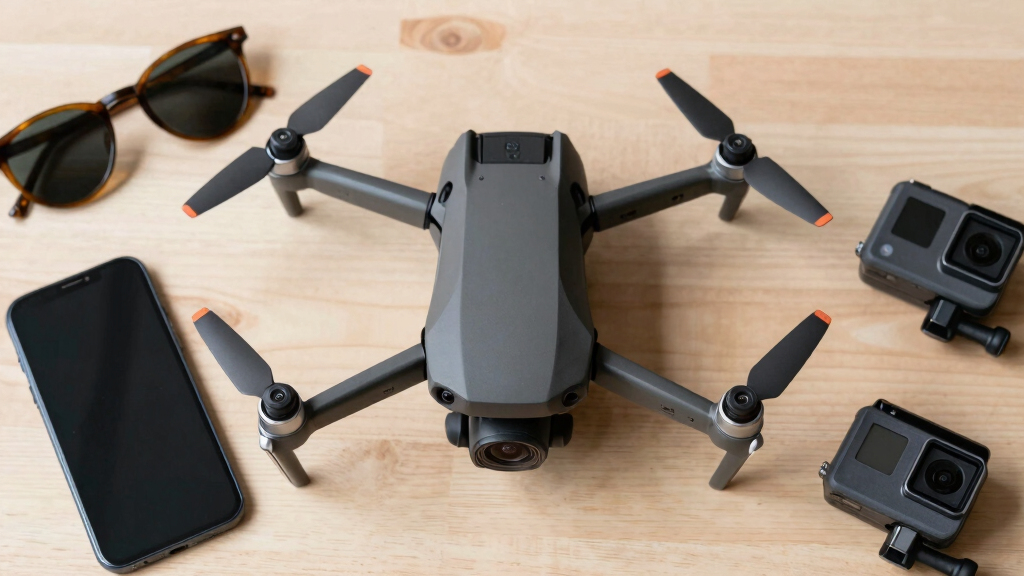
AI camera drone for aerial videography
As an affiliate, we earn on qualifying purchases.
As an affiliate, we earn on qualifying purchases.
Evolution of Aerial Video Technology and AI Integration
Over the past decade, drone technology has steadily advanced from simple remote-controlled devices to sophisticated platforms capable of high-resolution imaging and autonomous operation. In 2024, industry leaders began integrating AI for obstacle avoidance and scene recognition. The current year, 2026, marks a turning point with widespread deployment of AI-powered stabilization and autonomous flight modes, driven by improvements in machine learning algorithms, sensor accuracy, and processing power. These developments build on earlier innovations like GPS-based automation and digital stabilization, pushing the boundaries of what is possible in aerial videography.
“Our latest drones leverage machine learning to adapt in real-time, providing smoother footage even in challenging conditions.”
— Michael Chen, CTO of Autonomech

DJI Mini 4K Fly More Combo, Drone with 4K UHD Camera for Adults, Under 249 g, 3-Axis Gimbal Stabilization, 10km Video Transmission, Auto Return, 3 Batteries for 93-Min Max Flight Time, QuickShots
No Registration Needed – Under 249 g, this drone with camera for adults 4K does not require FAA…
As an affiliate, we earn on qualifying purchases.
As an affiliate, we earn on qualifying purchases.
Adoption Rate and Regulatory Challenges of AI Drones
While technological capabilities are rapidly advancing, it remains unclear how quickly widespread adoption will occur across different sectors. Regulatory frameworks governing autonomous drones are still evolving, potentially delaying full integration into commercial and consumer markets. Additionally, questions about data privacy, safety standards, and liability in autonomous operations are still under discussion globally, which could influence the pace of deployment.

CADDXFPV Walksnail GM2 V1-Axis Gimbal – FPV Head Tracking
2-Axis Head Tracking: Paired with CaddxFPV Head Tracker and Avatar HD Goggles, the GM2 enables responsive head tracking…
As an affiliate, we earn on qualifying purchases.
As an affiliate, we earn on qualifying purchases.
Future Developments and Industry Adoption Milestones
Next steps include regulatory agencies establishing clearer guidelines for autonomous drone use, which could facilitate broader adoption. Manufacturers are expected to continue refining AI algorithms, improving obstacle avoidance, scene recognition, and flight autonomy. Industry analysts predict that by late 2026 or early 2027, AI-powered drones will become standard in many professional filming and industrial applications, with consumer models following closely behind. Ongoing innovations will likely focus on enhancing AI robustness and safety features.

Official RC – Smart Remote Controller for DJI Mavic 3 Pro/Mavic 3 Classic/Mavic 3/Mini 3/Mini 3 Pro, 15km O3+ Video Transmission, 4-Hour Ultra-Long Battery Life, 5.5-inch FHD Display, Smooth Control
O3+ Video Transmission Technology: When used with drones that support O3+ transmission, like Mavic 3, RC can provide…
As an affiliate, we earn on qualifying purchases.
As an affiliate, we earn on qualifying purchases.
Key Questions
How do AI camera drones improve aerial footage?
They use machine learning algorithms to stabilize footage, track subjects automatically, and adapt to environmental conditions, resulting in smoother, higher-quality videos.
Are AI-enabled drones safe to operate autonomously?
While current models include obstacle avoidance and safety features, regulatory approval and technological maturity vary by region. Users should follow local guidelines and manufacturer instructions.
Will AI drones replace human pilots entirely?
Not immediately. AI enhances pilot capabilities and automates routine tasks, but human oversight remains important, especially for complex or sensitive operations.
What industries are benefiting most from AI camera drones?
Filmmaking, real estate, construction, agriculture, and emergency services are among the primary sectors adopting AI-enabled aerial video technology for improved efficiency and quality.
When will AI camera drones become affordable for consumers?
While high-end models are already available, broader affordability for casual users is expected within the next 1-2 years as technology matures and production scales up.
Source: ThorstenMeyerAI.com