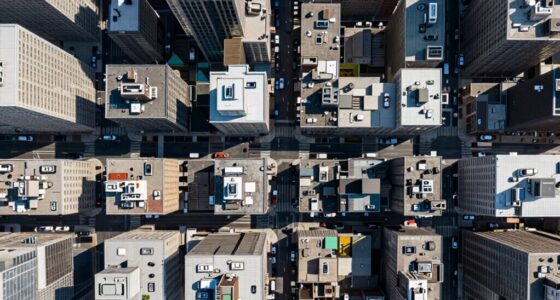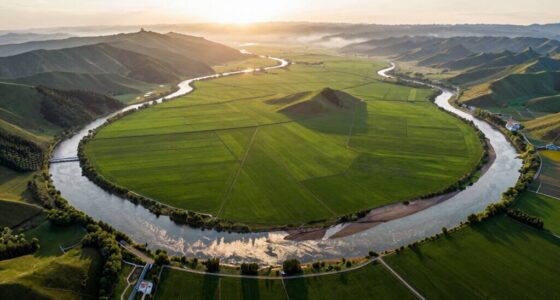
To make a location look as stunning on camera as it does in person, start by adjusting your lighting—use reflectors or additional lights to fill shadows and enhance warmth. Try different camera angles and perspectives to find the most flattering shot, and include interesting foreground elements for depth. Proper composition, along with suitable lenses and equipment, can also help capture its true essence. If you keep exploring these techniques, you’ll discover even more ways to highlight the location’s natural charm.
Listen free for 30 days with Audible
Thousands of audiobooks and originals — cancel anytime.
As an affiliate, we earn on qualifying purchases.
Key Takeaways
- Use different camera angles and perspectives to capture the scene’s true beauty more effectively.
- Enhance lighting with reflectors or additional lights to better match the in-person ambiance.
- Incorporate foreground elements and leading lines to add depth and vibrancy to the shot.
- Select appropriate lenses and focal lengths to better represent the scene’s scale and details.
- Plan and adjust on-site, balancing natural light and composition to minimize reliance on post-production fixes.

When a location looks stunning in person but falls flat on camera, it can be frustrating. You might have scouted the perfect spot, envisioning it bringing your project to life, only to find that the footage doesn’t capture its true beauty. The good news is, you can make strategic adjustments to improve how the location appears on camera. Start by focusing on lighting adjustments. Natural light can be unpredictable, so consider the time of day and weather conditions. Shooting during the golden hour—shortly after sunrise or before sunset—can add warmth and a soft glow that enhances the location’s appeal. If natural light isn’t enough, supplement with reflectors or portable lights to fill shadows evenly and highlight key features. Proper lighting ensures the scene’s textures and colors pop as they do when you see them in person.
Next, pay close attention to camera angle techniques. The way you shoot can drastically change how a location looks on film. Experiment with different angles to find the most flattering perspective. For instance, shooting from a slightly elevated position can showcase the scope of a landscape or architecture, making it appear more dramatic and immersive. Low angles can emphasize height and grandeur, while straight-on shots might flatten the scene, making it less impressive. Consider framing your shots carefully to include interesting foreground elements or leading lines that draw the viewer’s eye and create depth. Sometimes, a small change in angle—tilting the camera slightly or shifting your position—can reveal hidden beauty that isn’t obvious from a straightforward shot. Additionally, understanding how lighting conditions impact the camera’s perception can help you make better adjustments during the shoot. It’s also helpful to keep in mind that camera equipment can influence the final look, so using lenses with different focal lengths or filters can help you better capture the scene’s true essence.
Furthermore, pay attention to the background and how elements are composed within your frame. Clutter or distracting backgrounds can detract from the location’s appeal, so adjust your camera position to minimize distractions or use a wider lens to incorporate more context. If possible, add props or set dressings that complement the scene and make it more vibrant on camera. Post-production editing can help, but relying solely on editing to compensate for poor framing or lighting won’t deliver the authentic look you’re after. Instead, use a combination of lighting adjustments and camera angle techniques during shooting to maximize the location’s natural beauty. With careful planning and a flexible approach, you can ensure your footage truly reflects the charm you see in person.
portable reflector for photography
As an affiliate, we earn on qualifying purchases.
As an affiliate, we earn on qualifying purchases.
Frequently Asked Questions
How Can I Improve On-Camera Lighting to Match Real-Life Visuals?
To improve on-camera lighting to match real-life visuals, start by enhancing ambient lighting to create a natural glow. Use soft, diffused light sources to minimize harsh shadows. After filming, apply color correction to balance the tones and match the environment’s true colors. Adjusting the white balance on your camera also helps. Combining these techniques guarantees your footage looks authentic and closely resembles what you experience in person.
What Camera Settings Enhance Location Appearance on Video?
You should adjust your camera angle to capture the location’s best features and avoid distortion. Use a slightly higher or eye-level shot to showcase depth and details. Enhance the location’s appearance through thoughtful color grading, which can boost vibrancy and correct color discrepancies. Experiment with settings like ISO, aperture, and white balance to optimize clarity. These adjustments make your video more true-to-life and visually appealing, matching the location’s real-world beauty.
How Do I Prevent Reflections or Glare From Affecting Footage?
To prevent reflections or glare from affecting your footage, you should focus on reflection control and glare reduction techniques. Use polarizing filters to cut down on unwanted reflections from glass or shiny surfaces, and adjust your camera angle to minimize direct light hitting the lens. Additionally, controlling ambient light and adding flags or diffusers can help block glare, ensuring your footage accurately captures the location’s beauty without distraction.
What Post-Production Techniques Can Make Locations Look More Authentic?
You can enhance authenticity through color grading by adjusting tones to match real-life hues, making the location feel more natural. Incorporate subtle sound design elements to add ambiance, grounding the scene in reality. These techniques help bridge the gap between in-person experience and on-camera visuals, making your footage feel more genuine. By carefully balancing colors and sounds, you create an immersive environment that resonates as authentic to your audience.
How Can I Select the Best Angles to Showcase a Location’s True Beauty?
Did you know that 60% of viewers find a location more appealing when shot with the right angles? To showcase a location’s true beauty, focus on angle composition and focal depth. Experiment with low and high angles, framing key features creatively. Use focal depth to highlight details and create depth, drawing viewers into the scene. Adjust your perspective to capture the space’s essence, making it look as stunning on camera as in person.
As an affiliate, we earn on qualifying purchases.
Conclusion
So, next time your location outshines your camera lens, don’t panic. Instead, embrace the magic of in-person beauty that no filter can capture. Remember, your audience is missing out on a breathtaking experience that could make their jaws drop—literally! With a little creativity and confidence, you’ll turn those imperfect shots into awe-inspiring moments they’ll talk about for years. Trust me, your location’s true beauty deserves to be seen and celebrated—no filter needed.
camera lens with adjustable focal length
As an affiliate, we earn on qualifying purchases.
As an affiliate, we earn on qualifying purchases.
camera tripod for landscape shots
As an affiliate, we earn on qualifying purchases.
As an affiliate, we earn on qualifying purchases.
Labor Day sales Picks
labor day deals
As an affiliate, we earn on qualifying purchases.