
TL;DR

Get the latest gadgets delivered free with Prime
- Fast, free delivery on millions of items
- Prime Video, Amazon Music and more included
- Member-only deals all year
AI-enabled camera drones are revolutionizing aerial photography in 2026 by providing advanced stabilization, autonomous flight features, and improved image quality. This development is set to impact hobbyists, professionals, and industries relying on aerial footage, though some technological and regulatory questions remain.
Leading drone companies unveiled a new generation of AI-powered camera drones in 2026, promising to significantly improve aerial filming capabilities. These drones incorporate advanced artificial intelligence systems designed to automate flight paths, optimize stabilization, and enhance image quality, making professional-grade aerial footage more accessible. The development marks a major shift in drone technology, with widespread implications for content creators, industries, and hobbyists alike. For a detailed review of the best camera drones, see 15 Best Camera Drones in 2026.
Several top drone manufacturers, including DJI, Autel Robotics, and Skydio, announced new models equipped with integrated AI systems that enable autonomous flight, obstacle avoidance, and intelligent framing. These drones use machine learning algorithms to analyze real-time data, adjusting flight and camera settings dynamically to produce stable, high-quality footage. Learn more about how AI camera drones are transforming aerial video in How AI Camera Drones Are Changing Aerial Video In 2026. Notably, DJI introduced the Mini 4K AI, which offers 4K video with stabilization enhancements driven by AI algorithms, while Skydio’s latest drone features fully autonomous flight paths tailored to complex environments.
Industry experts highlight that these AI features reduce the need for manual piloting skills, allowing even casual users to capture professional-looking footage. Additionally, the new drones boast longer flight times—up to 40 minutes—thanks to more efficient power management and AI-driven flight optimization. While these advancements are promising, the technology is still in the early stages of widespread adoption, and some concerns about regulation and data privacy are emerging.
The 10 picks
- 1
 DJI Mini 5 Pro Fly More Combo Plus with DJI RC 2, 4K Camera DroneView on Amazon →
 - 2
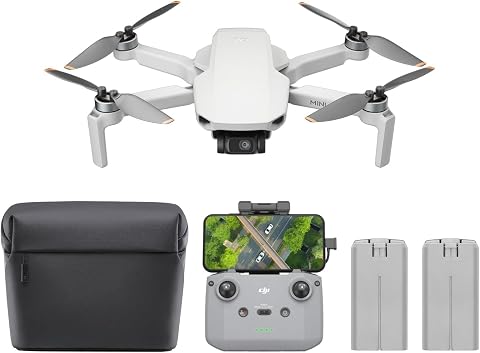 DJI Mini 4K Camera Drone Combo, 4K UHD, 249g, 3-Axis Gimbal, 10km Transmissio…View on Amazon →
 - 3
 DJI Mini 4K Drone with 4K UHD Camera and 3-Axis GimbalView on Amazon →
 - 4
 8K GPS Drone with Camera for Adults, 5G Brushless Foldable RC QuadcopterView on Amazon →
 - 5
 GPS Drone with 1080P Camera and 4.5" LCD Screen RemoteView on Amazon →
 - 6
 TD12Pro Drone with 1080P Camera and LCD Screen RemoteView on Amazon →
 - 7
 MSMV 4K HD Camera Drone, Wireless RC Toy for Boys and GirlsView on Amazon →
 - 8
 F417PRO FPV Drone with 1080P Camera and LCD Remote for Adults, Beginners, KidsView on Amazon →
 - 9
 Drone with Camera and Built-in Screen on ControllerView on Amazon →
 - 10
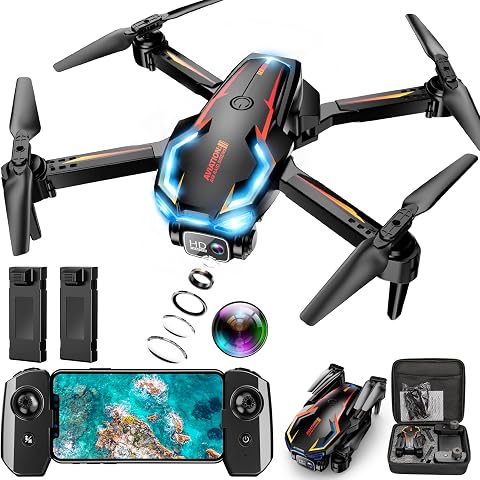 Drone with Camera for Adults, 2K HD FPV, Altitude Hold, One-Key Takeoff/Landi…View on Amazon →
Impacts of AI-Enhanced Drones on Aerial Filmmaking
The integration of AI into camera drones in 2026 represents a transformative step for aerial photography and videography. It democratizes access to high-quality footage by reducing the skill barrier, enabling amateurs and professionals to produce cinematic content with minimal effort. Industries such as real estate, construction, and film production stand to benefit from more reliable, autonomous drone operations that can execute complex flight patterns and capture detailed imagery without constant manual control.
Moreover, AI-driven stabilization and intelligent framing improve footage quality, making aerial shots more stable and visually appealing. However, the rise of autonomous drones also raises questions about regulation, safety, and privacy, which authorities are beginning to address. Overall, these developments could redefine standards for aerial content and expand commercial applications, provided regulatory frameworks keep pace.
Evolution of Drone Technology and AI Integration
Over the past decade, consumer drone technology has steadily advanced, with improvements in camera resolution, flight stability, and user-friendly controls. The year 2026 marks a significant milestone as AI systems become embedded in consumer and professional-grade drones, transitioning from optional features to core functionalities. Earlier models relied heavily on manual piloting, with limited automation; recent innovations have shifted toward autonomous flight and intelligent image processing.
Major manufacturers like DJI and Skydio have invested heavily in AI research, leading to the release of drones capable of obstacle avoidance, automatic tracking, and adaptive flight paths. These developments follow trends in AI and machine learning, which enable drones to analyze their environment and optimize performance in real time. The current wave of AI-enabled drones builds on this foundation, promising more intuitive operation and higher-quality footage.
Regulatory and Technological Challenges Still Emerging
While AI-enhanced drones promise significant benefits, questions remain about regulatory frameworks, data privacy, and safety standards. It is not yet clear how authorities worldwide will regulate fully autonomous flight or how privacy concerns will be managed as drones become more capable of capturing sensitive data. Additionally, the long-term reliability of AI systems in diverse environmental conditions is still being tested, and some industry insiders warn of potential technical failures or hacking risks.
Expected Developments and Industry Adoption in 2026 and Beyond
Manufacturers are expected to continue refining AI capabilities, with upcoming models featuring even more sophisticated autonomous functions, longer flight times, and enhanced stabilization. Regulatory bodies are likely to release new guidelines to address safety and privacy, which will influence how these drones are used commercially and recreationally. Consumer adoption will grow as prices decrease and AI features become standard, potentially leading to new applications in filmmaking, surveying, and emergency response. Industry stakeholders anticipate widespread integration of AI drones in various sectors within the next year, contingent on regulatory clarity.
Key Questions
How do AI-powered camera drones differ from traditional drones?
AI-powered camera drones incorporate machine learning algorithms that enable autonomous flight, obstacle avoidance, and intelligent framing, reducing the need for manual piloting and improving footage stability and quality.
Are AI drones safe to use in crowded or complex environments?
Many new models feature advanced obstacle detection and avoidance systems, making them safer for use in complex environments. However, users should still exercise caution and adhere to local regulations.
Will AI drones be regulated or restricted in the future?
Regulatory agencies are beginning to develop guidelines for autonomous drone operation, but comprehensive regulations are still in progress. Future restrictions may focus on privacy, safety, and airspace management.
Can amateurs and hobbyists benefit from AI-enabled drones?
Yes, AI features simplify flying and filming, making high-quality aerial footage accessible to hobbyists without advanced piloting skills.
What are the main limitations of current AI drone technology?
Limitations include concerns about reliability in adverse weather, potential hacking risks, and the evolving regulatory landscape that may impose restrictions on autonomous operation.
Source: ThorstenMeyerAI.com
Halloween Picks
halloween
As an affiliate, we earn on qualifying purchases.