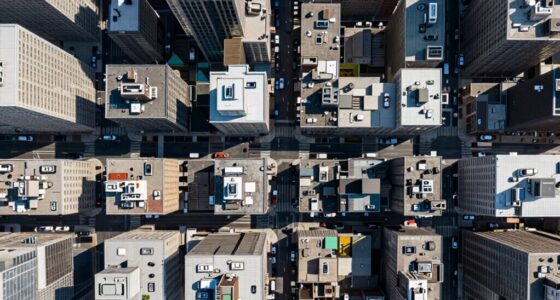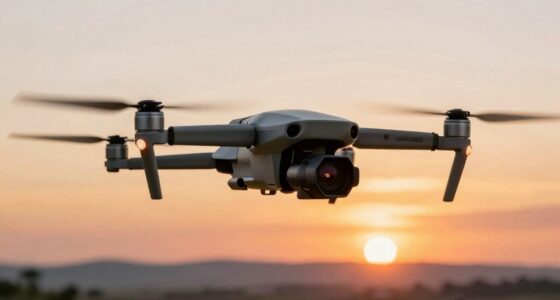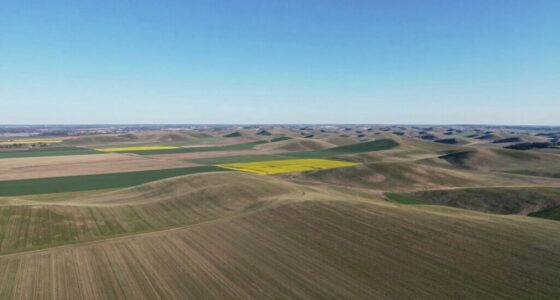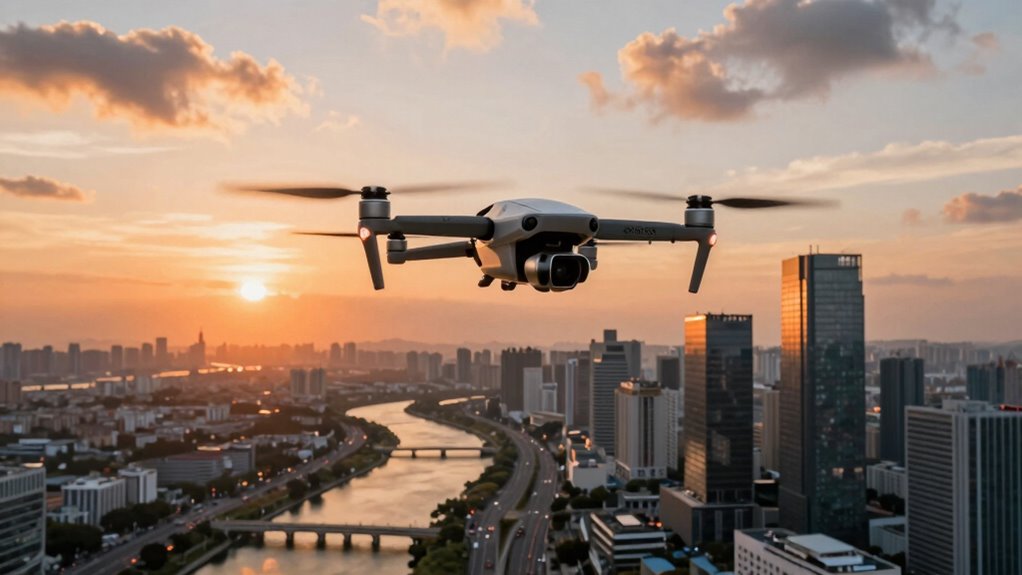

To quickly improve your drone framing skills, focus on practicing core composition principles like the rule of thirds, leading lines, and balancing elements in your shots. Experiment with different angles and altitudes, adjusting on the fly to create dynamic scenes. Visualize your shots beforehand and use storyboards to plan your flight. Study professional drone pilots to learn their techniques and regularly review your footage to identify areas for improvement. Keep practicing, and you’ll see your skills sharpen fast—there’s more to discover ahead.
Key Takeaways
- Study and mimic professional drone pilots’ framing techniques and angles.
- Practice pre-flight visualization and shot planning to enhance composition awareness.
- Use the rule of thirds, leading lines, and symmetry to structure shots effectively.
- Experiment with different perspectives, altitudes, and camera tilts during flight.
- Review footage critically to identify improvements and refine your composition skills.
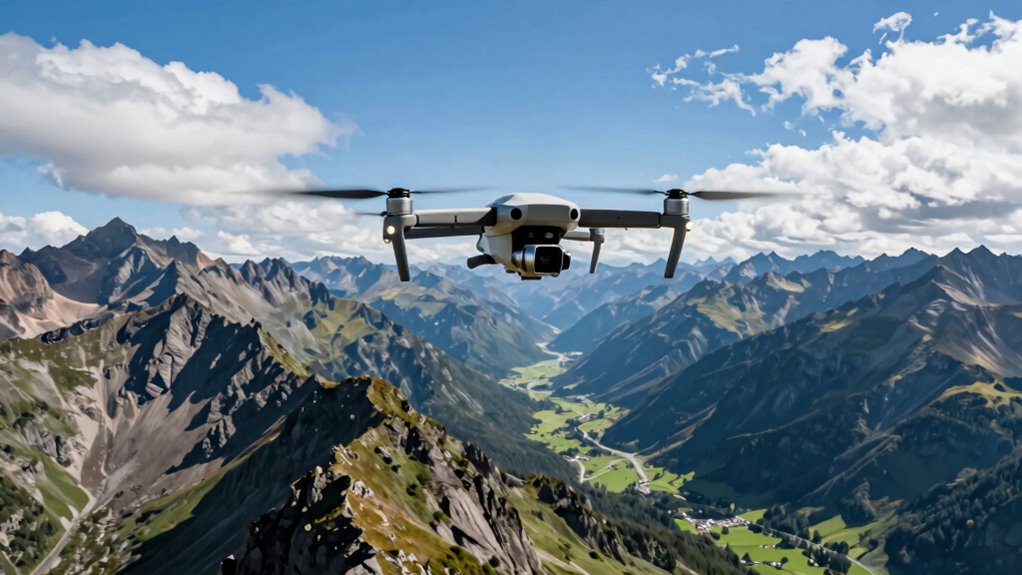
Ever wondered how some drone pilots capture stunning, perfectly framed shots effortlessly? It’s not just about having the latest equipment; it’s about mastering aerial composition and understanding camera angles. When you focus on these elements, you’ll see a significant improvement in your framing skills. The key lies in practicing deliberate composition, paying attention to how objects are arranged within your frame, and how different camera angles can dramatically change the story your shot tells.
Master aerial composition and camera angles to elevate your drone shots effortlessly.
Aerial composition is your foundation. Think of your drone’s perspective as a canvas where you control the placement of key elements. Instead of simply pointing and shooting, learn to visualize the scene before taking off. Use the rule of thirds to position your main subjects off-center, creating a balanced and engaging shot. Look for leading lines, patterns, and shapes that guide the viewer’s eye through the frame. By consciously integrating these compositional tools, your shots will become more compelling and professional-looking. Additionally, understanding how to balance elements within the frame can help create more visually appealing images. Developing a strong sense of aerial perspective will further enhance your ability to craft captivating scenes from above.
Camera angles are equally crucial. Experiment with high, low, and oblique angles to add depth and interest to your footage. Elevating your drone to higher altitudes can give a majestic, sweeping view, while lowering it closer to the ground can add intimacy and drama. Tilting the camera up or down alters the perspective, emphasizing height or depth, and can make subjects appear larger or more imposing. Practice moving your drone smoothly between angles; this fluidity makes your footage more dynamic and visually appealing.
The fastest way to improve is by planning your shots before flying. Visualize the scene, decide on the best camera angles, and consider how to compose the shot using principles like symmetry, framing, and contrast. During flight, stay aware of your composition in real-time, adjusting your drone’s position and camera tilt to enhance the scene. Review your footage afterward, analyze what works, and identify what could improve. Over time, this reflective process sharpens your eye for effective aerial composition and helps you intuitively select the best angles. Developing a shot list or storyboard before flying can further streamline this process and ensure you capture all the desired elements.
Finally, don’t shy away from studying professional drone pilots or filmmakers. Observe how they frame shots, what angles they choose, and how they use aerial composition to tell a story. Mimic their techniques and adapt them to your style. With consistent practice and a focus on aerial composition, you’ll notice your drone framing skills accelerate rapidly, transforming ordinary footage into extraordinary visuals that captivate your audience.

SoloGood FPV Camera SIYI A8 Mini Gimbal Camera 4K 8mp HD 6X Digital Zoom with AI Smart Identify and Tracking HDR Starlight Night Vision for UGV USV RC Plane FPV Drones Robot
- Camera Type: Mini 4K AI Gimbal FPV Camera
- Tracking Feature: AI Smart Identify and Tracking
- Gimbal Function: Rotates with aircraft for FPV view
As an affiliate, we earn on qualifying purchases.
As an affiliate, we earn on qualifying purchases.
Frequently Asked Questions
What Camera Settings Optimize Drone Framing Quality?
To optimize drone framing quality, you should focus on camera angles and composition techniques. Use wide-angle settings for expansive shots, and adjust exposure to keep your subject bright without overexposing the background. Experiment with different angles like eye-level or high-altitude views to add variety. Applying composition techniques such as the rule of thirds and leading lines helps create balanced, engaging frames that draw viewers’ attention naturally.
How Does Weather Affect Drone Framing Accuracy?
Weather can totally mess with your drone framing accuracy—think of wind challenges as a wild beast throwing your shots off course, and lighting considerations like trying to paint with invisible ink. Strong winds can shake your drone like a leaf in a hurricane, making precise framing nearly impossible. Bright sunlight or heavy shadows can distort your perception, so you gotta adapt quickly. Weather’s unpredictable nature demands constant vigilance to keep your framing sharp and on point.
Are There Specific Drone Models Better for Framing?
Yes, some drone models are better for framing, especially those with advanced drone stabilizers and control algorithms. Look for drones that offer precise stabilization and smooth control, which help you frame shots accurately. Models with intelligent flight modes and adaptive control algorithms make it easier to keep your subject in focus and maintain perfect composition. Investing in these features guarantees sharper, more professional-looking footage and enhances your overall framing skills.
How Can I Practice Framing Without a Drone?
You can practice framing without a drone through manual techniques and framing exercises. Imagine holding an imaginary camera, focusing on composing scenes with your hands or using a smartphone to simulate shots. Use a window or open space to practice framing subjects at different distances, adjusting angles and perspectives. These exercises sharpen your eye for composition, helping you develop a keen sense of balance and symmetry, which translates directly to better drone framing skills.
What Post-Production Techniques Enhance Framing?
To enhance framing in post-production, focus on creative composition and visual storytelling. Use cropping to refine your shot’s balance, emphasizing key elements. Adjust contrast, brightness, and colors to direct viewers’ attention and create mood. Techniques like vignetting or adding overlays can guide the eye and strengthen your narrative. These edits help you craft compelling visuals that communicate your story more effectively, elevating your drone footage’s overall impact.

4 Pcs Propeller for DJI Mavic Air 2 Series Drone Spare Parts Low-Noise Blade Props Replacement Drone Accessories for Maivc Air 2s
- Compatibility: Designed for DJI Mavic Air 2 and Air 2S
- Package Contents: Includes 4 replacement propeller blades
- Noise Reduction: Low-noise blade design for quieter flights
As an affiliate, we earn on qualifying purchases.
As an affiliate, we earn on qualifying purchases.
Conclusion
So, next time you’re soaring high, remember that perfect framing isn’t about fancy gadgets or endless practice—just a dash of patience and a keen eye. Ironically, the fastest way to improve might be simply slowing down and trusting your instincts. After all, in the rush to capture stunning shots, you might just overlook the obvious. Sometimes, the best frames are those you stumble upon when you finally stop chasing perfection and start enjoying the view.
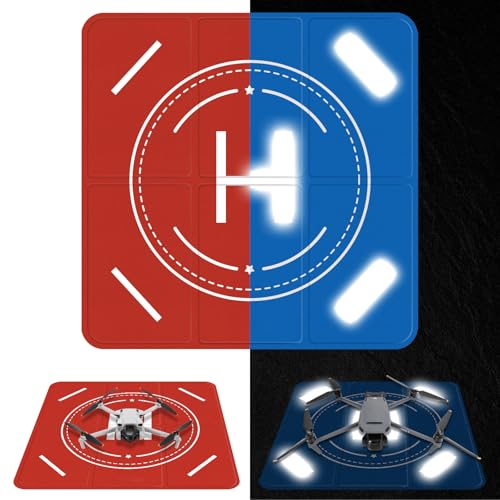
FPVtosky Nighttime Reflective Drone Landing Pad, Fast-fold Double Sided Waterproof Landig Pad Weighted for DJI Lito X1/Mini 5 Pro/ 4/3 Pro/Mini 4k / Mavic 4 / Air 3s/ Avata 2/ Neo/Flip
- Waterproof and Easy to Clean: Made of durable double-sided PU leather
- Portable and Safe: Fits various drone sizes with foldable design
- Foldable and Convenient: Quickly folds for easy transport and storage
As an affiliate, we earn on qualifying purchases.
As an affiliate, we earn on qualifying purchases.
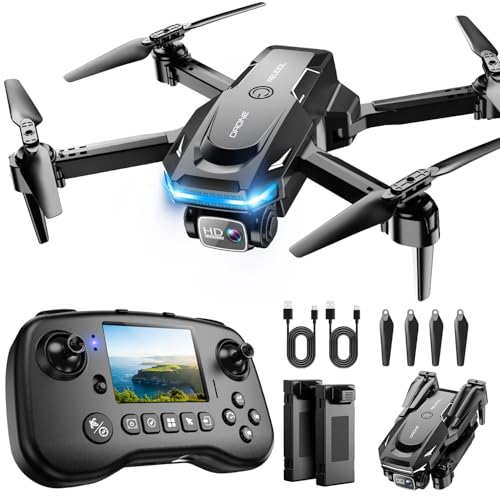
Drone with Camera, Screen on Controller Remote Control Quadcopter FPV Drone
- Built-in HD Screen: Watch live footage without phone
- HD Camera with Adjustable Lens: Capture 1080P videos and selfies
- Easy One-Key Operations: Takeoff, landing, flips, and more
As an affiliate, we earn on qualifying purchases.
As an affiliate, we earn on qualifying purchases.