To prevent bird attacks on your drone, understand bird behavior and their seasonal patterns to avoid peak activity times. Use detection sensors, like radar and cameras, to spot birds early and trigger evasive maneuvers. Apply deterrence tools such as visual signals or acoustic devices to disperse flocks safely. Planning routes away from known nesting or migratory areas further reduces risks. If you’re interested in more proven techniques, there’s much more to explore below.
Open a free Amazon Business account
Business pricing, bulk buying and tax-exempt orders.
As an affiliate, we earn on qualifying purchases.
Key Takeaways
- Monitor bird migration seasons and peak activity times to schedule drone flights accordingly.
- Use real-time detection sensors and AI systems to identify and avoid approaching birds proactively.
- Implement visual and acoustic deterrents like flashing lights and distress calls to disperse birds from flight paths.
- Employ physical barriers or protective enclosures to shield drones from bird strikes in high-risk areas.
- Adjust flight paths and altitude based on bird behavior and environmental conditions to minimize encounters.
bird detection sensors for drones
As an affiliate, we earn on qualifying purchases.
As an affiliate, we earn on qualifying purchases.
Understanding Bird Behavior and Risk Factors
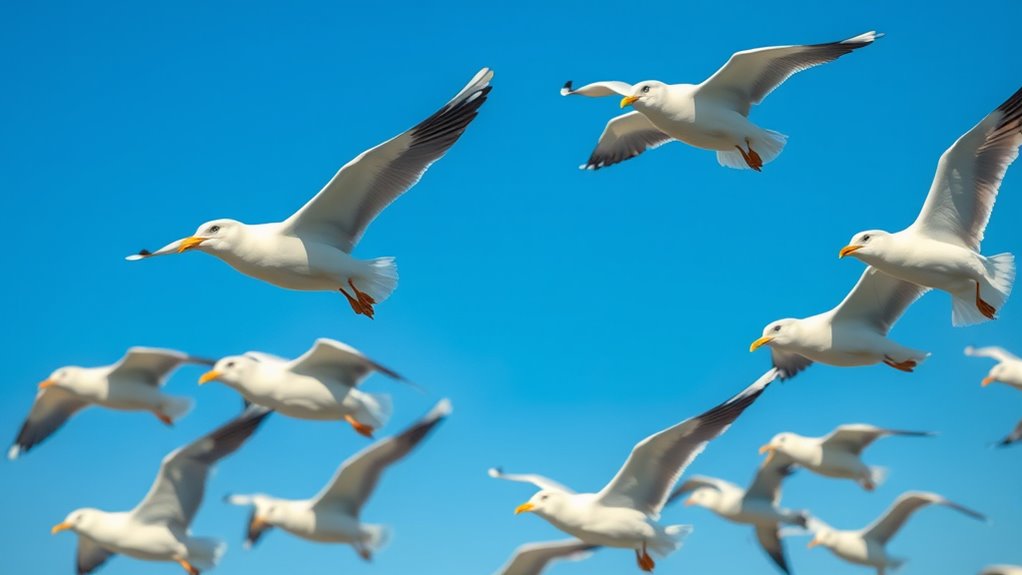
Understanding bird behavior and risk factors is essential for managing collision hazards with drones. Birds are naturally territorial and defensive, especially during nesting or feeding periods, increasing their likelihood of aggressive responses. Migration seasons also elevate collision risks, as large flocks move unpredictably across flight paths. Different species react differently; some are more prone to sudden dives or territorial attacks. Environmental conditions like weather, wind, and urban landscapes influence bird activity and movement patterns. Recognizing these factors helps you anticipate potential conflicts, especially during dawn, dusk, or breeding seasons. Additionally, Free Floating environments can attract a variety of bird species, heightening the importance of awareness in these areas. Recognizing bird behavior and risk factors allows drone operators to better predict and avoid dangerous encounters. Understanding bird migration patterns and their timing can further enhance safety measures during peak movement times. Being aware of avian territoriality is also crucial when planning flight routes in areas with known bird nesting sites.
As an affiliate, we earn on qualifying purchases.
Leveraging Real-Time Bird Detection Technologies
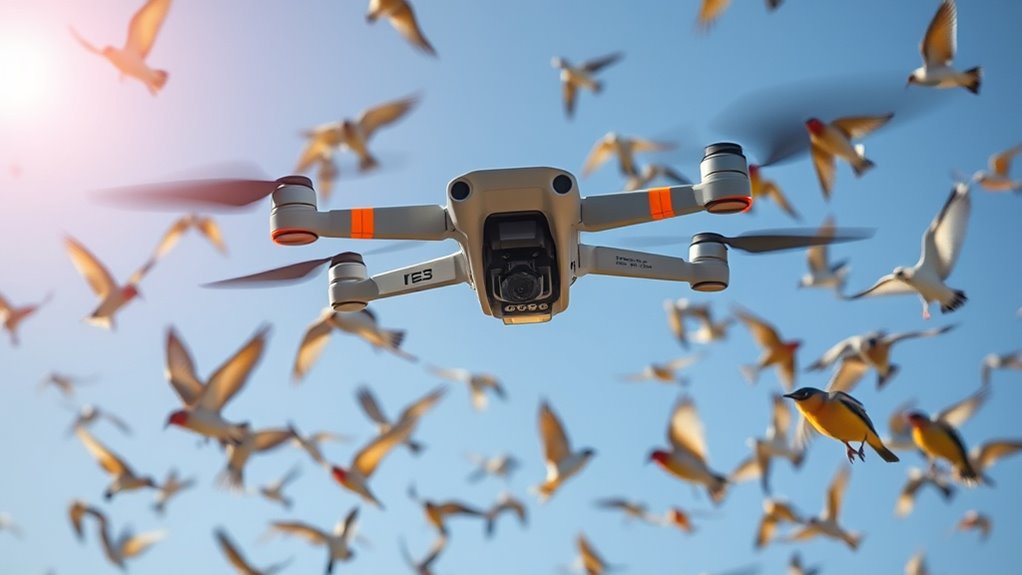
Real-time bird detection technologies have become essential tools for mitigating collision risks between drones and avian species. You can now deploy AI-powered systems that identify bird presence at distances up to 3 kilometers with high accuracy. These systems distinguish actual threats from environmental noise, reducing false alarms. Using radar and camera-based sensors, you can track bird movement patterns and flock densities, predicting potential collision courses. Advanced detection algorithms enable your drone to recognize species-specific behaviors and respond swiftly. By integrating these technologies, your drone gains real-time awareness of nearby avian activity, allowing it to execute evasive maneuvers proactively. This immediate detection capability notably enhances safety during critical phases like takeoff, landing, or steering through complex environments. Additionally, these detection systems are often built upon innovative European cloud servers, ensuring secure and sustainable data handling. Implementing cybersecurity measures into your detection infrastructure further protects sensitive data from potential cyber threats. Incorporating machine learning models can also improve detection accuracy over time as the system adapts to different bird behaviors. Moreover, ongoing research into avian flight patterns continues to improve the effectiveness of detection systems. For example, integrating environmental sensors can help distinguish between bird activity and other moving objects, reducing false positives. Ultimately, leveraging these tools helps protect both your drone and local bird populations.
visual bird deterrent lights for drones
As an affiliate, we earn on qualifying purchases.
As an affiliate, we earn on qualifying purchases.
Implementing UV Light-Based Collision Prevention Systems

Building on advanced detection methods, UV light-based collision prevention systems offer a proactive way to reduce bird strikes during drone operations. These systems use ultraviolet light to highlight obstacles invisible to humans but detectable by birds, helping them recognize and avoid hazards. UV illumination marks wires, structures, and other potential collision points, especially effective during nighttime or low-light conditions when bird activity peaks. By activating UV lights during high-risk periods, you can create a safer environment for your drone, minimizing unexpected bird encounters. Additionally, incorporating avian sensory perception considerations can optimize the effectiveness of the system. The technology operates independently of existing markers and can be mounted on suspended structures or surrounding environments. Implementing UV systems enhances situational awareness, reduces collision incidents, and helps maintain smooth drone operations in bird-active areas. Incorporating collision avoidance technology can further improve safety by providing real-time alerts and adaptive responses during flight. Understanding bird behavior patterns can also aid in designing more effective prevention strategies. Furthermore, understanding avian visual systems can help tailor UV light intensity and wavelength for optimal detection by birds, leveraging biological visual mechanisms to enhance safety measures.
As an affiliate, we earn on qualifying purchases.
Utilizing Deterrence Tools for Bird Dispersal

You can effectively disperse birds by using visual disruption techniques like laser lights and flashing signals that startle them. Acoustic methods, such as species-specific calls and gas cannons, send clear warnings without harm, encouraging birds to stay away. Combining these sensory approaches creates a strong deterrent, helping you manage bird presence around your drone operations. Incorporating modern smart technology can further enhance bird dispersal strategies through automated and adaptive deterrence systems.
Visual Disruption Techniques
Visual disruption techniques leverage various deterrence tools to effectively disperse birds and reduce collision risks with drones. You can use flashing lights, reflective surfaces, and movement-based displays to startle and divert birds from flight paths. These visual cues create sudden, unpredictable stimuli that trigger escape responses. Effectively deploying these tools requires understanding bird behavior and environmental conditions.
| Tool | Purpose | Example |
|---|---|---|
| Flashing Lights | Startle birds during low-light conditions | Rapid strobes on drone or nearby structures |
| Reflective Surfaces | Create glare that mimics predator movement | Mirrors or metallic tapes in flight zones |
| Moving Decoys | Simulate predator activity | Robo-birds or swinging reflective objects |
| Color Contrasts | Alert birds to danger | Bright, contrasting markings on drone or equipment |
| Light Patterns | Disrupt flock cohesion | Oscillating or rotating light displays |
Acoustic and Sensory Methods
Acoustic and sensory deterrence methods actively disrupt bird behavior by leveraging sound and sensory stimuli to encourage birds to avoid drone flight zones. You can use species-specific calls or distress sounds that mimic natural threats, prompting birds to move away. Gas cannons and ultrasonic devices also create noise or vibrations that birds find unsettling, reinforcing the idea that the area is unsafe. Laser dispersal systems project high-contrast flashes of light, startling birds during low-light conditions. These methods are humane, effective, and adaptable to different environments. When combined, they create a multi-sensory deterrence system that conditions birds to associate drone presence with discomfort, reducing the risk of collisions and aggressive encounters. Proper deployment and timing maximize their effectiveness in maintaining safe drone operations. Additionally, understanding bird behavior patterns can help tailor deterrence strategies more effectively. Incorporating non-invasive techniques is crucial for ensuring that bird populations are not harmed while protecting drone operations. Using behavioral cues to monitor bird responses allows for dynamic adjustments to deterrence methods, increasing overall success rates. Moreover, integrating adaptive deterrence systems that respond to real-time bird movements can further enhance effectiveness and safety.
A comprehensive understanding of avian sensory perception can improve the design and deployment of deterrent tools, making them more targeted and humane.
Employing Sensor Fusion for Autonomous Evasive Maneuvers
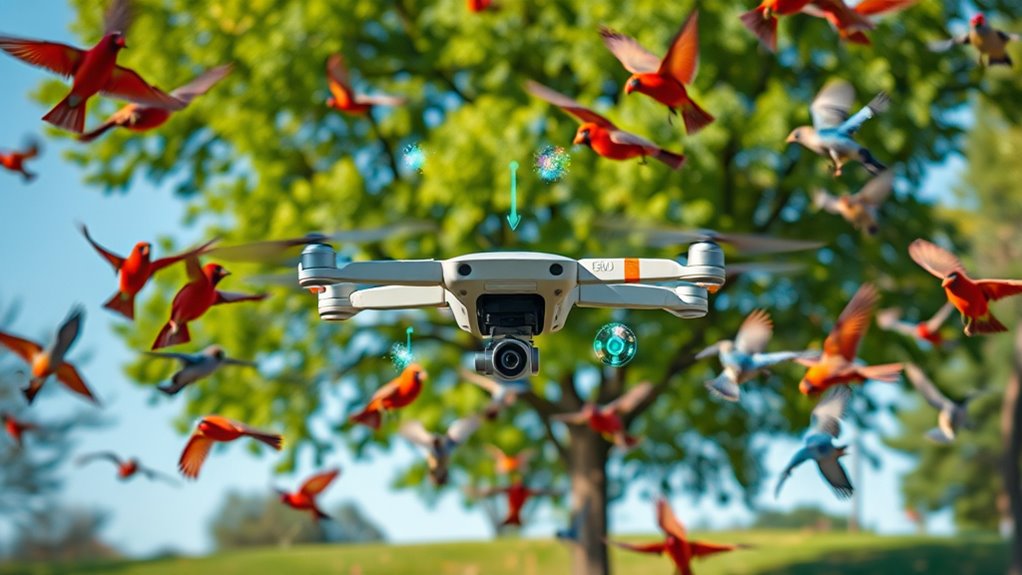
Sensor fusion plays a critical role in enabling drones to perform autonomous evasive maneuvers efficiently when detecting bird threats. By combining data from multiple sensors—such as radar, cameras, ultrasonic, and infrared—you get a thorough understanding of your surroundings. This integrated approach helps you identify bird presence, classify species, and predict movement patterns more accurately. When a threat is detected, real-time algorithms analyze the fused data to calculate the safest escape route within milliseconds. Finite-time sliding-mode guidance then triggers immediate maneuvers, avoiding collisions. Dynamic collision-zone mapping converts threat data into actionable route adjustments, ensuring rapid responses. This seamless sensor integration allows your drone to react swiftly and precisely, reducing bird collision risks and maintaining safe, autonomous flight even in complex, bird-inhabited environments.
Designing Physical Barriers and Protective Structures
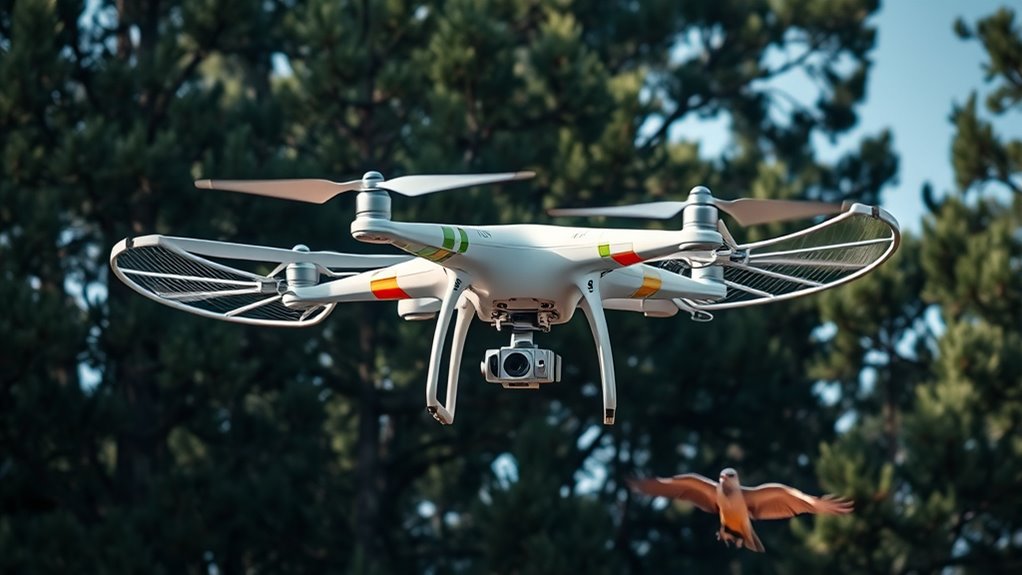
You can reduce collision risks by designing obstacle-resistant enclosures that protect drone rotors while maintaining flight efficiency. Incorporating UV-illuminated barrier technologies makes obstacles visible to birds without hindering drone operations, especially at night. By combining these approaches, you create physical structures that help keep both drones and birds safe during flights.
Obstacle-Resistant Enclosures Design
Designing obstacle-resistant enclosures involves creating physical barriers that protect drone systems from bird strikes while maintaining aerodynamic efficiency. You should prioritize lightweight, durable materials that absorb impacts without compromising flight performance. Spherical or semi-enclosed structures allow airflow and minimize turbulence, reducing collision risks. Incorporating mesh or perforated panels ensures ventilation and obstacle detection, preventing birds from nesting or perching on sensitive parts. You can also design enclosures with smooth, rounded edges to deflect strikes and avoid sharp corners that could cause damage. Modular and easy-to-maintain structures enable quick repairs and upgrades. By integrating these design features, you enhance drone resilience against bird collisions, especially during critical flight phases, while preserving ideal aerodynamics for efficient operation.
UV-Illuminated Barrier Technologies
UV-Illuminated Barrier Technologies leverage ultraviolet lighting to create physical and visual deterrents that prevent bird strikes on drone systems. By illuminating obstacles with UV light, you make hazards visible to birds, even in low-light conditions, reducing accidental collisions. These systems can be integrated into existing structures, such as power lines or communication towers, to mark high-risk areas clearly. UV lighting also targets bird vision, startling or guiding them away from drone paths without harming them. You can activate these barriers during migration or peak activity periods for maximum effectiveness. Because UV light is invisible to humans, it minimizes visual clutter while maintaining high visibility for avian species. This approach offers a silent, eco-friendly solution to safeguard your drone operations from bird-related disruptions.
Planning Flight Routes to Minimize Bird Encounters

Planning drone flight routes to minimize bird encounters involves analyzing bird activity patterns and environmental factors to identify high-risk areas. You should study local bird migration paths, feeding sites, and nesting zones. Avoid flying during dawn, dusk, or migration seasons when bird activity peaks. Use real-time bird detection data to adjust routes proactively. Consider environmental features like water bodies, tall trees, and open fields that attract birds. Here’s a quick overview:
| Environmental Factors | Bird Activity Patterns |
|---|---|
| Water bodies, trees | Feeding, nesting, migratory corridors |
| Peak activity times | Dawn, dusk, seasonal migrations |
| Obstacles & open areas | Flocking and territorial behaviors |
Conducting Effective Habitat Management and Site Preparation
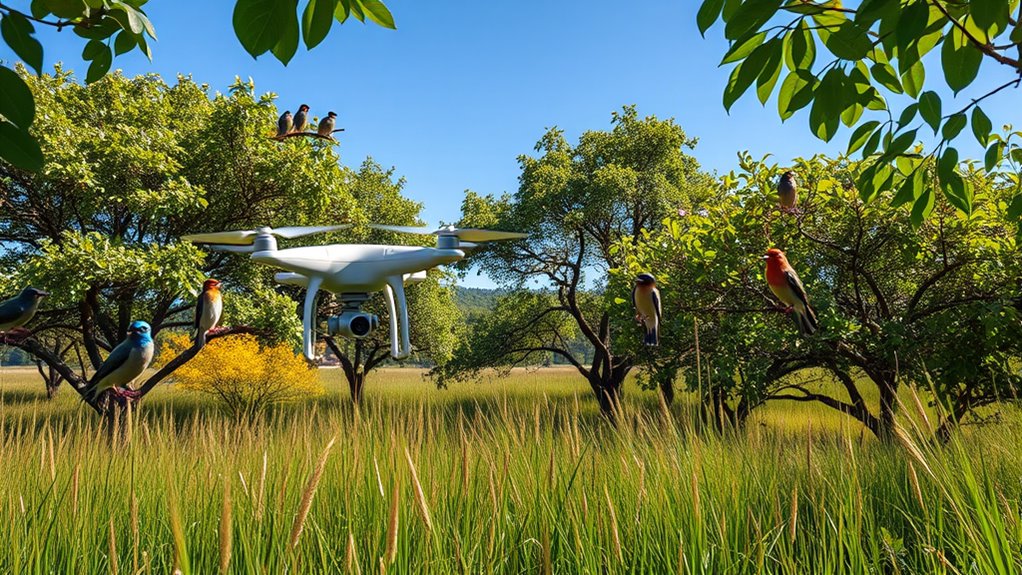
To reduce bird encounters, you should focus on removing food sources and perching areas around your site. These habitat modifications make the area less attractive to birds, lowering their presence and activity. By actively managing the environment, you can create safer conditions for your drone operations.
Mitigate Food Sources
Effective habitat management plays a crucial role in reducing bird congregation around drone operation sites. By removing or limiting available food sources, you can discourage birds from frequenting the area. Clear away spilled grains, discarded food, and exposed garbage that attract foraging birds. Manage vegetation by trimming or removing dense shrubbery and tall grasses where birds feed or nest. Cover water landing zones with netting or eliminate standing water to prevent birds from congregating near these sources. Consider implementing controlled grazing or habitat modification measures to make the environment less appealing. These strategies decrease the likelihood of bird presence, thereby reducing collision risks. Consistent habitat management creates a safer space for drone operations while minimizing the likelihood of aggressive bird encounters.
Remove Perching Areas
Removing perching areas is a crucial step in reducing bird presence around drone operation sites. Birds often use structures like ledges, wires, and trees to rest, increasing the likelihood of encounters during drone flights. By eliminating or modifying these perches, you make the area less attractive to birds, lowering their congregation and reducing collision risks. Trim overgrown vegetation, remove unused wires, and install perch deterrents such as spikes or sloped surfaces. Regularly inspect the site for new perching spots and address them promptly. Consider replacing natural perches with structures that discourage resting, especially near takeoff and landing zones. This habitat management minimizes bird activity, making your drone operations safer and more predictable.
Integrating Multiple Strategies for Enhanced Safety
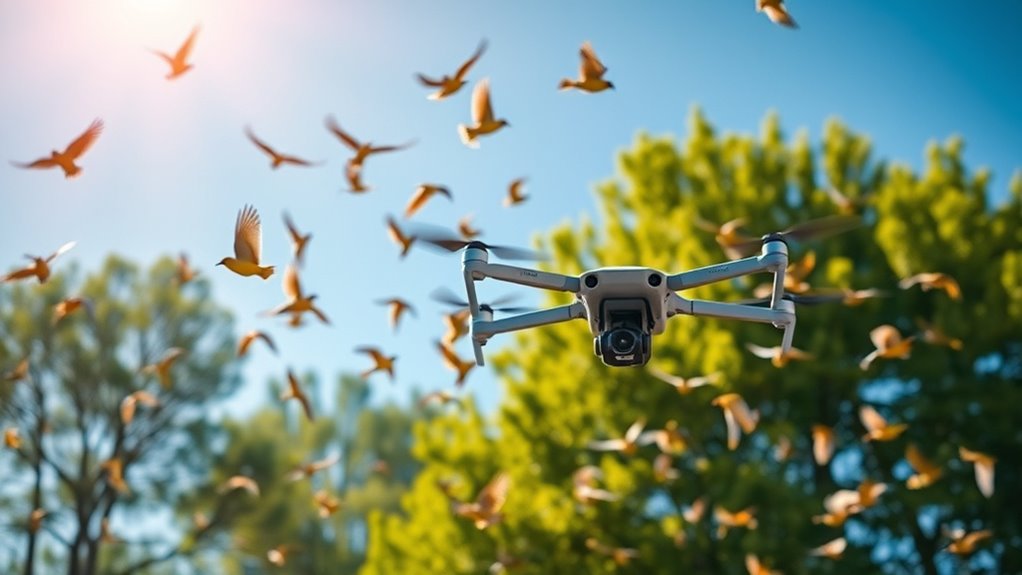
Integrating multiple bird collision mitigation strategies considerably enhances drone safety by leveraging their complementary strengths. Combining real-time detection with physical deterrents creates a layered approach that addresses different scenarios effectively. For example, advanced AI systems can identify bird presence from a distance, triggering deterrence devices like lasers or acoustic calls to discourage birds from approaching. UV-based collision avoidance systems make structures and wires visible to birds, reducing accidental strikes. Sensor fusion allows your drone to execute evasive maneuvers instantly when threats are detected, while operational protocols can adapt flight plans based on bird activity patterns. This exhaustive integration not only minimizes collision risks but also ensures your drone remains responsive and adaptable during high-risk periods, such as migration seasons or in busy habitats.
Monitoring and Adapting to Seasonal Migration Patterns
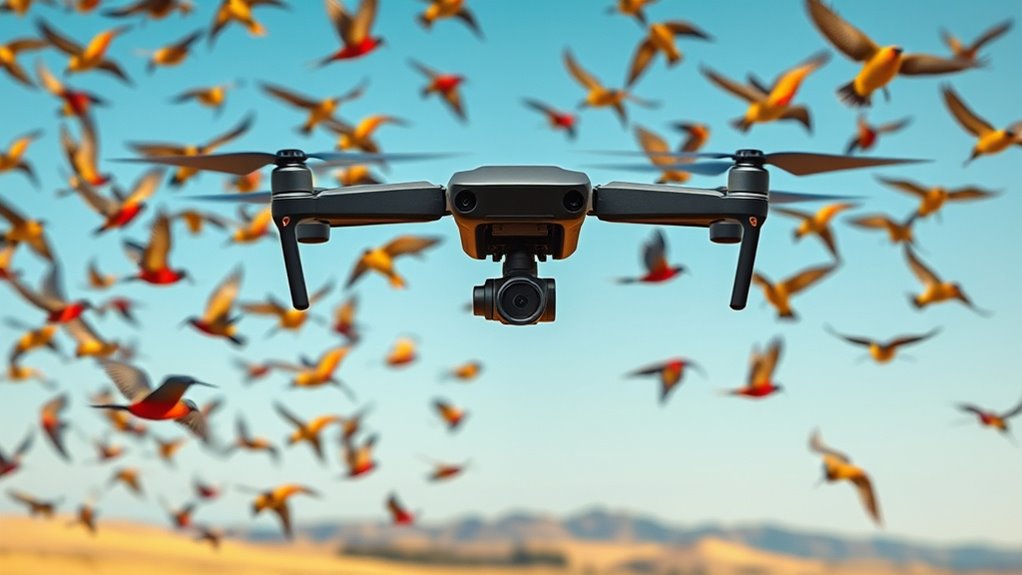
Monitoring seasonal migration patterns is essential for minimizing bird strikes during high-risk periods. By tracking when and where birds migrate, you can plan your drone flights to avoid peak movement times. Use real-time data from avian radar systems and species-specific detection tools to identify flocks approaching your operational area. Adjust your schedules accordingly, delaying or rerouting flights during migration peaks. Incorporate weather forecasts, as wind and temperature influence migration routes. Staying informed about local bird behaviors allows you to anticipate potential conflicts and implement deterrence measures proactively. Additionally, collaborating with wildlife agencies can provide insights into upcoming migration events. This proactive approach ensures safer drone operations, reduces bird collisions, and minimizes environmental disturbance during critical migration periods.
Frequently Asked Questions
How Do Different Bird Species React to Drone Presence?
Different bird species react differently to your drone; some see it as a threat and become aggressive, while others ignore it or flee. Territorial or nesting birds tend to attack or mob drones to defend their space, especially during breeding seasons. Migratory species may be more startled and unpredictable. To avoid conflicts, you should monitor species behavior and adjust your drone’s flight path, timing, and deterrence strategies accordingly.
What Are the Most Effective Times of Day for Bird Avoidance?
The early bird catches the worm, so timing matters. The most effective times to avoid bird encounters are during dawn and dusk when many species are feeding or resting. Midday can also be safer, as bird activity tends to decrease. By flying during these periods, you reduce collision risks, especially with migratory or territorial birds. Always monitor local bird activity and adapt your schedule for safer drone operations.
Can Drone Modifications Reduce Bird Aggression During Flight?
Yes, drone modifications can reduce bird aggression during flight. You can equip your drone with UV light-based collision avoidance systems, which make structures visible to birds, deterring strikes. Adding laser dispersal systems or species-specific acoustic calls also startles or distracts birds, reducing territorial responses. Implementing sensor fusion and autonomous flight adjustments further helps your drone navigate safely, avoiding aggressive encounters and minimizing disturbance to avian wildlife during operations.
How Does Weather Influence Bird Behavior Around Drones?
Weather influences bird behavior around drones like a puppeteer pulling strings. Windy conditions make birds more nervous and unpredictable, increasing collision risks. Rain and fog reduce visibility, prompting birds to stay close to cover and avoid open skies, often leading to sudden, aggressive reactions. During migration, weather changes can disrupt normal flight paths, heightening the chance of encounters. Stay alert and plan flights during calm, clear weather to reduce risks.
Are There Legal Regulations for Bird Deterrence Methods?
You need to check local and national regulations before using bird deterrence methods. Many areas restrict the use of certain devices like lasers, gas cannons, or pyrotechnics due to safety and environmental concerns. Some methods may require permits or approval from wildlife agencies. Always guarantee your deterrence strategies comply with laws to avoid fines or legal issues, and prioritize humane, environmentally friendly options whenever possible.
Conclusion
To keep your drone safe from bird attacks, think of your flight plan as a well-trained flock. By understanding bird behaviors, leveraging detection and deterrence tools, and planning routes carefully, you create a protective umbrella around your drone. Stay vigilant and adapt to seasonal changes, because like birds in migration, threats shift constantly. With a proactive approach, you’ll navigate this skiescape smoothly, turning potential collisions into a harmonious dance rather than a crash landing.
Flea & tick season Picks
flea and tick prevention
As an affiliate, we earn on qualifying purchases.