
Since its founding in 2006, DJI has become a global leader in drone technology by focusing on innovation and expanding its product lineup. You’ll see how they set industry standards with high-tech features like obstacle avoidance and high-resolution cameras. Their success lies in targeting both hobbyists and commercial users, constantly improving their drones to stay ahead. If you keep exploring, you’ll discover how this company’s strategic moves keep them at the top of the market.
Key Takeaways
- Founded in 2006, DJI prioritized innovation and expanding its drone technology to establish industry leadership.
- Continuous product upgrades and advanced features set DJI as a standard-bearer in drone capabilities.
- Diversified from hobbyist drones to commercial markets like agriculture, filmmaking, and public safety.
- Heavy investment in R&D and regulatory compliance enabled rapid technological advancements and global expansion.
- Widespread distribution, localized support, and cutting-edge technology solidified DJI’s dominance worldwide.
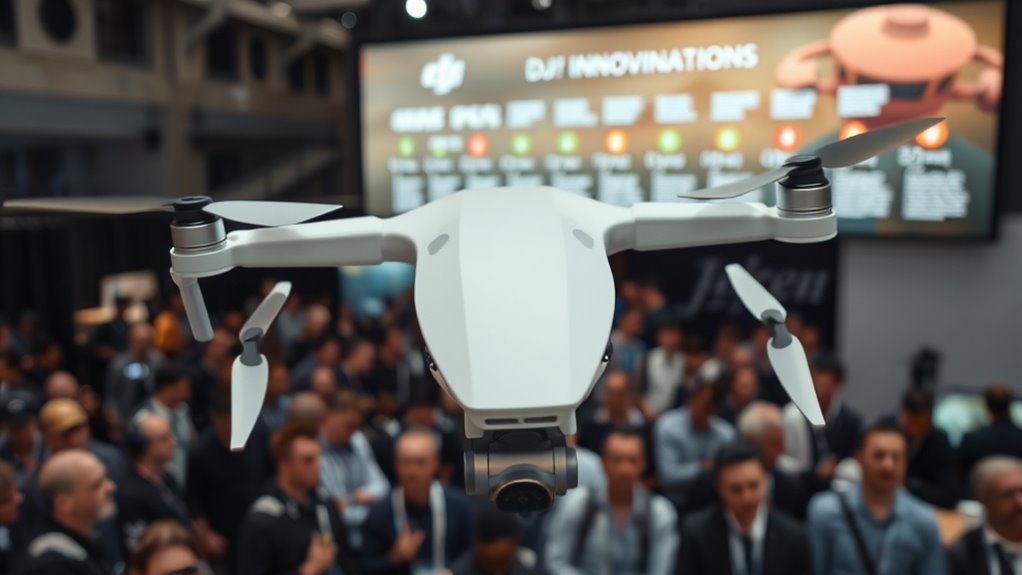
Founded in 2006, DJI has rapidly become a global leader in drone technology by innovating and expanding its product lineup. You can see how the company’s focus on technology evolution has played a *pivotal* role in shaping its success. From the start, DJI prioritized pushing the boundaries of what’s possible with drones, continuously improving their capabilities and usability. This commitment to innovation has allowed DJI to stay ahead of competitors and set industry standards. As drone technology advanced, DJI kept pace, integrating features like GPS stabilization, intelligent flight modes, and high-quality cameras into their models. These upgrades made drones more accessible and practical for a broad audience, from hobbyists to professionals.
Founded in 2006, DJI’s relentless innovation has established industry standards and expanded drone accessibility worldwide.
Market expansion has also been a core element of DJI’s growth strategy. Initially, they targeted the hobbyist market, offering entry-level drones that were easy to fly and affordable. But they didn’t stop there. Recognizing the potential in commercial applications, DJI expanded into industries such as agriculture, filmmaking, construction, and public safety. This diversification opened new revenue streams and strengthened their position in the market. By tailoring products to meet specific industry needs, DJI not only increased sales but also built a reputation for reliability and innovation across sectors.
Throughout their history, DJI has maintained a keen focus on research and development. You’ll notice how their investment in R&D has driven the rapid deployment of new features and models, keeping them at the forefront of the drone industry. Their ability to adapt to changing regulations and customer demands has also contributed to their market dominance. For instance, as regulations around drone use tightened, DJI developed smarter, compliant products that fit within legal frameworks, ensuring continued growth and market presence.
Furthermore, advancements in drone technology such as high-resolution cameras and obstacle avoidance systems have played a significant role in enhancing their product offerings and maintaining their competitive edge. Their global market expansion efforts are evident in their widespread distribution and localized support worldwide. They established manufacturing hubs and offices in key regions, ensuring efficient supply chains and customer service. This global footprint enabled DJI to reach different markets quickly and respond to regional needs. As a result, they became not just a leader in China but a dominant force worldwide.
Frequently Asked Questions
What Are Dji’s Main Competitors in the Drone Industry?
You’ll find that DJI’s main competitors include Parrot, Autel Robotics, and Skydio. These companies adopt diverse market strategies, focusing on innovation and affordability, to boost consumer engagement. Parrot targets casual users with user-friendly designs, while Autel offers high-quality drones for pros. Skydio emphasizes autonomous flight tech. To stay competitive, DJI continually refines its products and marketing, maintaining its dominant position in the evolving drone industry.
How Does DJI Ensure Drone Safety and Regulation Compliance?
You guarantee drone safety and regulatory compliance by strictly following safety protocols and adhering to regulations. DJI incorporates geofencing technology to prevent unauthorized flying in restricted areas and updates firmware regularly to meet evolving standards. They work closely with authorities worldwide, ensuring their drones comply with local laws. This proactive approach helps you operate drones responsibly, minimizing risks and ensuring safety for everyone around you.
What Innovative Technologies Has DJI Pioneered in Drones?
You hit the jackpot with DJI’s innovative tech. They’ve pioneered advanced camera stabilization, giving you smooth, professional-quality footage, and obstacle avoidance systems that keep your drone safe and smart. These cutting-edge features have revolutionized aerial photography and videography, making complex shots easier and safer. DJI’s relentless pursuit of innovation means you’re always one step ahead, capturing stunning visuals with confidence and ease—truly a leap forward in drone technology.
How Does DJI Impact Environmental Sustainability?
You can see DJI’s positive impact on environmental sustainability through their use of eco-friendly materials and renewable energy in manufacturing. They actively reduce waste and minimize carbon footprints by integrating renewable energy sources and sustainable practices into their production processes. By prioritizing eco-conscious choices, DJI helps promote greener technology and encourages the industry to adopt more sustainable methods, making a meaningful difference for the environment.
What Are Dji’s Future Plans for Product Development?
You can expect DJI to focus on future innovations like smarter, more efficient drones and expanding their product range to include advanced aerial imaging and autonomous flying technology. They’re likely to enhance user experience with improved controls and AI integration. DJI’s commitment to product expansion means you’ll see new models tailored for professional, industrial, and recreational use, ensuring they stay at the forefront of drone technology and meet evolving market demands.
Conclusion
So, after learning about DJI’s journey, it’s clear they didn’t just enter the drone market—they practically reinvented it. With innovation that outpaces even your wildest expectations, DJI’s dominance is nothing short of legendary. Their relentless drive and groundbreaking technology have made them the undisputed king of drones. Now, you can see why they’re not just a company—they’re a global phenomenon transforming how we see and explore the world from above.