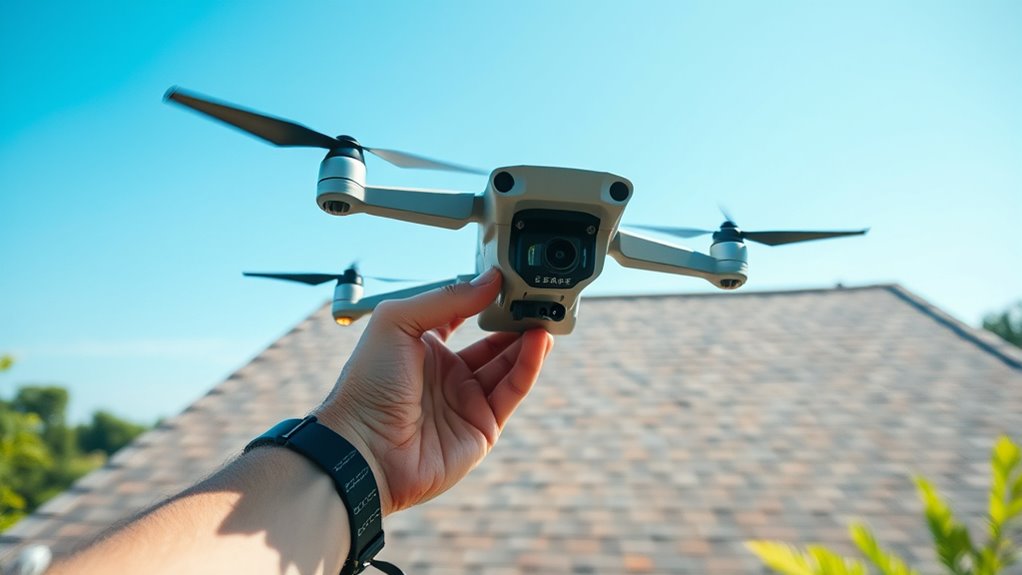

Inspecting your roof with a drone offers a safer, faster, and more thorough way to identify issues without risking falls or equipment hazards. It provides detailed high-resolution images and thermal data, revealing tiny cracks, leaks, or insulation problems that are hard to see from the ground. With quick, efficient assessments, you can catch problems early and save money on repairs. Keep exploring to learn how drone inspections can transform your home maintenance routine.
Open a free Amazon Business account
Business pricing, bulk buying and tax-exempt orders.
As an affiliate, we earn on qualifying purchases.
Key Takeaways
- Drones provide safe, comprehensive roof inspections without climbing, reducing fall risks and equipment hazards.
- They access hard-to-reach areas like steep slopes, chimneys, and complex geometries effortlessly.
- High-resolution images and thermal imaging detect tiny cracks, leaks, and insulation issues early.
- Drone inspections save time and costs by quickly covering all roof sections and avoiding manual setup.
- They enable proactive maintenance by identifying hidden damages, preventing costly repairs later.
As an affiliate, we earn on qualifying purchases.
The Advantages of Drone Roof Inspections
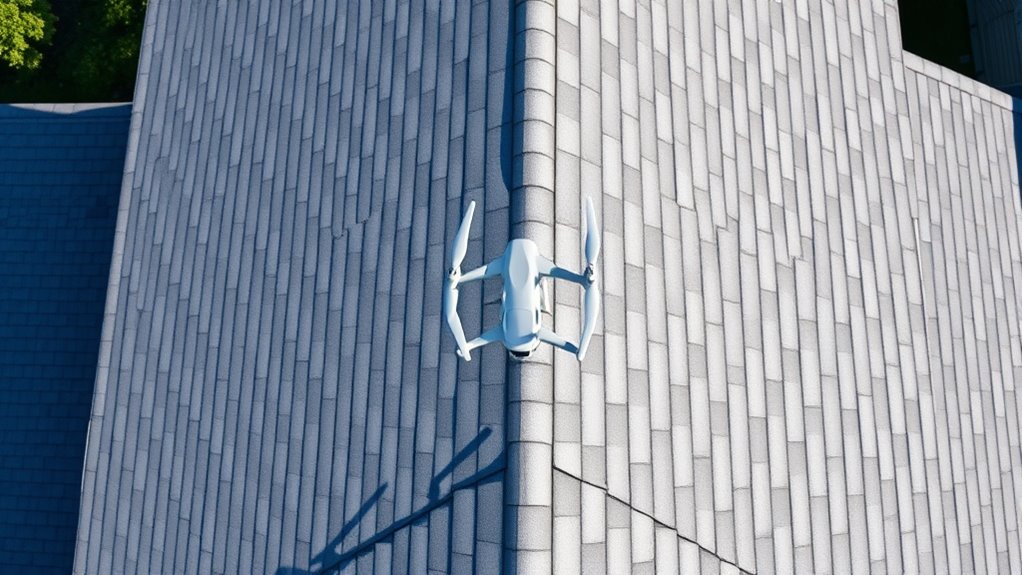
Drone roof inspections offer numerous advantages that make them a superior choice over traditional methods. You can avoid risking falls or injuries because there’s no need to climb onto the roof. Drones eliminate the use of ladders, scaffolding, or lifts, reducing equipment hazards and making the process safer. They can easily access steep, high, or complex roof sections, capturing detailed images without disturbing landscaping or property. With high-resolution cameras and thermal imaging, drones provide precise, detailed visuals of cracks, damage, or hidden issues. Inspection times are *substantially* shorter—often under an hour—allowing for quick reports and immediate decision-making. Plus, drone inspections cut costs by reducing labor and equipment expenses, making routine maintenance more affordable for homeowners and businesses alike. Additionally, the use of high-quality imaging technologies enhances the color accuracy and detail, ensuring nothing is overlooked during inspections. Employing drones also aligns with modern safety standards, further promoting risk-free assessment procedures. Incorporating inspection technology like drones can also improve the overall accuracy and thoroughness of assessments, leading to better maintenance planning. Furthermore, the ability of drones to gather comprehensive data helps in creating detailed records for future reference and insurance purposes. In addition, advancements in aerial imaging technology continue to expand the capabilities and effectiveness of drone inspections.
thermal imaging drone for roof inspection
As an affiliate, we earn on qualifying purchases.
As an affiliate, we earn on qualifying purchases.
Enhancing Safety and Reducing Risks

Using a drone for roof inspections keeps you safe by eliminating the need to climb or work on unstable surfaces, reducing fall risks. It also removes the reliance on ladders, scaffolding, or lifts, which can be hazardous to handle. Plus, you can easily access hard-to-reach areas without risking damage to your roof or putting yourself in danger. Additionally, incorporating nanotechnology-enabled sensors in drones can enhance inspection accuracy by detecting structural issues at the microscopic level. Incorporating local automation features can further streamline the inspection process and provide real-time data analysis. Advanced drone systems equipped with market-specific technology can deliver more precise assessments tailored to different roofing materials and conditions. Innovations like water-resistant components ensure durability when operating in wet or humid environments, improving inspection reliability.
Fall Prevention Benefits
By eliminating the need for physical climbing, drone inspections considerably improve safety by reducing the risk of falls and injuries. Drones can safely access steep, high, or uneven surfaces without putting you at risk. This advanced technology allows for thorough inspections without exposing workers to dangerous conditions. Drones can safely access steep, high, or uneven surfaces without putting you at risk. You avoid working in dangerous conditions like wet or windy weather, further lowering your chances of injury. Since no manual access is required, you won’t need to maneuver around fragile roofing materials or unstable surfaces. Furthermore, employing safety protocols during drone inspections enhances overall home maintenance safety. Incorporating risk mitigation strategies further reduces the potential for accidents during inspections. Additionally, integrating connected devices can provide real-time data and improve decision-making during inspections. Overall, using a drone keeps you safer, preventing accidents and giving you peace of mind during roof inspections. AI-driven solutions are transforming traditional home maintenance practices, making inspections safer and more efficient.
Equipment-Free Inspection
Eliminating the need for physical equipment, inspections can be conducted entirely without ladders, scaffolding, or lifts. This markedly reduces the risk of falls, injuries, and equipment-related accidents. You avoid exposing yourself to unstable surfaces, wet conditions, or steep angles, making the process safer for everyone involved. Plus, there’s no need to transport heavy gear or set up complex systems, saving time and effort. Drone inspections enable you to access all roof areas quickly and safely, providing thorough coverage without physical contact. You also eliminate the chance of accidental damage to your roof or landscaping during inspection. Overall, this equipment-free approach prioritizes safety, minimizes hazards, and streamlines the entire process, giving you peace of mind during maintenance checks. Remote access technology allows for comprehensive inspections from a safe distance, further enhancing safety and efficiency. Additionally, understanding safety protocols can further reduce potential risks during aerial inspections. Using navigation and mapping explainers, you can better plan and execute effective drone routes, ensuring complete coverage. Incorporating advanced imaging techniques can improve detection of potential issues that might be missed in traditional inspections. Moreover, leveraging exfoliating acids can help in the maintenance of roofing materials by preventing mold and deterioration, ensuring longevity.
Safe Access to Hard-to-Reach Areas
Accessing hard-to-reach roof areas can pose significant safety risks, especially on steep, high, or complex structures. Climbing ladders or scaffolding increases the chance of falls, slips, or other injuries. Using drones eliminates the need for manual access, keeping you off dangerous surfaces. They can easily reach gutters, chimneys, valleys, and other tricky spots without disturbing the property or risking damage. With a drone, you get thorough coverage of every angle, ensuring no area is overlooked. This method minimizes exposure to hazards like wet, icy, or unstable roofs. Plus, it protects both you and the property from accidents during inspection. By leveraging drone technology, you can conduct safer, more efficient inspections of hard-to-reach areas with confidence. Smartphone guidance can help you operate drones effectively and safely. Additionally, understanding home maintenance safety protocols is essential to maximize the benefits of drone inspections while minimizing risks.
high-resolution drone camera for home inspection
As an affiliate, we earn on qualifying purchases.
As an affiliate, we earn on qualifying purchases.
Achieving Comprehensive Coverage and Access
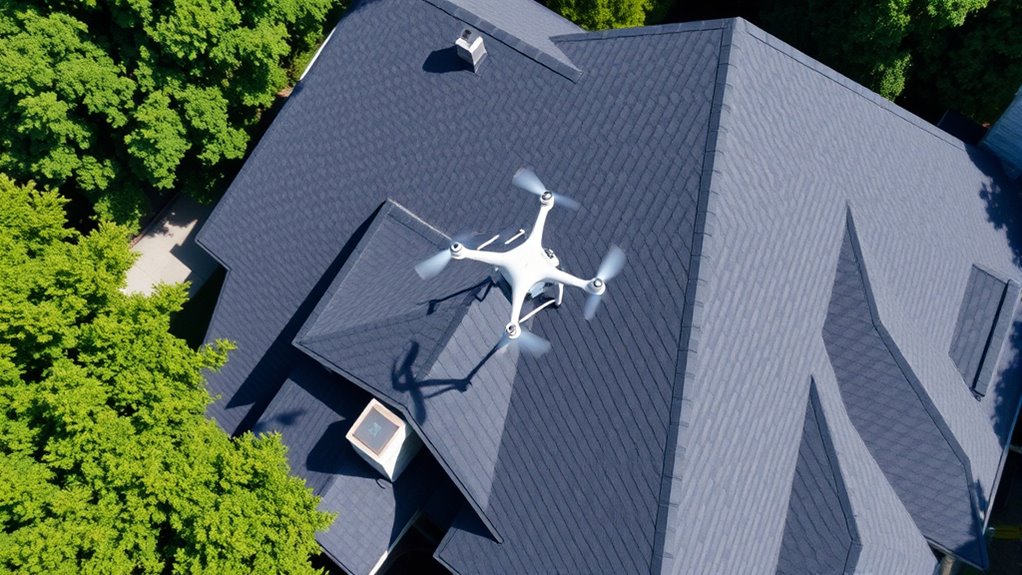
Drones make it possible to exhaustively inspect every part of your roof, regardless of its design or height. With their agility, you can access steep slopes, complex structures, and hard-to-reach areas that traditional methods struggle to cover. They eliminate the need for scaffolding or risky climbs, guaranteeing safety and efficiency. You get full coverage of every corner, ridge, and gutter, capturing detailed images from multiple angles. This all-encompassing view helps identify issues early before they worsen. Plus, drones can easily navigate around chimneys, skylights, and vents, providing a complete assessment without disturbing landscaping or property. Achieving thorough coverage means no spot is overlooked, giving you confidence in your roof’s condition and maintenance needs.
- Reaches steep or high sections effortlessly
- Inspects complex roof geometries
- Covers gutters, chimneys, and vents precisely
- Avoids disturbance to landscaping or property
- Ensures no area is left uninspected
roof inspection drone accessories
As an affiliate, we earn on qualifying purchases.
As an affiliate, we earn on qualifying purchases.
Capturing Detailed and Accurate Data
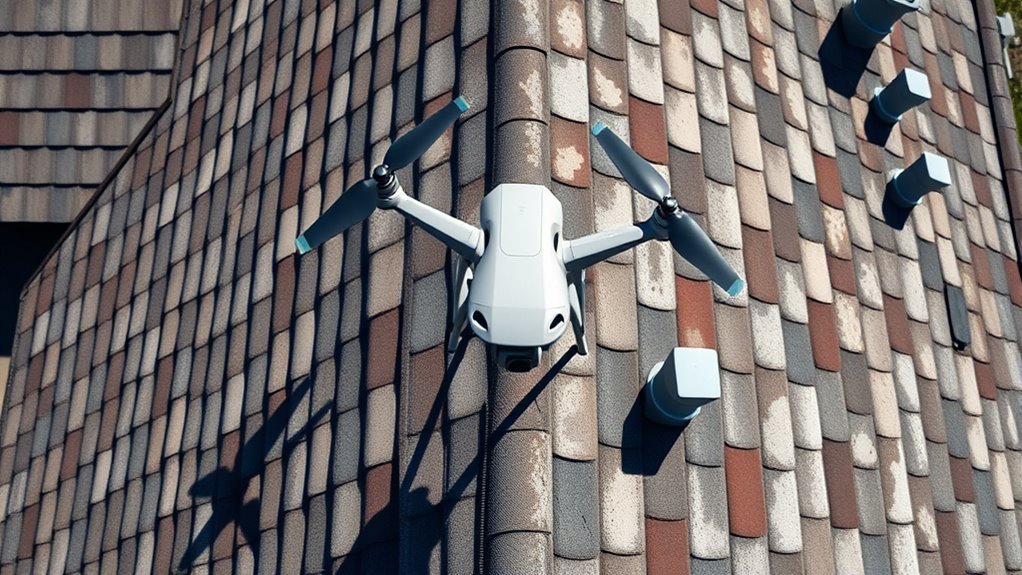
You rely on your drone’s high-resolution camera to capture clear, detailed images of your roof’s surface. Its thermal imaging provides precise data on hidden moisture or insulation issues that aren’t visible to the naked eye. This combination guarantees you get accurate information to identify potential problems early and plan effective repairs.
High-Resolution Imaging Clarity
High-resolution imaging is a key advantage of drone inspections, enabling you to capture highly detailed and accurate data of your roof’s surface. With advanced cameras, you get crisp, clear images that reveal even the smallest issues, like tiny cracks or loose shingles. This clarity helps you assess damage precisely and plan repairs efficiently. You can also compare images over time to monitor roof health.
- Detects minor cracks and surface imperfections early
- Identifies missing or damaged shingles with precision
- Reveals water stains and leaks not visible to the naked eye
- Provides high-quality images for insurance claims
- Supports accurate documentation for maintenance records
Thermal Data Precision
Thermal imaging enhances roof inspections by providing detailed and accurate data that visual images alone can’t reveal. With thermal data, you can pinpoint hidden issues like moisture intrusion, insulation gaps, or heat leaks that aren’t visible to the naked eye. Your drone’s thermal sensors detect temperature variations across the roof surface, highlighting problem areas with precision. This allows you to identify early-stage damage before it worsens, saving time and money on repairs. The high-resolution thermal images offer clear, quantifiable data for analysis and documentation. You can compare thermal readings over time to monitor roof health, making maintenance more proactive. Overall, thermal data accuracy ensures you get a thorough understanding of your roof’s condition, supporting informed decision-making.
Saving Time With Rapid Assessments

Because drone inspections can be completed in under an hour for most homes, they substantially cut down the time required compared to traditional methods. You can get a thorough assessment without spending hours setting up equipment or climbing onto your roof. This rapid process allows you to identify issues quickly and make informed decisions faster. You’ll also avoid delays caused by scheduling or weather disruptions that often slow down manual inspections. With the ability to cover every angle swiftly, you save valuable time on routine checks or urgent repairs. Plus, immediate reporting means you can act fast if problems are detected, reducing the risk of further damage.
- Complete inspections in less than an hour
- No time-consuming setup or teardown
- Rapid detection of roof issues
- Faster decision-making for repairs
- Immediate reporting for urgent repairs
Cost Benefits of Drone Technology

Drone technology offers significant cost advantages by reducing the need for extensive manual labor and expensive equipment. You save on labor costs since inspections are faster and require fewer team members. There’s no need for scaffolding, lifts, or other costly gear, which lowers your overall expenses. Drones can quickly cover large or complex roofs, cutting down inspection time from hours or days to under an hour. This efficiency means less disruption and fewer expenses related to scheduling and setup. For homeowners and businesses, routine inspections become more affordable, encouraging regular maintenance that prevents costly repairs later. Plus, the detailed images and data collected can identify issues early, saving money by addressing problems before they escalate. Overall, drone technology makes roof inspections more economical and accessible.
Supporting Maintenance and Insurance Claims

Accurate and detailed documentation from drone inspections plays a pivotal role in supporting maintenance efforts and insurance claims. When you have clear, time-stamped images and videos, it’s easier to verify damage, assess repair needs, and speed up claims processing. This visual evidence reduces disputes and provides insurers with concrete proof of damage. Additionally, drone footage helps you monitor your roof’s condition over time, enabling proactive maintenance before issues worsen.
- Provides reliable, timestamped evidence for insurance claims
- Assists in post-storm damage assessment and repair planning
- Helps track roof deterioration over time for proactive upkeep
- Enhances transparency during property sales
- Facilitates quick emergency response, minimizing downtime
Frequently Asked Questions
Are Drone Roof Inspections Legal in All Areas?
Drone roof inspections are not legal in all areas. You need to check local laws and regulations, as some places have restrictions on drone use, especially over private property or certain airspace zones. Always obtain necessary permits and follow FAA or equivalent authority guidelines. By doing so, you guarantee your drone inspection stays within legal boundaries and avoids potential fines or legal issues.
How Much Does a Drone Roof Inspection Typically Cost?
A drone roof inspection typically costs between $150 and $300 for a standard home. The price varies based on factors like the size and complexity of your roof, location, and the inspector’s experience. Some companies charge flat rates, while others bill hourly. Keep in mind that investing in a drone inspection can save you money by catching issues early and reducing the need for costly repairs later.
Do I Need Permission to Use a Drone on My Property?
You usually don’t need permission to fly a drone on your property if it stays within your property lines and doesn’t infringe on others’ airspace. However, you should follow local laws and regulations, especially if your drone weighs over a certain limit or if you’re near airports or restricted zones. Check your city’s rules and FAA regulations to make certain you’re compliant and avoid potential fines or legal issues.
Can Drones Inspect Roofs During Bad Weather Conditions?
Like a vigilant eagle soaring through stormy skies, you can’t rely on drones to inspect roofs during bad weather. Rain, snow, or high winds turn your aerial eye into a shaky, unreliable observer. Safety comes first, so it’s best to wait for calm, clear days. Drones perform best in stable conditions, ensuring sharp images and safe operations — don’t risk flying your eye in turbulent weather.
What Qualifications or Certifications Does a Drone Operator Need?
You need to obtain a Remote Pilot Certificate from the FAA to operate a drone commercially. This requires passing a knowledge test covering safety, regulations, and airspace rules. You should also be familiar with local laws and regulations specific to your area. Additionally, gaining practical experience and staying updated on drone technology and safety practices will help guarantee you operate confidently and responsibly during roof inspections.
Conclusion
So, next time you spot a roof problem, don’t climb up with a ladder—call in a drone! It’s like having a superhero in the sky, scanning every inch in seconds and catching issues before they turn into disasters. With drone tech, you’re not just maintaining your home—you’re protecting it from catastrophe, saving loads of money, and avoiding the dangers of risky climbs. Trust me, you’ll wonder how you ever managed without it!
College move-in / dorm season Picks
dorm essentials
As an affiliate, we earn on qualifying purchases.