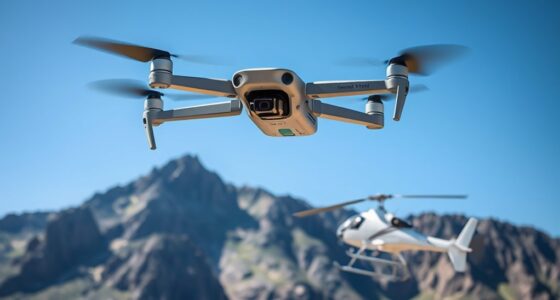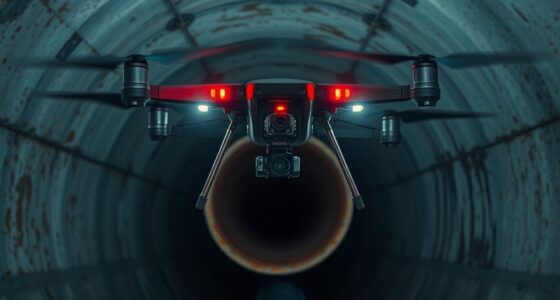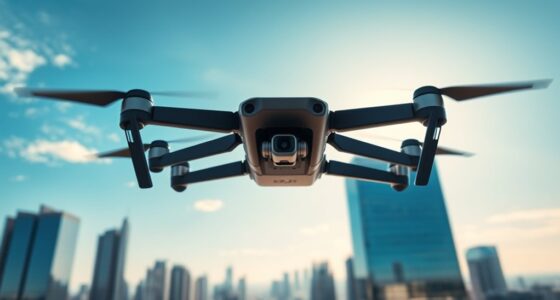
Drones are revolutionizing the insurance industry by enabling you to gather detailed aerial data quickly and accurately for claims and inspections. They help you assess damage more efficiently, reduce costs, and get better insights through aerial perspectives. By following safety protocols and staying compliant with regulations, you protect your team and reputation. Want to discover how to integrate drones responsibly and maximize their benefits? Keep exploring to learn more about smart drone practices in insurance.
Key Takeaways
- Drones enable rapid, accurate aerial inspections, improving claims assessment and reducing processing times.
- Aerial data collected by drones enhances damage assessment accuracy for insurance claims.
- Using drones reduces operational costs and increases safety during inspection procedures.
- Drones provide detailed visual documentation, supporting evidence-based claims processing.
- Proper regulatory compliance and safety protocols ensure effective and responsible drone deployment in insurance.
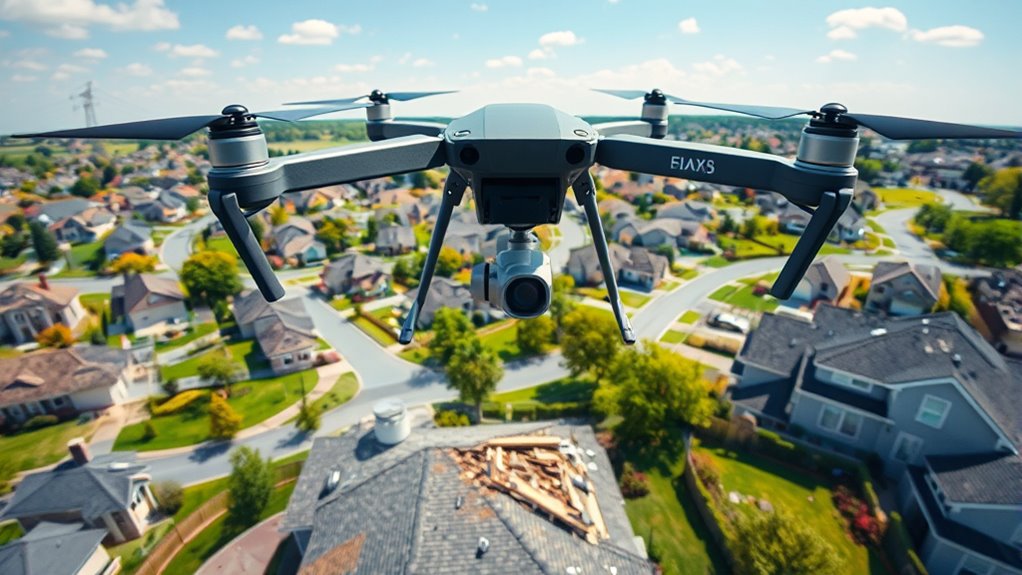
Have you ever wondered how drones are transforming the insurance industry? These flying devices are revolutionizing how insurers evaluate risks, process claims, and perform inspections. By providing aerial data quickly and accurately, drones enable insurers to make more informed decisions while reducing costs. But as you adopt this technology, it’s essential to prioritize drone safety and regulatory compliance. Ensuring safe drone operations not only protects people and property but also helps you stay within the bounds of the law, avoiding penalties and reputational damage.
Drones are transforming insurance with faster data, better insights, and cost savings through safe, compliant operations.
When deploying drones for insurance inspections, safety should be your top concern. You need to operate your drones responsibly, following established safety protocols to prevent accidents. This involves checking the drone’s equipment, paying attention to weather conditions, and maintaining a clear line of sight during flights. Proper training for drone operators is vital to minimize risks and ensure smooth, accident-free missions. Employing safety measures like geofencing and obstacle avoidance technology further enhances operational safety. Remember, a single mishap can jeopardize your reputation and the trust clients place in your company, so diligence in safety practices is non-negotiable.
Regulatory compliance is equally significant when integrating drones into your insurance processes. Different regions have specific rules governing drone operation, including restrictions on flying altitude, no-fly zones, and requirements for obtaining permits or licenses. Staying up-to-date with these regulations guarantees you avoid legal issues that could delay claims processing or result in fines. Many jurisdictions now require drone operators to register their devices and pass safety exams to demonstrate competence. By adhering to these regulations, you demonstrate professionalism and responsibility, which builds confidence among your clients and partners. Additionally, understanding the importance of aerial data and its proper use can help you leverage drone technology more effectively.
To effectively manage drone safety and regulatory compliance, you should establish clear operational procedures and keep thorough records of all flights. This way, if questions arise, you can show that your operations comply with applicable laws and safety standards. Utilizing software solutions that monitor regulations and provide compliance checklists can streamline this process. Besides, staying connected with industry associations and local authorities helps you stay informed about changing rules and best practices.
Incorporating drones into your insurance workflows promises many benefits, but only if you prioritize safety and compliance. By doing so, you not only protect your team and assets but also ensure that your use of aerial data maintains the integrity and reputation of your company. The key to success lies in responsible operation, continuous education, and strict adherence to the evolving legal landscape surrounding drone technology.
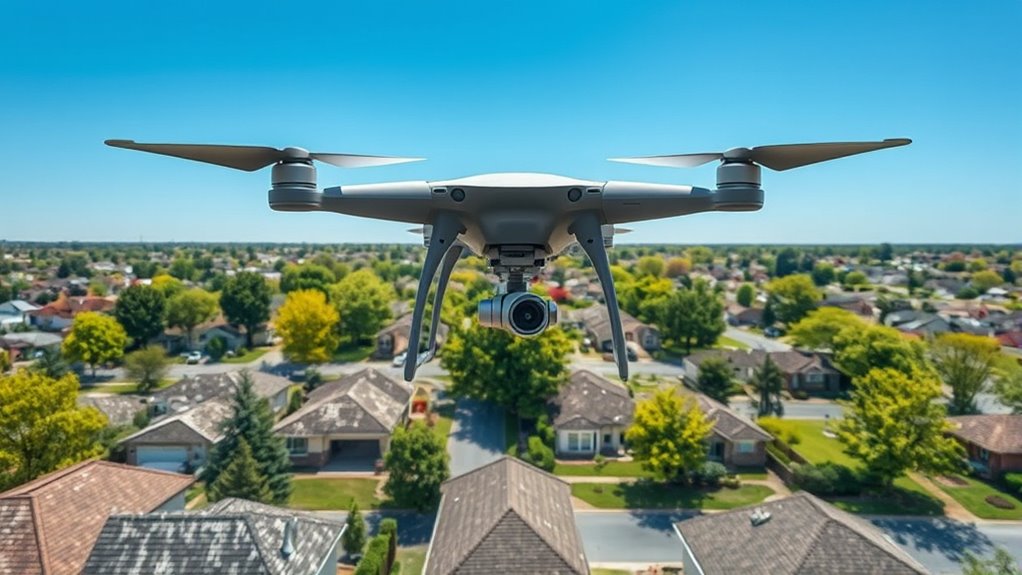
professional drone for insurance inspections
As an affiliate, we earn on qualifying purchases.
As an affiliate, we earn on qualifying purchases.
Frequently Asked Questions
How Do Drones Improve Fraud Detection in Insurance Claims?
Drones enhance fraud detection by providing aerial surveillance that captures detailed images of claim sites. You can verify claims more accurately through high-resolution footage, making it harder for fraudsters to misrepresent damage or losses. This real-time data streamlines claim verification, ensuring that suspicious activities are identified quickly. By leveraging drones, you improve the overall integrity of the claims process and reduce false claims, saving your company money and increasing trust with genuine policyholders.
What Training Is Required for Insurance Personnel to Operate Drones?
Imagine yourself as a skilled pilot steering new skies. You’ll need remote piloting skills and drone certification to operate insurance drones safely. Training programs cover regulations, safety procedures, and flight techniques, guaranteeing you handle equipment confidently. Many jurisdictions require certification, much like a pilot’s license, to ensure responsible use. With proper training, you can confidently gather aerial data for claims, inspections, and fraud detection, elevating your insurance expertise to new heights.
How Do Privacy Laws Affect Drone Use in Residential Inspections?
Privacy regulations profoundly impact your use of drones for residential inspections. You must respect neighbors’ privacy and avoid unwarranted residential surveillance, which can lead to legal issues. Always obtain necessary permissions and stay within legal boundaries set by privacy laws. By doing so, you guarantee compliance, protect individuals’ rights, and maintain trust while efficiently gathering aerial data for insurance claims.
What Are the Cost Savings Associated With Drone Implementation?
You can achieve significant cost reduction with drone implementation by streamlining inspections and claims assessments. Drones boost operational efficiency, allowing you to cover large areas quickly and reduce the need for manual labor and equipment. This not only cuts expenses but also speeds up processing times. Overall, integrating drones into your workflow helps you save money while improving accuracy and safety in your insurance operations.
How Is Drone Data Integrated Into Existing Insurance Claim Systems?
You integrate drone data into your existing insurance claim systems by first ensuring secure transmission and storage, prioritizing data security. You then automate the upload process, linking drone imagery and reports to your claims database. Regular drone maintenance keeps equipment reliable, reducing errors. This seamless integration speeds up claims processing, provides accurate data, and enhances overall efficiency, all while maintaining strict data security protocols.

Feature Papers of Drones: Volume II
As an affiliate, we earn on qualifying purchases.
As an affiliate, we earn on qualifying purchases.
Conclusion
Imagine a world where drones fly faster than the eye can see, capturing every detail of a claim site in seconds. With aerial data, you won’t just inspect damage—you’ll dominate it, turning chaos into clarity in the blink of an eye. Say goodbye to tedious inspections and hello to a future where insurance claims are settled in moments, not months. Drones are revolutionizing your work, making you unstoppable in the sky-high domain of insurance.

Police Drone Detection & Tracking Kit Handheld Drone Detection Kit- Compact Remote ID Receiver for iOS & Android
✅ Real-Time RF Drone Detection: Instantly detects drones using radio frequency remote ID signals VERSATILE DETECTION: Handheld device…
As an affiliate, we earn on qualifying purchases.
As an affiliate, we earn on qualifying purchases.
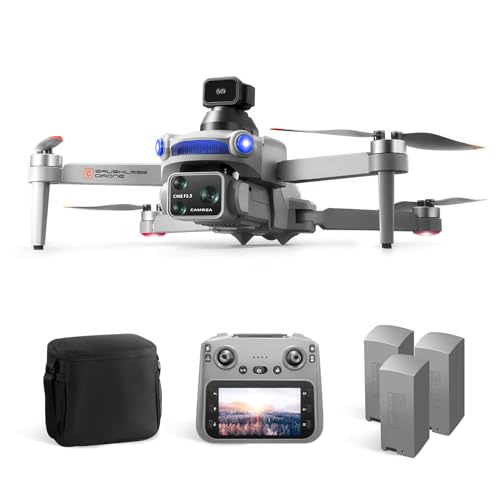
S119 4K Drone with Camera for Adults, GPS Auto Return, Obstacle Avoidance, Brushless Motor, 5G Screen Remote, 3 Batteries 75 Min Flight, Dual Camera 120° Wide-Angle, 2000M Range, 120M Altitude FPV Quadcopter (Gray)
[Extended Flight Time & High-Altitude Performance] Comes with 3 modular 7.4V 3800mAh batteries, each supporting 25 minutes of…
As an affiliate, we earn on qualifying purchases.
As an affiliate, we earn on qualifying purchases.