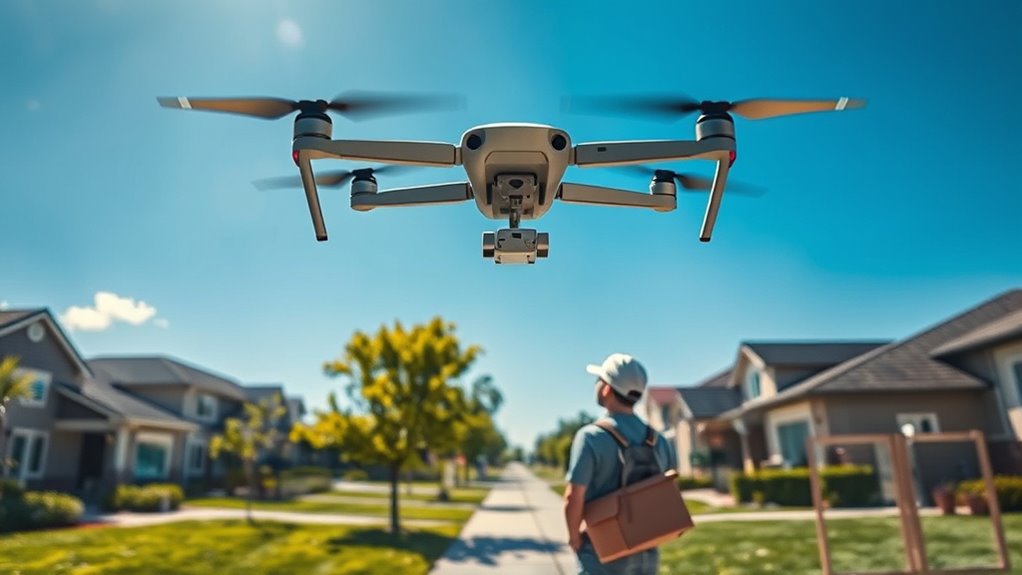
Drones are set to revolutionize your package deliveries, offering faster, contactless, and more efficient service. With industry growth projected to reach over USD 7 billion by 2035 and successful deployments by companies like Amazon and Walmart, drone delivery is becoming more reliable and widespread. Advances in technology, supportive regulations, and consumer demand are driving this change. To discover how drones could soon deliver your packages seamlessly, keep exploring this exciting transformation.
Open a free Amazon Business account
Business pricing, bulk buying and tax-exempt orders.
As an affiliate, we earn on qualifying purchases.
Key Takeaways
- Drone delivery market is projected to grow exponentially, reaching over USD 7 billion by 2035, transforming logistics.
- Advances in technology enable faster, more efficient, and contactless deliveries, reducing delivery times significantly.
- Major companies like Amazon and Walmart are expanding drone services, demonstrating industry scalability and consumer acceptance.
- Evolving regulations and infrastructure investments support widespread adoption, especially in North America and Asia Pacific.
- Challenges such as security, privacy, and regulatory hurdles remain, but ongoing innovations are shaping a promising future.

EVEO Screen Cleaner Spray - Large Screen Cleaner Bottle - TV Screen Cleaner, Computer Screen Cleaner, for Laptop, Phone, Ipad - Computer Cleaning kit Electronic Cleaner (1 Pack)
- Versatile Electronic Screen Cleaner: Suitable for TVs, laptops, phones, and tablets
- Effective Streak-Free Cleaning: Removes dust, fingerprints, and smudges
- Gentle on Sensitive Screens: Safe for LCD, LED, OLED, CRT screens
As an affiliate, we earn on qualifying purchases.
Market Growth and Investment Trends
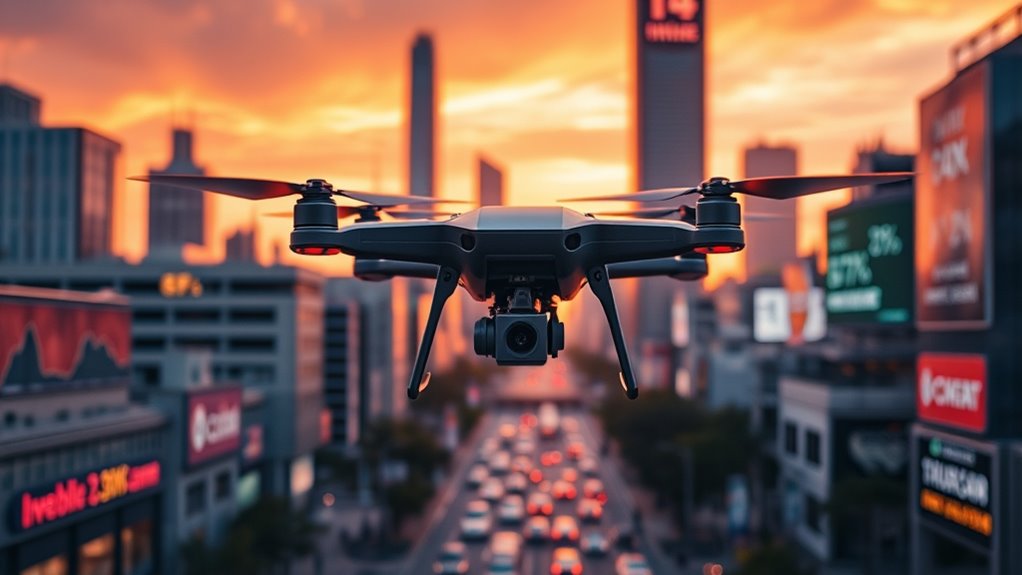
The drone delivery market is experiencing rapid growth driven by significant investments from major industry players and advancing technology. You can see this in the increasing valuation—from USD 0.7 billion in 2025 to an expected USD 7.2 billion by 2035, with a compound annual growth rate of 23.3%. Service markets are also expanding quickly, projected to grow from USD 2.72 billion in 2025 to USD 18.26 billion by 2032, at a CAGR of 31.3%. The global value of goods delivered by drones is set to soar, increasing 74% annually and reaching over USD 65 billion in 2034. Major companies like Amazon, Walmart, and China’s drone industry are investing heavily, fueling innovation, regulatory support, and market confidence for widespread adoption. Additionally, the development of European cloud servers plays a crucial role in ensuring the secure and sustainable management of drone data and operations. As technology advances, real-time data processing will become increasingly vital for efficient and safe drone delivery systems, especially as regulatory frameworks continue to evolve to accommodate this rapidly expanding industry. Furthermore, support for breakfast can be integrated into drone delivery services, ensuring that fresh and hot meals or food items reach consumers efficiently. Incorporating innovative logistics solutions will further optimize delivery routes and enhance overall efficiency in this emerging industry.

KIC CrystalVu Screen Cleaner Spray Kit (16oz) with Microfiber Cloth
- Streak-Free Formula: Removes fingerprints and smudges without residue
- Multi-Device Compatibility: Suitable for phones, tablets, and screens
- Safe for Delicate Screens: Protects LCD, LED, and OLED displays
As an affiliate, we earn on qualifying purchases.
Current Deployment Success Stories

Across the globe, drone delivery services are demonstrating impressive operational success, with companies rapidly expanding their reach and capabilities. You can see this with Amazon completing over 5,000 customer deliveries in test markets during 2024, showcasing the practicality of drone logistics. Walmart has extended its drone delivery service to 4.5 million households, proving scalability. Medical drones saved an estimated 340 lives in rural areas by providing quick access to essential supplies. Food delivery via drones boasts a 98.2% on-time rate, highlighting reliability. Regional leaders like North America and China are setting benchmarks, with China generating over USD 1.4 billion in drone revenue. These success stories confirm that drone delivery isn’t just a concept — it’s transforming everyday logistics with proven efficiency. Trusted drone services continue to expand, demonstrating the increasing reliability and acceptance of drone logistics worldwide. Additionally, the integration of regulatory frameworks is accelerating the adoption of drone technology across industries, reflecting the evolving industry standards and safety protocols that support widespread deployment. Furthermore, ongoing innovations in drone technology are further enhancing operational capabilities and safety features, promising even greater future success. The development of Gold IRA markets indicates a robust financial environment that could support investments in emerging technologies like drones, fostering innovation and stability in the industry.

iO CLEAN (16oz - 473ml Screen Cleaner Spray – Best Large Cleaning Kit
- Versatile Screen Compatibility: Works on all electronic screens and devices
- Gentle, Scratch-Free Formula: Removes dust and grime without scratching
- Protective, Anti-Static Coating: Leaves a streak-free, smudge-free shine
As an affiliate, we earn on qualifying purchases.
Consumer Acceptance and Changing Preferences

You’re likely noticing how consumer acceptance is shifting toward drone delivery, especially with the rising demand for contactless options. More people are willing to use drones for small packages, driven by the need for speed and safety. As preferences evolve, companies must adapt to meet these changing expectations to stay competitive. Incorporating environmentally friendly practices can also help improve public perception of drone delivery services. Additionally, addressing trust and safety concerns is crucial for widespread adoption of drone technology. Implementing seasonal maintenance tips for drone equipment can further enhance reliability and customer confidence. Moreover, understanding field‑of‑view and imaging‑scale can assist in optimizing drone camera setups for better navigation and package delivery accuracy. Emphasizing connected equipment and ongoing tech upgrades can ensure drones operate efficiently and safely over time.
Growing Adoption Trends
As consumer awareness of drone delivery grows, acceptance is quickly accelerating, especially for small, contactless packages. You’re increasingly comfortable with the idea of receiving items like food, medicines, or retail products via drones, driven by convenience and safety concerns. Consumer demand is fueling rapid adoption across sectors such as healthcare, retail, and food delivery. Over 68% of people are willing to use drone delivery for packages under five pounds, highlighting strong acceptance. The shift toward contactless options, especially during recent health crises, has made drone delivery more appealing. This trend aligns with the broader evolution of modern kitchen technology—emphasizing automation and contactless solutions—making drone delivery a natural extension of innovative delivery methods. Additionally, DreamRidiculous insights into emerging crypto trends are influencing the economic landscape, indirectly supporting innovative delivery methods like drones. As a result, consumer preferences are shaping the future landscape, making drone delivery a more integral part of everyday life. Furthermore, increasing integrated smart home systems could facilitate seamless delivery experiences by integrating drone arrivals with home automation. Moreover, advancements in delivery logistics technology are making drone operations more efficient and reliable, further boosting consumer confidence. Innovations in autonomous vehicle systems may also enhance the safety and precision of drone deliveries in urban environments.
Preference for Contactless Delivery
Growing consumer trust in drone delivery is largely driven by the increasing demand for contactless options. You want safe, hygienic ways to receive packages, especially during health crises. Drones offer a touch-free experience, reducing human contact and minimizing risks. This convenience appeals to your desire for speedy, safe deliveries, particularly for small items like food, medicine, or retail goods. As more people prioritize health and safety, contactless delivery has become a primary motivator for embracing drone services. Companies see this trend and invest heavily in drone tech that supports seamless, hygienic handoffs. With 68% of consumers willing to try drone delivery for lightweight packages, your preference for contactless options is shaping the future landscape of package delivery, making drones an integral part of everyday logistics. Additionally, advancements in safe handling procedures are ensuring that the entire delivery process maintains hygiene standards and builds consumer confidence.
Regional Leaders and Global Expansion
Have you wondered which regions are leading the charge in drone delivery? North America, especially the U.S., dominates the market with over a third of global share, thanks to innovative tech and supportive regulations. The U.S. continues to expand its drone programs, with companies like Amazon and Walmart reaching millions of households. Meanwhile, Asia Pacific is rapidly emerging as a key player, driven by China’s booming e-commerce sector and government backing for BVLOS operations. China alone generated over USD 1.4 billion in drone revenue in 2024, reflecting its fast-paced growth. These regions are setting the stage for global expansion, leveraging technological advances and regulatory frameworks to scale drone delivery services worldwide. Expect Asia and North America to lead the way, shaping the future landscape of package delivery.
Technological Innovations Driving Change
You’ll see how advanced navigation systems, AI, and automation are revolutionizing drone delivery, making operations safer and more reliable. These innovations enable drones to navigate complex environments and adapt to changing conditions in real time. As a result, delivery speeds increase, costs decrease, and the technology becomes more accessible and scalable.
Advanced Navigation Systems
Advanced navigation systems are revolutionizing drone delivery by enabling precise, reliable, and autonomous operations even in complex environments. You benefit from GPS enhancements, real-time obstacle detection, and high-precision sensors that allow drones to navigate urban landscapes, forests, and indoor spaces safely. These systems integrate multiple data sources, including LiDAR, radar, and computer vision, to create detailed 3D maps and detect obstacles instantly. This technology reduces errors, prevents collisions, and guarantees accurate deliveries, even in challenging conditions. You’ll see fewer delays and more consistent service as drones adapt to changing environments without human intervention. As advancements continue, navigation systems will become smarter, supporting larger payloads and longer distances, pushing drone delivery toward broader commercial adoption.
AI and Automation
AI and automation are transforming drone delivery by enabling smarter, more efficient operations that require minimal human intervention. With advanced AI, drones can navigate complex environments, avoid obstacles, and optimize routes in real time. Automation streamlines tasks such as package loading, flight planning, and delivery confirmation, reducing costs and increasing speed. Key innovations include:
- Autonomous navigation systems that adapt to changing conditions
- Predictive maintenance minimizing drone downtime
- Real-time data processing for dynamic route adjustments
- AI-powered safety protocols ensuring secure operations
These advances lead to faster deliveries, lower operational costs, and expanded service areas. As AI-driven automation matures, expect more reliable, scalable drone networks that seamlessly integrate into existing logistics systems. You’ll see faster, safer, and more efficient package deliveries in the near future.
Cost Savings and Operational Efficiency
Cost savings and operational efficiency are driving the rapid adoption of drone delivery solutions across multiple industries. Drones drastically cut delivery times—from an average of 12 minutes versus 45 minutes for traditional methods—improving speed and customer satisfaction. They also reduce costs; for example, Amazon projects drone delivery costs dropping from USD 484 per delivery in 2022 to just USD 63 by 2025. The table below highlights key efficiencies:
| Aspect | Traditional Delivery | Drone Delivery | Efficiency Gain |
|---|---|---|---|
| Delivery Time | 45 minutes | 12 minutes | 73% faster |
| Cost per Delivery | USD 484 | USD 63 | 87% reduction |
| Infrastructure Maintenance | High | Low | Significant savings |
| Emergency Response | Longer | 37% faster | Faster aid |
| Inspection Costs | High | 55% less | Cost-effective |
These improvements boost productivity and cut expenses, making drone delivery more attractive.
Regulatory Frameworks and Policy Developments

Regulatory frameworks and policy developments are pivotal in shaping the future of drone delivery, as governments worldwide work to establish clear rules for safe and efficient operation. These policies influence how quickly drone services expand and integrate into existing infrastructure. Governments are focusing on:
Regulatory policies are crucial for safe, efficient drone delivery expansion worldwide.
- Establishing BVLOS (Beyond Visual Line of Sight) regulations to enable long-range flights
- Creating safety standards for urban airspace management
- Developing licensing and certification processes for commercial operators
- Addressing privacy and security concerns to gain public trust
Progress varies globally, with North America and China leading the way through supportive policies. Clear regulations foster innovation, reduce risks, and encourage industry investments, ultimately accelerating drone delivery adoption while ensuring safety and compliance.
Challenges and Limitations of Drone Delivery

You’ll need to overcome numerous challenges before drone delivery becomes mainstream. Regulatory hurdles, technical limitations, and infrastructure gaps can slow down progress, while privacy and security issues raise concerns. Addressing these obstacles is vital to unblocking the full potential of drone-based logistics.
Regulatory and Legal Barriers
Despite the rapid growth of drone delivery markets worldwide, regulatory and legal barriers continue to slow widespread adoption. Governments struggle to develop thorough rules for drone operations, especially beyond visual line of sight (BVLOS) flights. You face complex approval processes, varying regulations across regions, and safety concerns that delay deployment. To navigate these hurdles, it’s essential to understand that:
- Regulations often lag behind technological advancements
- Different countries have inconsistent drone laws
- Privacy issues raise legal questions
- Airspace management remains a challenge
These obstacles create uncertainty for companies aiming to scale their drone services. Until regulations are streamlined and harmonized globally, the full potential of drone delivery will remain limited, impacting growth and innovation.
Technical and Infrastructure Challenges
Technical and infrastructure challenges pose significant hurdles to the widespread adoption of drone delivery systems. You’ll need reliable communication networks to guarantee constant control and real-time data transfer, especially in remote areas. Building dedicated drone corridors and landing zones requires substantial investment and planning. Weather conditions, like rain, wind, and snow, can disrupt operations and damage drones, limiting their reliability. Power supply and battery life also restrict flight range and payload capacity, forcing frequent recharges and limiting delivery distances. Additionally, integrating drones into existing logistics networks demands significant infrastructure upgrades and coordination with air traffic control. These technical barriers, combined with high initial costs, slow down the scaling process and make widespread implementation more complex and resource-intensive.
Privacy and Security Concerns
As drone delivery systems expand, concerns about privacy and security come to the forefront. You might worry about unauthorized surveillance, data breaches, or malicious hacking. Drones equipped with cameras can inadvertently capture private moments, raising serious privacy issues. Security threats include potential hijacking or interference, which could cause accidents or theft. To address these problems, consider:
- Implementing strict data encryption and secure communication protocols
- Enforcing geo-fencing to prevent unauthorized drone access
- Developing robust authentication systems for drone operations
- Regularly updating software to counteract hacking attempts
While these measures help, establishing exhaustive regulation and public trust remains challenging. Ensuring privacy and security isn’t just technical; it’s essential for widespread acceptance of drone delivery services.
Future Market Projections and Opportunities

The future of drone delivery presents substantial growth opportunities driven by rapid technological advancements and expanding consumer demand. You can expect the global drone delivery market to grow from USD 0.7 billion in 2025 to USD 7.2 billion by 2035, with a CAGR of 23.3%. The drone service market itself may reach USD 18.26 billion by 2032, growing at 31.3%. As drone deliveries increase, the value of goods transported worldwide could rise by 74% annually, hitting USD 65 billion by 2034. Autonomous drone markets are also expanding rapidly, projected to hit USD 15 billion by 2035. With units rising from 32,000 in 2024 to nearly 276,000 by 2030, the industry is poised for exponential growth, opening numerous opportunities across sectors.
How Drones May Transform Your Delivery Experience
Imagine receiving your packages faster and more conveniently than ever before, thanks to the rising use of drones. Drones can deliver your items directly to your doorstep, reducing wait times and avoiding traffic. They’ll enable contactless delivery, making shopping safer and more hygienic. You’ll benefit from real-time tracking, giving you visibility from dispatch to drop-off. Plus, drones can reach remote or hard-to-access areas where traditional delivery struggles.
Here’s how they’ll transform your experience:
- Faster delivery times, often under 15 minutes
- Increased delivery accuracy and reliability
- Lower costs, making delivery more affordable
- Access to remote or rural locations previously underserved
Drones are set to revolutionize how you receive packages, making delivery quicker, safer, and more efficient.
Frequently Asked Questions
How Secure Are Drone Delivery Systems Against Hacking and Cyber Threats?
Drone delivery systems are becoming increasingly secure, but cyber threats still pose risks. You should know that manufacturers implement robust encryption, real-time monitoring, and multi-layered authentication to prevent hacking. However, cybercriminals continually develop new methods, so it’s essential for you to stay informed about updates and security practices. Overall, the industry is actively working to enhance safety, but remain cautious and use trusted services to protect your deliveries.
What Are the Environmental Impacts of Widespread Drone Deployment?
Widespread drone deployment can reduce traffic congestion and lower emissions since drones use electric power and avoid traditional vehicles. However, increased drone activity might lead to noise pollution and disrupt wildlife habitats. You should consider the balance between environmental benefits, like decreased carbon footprints, and potential issues, such as energy consumption for manufacturing and battery disposal. Responsible regulation and technological advancements can help maximize positives while minimizing negatives.
How Will Drone Noise Pollution Affect Urban and Rural Communities?
Drone noise pollution can markedly impact your daily life, especially in urban areas where multiple drones operate simultaneously. You might experience increased noise levels, leading to discomfort or stress, and potential disturbance of wildlife in rural communities. As drone use expands, communities could see stricter noise regulations. So, you’ll need to adapt to quieter drone technology or designated flight zones to minimize noise-related issues.
What Are the Privacy Concerns Related to Drone Surveillance During Deliveries?
You may worry about privacy when drones fly overhead during deliveries, as they can potentially capture images or videos of your property without consent. This raises concerns about unauthorized surveillance and data security. While regulations aim to protect your privacy, there’s still a risk of misuse or data breaches. Staying informed about drone laws and advocating for strict privacy safeguards can help guarantee your rights are protected during drone operations.
How Will Drone Delivery Services Impact Traditional Courier and Logistics Jobs?
You’ll notice traditional courier jobs shrinking as sleek drones zip through the sky, delivering packages faster and cheaper. With nearly 276,000 drone units expected by 2030, many delivery roles will fade, replaced by tech jobs focused on drone maintenance and operation. While some workers might find new opportunities, others could face layoffs, transforming the landscape of logistics into a high-tech, automated domain.
Conclusion
So, it looks like drones might just revolutionize your shopping experience—if they can overcome all the legal, technical, and logistical hurdles first. Ironically, while they promise quick, hassle-free deliveries, you might still be waiting for that perfect drone to navigate your backyard jungle. But hey, if drones do take over, at least you’ll have plenty of stories about that time your package arrived via buzzing robot. The future’s flying in, one way or another!
Back to school Picks
back to school
As an affiliate, we earn on qualifying purchases.