
TL;DR

Get the latest gadgets delivered free with Prime
- Fast, free delivery on millions of items
- Prime Video, Amazon Music and more included
- Member-only deals all year
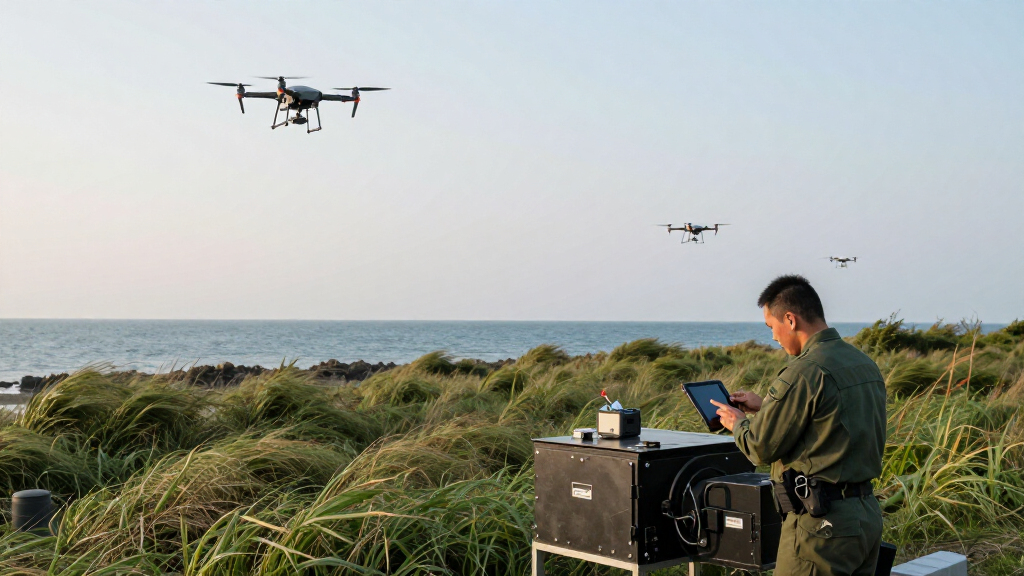
Taiwan’s Ocean Affairs Council is developing an autonomous system for coordinating drone fleets, working with National Cheng Kung University. The university has completed flight simulations involving two fleets of 10 drones each; plans and timing for maritime trials have not been disclosed.
Taiwan’s Ocean Affairs Council is working with National Cheng Kung University on an autonomous system for coordinating drone fleets, with the stated aim of helping the Coast Guard respond to Chinese grey-zone activity around the island. The university has completed flight simulations of two fleets, each comprising 10 drones, according to the South China Morning Post.
The project has advanced from controlling individual aircraft to coordinating two separate detachments. The reported simulations involved 20 drones in total, divided into two fleets. They were simulations, not reported live maritime operations or field trials.
The system is intended to support Taiwan’s Coast Guard Administration in monitoring activity in surrounding waters. The report describes autonomous coordination and mission execution as the project’s goal; it does not specify the missions the drones would perform, their sensors, or whether human operators would approve actions at particular stages.
The work comes as Taiwan increases patrols around 24 undersea cables and monitors nearly 100 China-linked boats, according to the supplied account. Those figures describe the reported patrol and monitoring effort; no time period or comparison baseline was provided for them.
Taiwan’s Drone Swarms Move From Simulation Toward Sea Trials
Taiwan’s Ocean Affairs Council and National Cheng Kung University are developing a system to coordinate autonomous drone fleets for coast guard support. Two 10-drone fleets have completed flight simulations. Maritime trial details have not been announced.
Coordinate fleets for wider-area observation
The project is intended to support Taiwan’s Coast Guard Administration as it monitors activity in surrounding waters, including activity described as grey-zone pressure: actions below the threshold of open military conflict.
Ocean Affairs Council + NCKU
The Ocean Affairs Council is working with National Cheng Kung University on the autonomous coordination system.
From individual aircraft to fleets
The described development has advanced from controlling individual drones to simulating two separate 10-drone groups.
Coast guard monitoring support
Multiple drones could offer another way to observe activity across a wide maritime area. Their specific missions have not been detailed.
Simulation is complete; trials remain ahead
The reported milestone is a simulated coordination of two fleets. The next phase is described as flight trials over maritime areas, but the account gives no date, location, or test conditions.
Individual control
Earlier work focused on controlling aircraft one at a time.
Fleet simulation
Two fleets of 10 drones each completed flight simulations.
Maritime trials
Trials over maritime areas are the reported next direction; details are undisclosed.
Operational status
No deployment date or final procurement decision has been reported.
Simulation involving 20 drones in two coordinated fleets, according to the South China Morning Post account.
The material does not say whether simulations used physical aircraft or simulated drones, or report live maritime operations.
Undersea cables are part of the picture
Undersea cables carry communications and other data between Taiwan and the outside world. Observing activity around cable routes can support awareness, while the causes and responsibility for specific incidents require case-by-case evidence.
Reported monitoring effort
Figures below are presented as reported counts, not as a trend, performance measure, or evidence of drone deployment.
More observation across an area
Coordinated uncrewed aircraft could give coast guard personnel another way to monitor activity over a broad area. Their actual capabilities and operational effect are not established.
Claims need incident-level detail
The supplied material describes cable-damage allegations and vessel activity but provides no dates, identities, investigation findings, or evidence establishing responsibility for particular damage.
What the next updates need to clarify
What has the project achieved?
National Cheng Kung University has completed flight simulations involving two coordinated fleets of 10 drones each, according to the reported account.
When and where are trials?
No maritime trial date, location, or test conditions have been reported.
What will the drones do?
The account does not identify their intended missions, sensors, communications, or navigation systems.
How will human oversight work?
It is unclear whether operators would set and monitor missions, intervene during flights, or review decisions at particular stages.
A research milestone, not an operational network
The confirmed development is a research and testing effort: simulations have coordinated two 10-drone fleets, and maritime flight trials are the reported next milestone. No operational deployment, trial schedule, or final procurement decision has been announced in the supplied account.
Drones and Taiwan’s Cable Patrols
Undersea cables carry communications and other data between Taiwan and the outside world. Damage to them can disrupt connectivity, while activity around cable routes can be difficult to distinguish from ordinary maritime operations. A system that coordinates multiple drones could give coast guard personnel another way to observe activity across a wide area.
The strategic relevance is the use of uncrewed surveillance in response to activity described as grey-zone pressure: actions below the threshold of open military conflict. The material does not establish that drone fleets would prevent cable damage or deter Chinese vessels. Any effect would depend on capabilities, deployment, and how information gathered by drones is used.
Autonomy may also reduce the need to direct each aircraft separately, but the project description does not clarify how much control would remain with human operators. That distinction matters for safety, accountability, and the system’s practical role in coast guard operations.
Products Worth Considering

DJI Osmo Pocket 4 Gimbal Camera Pro Kit, 18-Piece Bundle

DJI Osmo Pocket 3 Filter Bundle – Vlogging Camera with 1 CMOS Sensor and 4K/120fps

DJI Osmo Pocket 3 Creator Combo Vlogging Camera with Mic 2, 1 CMOS, 4K/120fps, 3-Axis Stabilization, 128GB Card
As an affiliate, we earn on qualifying purchases.
From Single Drones to Fleets
The reported development is one stage in a project led by the Ocean Affairs Council with National Cheng Kung University. Its latest described milestone is the simulation of two 10-drone fleets, following earlier work focused on controlling individual aircraft. The next phase is described as moving toward flight trials over maritime areas, but no schedule or trial location is given.
The project is framed around grey-zone activity near Taiwan. The account says civilian Chinese ships have damaged undersea cables on which Taipei relies and that Chinese research vessels have loitered over Taiwan-U.S. cable routes. These descriptions are reported claims; the material does not provide dates, vessel identities, investigation findings, or evidence establishing responsibility for particular cable damage.
Taiwan’s Coast Guard Administration has increased patrols around 24 undersea cables and is closely monitoring nearly a hundred China-linked boats, according to the account. The report compares the loitering of Chinese research vessels to activity by Russian trawlers in the Atlantic, but provides no further detail about the comparison.
Trial Plans and Human Oversight
The account does not state when or where maritime trials will take place, whether the simulations used physical drones or simulated aircraft, or how the system performed. It also gives no technical details about communications, navigation, sensors, or how the fleets would respond if links were disrupted.
It remains unclear what “without human intervention” means in practice: whether operators would set a mission and monitor it, whether they could intervene during flight, or whether the system would make decisions on its own. No operational deployment date, budget, or final procurement decision is reported.
The account also does not provide independent confirmation or case-specific evidence for cable-damage allegations, and it does not identify the vessels involved. The stated purpose of the project should not be taken as proof that the drones have been used against Chinese ships or that they can prevent future incidents.
Maritime Trials Are the Next Milestone
The project is reported to be moving toward flight trials over maritime areas after completing simulations involving two fleets. The account does not give a date, location, or description of the test conditions. Those details will help show whether coordination demonstrated in simulation can work in an operational environment.
Further updates would need to clarify the drones’ intended missions, how the Coast Guard would receive and act on their observations, and what human review would remain. Until then, the confirmed development is a research and testing effort—not an announced operational drone network.
Source: Tom’s Hardware
Key Questions
What has Taiwan’s drone project achieved so far?
National Cheng Kung University has completed flight simulations involving two coordinated fleets of 10 drones each, according to the South China Morning Post. The account does not say that the fleets have completed live maritime trials.
Who is developing the system?
The Ocean Affairs Council is working with National Cheng Kung University. The project is intended to support the Coast Guard Administration in responding to activity around Taiwan’s waters.
Why are the drones being developed?
The stated aim is to help Taiwan monitor and respond to grey-zone activity, including activity around undersea cable routes. The reported material does not establish that the system has been deployed or used to stop cable damage.
When will the maritime trials begin?
No trial date or location has been reported. The project is described as moving toward flight trials over maritime areas after completing simulations.
Will the drones operate without human supervision?
The project is described as aiming for fleets that can coordinate and execute missions without human intervention. The account does not explain the planned level of operator oversight, intervention, or safety controls.
Source: Tom’s Hardware