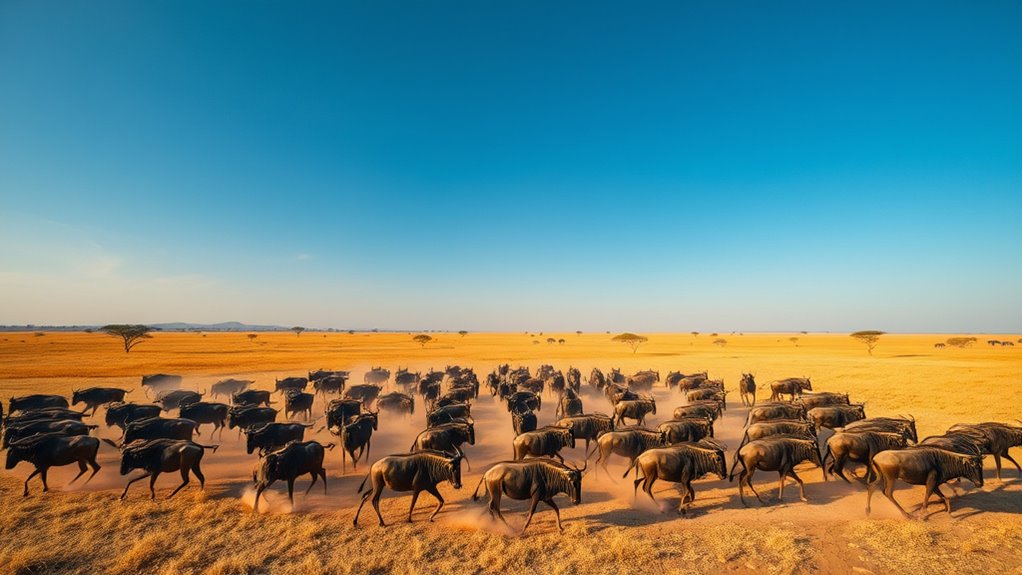

When using drones for wildlife photography, always respect animals’ space and avoid causing stress or disturbance. Follow local laws and secure necessary permits, especially near sensitive habitats or during breeding seasons. Use quiet, low-impact equipment and keep flight durations brief, focusing on natural observation with patience. Collaborate with conservation experts to ensure ethical practices, and be mindful to protect privacy and avoid intrusive filming. Keep exploring to discover how to balance stunning shots with responsible wildlife photography.
Open a free Amazon Business account
Business pricing, bulk buying and tax-exempt orders.
As an affiliate, we earn on qualifying purchases.
Key Takeaways
- Maintain a safe distance and use telephoto lenses to avoid stressing wildlife during drone photography.
- Limit flight duration and avoid hovering over nests or sensitive habitats, especially during breeding seasons.
- Obtain necessary permits, follow regulations, and respect privacy boundaries to ensure legal and ethical compliance.
- Observe animal behavior quietly, practice patience, and be ready to withdraw if animals show signs of distress.
- Use quiet, low-impact equipment and gentle flying techniques to minimize habitat disturbance and promote sustainable practices.
telephoto lens for wildlife photography
As an affiliate, we earn on qualifying purchases.
As an affiliate, we earn on qualifying purchases.
Respect Wildlife Distances and Behavior
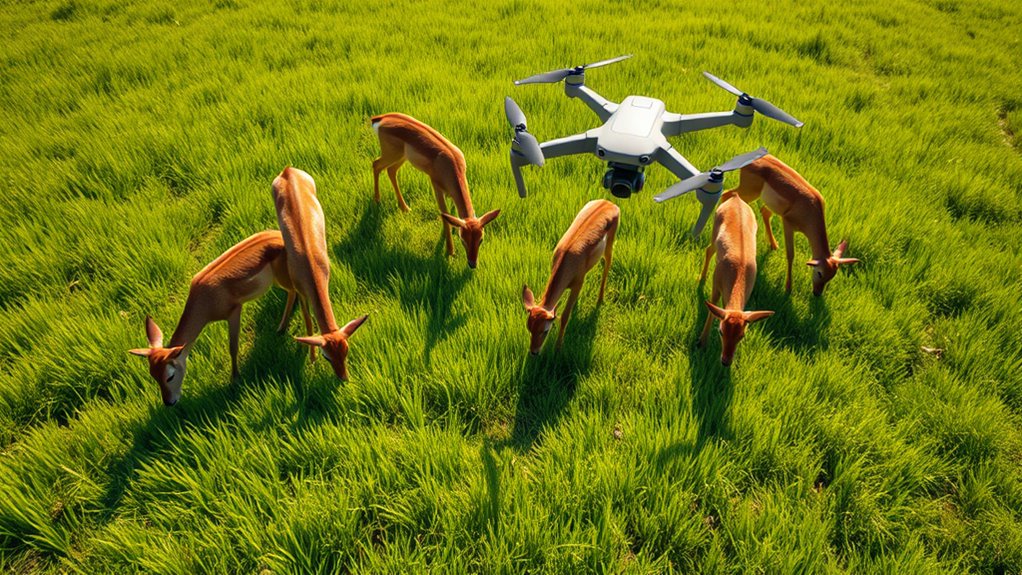
To protect wildlife and guarantee ethical photography, it’s essential to respect their natural distances and behaviors. Keep a safe distance so animals don’t feel threatened or stressed. Use a telephoto lens to capture detailed shots without getting too close. Always monitor their reactions; if animals show signs of anxiety, move further away or stop filming. Avoid hovering directly over nests, dens, or young animals, as this can cause injury or abandonment. Limit your time near wildlife to minimize disturbance and avoid disrupting their daily routines. Respecting their space helps preserve natural behaviors and habitats. Remember, the goal is to observe and document, not to interfere. Incorporating proper equipment and techniques enhances both the safety of the animals and the quality of your shots. Being aware of animal behavior cues can also help you anticipate their reactions and act accordingly. Additionally, understanding human impact on wildlife can guide you in making more responsible decisions during your photography sessions. Educating yourself about herbalism principles may also inspire respectful engagement with natural environments, ensuring your photography practices support conservation efforts.
Furthermore, leveraging wilderness awareness can help you recognize signs of animal stress and adapt your approach accordingly.
quiet drone for wildlife filming
As an affiliate, we earn on qualifying purchases.
As an affiliate, we earn on qualifying purchases.
Comply With Local Regulations and Permits
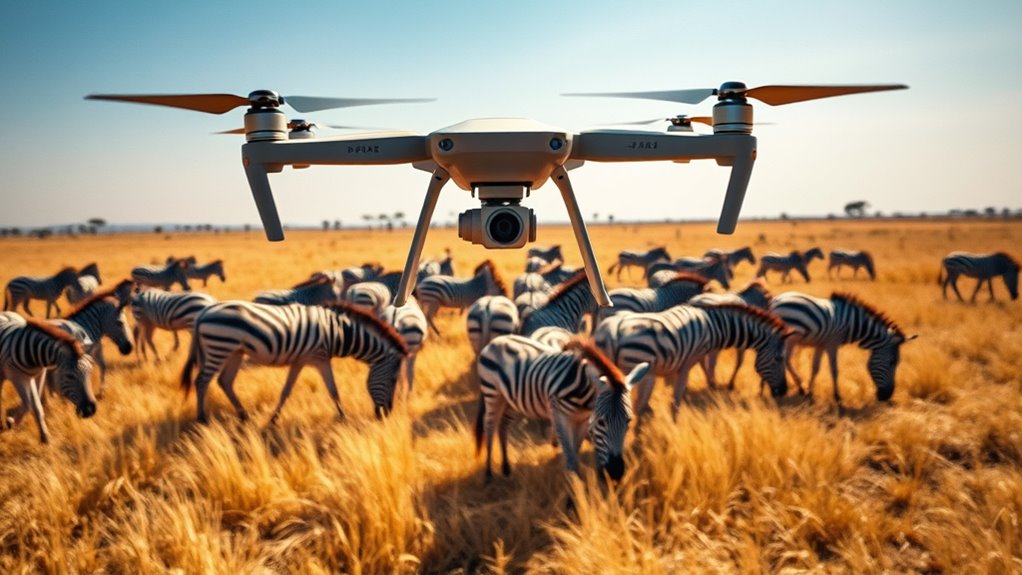
Before you fly your drone for wildlife photos, you need to obtain the necessary permissions from local authorities. Make sure you understand and follow all regulatory restrictions, such as altitude limits and no-fly zones. Failing to comply can lead to fines, confiscation, or legal issues, so always stay informed before your shoot. Additionally, understanding Bank SWIFT/BIC Codes can be helpful if you need to process payments or receive funding for your photography projects. Remember that privacy policies may also impact how your data and images are handled during your project. To ensure responsible use, familiarize yourself with navigation and mapping features of your drone to avoid restricted areas and protect wildlife habitats.
Obtain Necessary Permissions
Ensuring you have the proper permissions is essential before flying a drone for wildlife photography. Without them, you risk legal trouble and disturbing the animals you’re trying to observe. Always check local laws to identify required permits or licenses. Obtain written approval from landowners or authorities when necessary. Respect protected areas and special zones that restrict drone use. By securing the right permissions, you demonstrate respect for wildlife and conservation efforts.
- Feel the thrill of capturing rare moments, knowing you’ve acted responsibly
- Experience peace of mind, avoiding fines and penalties
- Honor the habitat and animals that inspire your work
- Contribute to ethical photography that promotes conservation and respect
Follow Regulatory Restrictions
Following local regulations and obtaining necessary permits is essential when using drones for wildlife photography. Ignoring rules can result in fines, confiscation, or harm to wildlife. Always research regional laws before your shoot. Some areas require registration, flight restrictions, or specific permits, especially in protected zones. To help you stay compliant, here’s a quick overview:
| Regulation Type | Key Requirement |
|---|---|
| No-Drone Zones | Avoid flying in parks or reserves |
| Permits and Registration | Obtain permits for protected areas or commercial use |
| Flight Restrictions | Follow altitude and distance limits |
Additionally, understanding protected zones and their restrictions can help you avoid unintended violations. Being aware of regulatory restrictions ensures that your photography remains both ethical and legal, preserving the enjoyment of wildlife for everyone. Maintaining awareness of drone regulations helps prevent accidental infractions and promotes responsible use of technology in natural habitats. Recognizing ethical considerations when photographing wildlife can further enhance your approach and respect for the environment.
wildlife drone permits and regulations
As an affiliate, we earn on qualifying purchases.
As an affiliate, we earn on qualifying purchases.
Minimize Disturbance During Sensitive Periods
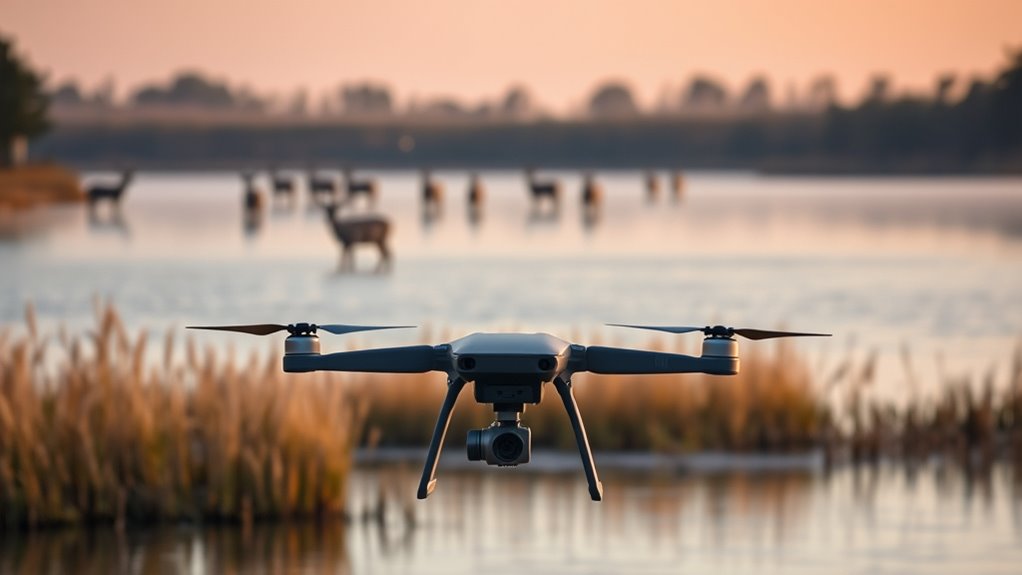
You should avoid flying your drone during critical times like nesting or breeding seasons to prevent stressing wildlife. Limiting your flight time helps reduce disturbance and allows animals to go about their natural behaviors. Being mindful of these periods guarantees you don’t unintentionally harm or disrupt the animals you’re photographing. Incorporating auditory awareness techniques can also help you gauge the animals’ reactions and prevent overstimulation. Additionally, understanding the filtering capability of your drone’s camera can assist in capturing clear images without the need for excessive proximity. Recognizing the importance of behavioral cues can further inform your approach and ensure respectful wildlife interactions. Being aware of disturbance thresholds can guide you in maintaining an ethical distance and preserving wildlife well-being. Paying attention to animal stress signals can help you adjust your approach in real-time and avoid causing undue harm.
Avoid Nesting Periods
Nesting periods are critical times for many wildlife species, and drone activity can cause significant disruption during these sensitive phases. During this time, disturbance may lead to abandonment, reduced reproductive success, or increased stress for vulnerable animals. To avoid causing harm, you should:
- Reschedule your drone flights to outside nesting seasons, respecting local wildlife calendars.
- Maintain greater distances to prevent startling nesting birds or mammals.
- Limit your time near nesting sites to minimize cumulative disturbance.
- Stay vigilant for signs of distress and immediately cease flying if animals show agitation.
- Familiarize yourself with UST projector rankings and environmental considerations to ensure respectful observation of wildlife habitats.
Limit Flight Duration
Minimizing the duration of drone flights is essential during sensitive wildlife periods, as prolonged presence can increase stress and disrupt natural behaviors. Keep your flights short and focused, only capturing essential shots to reduce disturbance. Plan your approach beforehand, aiming for quick, efficient sessions that limit your time near animals. Constantly monitor their reactions; if you notice signs of stress, promptly end your flight. Use telephoto lenses to achieve detailed images from a distance, minimizing the need for extended drone operation. Remember, the goal isn’t just a good shot but also preserving wildlife well-being. Incorporating ethical considerations and practicing responsible flight habits can help ensure your presence remains unobtrusive while capturing stunning images. By keeping flight times brief, you help prevent behavioral changes, reduce habitat disturbance, and uphold ethical standards in wildlife photography.
low-impact drone for nature photography
As an affiliate, we earn on qualifying purchases.
As an affiliate, we earn on qualifying purchases.
Use Quiet, Low-Impact Equipment and Techniques
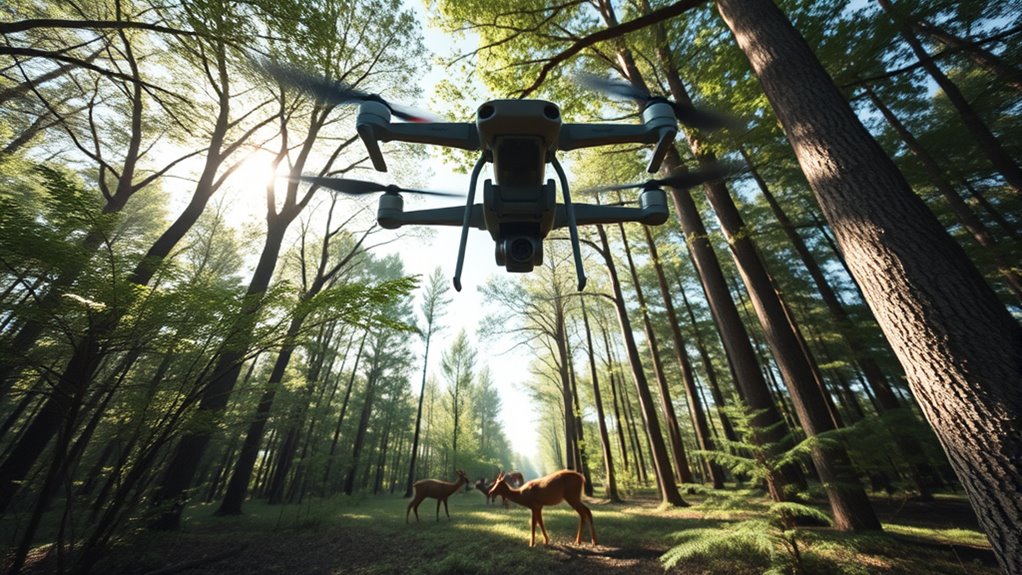
Using quiet, low-impact equipment is essential for ethical wildlife drone photography because it helps reduce disturbance to animals and their habitats. When you choose quieter drones and gentle techniques, you protect wildlife’s natural behaviors and minimize stress. Opt for models with reduced noise emissions and fly at higher altitudes when possible. Your careful approach can support sustainable practices—preserving the serenity of natural environments so animals remain undisturbed, allowing you to capture authentic moments without causing panic or flight responses. This also helps maintain the health of fragile habitats by avoiding unnecessary disruption and fosters respect for wildlife, encouraging their survival and well-being.
Protect Privacy and Avoid Intrusive Filming
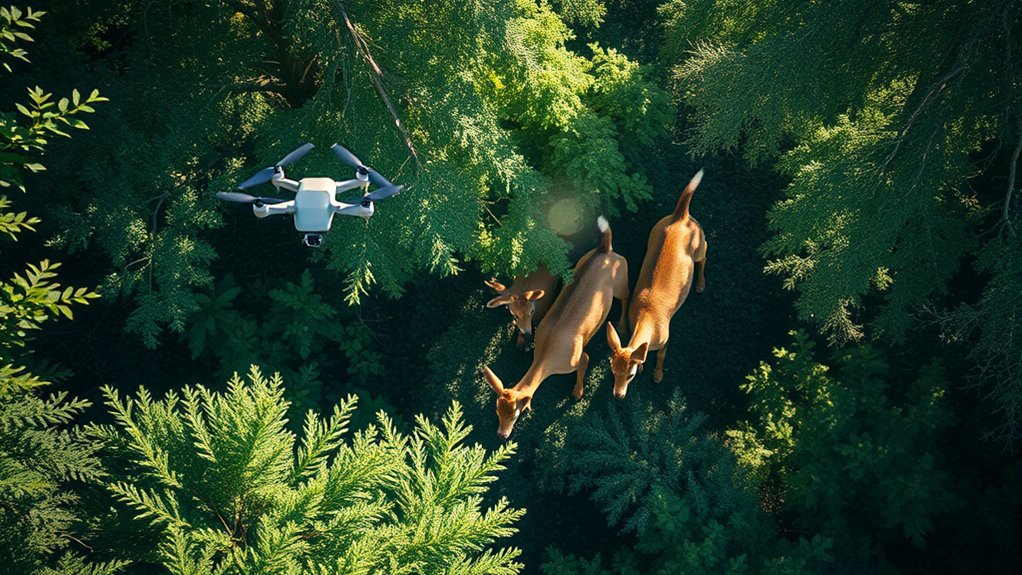
Protecting privacy and avoiding intrusive filming are essential when engaging in wildlife drone photography. Always respect the boundaries of private property and avoid flying near homes or cultural sites without permission. Keep your drone at a respectful distance from people, especially children, and avoid capturing their images without consent. Steer clear of filming in sensitive areas where privacy concerns are heightened, such as villages or tribal lands. Use your drone thoughtfully, ensuring it doesn’t record individuals in vulnerable or private moments. Be mindful of local laws and regulations regarding privacy and data collection. By maintaining awareness of your surroundings and using discretion, you help prevent invasions of privacy and reduce the risk of causing discomfort or distress to both humans and wildlife.
Prioritize Patience and Natural Observation
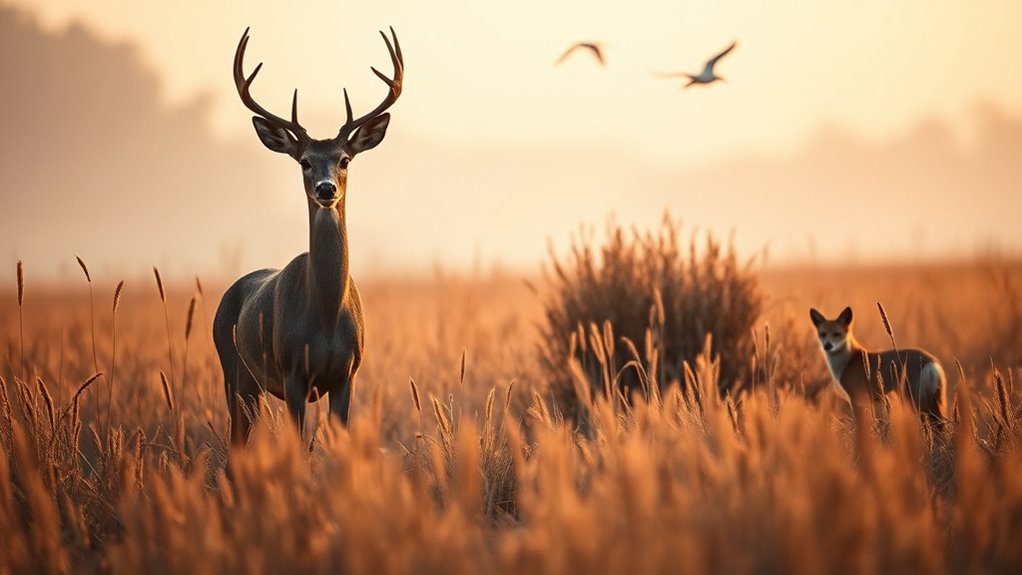
Prioritizing patience and natural observation is essential for ethical wildlife drone photography. Rushing or forcing shots can stress animals and disrupt their natural behaviors. Instead, spend time quietly observing their routines and reactions. This approach allows you to capture authentic moments without interference. Be mindful of signs that animals are disturbed, and always be ready to step back. Remember, patience often yields the most compelling images.
Consider these emotional benefits:
- Witnessing genuine wildlife behavior in its purest form
- Building trust with animals over time
- Respecting the delicate balance of their habitat
- Contributing to conservation by minimizing disturbance
Collaborate With Conservation Experts
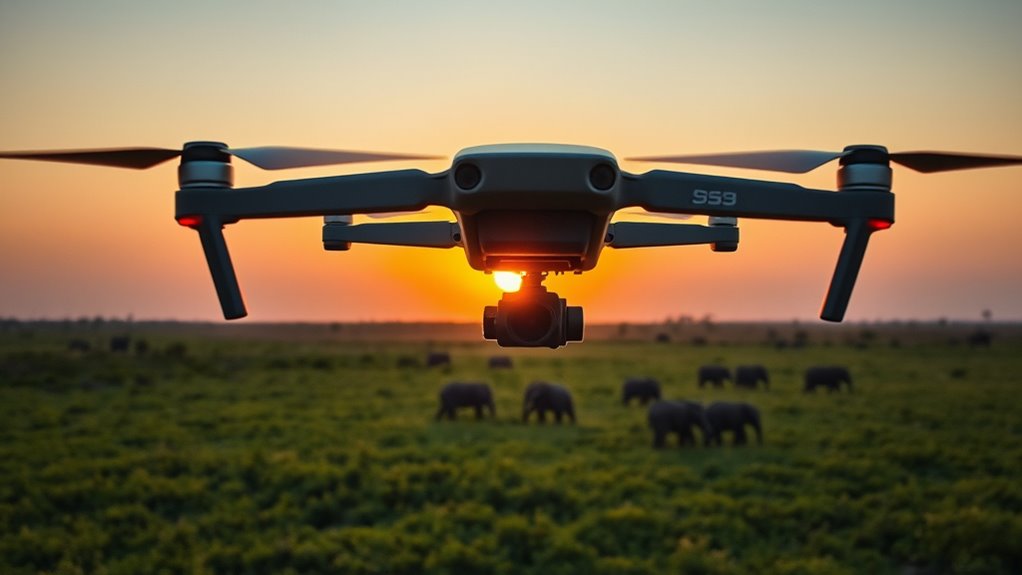
Collaborating with conservation experts enhances the ethical and scientific integrity of your wildlife drone photography. These professionals provide valuable insights on animal behavior, habitat sensitivity, and legal restrictions, guaranteeing your approach minimizes disturbance. Partnering with biologists or conservationists helps you identify critical areas to avoid and ideal times for filming, reducing risks to wildlife.
| Benefit | Explanation |
|---|---|
| Expertise | Guides safe, responsible drone use around animals. |
| Permits | Assists with obtaining necessary permissions. |
| Data | Contributes to research and conservation efforts. |
| Behavior Insights | Helps interpret animal responses and limits stress. |
| Legal Compliance | Ensures adherence to regulations and no-fly zones. |
Promote Ethical Sharing and Representation
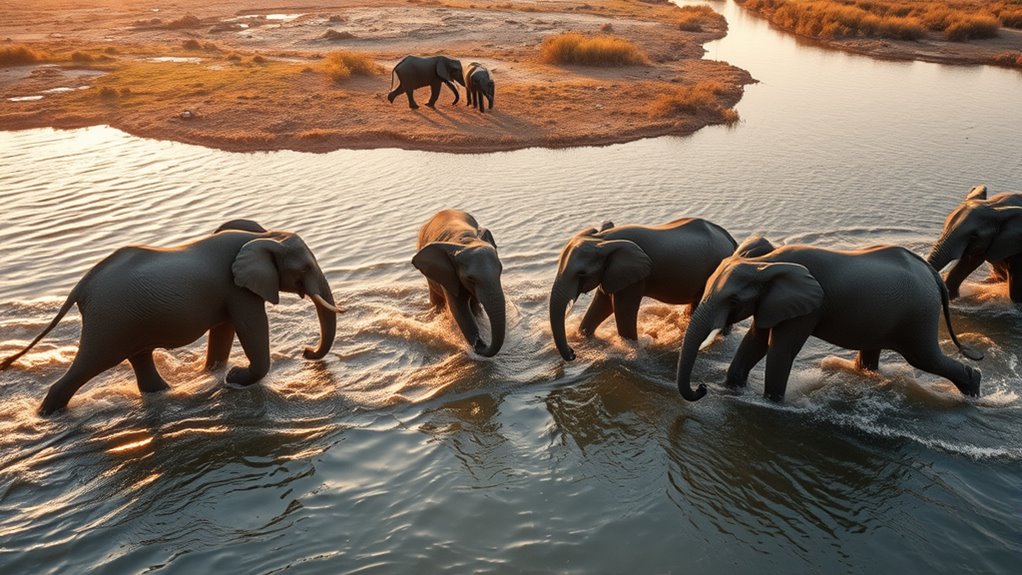
When sharing wildlife photos taken with drones, it’s essential to contemplate the impact on both animals and viewers. Your images can inspire conservation but also risk spreading misinformation or encouraging unsafe behavior. To promote ethical sharing, consider these points:
Respect wildlife when sharing drone photos; promote conservation without risking disturbance or misinformation.
- Highlight the importance of respecting wildlife and habitats, avoiding sensationalism.
- Clearly state that your photos were taken responsibly, without disturbing animals.
- Avoid revealing exact locations that could lead to habitat disturbance or illegal activities.
- Encourage others to follow ethical guidelines and prioritize wildlife welfare in their photography.
Frequently Asked Questions
How Can I Identify No-Drone Zones Before Filming?
You can identify no-drone zones by checking local regulations and maps before filming. Look for official signage, online resources, or government websites that outline restricted areas like national parks, reserves, and protected sites. Contact local authorities or park officials if you’re unsure. Always respect posted signs and boundaries, and use GPS or apps designed to alert you when entering restricted zones, ensuring you stay compliant and avoid disrupting wildlife.
What Are the Best Drone Settings to Reduce Wildlife Disturbance?
Think of your drone as a gentle whisper in the wild. To minimize disturbance, set your drone to low noise mode, use a high shutter speed to avoid hovering longer, and keep the altitude as high as possible. Adjust the camera to a wider angle to capture more from a distance. Always monitor wildlife reactions and land immediately if you notice stress, ensuring your presence remains unobtrusive.
How Do I Handle Accidental Disturbances Caused by My Drone?
If your drone accidentally disturbs wildlife, immediately stop flying and slowly retreat to a safe distance. Observe the animals’ behavior; if they seem stressed or flee, land the drone calmly and avoid further disturbance. Reflect on what caused the disruption—was it altitude, noise, or proximity? Use this experience to adjust your approach next time, maintaining respectful distances and minimizing noise to prevent future issues.
Are There Specific Permits Required for Drone Use in Protected Areas?
Yes, you need specific permits to fly your drone in protected areas. You should check local regulations and apply for necessary permissions from relevant authorities like park services or conservation agencies before your shoot. Failing to obtain permits can lead to fines or legal issues. Always guarantee you’re fully compliant with all rules to avoid disturbing wildlife or violating protected status, and respect no-drone zones within these areas.
How Can I Ethically Share Wildlife Footage Online?
You can ethically share wildlife footage online by respecting animals’ privacy, avoiding sensationalism, and promoting conservation. Always credit the location and support ethical practices. Use low noise and maintain a respectful distance to prevent disturbance. Share authentic stories that highlight wildlife behavior without manipulation. Educate your audience on the importance of conservation, and avoid sharing sensitive or intrusive footage that could harm or stress animals or their habitats.
Conclusion
Remember, like a skilled explorer in uncharted territory, your drone photography should honor nature’s delicate balance. By respecting wildlife, following regulations, and practicing patience, you become a steward rather than a disruptor. Let your images tell stories worth sharing—stories that honor the spirit of the wild, much like a modern-day David facing Goliath with respect and integrity. Embrace ethical photography, and you’ll capture breathtaking scenes that inspire awe without leaving scars behind.
College move-in / dorm season Picks
dorm essentials
As an affiliate, we earn on qualifying purchases.