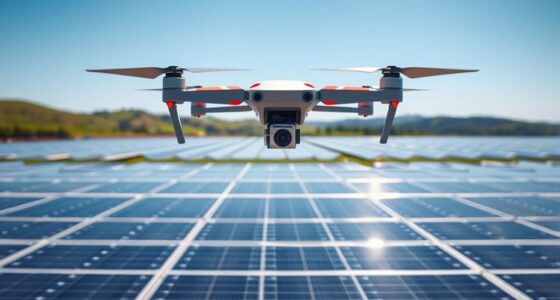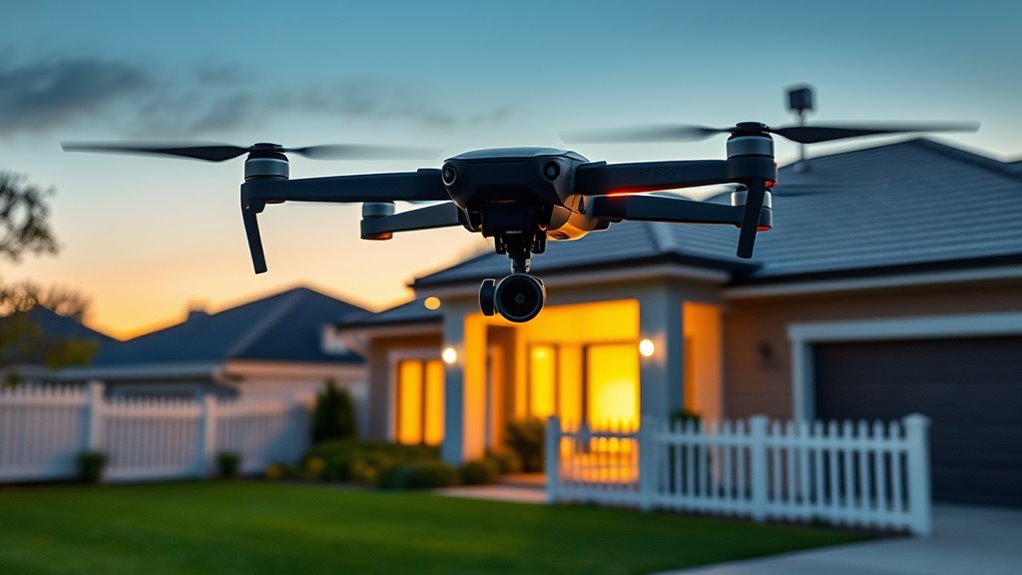

Drones can considerably boost your home security by providing rapid, flexible aerial surveillance that covers large areas quickly. Equipped with thermal, infrared, and night vision sensors, they detect intruders even in low visibility. They allow real-time alerts, remote control, and act as deterrents to potential intruders. While there are some limitations like battery life and regulations, advanced drone systems are evolving—keep exploring to discover how they can create a smarter, more secure home environment.
Open a free Amazon Business account
Business pricing, bulk buying and tax-exempt orders.
As an affiliate, we earn on qualifying purchases.
Key Takeaways
- Drones provide rapid, flexible surveillance that can cover large property areas quickly and efficiently.
- Equipped with thermal and night vision sensors, drones can detect intruders in low-visibility conditions.
- They act as aerial deterrents, discouraging unauthorized access through unpredictable aerial presence.
- Drones enable real-time alerts and visual confirmation, improving response times during security breaches.
- Integration with AI and existing security systems enhances autonomous threat detection and overall home protection.
As an affiliate, we earn on qualifying purchases.
How Drones Enhance Home Security Capabilities
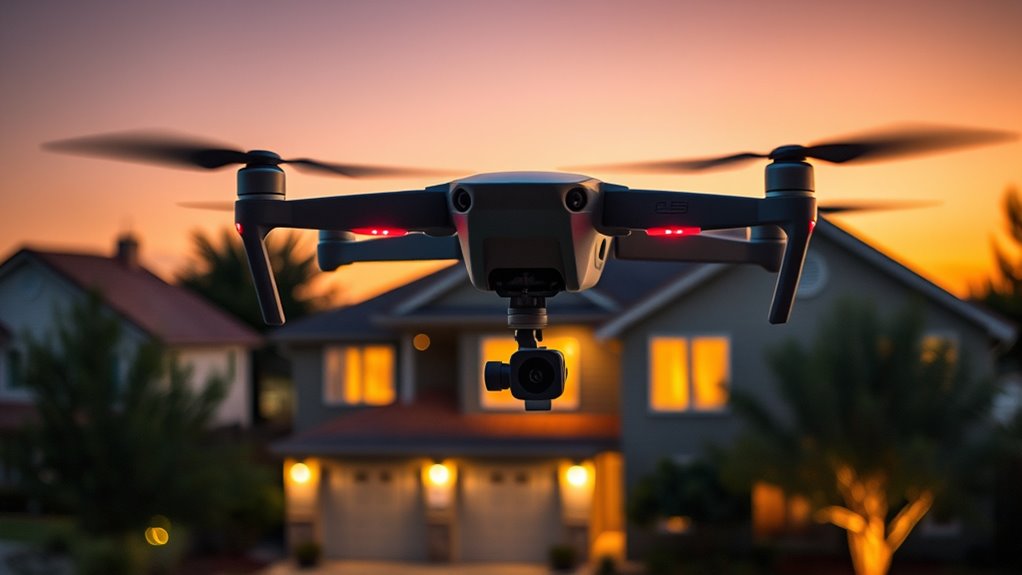
Drones considerably enhance home security by providing rapid, flexible surveillance that traditional systems can’t match. With their ability to cover large areas quickly, you can monitor your entire property more efficiently than ground patrols or static cameras. Drones equipped with thermal, infrared, and night vision sensors detect intruders even in low visibility or adverse weather, giving you a significant advantage. They can be instantly deployed to any part of your property after an alarm triggers, offering real-time visual confirmation and reducing response times. Plus, their unpredictable aerial presence acts as a deterrent, discouraging potential intruders from attempting a break-in. By adding this dynamic layer to your security setup, drones help you stay better protected, whether you’re at home or away. Additionally, integrating high contrast ratio technology into your security cameras enhances the clarity of footage in various lighting conditions, making it easier to identify intruders and assess situations accurately. Incorporating aerial surveillance capabilities further expands your security options by providing comprehensive oversight that static systems cannot achieve. Moreover, utilizing remote monitoring features allows you to oversee your property from anywhere, increasing peace of mind. Advanced navigation systems enable drones to operate autonomously, increasing their effectiveness in complex environments. Incorporating thermal imaging can also help detect hidden threats or unusual activity even in challenging weather or darkness.
As an affiliate, we earn on qualifying purchases.
Technological Features Powering Drone Surveillance
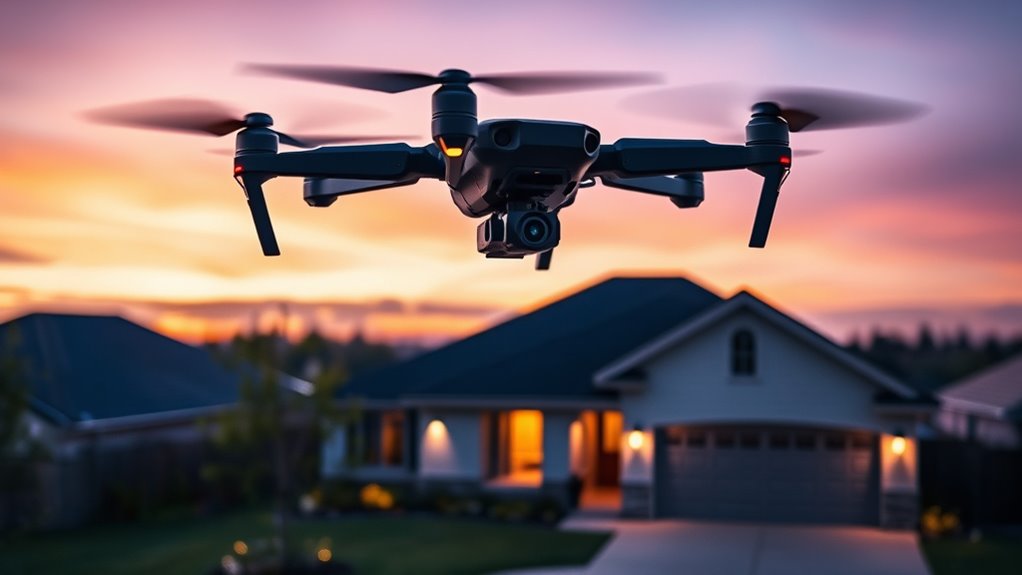
The technological features integrated into drone home security systems enable them to operate autonomously and effectively in diverse conditions. You benefit from AI and machine learning that recognize intruders, track movement, and identify threats without manual input. GPS navigation, 4G/5G connectivity, and cloud streaming keep you connected and informed in real time. Drones also have automatic obstacle detection and collision avoidance, ensuring safe operation. Additionally, encrypted data transmission protects your privacy, while alarms, strobe lights, and speakers can deter intruders. These security features work together to create a comprehensive surveillance system. Here’s a quick overview of key features: navigation and mapping. Moreover, European cloud servers can securely store and process surveillance data, enhancing privacy and compliance with data regulations. Remote control capabilities further allow for user intervention when necessary, providing an extra layer of security. The integration of real-time alerts ensures you are immediately notified of any suspicious activity.
aerial surveillance drone for home
As an affiliate, we earn on qualifying purchases.
As an affiliate, we earn on qualifying purchases.
Cost and Operational Advantages of Drone Security Systems
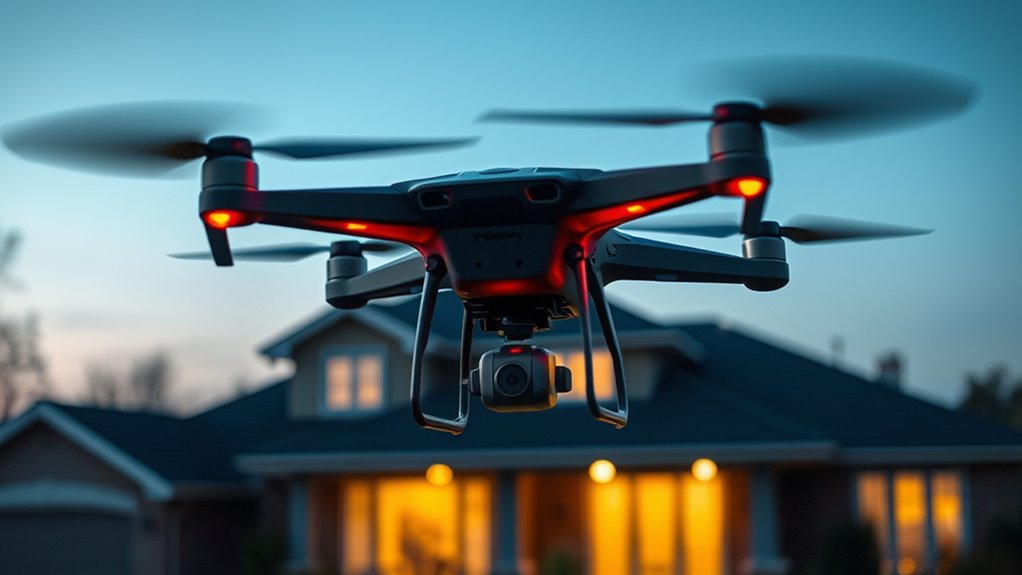
Implementing drone security systems offers significant cost and operational advantages by reducing reliance on human security personnel and enhancing overall efficiency. You’ll save on labor costs since drones can monitor large areas continuously without breaks, and they’re capable of quickly covering complex property layouts. Automated drone-in-a-box setups enable drones to self-recharge and stay operational around the clock with minimal human intervention. This technology also helps to streamline security operations, allowing you to allocate resources more effectively. Drones also act as a force multiplier, complementing existing security measures like cameras and access controls. By providing rapid response and real-time surveillance, they help prevent incidents before escalation. Additionally, advances in free floating technology enable drones to navigate varied terrains more effectively, improving coverage and security. The absence of an odor, similar to that of fentanyl, makes detection challenging but underscores the importance of technology in security. Furthermore, the integration of electric power generation with bike generators in security systems can support sustainable energy solutions for remote surveillance stations. Overall, drone security systems deliver a more cost-effective, scalable, and flexible solution, making home protection operationally smarter and financially sustainable.
As an affiliate, we earn on qualifying purchases.
Challenges and Limitations in Drone Home Protection

While drone security systems offer notable advantages in cost savings and operational efficiency, they also face several significant challenges that can limit their effectiveness. Limited flight times, typically around 20-30 minutes per battery, mean you’ll need multiple drones or automated charging solutions to maintain continuous coverage. Weather conditions, like heavy rain or strong winds, can hinder drone operations and reliability, reducing their availability when you need them most. Regulatory restrictions may prevent drones from flying over private or urban areas, limiting their scope. Privacy concerns and legal issues surrounding aerial surveillance can also pose hurdles, especially in residential neighborhoods. Additionally, managing and maintaining these systems requires technical expertise, which might be a barrier for some homeowners seeking simple security solutions. The energetic alignment of operators with their systems can influence their effectiveness and response times. Moreover, understanding system reliability is crucial for homeowners to ensure consistent protection. Ensuring system redundancy is essential to mitigate potential failures and maintain security coverage. Proper system calibration and regular updates are also necessary to keep the drones functioning optimally.
Practical Applications for Residential Security
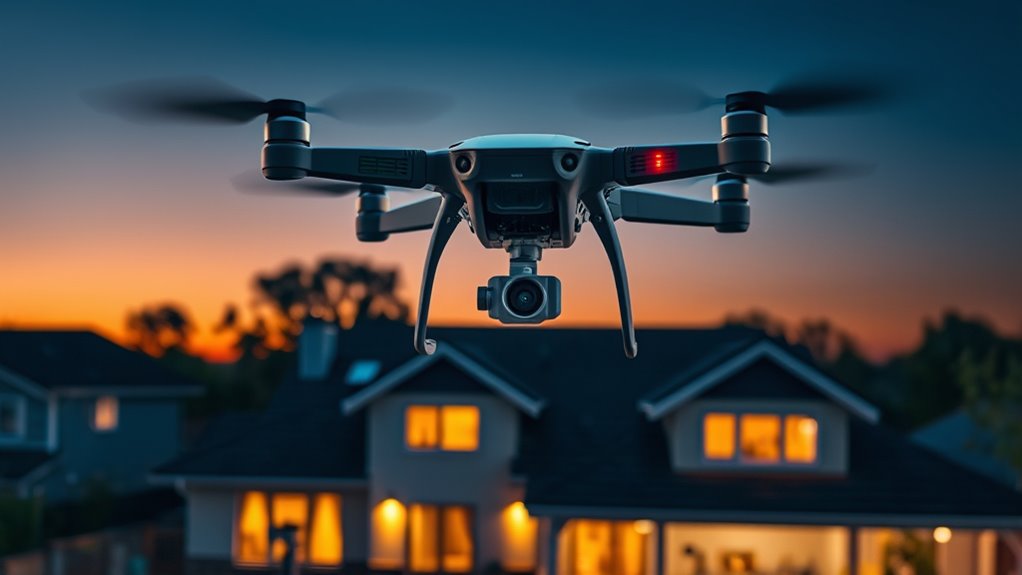
You can use drones for perimeter monitoring, quickly checking fences, gates, and entry points to catch intruders early. Nighttime surveillance becomes more effective with thermal imaging, helping you spot threats in low visibility conditions. During emergencies, drones provide instant assessments of fires or accidents, keeping responders safe and informed. Additionally, drone safety protocols are essential to ensure responsible use and prevent accidents during home security operations. Implementing proper smartphone and accessory management can further enhance your drone’s effectiveness by providing reliable control and real-time data sharing. Incorporating maintenance routines into your drone use can help maintain optimal performance and prolong the lifespan of your equipment.
Perimeter Monitoring Strategies
Perimeter monitoring is a critical aspect of residential security, ensuring that property boundaries are continuously watched for potential intrusions. Drones excel in this role by covering large areas quickly and efficiently, providing real-time aerial views that ground patrols can’t match. You can deploy drones to track fences, gates, or other vulnerable entry points, giving you early alerts of suspicious activity. Incorporating thermal imaging or night vision allows you to monitor effectively after dark or in adverse weather conditions. Automated patrol routines can be scheduled or triggered by alarms, ensuring persistent surveillance without manual effort. Additionally, drones act as a deterrent, adding an unpredictable aerial presence that discourages intruders before they attempt to breach your property.
Nighttime Surveillance Benefits
Nighttime surveillance substantially enhances residential security by enabling drones to detect intruders in low-visibility conditions. With thermal and infrared imaging, your drone can spot movement and heat signatures even in complete darkness, providing a clear advantage over traditional cameras. This real-time detection allows you to identify potential threats early, reducing response times and preventing break-ins. Drones can quickly patrol large areas, covering multiple zones faster than ground patrols, and their unpredictable aerial presence acts as a deterrent. Additionally, onboard sensors and cameras transmit live feeds, giving you immediate situational awareness. This constant nighttime monitoring helps keep your home secure, ensuring you’re alerted to suspicious activity before it escalates, all while operating seamlessly and autonomously.
Emergency Response Capabilities
How quickly can your home security system respond to an emergency? With drone technology, response times are markedly reduced. Drones can be instantly deployed upon an alarm trigger, providing real-time live video and audio feeds to verify threats immediately. They can rapidly reach areas that are hard to access on foot or by ground patrols, offering instant situational awareness. Equipped with thermal imaging and advanced sensors, they detect intruders or hazards even in low visibility conditions. Drones also serve as mobile deterrents, flashing lights or sounding alarms to scare off intruders. This swift, precise response helps prevent escalation, minimizes damage, and ensures you get accurate information faster. Overall, drone emergency response capabilities enhance your home’s security by delivering rapid, informed action in critical moments.
Integrating Drones With Existing Security Measures
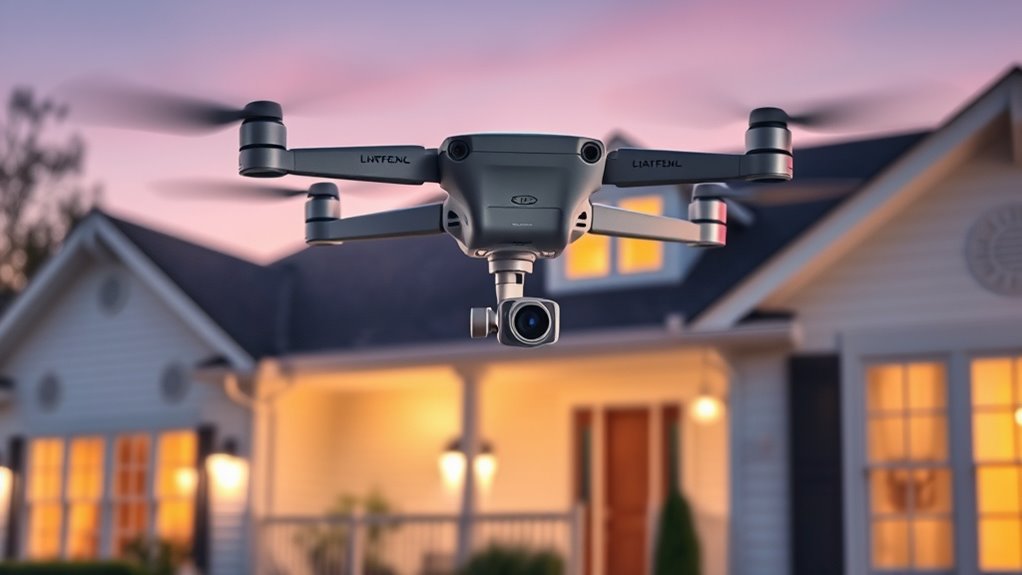
Integrating drones with existing security measures enhances overall protection by creating a layered defense system. You can combine drones with fixed cameras, alarms, and access controls to cover blind spots and improve situational awareness. Drones can be programmed to patrol perimeter areas automatically, complementing stationary security devices. When an alarm triggers, drones can quickly deploy to provide live video feeds, confirming threats or identifying intruders in real time. This coordination reduces false alarms and speeds up response times. Additionally, integrating drones with your existing security platform allows seamless control and monitoring through centralized apps or systems. By combining traditional security measures with aerial surveillance, you create a more extensive, dynamic, and adaptable home security setup that enhances safety and deterrence.
Future Developments in Drone Home Security Technology

Advancements in drone home security are rapidly transforming the industry, driven by breakthroughs in AI, sensor technology, and connectivity. You can expect smarter drones that autonomously recognize intruders, track movements, and identify threats using advanced machine vision. Expansion of drone-in-a-box systems will enable continuous, long-duration operations with minimal human intervention, making security more reliable. Multi-sensor payloads like LiDAR and multispectral cameras will enhance site mapping and threat detection, even in challenging conditions. Faster, low-latency 4G/5G networks will support high-definition live streaming for real-time situational awareness. Cloud-based platforms will centralize monitoring, data analysis, and management, streamlining your security setup. These innovations will make drone security more autonomous, efficient, and integrated into your overall home protection system.
Frequently Asked Questions
How Do Drones Handle Privacy Concerns in Residential Neighborhoods?
You might worry about privacy when drones patrol your neighborhood. To handle this, drone security systems often use encrypted data transmission, ensuring your footage stays private. They’re programmed to avoid capturing private spaces and follow legal regulations. Many systems also include privacy settings, like limited altitude or restricted zones, so you can feel confident that your personal data is protected while enjoying the benefits of aerial surveillance.
What Are the Legal Restrictions on Drone Surveillance Over Private Properties?
You need to be aware that legal restrictions on drone surveillance over private properties vary by location. Many regions require drone operators to obtain permits, respect privacy laws, and avoid flying over private land without permission. You could face fines or legal action if you violate laws related to airspace or privacy. Always check local regulations before deploying a drone for surveillance to guarantee you’re compliant and avoid potential legal issues.
How Secure Is the Data Transmitted From Home Security Drones?
The data transmitted from your home security drone is quite secure if proper measures are in place. Most systems use encrypted data transfer, ensuring your footage and information stay private. Additionally, advanced security protocols safeguard against hacking or interception. You should choose systems with robust encryption, regular updates, and secure cloud storage. This way, your surveillance data remains confidential, protected from unauthorized access and cyber threats.
Can Drones Operate Effectively During Adverse Weather Conditions?
Drones struggle to operate effectively during adverse weather conditions like heavy rain, strong winds, or snow. These elements can impair their sensors, reduce flight time, and increase the risk of crashes. You’ll find that their reliability drops, and safety becomes a concern. To guarantee continuous security, it’s best to pair drones with traditional systems or wait for weather improvements before deploying them in challenging conditions.
What Maintenance Is Required for Long-Term Drone Home Security Systems?
You need to regularly check and clean your drones’ sensors, cameras, and propellers to guarantee peak performance. Keep firmware and software updated to fix bugs and enhance features. Inspect batteries for signs of wear and replace them as needed to maintain flight time. Also, test obstacle detection and autonomous functions periodically. Proper storage in a cool, dry place helps prevent damage, and scheduling routine maintenance minimizes downtime and extends your drone’s lifespan.
Conclusion
While drones can elevate your home security with impressive tech and quick response, they’re not a magic fix. They’re like a high-tech guard dog—alert and mobile—but still need proper integration with traditional systems. As technology advances, they’ll become more reliable, yet the human element remains essential. So, don’t rely solely on drones; combine them with other security measures for true peace of mind. After all, technology is a tool, not a substitute for vigilance.
Labor Day sales Picks
labor day deals
As an affiliate, we earn on qualifying purchases.