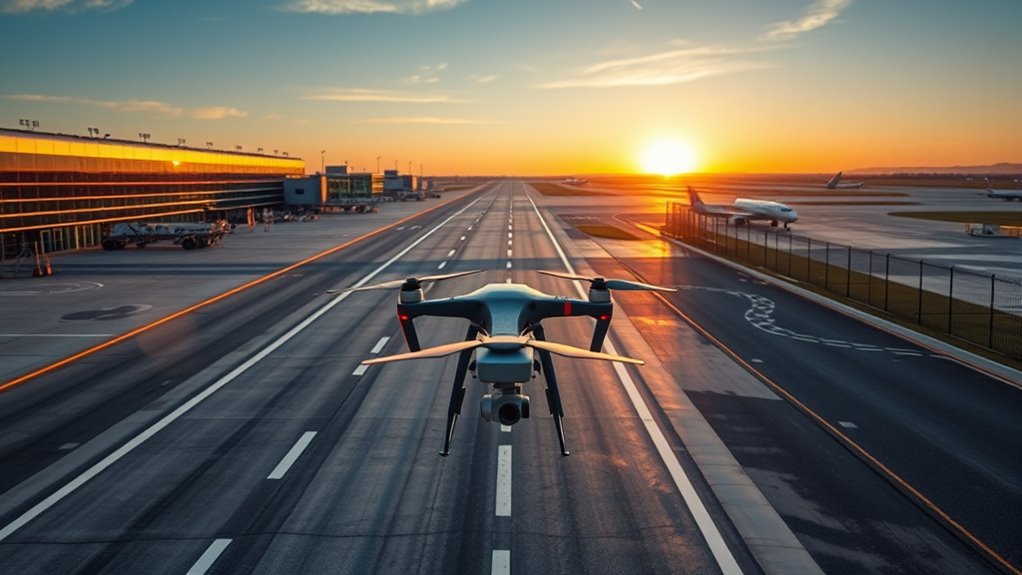

If you plan to fly within five miles of an airport, you must follow strict regulations to stay safe and legal. Most importantly, you need to avoid flying without permission, as this can interfere with aircraft or breach security. Use apps and local resources to identify no-fly zones and understand the rules. Following the 5-mile rule helps protect everyone in the airspace. Continue to explore so you can learn how to fly safely near airports.
Listen free for 30 days with Audible
Thousands of audiobooks and originals — cancel anytime.
As an affiliate, we earn on qualifying purchases.
Key Takeaways
- The 5-mile radius rule prohibits flying drones near airports without proper authorization to ensure safety and compliance.
- Always check local regulations and use mapping apps to identify no-fly zones within 5 miles of an airport.
- Violating the 5-mile rule can lead to fines, legal action, or drone confiscation by authorities.
- Staying within permitted areas and obtaining necessary permissions help prevent safety hazards and security breaches.
- Understanding airport security measures and respecting boundaries contribute to safe and responsible drone operation.
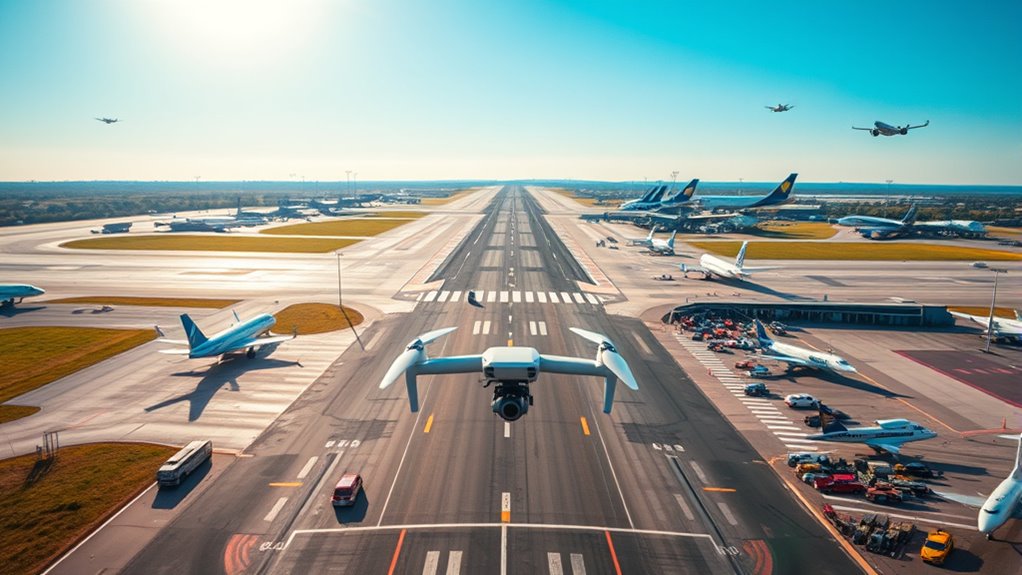
Have you ever wondered what rules govern flying near airports? Understanding these regulations is essential for your safety and avoiding legal trouble. The rules primarily focus on maintaining airport security and ensuring that aircraft can operate without interference. Drone regulations, in particular, are strict within certain distances of airports. The Federal Aviation Administration (FAA) enforces these rules to prevent drones from entering restricted areas, which could cause serious safety issues for aircraft and passengers. If you’re flying a drone, you need to be aware of the 5-mile radius rule, which is the typical boundary where drone operations are heavily restricted without prior authorization. This means you should always check local rules before flying near an airport, as violations can lead to hefty fines or even criminal charges.
Flying a drone near airports? Keep within a 5-mile radius to stay safe and avoid legal trouble.
Airport security plays a key role in establishing these boundaries. Security measures are designed to keep the airspace safe from unauthorized or potentially dangerous activities. When you’re near an airport, security personnel are especially vigilant, and the airspace is monitored closely by radar and other surveillance systems. If you’re caught flying a drone or any other flying device within the restricted zone, authorities can quickly respond, and you might face serious consequences. This is why understanding the significance of the 5-mile rule is essential; it’s not just about avoiding fines but also about ensuring the safety of all air travelers and airport staff.
The 5-mile rule isn’t arbitrary—it’s based on the need to keep the airspace clear of potential hazards. Within this radius, drone regulations become more stringent, often requiring you to register your drone and obtain specific permissions if you want to fly legally. Ignoring these rules can result in your drone being confiscated or legal action taken against you. Even if you’re just flying for fun, respecting these boundaries shows responsible drone operation and helps maintain overall airport security. Remember, airports are busy hubs, and even a small drone flying too close can interfere with aircraft operations, leading to dangerous situations.
To stay safe and compliant, always consult local drone regulations before flying near an airport. Many apps and online resources can help you identify no-fly zones and provide the latest updates on restrictions. Keep in mind that these rules are not just about avoiding trouble—they’re about protecting everyone, including you. By respecting the 5-mile rule and understanding airport security protocols, you contribute to a safer airspace and help prevent accidents that could have serious consequences. Proper airspace management ensures the safety of all involved. So next time you plan to fly a drone or any flying device near an airport, take the time to check regulations, stay within legal boundaries, and prioritize safety above all.

EVEO Screen Cleaner Spray - Large Screen Cleaner Bottle - TV Screen Cleaner, Computer Screen Cleaner, for Laptop, Phone, Ipad - Computer Cleaning kit Electronic Cleaner (1 Pack)
- Versatile Electronic Screen Cleaner: Suitable for TVs, laptops, phones, and tablets
- Effective Streak-Free Cleaning: Removes dust, fingerprints, and smudges
- Gentle on Sensitive Screens: Safe for LCD, LED, OLED, CRT screens
As an affiliate, we earn on qualifying purchases.
Frequently Asked Questions
Can Drones Fly Anywhere Within the 5-Mile Radius?
You can’t just fly your drone anywhere within the 5-mile radius of an airport. You must check airspace maps to identify restricted areas and guarantee you’re compliant with local regulations. Additionally, drone registration is required if your drone exceeds a certain weight. Always stay informed about no-fly zones, and avoid flying near airports unless you have authorization, to keep everyone safe and avoid penalties.
What Are the Penalties for Violating Airport Proximity Rules?
Think of airspace violations as breaking a delicate, invisible barrier—troublesome and risky. If you violate airport proximity rules, the legal consequences can hit hard: hefty fines, confiscation of your drone, or even criminal charges. Authorities take these violations seriously, like a hawk eyeing its prey. Staying within the rules keeps you safe from fines and legal trouble, ensuring your drone adventures stay fun instead of costly.
How Do Weather Conditions Affect Flying Near Airports?
Weather impact plays a significant role when flying near airports. Poor visibility conditions, like fog, rain, or snow, can make navigation tricky and increase the risk of accidents. You should always check current weather reports before flying close to airports, and be prepared to delay or reroute if visibility drops. Staying alert to changing weather helps guarantee your safety and prevents unintentional violations of airspace rules.
Are There Specific Times When Drone Flying Is More Restricted?
Yes, drone flying is more restricted during certain times, especially when FAA regulations and No fly zones are in effect. You should avoid flying near airports, military bases, or during special events, like large gatherings or emergencies. Restrictions often increase at night or during poor weather conditions. Always check local notices and airspace restrictions before flying to guarantee you’re complying with regulations and staying safe.
How Can I Obtain Permission to Fly Near Airports Legally?
If you want to fly near airports legally, you need FAA authorization. First, submit a request through the FAA’s DroneZone platform, providing details about your flight plan. Remember, fulfilling all legal requirements is vital; otherwise, you risk fines or confiscation. Stay proactive and make certain your permission is approved before takeoff. Don’t take chances—obtaining FAA authorization keeps your drone operations safe, legal, and stress-free.

iO CLEAN (16oz - 473ml Screen Cleaner Spray – Best Large Cleaning Kit
- Versatile Screen Compatibility: Works on all electronic screens and devices
- Gentle, Scratch-Free Formula: Removes dust and grime without scratching
- Protective, Anti-Static Coating: Leaves a streak-free, smudge-free shine
As an affiliate, we earn on qualifying purchases.
Conclusion
Remember, the 5-mile rule acts as a gentle boundary, like a protective shield guiding your flight. Respecting this boundary keeps you aligned with safety’s steady heartbeat, preventing chaos from clouding your journey. Just as a lighthouse guides ships safely through darkness, understanding and honoring airport proximity helps you navigate the skies responsibly. Stay cautious, stay aware, and let this rule be your beacon, ensuring your flying experience remains smooth and secure—above all, a symbol of respect for the sky’s delicate balance.
Flea & tick season Picks
flea and tick prevention
As an affiliate, we earn on qualifying purchases.