
TL;DR

Get the latest gadgets delivered free — and shop member deals
- Fast, free delivery on millions of items
- Access to Prime Big Deal Days deals on October 6–7
- Prime Video, Amazon Music and more included
In 2026, AI is expected to see significant advancements in autonomous systems, ethical AI, and industry-specific applications. Experts predict rapid growth driven by new research and investment, shaping the future of technology and society.
Experts predict that artificial intelligence will undergo major transformations in 2026, with advancements in autonomous systems, ethical frameworks, and industry-specific AI applications shaping the technological landscape. These forecasts, based on industry reports and ongoing research, highlight the importance of AI’s evolving role across sectors.
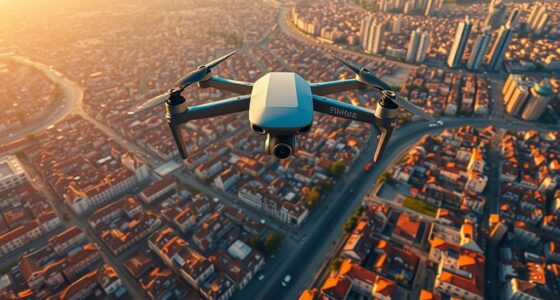
The top 10 AI trends for 2026 include the widespread adoption of autonomous vehicles and robots in logistics and manufacturing, driven by breakthroughs in machine learning and sensor technology. Additionally, there is a strong focus on ethical AI development, with new standards and regulations emerging to address bias, transparency, and accountability. Industry-specific AI solutions are expected to become more prevalent, notably in healthcare, finance, and energy, offering tailored automation and decision-making tools.
Furthermore, experts foresee a surge in AI-powered personalization in consumer services, along with advances in natural language processing that will enable more natural human-AI interactions. The integration of AI with other emerging technologies, such as quantum computing and edge devices, is also predicted to accelerate, fostering new capabilities and efficiencies. These developments are supported by increased investments from both private and public sectors, aiming to harness AI’s potential for economic growth and societal benefit.
The 10 picks
- 1
 Nikon Z50 II with Two Lenses – Compact Mirrorless Camera with 20.9MP Sensor,…View on Amazon →
 - 2
 Canon EOS RP Full-Frame Mirrorless Camera with RF 24-105mm Lens KitView on Amazon →
 - 3
 Canon EOS R50 Mirrorless Camera with 18-45mm & 55-210mm Lens BundleView on Amazon →
 - 4
 Canon EOS R50 Mirrorless Camera with 18-45mm Lens BundleView on Amazon →
 - 5
 Canon EOS R6 Mark II Mirrorless Camera RF24-105mm F4-7.1 IS STM Lens KitView on Amazon →
 - 6
 Canon EOS R50 Mirrorless Camera with RF-S 18-45mm F4.5-6.3 IS STM Lens KitView on Amazon →
 - 7
 Sony Alpha a6400 Mirrorless Camera with 16-50mm LensView on Amazon →
 - 8
 Canon EOS R100 Mirrorless Camera with 18-45mm & 75-300mm Double Lens BundleView on Amazon →
 - 9
 Canon EOS R100 Mirrorless Camera with RF-S 18-45mm Lens BundleView on Amazon →
 - 10
 Canon EOS R100 Mirrorless Camera RF-S18-45mm F4.5-6.3 IS STM Lens KitView on Amazon →
Impacts of AI Advancements on Society and Industry
This evolution in AI technology will significantly influence multiple sectors, transforming how businesses operate and how individuals interact with digital tools. The proliferation of autonomous systems could improve efficiency in logistics, reduce human error, and enhance safety in transportation. However, these shifts also raise concerns regarding job displacement, privacy, and regulatory oversight. The emphasis on ethical AI development aims to mitigate these issues, but the pace of change may challenge existing frameworks. Overall, the predicted trends underscore AI’s growing role as a catalyst for economic and social change in 2026 and beyond.
Current State of AI and Key Developments Leading to 2026
As of early 2026, AI technology is characterized by rapid growth in machine learning capabilities, increased deployment of AI in commercial and industrial settings, and ongoing debates about ethical standards. Recent breakthroughs include improved natural language understanding, more sophisticated autonomous systems, and enhanced sensor integration for robotics. Industry leaders and research institutions have emphasized the importance of responsible AI development, with many adopting new guidelines and participating in international standardization efforts. This environment sets the stage for the predicted trends, reflecting both technological progress and societal concerns.
“2026 will be a pivotal year for AI, with breakthroughs that will fundamentally change how we integrate intelligent systems into everyday life.”
— Dr. Lisa Chen, AI researcher
Unconfirmed Predictions and Potential Challenges
While these predictions are grounded in current research and expert forecasts, specific breakthroughs and regulatory developments remain uncertain. The pace of AI adoption may be slowed by unforeseen technical hurdles, ethical debates, or geopolitical factors. Additionally, the timeline for widespread deployment of autonomous systems and industry-specific solutions could shift due to technical, legal, or societal obstacles. These uncertainties mean that while trends are likely, their exact trajectory and impact are still being determined.
Next Steps in AI Development and Monitoring Trends
Researchers, industry leaders, and policymakers will continue to monitor AI advancements throughout 2026, with particular attention to regulatory frameworks, technological breakthroughs, and societal impacts. Major conferences, publications, and investment trends will provide further insights into which predictions materialize and how they influence the global economy and daily life. Stakeholders should prepare for ongoing shifts, emphasizing responsible development and adaptation to emerging AI capabilities.
Key Questions
What are the most anticipated AI breakthroughs in 2026?
Experts expect significant progress in autonomous systems, natural language processing, and industry-specific AI applications, driven by advances in machine learning, sensor tech, and data availability.
How will AI regulation evolve in 2026?
Regulatory frameworks are expected to become more comprehensive, focusing on ethical standards, transparency, and safety, though the pace of regulation may vary across regions.
Will AI displace jobs in 2026?
AI-driven automation may impact certain jobs, especially in manufacturing, logistics, and routine tasks, but new roles and opportunities are also likely to emerge as industries adapt.
What industries will benefit most from AI advancements?
Healthcare, finance, transportation, and energy are expected to see the most significant benefits, with tailored AI solutions improving efficiency, safety, and decision-making.
Are there risks associated with these AI trends?
Yes, risks include ethical concerns, privacy issues, bias in algorithms, and potential misuse. Responsible development and regulation are critical to mitigating these risks.
Source: ThorstenMeyerAI.com
Fall Picks
fall essentials
As an affiliate, we earn on qualifying purchases.