
TL;DR

Get the latest gadgets delivered free with Prime
- Fast, free delivery on millions of items
- Prime Video, Amazon Music and more included
- Member-only deals all year
This article outlines the top 10 predictions for AI in 2026, based on expert forecasts and current trends. It covers technological breakthroughs, ethical considerations, and industry shifts expected within the next three years.
Experts project that by 2026, artificial intelligence will undergo significant advancements, transforming industries, daily life, and ethical frameworks. For an overview of the original analysis, see the detailed report. These predictions, based on current research trajectories and industry insights, highlight both the potential benefits and risks associated with rapid AI development.
According to leading AI researchers and industry analysts, the next three years will see breakthroughs in areas such as autonomous systems, natural language understanding, and AI-driven healthcare. Learn more about recent AI innovations in Grok 4.6 updates. Predictions include AI systems achieving near-human reasoning capabilities, widespread adoption of AI in critical sectors, and increased integration of AI with other emerging technologies like quantum computing and robotics.
However, these advancements are accompanied by ongoing debates over ethical use, bias mitigation, and regulation. For insights into current AI regulatory discussions, see the latest analysis. Experts warn that without proper oversight, AI could exacerbate societal inequalities or be exploited for malicious purposes. Despite these concerns, the overall consensus suggests a trajectory of rapid growth, with AI becoming more embedded in everyday life and industry operations.
The 10 picks
- 1
 Elgato 4K S Capture Card for PS5, Xbox Series X/S, Switch 2View on Amazon →
 - 2
 AVerMedia Capture Card for Streaming, 4K60 HDR Passthrough, 1080p60 Video Rec…View on Amazon →
 - 3
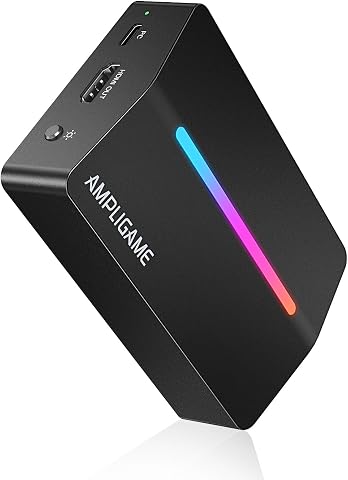 Fifine AmpliGame Video Capture Card, HD 1080p 60fps, 4K HDMI to USB, Compatib…View on Amazon →
 - 4
 4K HDMI Video Capture Card for Streaming and RecordingView on Amazon →
 - 5
 4K HDMI Video Capture Card, 1080P 60FPS Game Capture Device with HDMI Loop-Ou…View on Amazon →
 - 6
 XIIXMASK USB 3.0 HDMI Capture Card, 1080P 60FPS Capture, 4K Pass-ThroughView on Amazon →
 - 7
 Acer USB 3.0 HDMI Capture Card, 4K HDMI Loop-Out, 1080P 60Hz for StreamingView on Amazon →
 - 8
 4K HDMI Capture Card for Streaming, Full HD 1080P 60FPS USB 3.0 Cam Link Game…View on Amazon →
 - 9
 Guermok Video Capture Card, 4K USB3.0 HDMI to USB C, 1080P 60FPS & 2K 30FPSView on Amazon →
 - 10
 Audio Express AXHDCAP 4K HDMI Video Capture CardView on Amazon →
Impacts of AI Advancements on Society and Industry
The projected developments in AI by 2026 will likely reshape multiple sectors, including healthcare, transportation, finance, and entertainment. These changes could improve efficiency, enable new services, and address complex problems like climate change. However, they also pose risks related to job displacement, privacy, and ethical dilemmas, making regulation and oversight crucial to ensure benefits outweigh harms.
Current AI Trends and Foundations for 2026
Presently, AI technology is rapidly evolving, with notable progress in machine learning, natural language processing, and computer vision. Companies like OpenAI, Google, and Microsoft have released increasingly sophisticated models, and industries are integrating AI into core functions. The shift toward more autonomous and reasoning-capable AI systems is driven by advances in hardware, data availability, and algorithm design.
Experts note that many predictions for 2026 build on these existing trends, expecting exponential growth in AI capabilities, but acknowledge that some breakthroughs remain uncertain and depend on breakthroughs in areas like hardware efficiency, data privacy, and ethical frameworks.
Uncertainties and Challenges in AI Forecasts
Many predictions about AI in 2026 remain speculative, especially regarding the pace of breakthroughs in reasoning, general intelligence, and ethical regulation. It is unclear how quickly society and regulators will adapt to these rapid changes, or whether unforeseen technical hurdles will slow progress. The potential for AI misuse or unintended consequences also introduces significant uncertainties that could alter the predicted trajectory.
Next Steps for AI Development and Regulation
Researchers and policymakers are expected to focus on developing robust AI safety standards, ethical guidelines, and regulatory frameworks over the coming years. Industry investments in AI research will likely accelerate, aiming to address current limitations and ensure responsible deployment. Monitoring these developments will be crucial to understanding how AI evolves toward 2026 and beyond.
Key Questions
What are the most significant technological advancements expected in AI by 2026?
Experts predict near-human reasoning capabilities, more autonomous systems, and better natural language understanding, driven by hardware improvements and new algorithms.
Will AI pose risks to employment or privacy by 2026?
Yes, increased automation and data use could impact jobs and privacy, making regulation and ethical considerations essential to mitigate negative effects.
How might AI regulation evolve by 2026?
Governments and organizations are expected to implement more comprehensive AI safety standards and ethical guidelines, though global coordination remains a challenge.
Are there any breakthroughs that could delay AI progress?
Potential hurdles include hardware limitations, data privacy issues, and unforeseen technical challenges that could slow or alter the predicted development path.
What industries will benefit most from AI advancements in 2026?
Healthcare, transportation, finance, and entertainment are expected to see significant transformations thanks to AI-driven innovations.
Source: ThorstenMeyerAI.com
Columbus Day / Indigenous Peoples' Day Picks
long weekend sales
As an affiliate, we earn on qualifying purchases.