Anti-collision lights are essential for your drone operations, especially in low-light or busy areas. They help you stay visible to others, reducing the risk of mid-air collisions and ensuring awareness of your drone’s position. Properly placed lights with right colors signal its orientation, aiding safe navigation. Plus, they support compliance with safety rules and encourage responsible flying. Keep exploring to discover more about how these lights can make your drone flights safer and more effective.
Key Takeaways
- They improve drone visibility in low-light and foggy conditions, reducing collision risks.
- Proper placement and color signals communicate drone orientation to other pilots and aircraft.
- They help comply with safety regulations and facilitate regulatory approval processes.
- Anti-collision lights serve as educational tools, promoting safe flying practices among new operators.
- Reliable lighting enhances overall safety, confidence, and risk mitigation in both recreational and commercial drone flights.
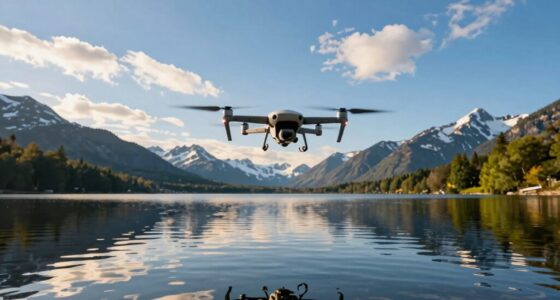
Have you ever wondered how drone operators prevent collisions during flight? It’s a critical concern, especially when multiple drones are sharing the same airspace or when operating in challenging conditions. That’s where anti-collision lights come into play. These lights are not just about making your drone look more visible; they’re essential tools that greatly enhance drone safety. When used properly, they improve light visibility, making your drone easier to spot from a distance, whether you’re flying at dusk, dawn, or in foggy conditions. This increased visibility allows you and others nearby to maintain awareness of your drone’s position, reducing the risk of mid-air collisions.
Drone safety hinges on clear communication and visibility. Anti-collision lights serve as a universal language in the sky, alerting other pilots, aircraft, and even pedestrians to your drone’s presence. Especially during operations in urban areas or near airports, these lights help guarantee you’re seen and recognized as a drone operator, not an obstacle or hazard. Proper lighting can help prevent accidents that could otherwise cause damage, injury, or legal issues. When your drone’s lights are bright and strategically placed, they stand out against various backgrounds, making it easier for others to judge distance and maneuver accordingly. This is particularly critical during low-light conditions, where natural visibility drops, and the risk of collision increases. Additionally, the placement and color of the lights are designed to maximize their effectiveness in various environments.
Anti-collision lights ensure your drone is seen and recognized, preventing accidents in low-light and urban environments.
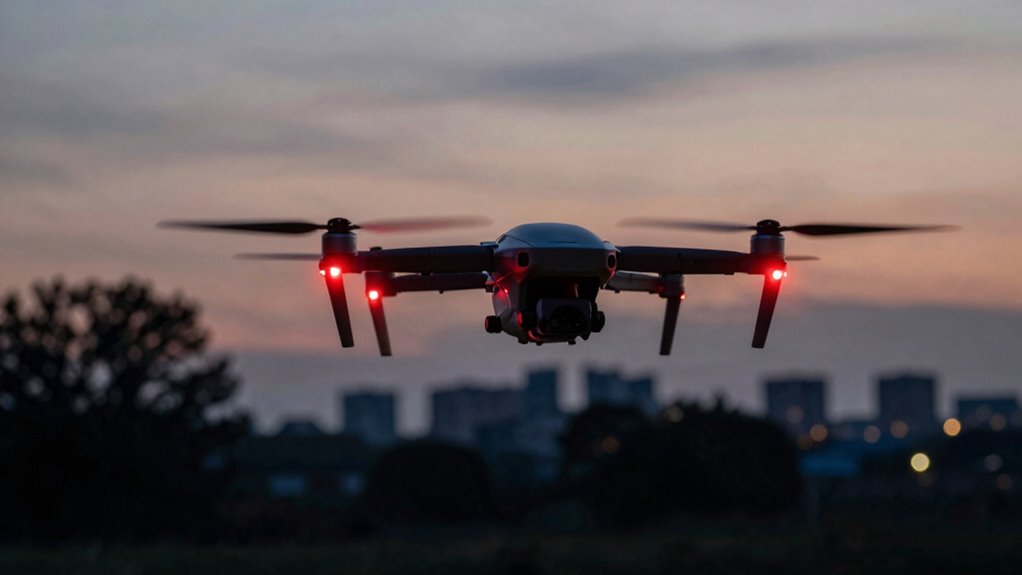
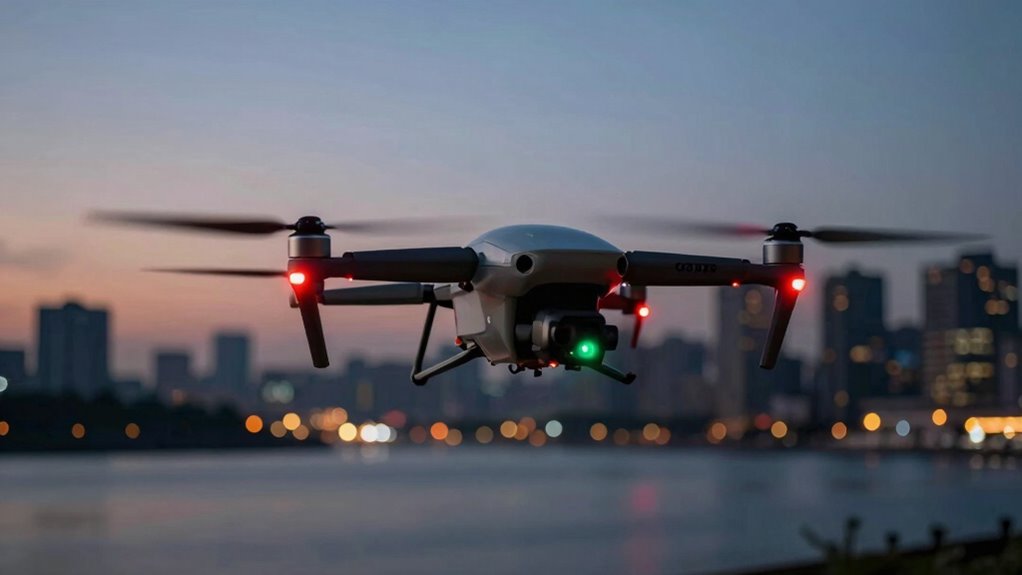
Light visibility isn’t just about brightness; it’s also about placement and color. Anti-collision lights typically use red, green, or white LEDs, each serving a specific purpose in signaling your drone’s orientation and movement. Red and green lights often mimic aircraft navigation lights, providing a quick visual cue to others about the drone’s direction. White lights can be used for general visibility, especially during night flights. When you combine proper light placement with high-quality, bright LEDs, you create a safety net that helps everyone in the vicinity stay aware of your drone’s position. This isn’t just about following regulations; it’s about proactive safety measures that protect everyone involved. Proper lighting also helps with compliance with safety standards, which is crucial for legal and operational reasons. Incorporating biodiversity considerations into drone safety practices, such as avoiding excessive light pollution, can contribute to a more sustainable coexistence with local ecosystems. Moreover, advancements in lighting technology continue to improve the effectiveness and energy efficiency of anti-collision systems.
A well-designed lighting system can also serve as an educational tool, helping new drone pilots learn about safe flying practices and spatial awareness. When considering the evolving regulations surrounding drone operations, having reliable lights can also simplify compliance and ensure smoother approvals from authorities. Ultimately, anti-collision lights aren’t just accessories—they’re indispensable safety tools that safeguard your drone flights. By boosting light visibility and ensuring your drone is clearly seen, you reduce the chances of accidents and contribute to a safer airspace for everyone. Whether you’re flying for recreation or conducting commercial operations, investing in reliable anti-collision lighting ensures you can operate confidently, knowing others can see your drone clearly, and you’re doing your part to maintain drone safety.

VIFLY Drone Strobe Light, Anti Collision Light for FAA Drone Night Flying, Fits DJI Mini 3 Pro/Mini 4 Pro/Mini 2/Air 3/Air 3S/Mavic 3/Mavic 2/Avata/Neo/Flip(1pc pack)
Super Bright: VIFLY Strobe installs 5*3W Hi-intensity LEDs which provide the greatest range available for a mini strobe….
As an affiliate, we earn on qualifying purchases.
As an affiliate, we earn on qualifying purchases.
Frequently Asked Questions
How Do Anti-Collision Lights Affect Drone Battery Life?
Anti-collision lights increase your drone’s power consumption, leading to higher battery drain. When you turn on these lights, they draw additional energy, which can reduce your flight time. While essential for safety, especially in low visibility, you should be aware that using anti-collision lights impacts your drone’s battery life. To maximize flight duration, consider using them only when necessary and monitor your drone’s power levels accordingly.
Are Anti-Collision Lights Legal in All Countries?
Anti-collision lights aren’t legal everywhere; legal restrictions and international regulations vary by country. You need to check local laws before using them, as some nations require specific certifications or prohibit certain lighting setups. Always stay informed about the rules in your area to avoid fines or penalties. Following international regulations helps guarantee your drone operations remain compliant and safe, regardless of where you’re flying.
Can Anti-Collision Lights Be Integrated With Drone Autopilot Systems?
Yes, anti-collision lights can be integrated with drone autopilot systems. By utilizing autopilot integration, you can program the lights to activate during specific flight phases or in response to sensor data. Sensor synchronization guarantees the lights work seamlessly with obstacle detection or navigation systems, enhancing safety. This integration allows your drone to automatically turn on anti-collision lights during critical moments, improving visibility and reducing collision risks during complex operations.
What Are the Maintenance Requirements for Anti-Collision Lights?
You might think anti-collision lights need little upkeep, but regular maintenance is key. You should check the battery efficiency to guarantee the lights stay bright during flights, and inspect the light durability, looking for cracks or corrosion. Clean the lenses and connections periodically, and replace batteries or damaged parts promptly. Doing so keeps your drone safe and compliant, preventing unexpected failures during critical operations.
Do Anti-Collision Lights Improve Drone Visibility in All Weather Conditions?
Anti-collision lights greatly enhance your drone’s visibility in many weather conditions, but they aren’t foolproof. Their weather resistance varies, so in heavy rain or fog, the light intensity might not be enough to guarantee clear visibility. For maximum safety, choose anti-collision lights with high light intensity and good weather resistance. Always consider the environment you’ll be flying in, and supplement lights with other visibility measures when needed.

STARTRC Drone Strobe Light, Rechargable Flash Led Lamplight for FAA DroneNight Flying, Fits for DJI Neo 2,Mini 5 Pro/ 4 Pro/3/4k, Avata 2,Air 3S and All RC Drones Accessory(2pc)
【Fits All Drones】Suitable for most drones like for DJI Neo2, Mini 5 Pro,Mini 4 Pro, Avata 2,Avata 360,…
As an affiliate, we earn on qualifying purchases.
As an affiliate, we earn on qualifying purchases.
Conclusion
As you navigate the skies, remember that anti-collision lights aren’t just accessories—they’re your safeguard against unseen dangers. Imagine a moment when these lights could mean the difference between safe passage and a near miss. Will you take the simple step to enhance your drone’s visibility? The choice is yours, but one thing’s certain: in the world of drones, staying illuminated might just keep you out of trouble when you least expect it.
VIFLY Drone Strobe Light, Anti Collision Light for FAA Drone Night Flying, Fits DJI Mini 3 Pro/Mini 4 Pro/Mini 2/Air 3/Air 3S/Mavic 3/Mavic 2/Avata/Neo/Flip(1pc pack)
Super Bright: VIFLY Strobe installs 5*3W Hi-intensity LEDs which provide the greatest range available for a mini strobe….
As an affiliate, we earn on qualifying purchases.
As an affiliate, we earn on qualifying purchases.

QVEVDACAR LED Strobe Drone Lights, 7 Colors Mini USB Rechargeable Lighting, Anti-Collision Tail Lights for Aircraft Flying, Motorcycles, Trucks, Cars, Bike (4-Pack)
Mini Body and Super Bright: The mini strobe light only weights 6g/0.2oz. The light beads used are super…
As an affiliate, we earn on qualifying purchases.
As an affiliate, we earn on qualifying purchases.