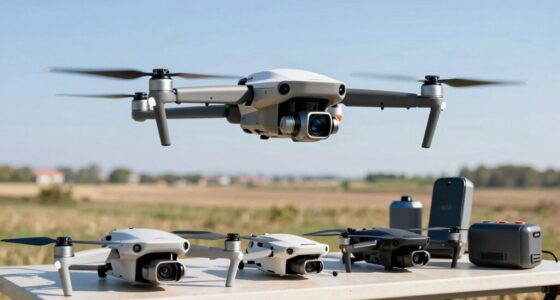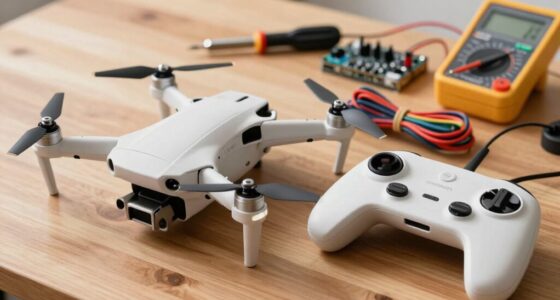
To build better habits around your drone’s home point and return-to-home, always set your home point before each flight and guarantee it’s accurate, especially in changing environments. Regularly check that your drone’s firmware is up-to-date and conduct pre-flight calibration. Maintain your batteries and keep environmental awareness high to prevent issues. Consistently following these steps helps ensure safe, reliable operation and confident use of return features. Keep exploring these practices to fly smarter and safer every time.
Listen free for 30 days with Audible
Thousands of audiobooks and originals — cancel anytime.
As an affiliate, we earn on qualifying purchases.
Key Takeaways
- Regularly review and practice activating the Return-to-Home feature in various scenarios to build muscle memory.
- Confirm the drone’s Home Point before each flight through visual or GPS verification.
- Incorporate routine pre-flight checks that include setting and confirming the Home Point.
- Maintain consistent drone calibration and firmware updates to ensure accurate Return-to-Home functionality.
- Stay aware of environmental factors that can influence the Home Point and Return-to-Home reliability during flights.

Creating better habits at home starts with small, intentional changes that fit seamlessly into your daily routine. When it comes to operating drones, especially those equipped with Point and Return-to-Home features, developing good habits around safety and maintenance becomes essential. These practices not only protect your equipment but also ensure your safety and the safety of others. The first step is understanding drone safety, which involves more than just flying skills. You should always check your drone’s firmware and calibration before flying. Make sure your drone is in good working order and that no obstacles are nearby. Familiarize yourself with the drone’s Return-to-Home feature, so you know when and how it activates, especially in low-battery or signal-loss situations. Additionally, understanding drone safety and maintaining awareness of your environment helps build your confidence and responsibility as a pilot. Practicing these habits consistently helps you recognize potential issues early and prevents accidents. Incorporating routine maintenance into your flying practices can help you catch potential problems before they become serious.
Battery maintenance is equally important and often overlooked. Properly caring for your drone’s batteries extends their lifespan and guarantees reliable performance. You should always use the charger provided or recommended by the manufacturer to avoid overcharging or damaging the battery. Avoid leaving batteries completely drained or fully charged for extended periods, as this can degrade their capacity over time. Instead, keep them stored at a mid-level charge if you’re not flying for a while. Regularly inspect your batteries for signs of damage, swelling, or corrosion, and replace them if necessary. Keeping your batteries in a cool, dry place helps maintain their health, especially during seasonal changes. Establish a routine for battery maintenance, such as checking voltage levels before each flight and avoiding rapid discharges, so you’re consistently practicing safe, responsible drone operation. Proper storage and handling are critical for maintaining battery health over time.
Integrating these habits into your routine makes your drone flying safer and more efficient. Always prioritize drone safety by staying aware of your surroundings and adhering to local regulations. Make battery maintenance part of your pre- and post-flight routines—charge, inspect, and store batteries properly. When your drone’s battery is well-maintained, the Return-to-Home feature becomes more reliable because it relies heavily on the drone’s battery status. If your batteries are in good shape, the drone can safely return to its home point even in emergencies. Developing these habits might seem simple, but over time, they become second nature, greatly reducing risks and extending the life of your equipment. Consistency is key; every small step you take towards better drone safety and battery care helps you become a more responsible and confident drone operator at home.
drone return to home GPS calibration
As an affiliate, we earn on qualifying purchases.
As an affiliate, we earn on qualifying purchases.
Frequently Asked Questions
How Often Should I Practice Using Home Point and Return-To-Home?
You should practice using the home point and return-to-home feature daily to build habit consistency. Regular practice helps you become confident and quick with your drone’s navigation. Start with short, focused sessions, maybe 10-15 minutes, and gradually increase practice frequency as you become more comfortable. The key is consistency, so aim to incorporate this into your routine several times a week to reinforce the habit effectively.
What Are Common Mistakes to Avoid When Setting Home Point?
You might accidentally set your home point wrong, turning your drone into a wild stallion! To avoid this, double-check your home point calibration before flying, especially in areas with signal interference. Don’t rely on a single calibration; instead, verify it by moving around and ensuring the drone consistently returns. Ignoring these steps can lead to misnavigation or crashes, so stay vigilant and keep your home point precise and reliable.
How Does Weather Affect the Reliability of Return-To-Home?
Weather impact profoundly influences the reliability factors of your drone’s return-to-home feature. Wind, rain, and fog can disrupt GPS signals, causing delays or failures in returning safely. You should always check weather conditions before flying, especially in adverse weather, to guarantee your drone’s return-to-home function works correctly. Keeping an eye on weather updates helps you prevent unexpected issues, maintaining safe and reliable drone operation.
Can I Update or Change My Home Point Location Easily?
Did you know you can update your home point location easily? Simply access your drone’s settings for home point customization, and select a new spot on the map or set your current position. For better accuracy, use GPS accuracy tips like ensuring clear sky view and holding the drone steady during the update. This way, you keep your return-to-home reliable and tailored to your needs.
What Backup Methods Should I Have if Return-To-Home Fails?
If return-to-home fails, you should have emergency procedures and an alternative landing plan ready. Always keep a manual control option accessible, and practice emergency maneuvers to quickly regain control. Consider setting waypoints or designated safe zones as backup landing spots. Regularly update your drone’s firmware and test your backup methods in safe environments. This preparation guarantees you’re ready to handle unexpected failures confidently and minimize risks during flight.
As an affiliate, we earn on qualifying purchases.
Conclusion
Building better habits around your drone’s home point and return-to-home feature is like tending a garden—you nurture it daily, and over time, it blossoms into a reliable safety net. Stay consistent, set clear routines, and treat your drone’s safety features as essential tools rather than chores. With patience, these habits will become second nature, giving you peace of mind and more freedom to explore. Cultivate your skills, and watch your confidence soar like a well-tended tree.
As an affiliate, we earn on qualifying purchases.
As an affiliate, we earn on qualifying purchases.
NFL season / tailgating Picks
team gear
As an affiliate, we earn on qualifying purchases.