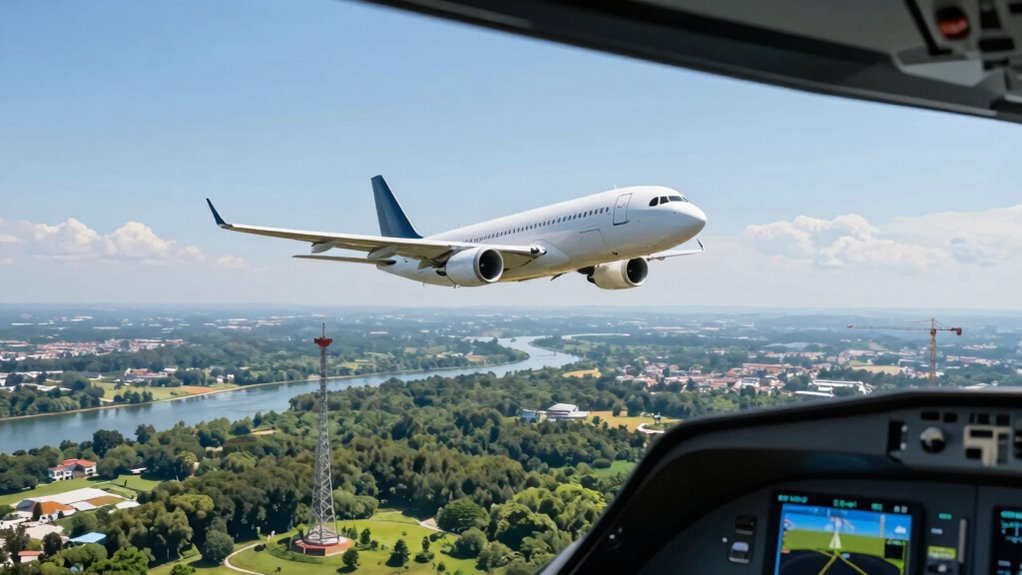

Obstacle avoidance systems shift your role from actively controlling the aircraft to supervising its automated systems. You focus more on monitoring sensor data, troubleshooting, and intervening only when necessary. Your manual flying skills become supplementary, emphasizing decision-making and system management instead. This change helps improve safety and efficiency, but it also requires you to understand system limitations and respond quickly to failures. Keep exploring to discover how these skills evolve and impact your work.
Key Takeaways
- Autonomous obstacle avoidance shifts pilot focus from manual navigation to system monitoring and oversight.
- Pilots rely more on data interpretation and troubleshooting rather than direct control.
- Training emphasizes understanding system limitations and rapid intervention skills.
- Flight workflows prioritize continuous supervision over constant manual flying.
- Enhanced safety and efficiency reduce manual workload and change traditional pilot responsibilities.
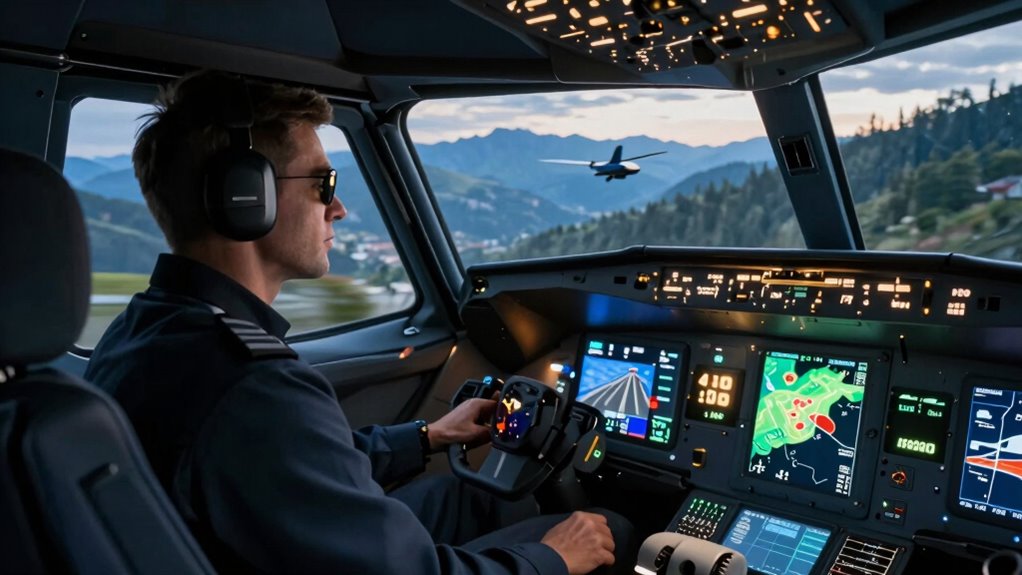
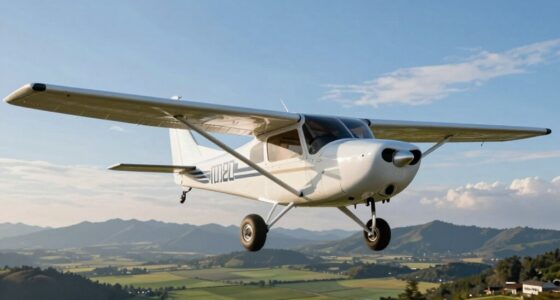
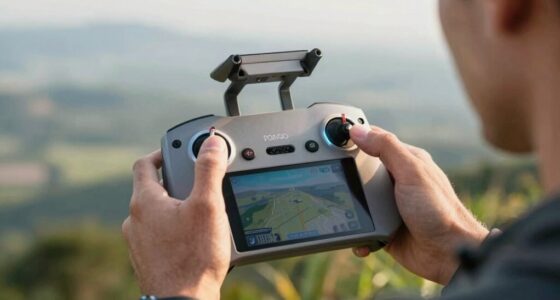
As new obstacle avoidance technology is integrated into aircraft, pilots find their roles shifting markedly. These advanced systems, often autonomous, are designed to detect and navigate around hazards automatically, reducing the need for manual intervention. This technological leap means that pilots no longer rely solely on visual cues or manual flying skills to avoid obstacles. Instead, they oversee and manage these autonomous systems, ensuring they operate correctly and intervene only when necessary. The shift toward automation is transforming cockpit workflows, requiring pilots to focus more on system management and decision-making rather than constant manual control.
Pilots now oversee autonomous obstacle avoidance systems, focusing on management and intervention rather than manual flying.
This evolution in technology also prompts considerable training adaptations. Pilots must learn to understand and interpret the data generated by these obstacle avoidance systems, which often include complex sensors and algorithms. Traditional training emphasizing manual flying skills now incorporates modules on system monitoring and troubleshooting, emphasizing a different set of competencies. Flight simulators are updated to replicate scenarios where pilots must assess the autonomous system’s decisions and intervene if it misjudges a situation. This prepares pilots for real-world conditions where they need to balance trust in automation with the ability to take control when necessary.
Autonomous systems enhance safety and efficiency but also demand a new level of vigilance from pilots. Instead of constantly flying the aircraft, your focus shifts to supervising these systems, ensuring they function correctly and making quick decisions if a system failure occurs. This change can be challenging, especially for pilots accustomed to manual flying, but it ultimately increases safety margins by reducing human error in obstacle detection and avoidance.
Training adaptations also involve understanding the limitations of autonomous systems. While they considerably reduce the risk of collision, they aren’t infallible. Pilots must be prepared to override or disable systems when unpredictable situations arise. This requires a nuanced understanding of system capabilities and failures, which training programs now emphasize more than ever. As automation takes on more of the obstacle avoidance role, your skills evolve from manual flying to system management, problem-solving, and rapid decision-making. Additionally, understanding sensor technology becomes crucial for effective oversight and troubleshooting.

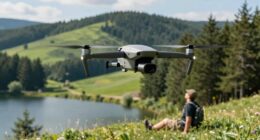
Front Visual Obstacle Avoidance System Replacement Part Compatible with Air 2S
Compatible with Air 2S drone models precise fit for front visual obstacle avoidance system repairs
As an affiliate, we earn on qualifying purchases.
As an affiliate, we earn on qualifying purchases.
Frequently Asked Questions
How Does Obstacle Avoidance Technology Impact Pilot Training Requirements?
Obstacle avoidance technology impacts your pilot training by emphasizing the importance of pilot decision making and understanding human-machine interaction. You learn to interpret automated alerts and system responses effectively, ensuring safe navigation. Training shifts toward managing these systems, recognizing their limitations, and maintaining situational awareness. This prepares you to work seamlessly with technology, making informed decisions quickly and confidently, ultimately enhancing safety and operational efficiency in complex environments.
What Are the Limitations of Current Obstacle Avoidance Systems?
You should know that current obstacle avoidance systems have notable limitations. About 20% of false alarms occur because sensors sometimes misinterpret environmental signals, leading to unnecessary alerts. Sensor limitations mean systems might not detect small or low-contrast obstacles, especially in poor weather or cluttered environments. These factors can restrict a pilot’s reliance on the technology, requiring continued vigilance and manual judgment to guarantee safety during flight.
How Do Pilots Handle System Failures During Obstacle Avoidance Maneuvers?
When obstacle avoidance systems fail during maneuvers, you rely on autopilot reliance and crew communication. You immediately switch to manual control, alerting your crew to assess the situation quickly. Clear communication ensures everyone understands the issue, while your training guides you to execute safe maneuvers without system support. Staying calm and coordinated helps you navigate the obstacle safely, minimizing risks despite the system failure.
Does Obstacle Avoidance Influence Airline Safety Protocols?
Does obstacle avoidance influence airline safety protocols? Absolutely. It prompts airlines to enhance air traffic management and boost pilot situational awareness. You’ll find new training, updated procedures, and advanced systems integrated to guarantee pilots can respond effectively. The goal? Minimize risks and ensure passenger safety. With these improvements, pilots are better equipped to handle complex environments, making flight safer and more reliable for everyone onboard.
What Future Advancements Are Expected in Obstacle Avoidance Technology?
Future obstacle avoidance tech will likely feature advanced autonomous navigation, allowing aircraft to interpret complex environments more accurately. Sensor integration will improve, combining radar, lidar, and cameras for real-time data. You’ll see smarter systems that adapt quickly, reducing pilot workload and increasing safety. These innovations will enable aircraft to navigate more efficiently and safely, even in challenging conditions, transforming how pilots interact with and rely on obstacle avoidance technology.

Microsoft Flight Simulator X For Pilots: Real World Training
As an affiliate, we earn on qualifying purchases.
As an affiliate, we earn on qualifying purchases.
Conclusion
As you navigate the skies, it’s no coincidence that obstacle avoidance technology is reshaping your role. Just like how a sudden change in weather can alter your route, these tools subtly influence your decisions and strategies. Embracing this shift not only keeps you safer but also sharpens your skills in unexpected ways. In the end, it’s not just about avoiding obstacles—it’s about becoming a more adaptable, confident pilot, ready for anything the sky throws your way.
Titwaye TPMS Relearn Reset Tool, Tire Pressure Sensor Programming Tool, EL-50449 TPMS Reset Device, Universal for Most Cars, Trucks, SUVs (Black)
Key Functions: This tpms relearn tool is for vehicles with direct TPMS. It activates sensors, clears dashboard warning…
As an affiliate, we earn on qualifying purchases.
As an affiliate, we earn on qualifying purchases.

ParaZero SafeAir Drone Parachute Advance Safety System & Autonomous Safety Monitoring for DJI Mavic 3 (all models) – ASTM Certification, Quick Deployment, Independent Battery, Low altitude capabilities
PROVEN INDUSTRY-LEADING COMPLIANCE: ParaZero's SafeAir system meets rigorous ASTM F3322-22 standards, ensuring unmatched safety and reliability for use….
As an affiliate, we earn on qualifying purchases.
As an affiliate, we earn on qualifying purchases.