
📊 Full opportunity report: Maximize Food Safety Compliance With Vision-Model Kitchen Inspection Tools on IdeaNavigator AI — validation score, market gap, and execution plan.

Get the latest gadgets delivered free — and shop member deals
- Fast, free delivery on millions of items
- Access to Prime Big Deal Days deals on October 6–7
- Prime Video, Amazon Music and more included
TL;DR
A new AI-powered kitchen inspection tool uses vision models to verify food safety compliance through phone photos. Tested in multi-unit restaurants, it aims to replace unreliable checklists and improve safety standards.
A new vision-model kitchen inspection tool is being tested by a multi-unit restaurant group to verify food safety compliance through photographs taken during morning walk-throughs. This development aims to replace traditional checklists that often record whether someone looked rather than what was observed, potentially improving safety standards and audit accuracy.
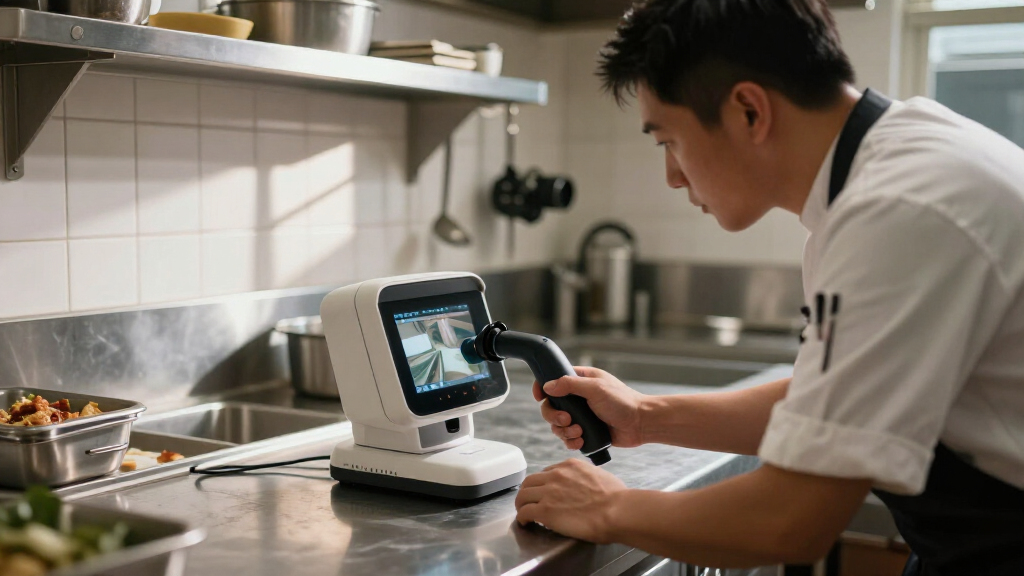
The tool uses existing smartphone cameras to capture images of key kitchen areas, such as prep stations, storage, and sinks. A vision model analyzes these images to identify violations like uncovered containers, propped cooler doors, and missing date labels. The system then generates timestamped reports and severity ratings, providing verifiable data that can be reviewed by managers and inspectors.
According to sources familiar with the project, this approach transforms routine walk-throughs into data-driven inspections without requiring new hardware investments. The initial testing involves collecting two weeks of photographs from five restaurant locations and comparing flagged violations with assessments by a professional health-inspection consultant.
The service is designed to operate on a subscription basis, offering per-location monthly fees and group dashboards to monitor compliance trends across multiple sites.
Maximize Food Safety Compliance With Vision-Model Kitchen Inspection Tools
Phone photos become verifiable safety evidence. A pilot inspection system uses computer vision to detect common kitchen violations, assign severity, and generate timestamped reports—turning routine morning walk-throughs into auditable compliance data.
From “task checked” to “condition verified”
Traditional checklists confirm that someone completed a step. Vision-assisted inspections preserve what was actually visible—creating a reviewable record for managers, consultants, and inspectors.
Use the camera already on site
Staff photograph prep stations, cold storage, sinks, and other critical kitchen zones during routine morning walk-throughs.
Detect visible violations
The vision model reviews each image for uncovered containers, propped cooler doors, missing date labels, and related risks.
Build an audit trail
Timestamped findings, severity ratings, and stored images give reviewers evidence that can be checked after the walk-through.
One photograph, five connected controls
The workflow adds a verification layer to existing routines without requiring dedicated inspection hardware.
Staff capture designated kitchen zones.
The model identifies objects and conditions.
Potential violations receive severity levels.
Evidence is timestamped and organized.
Managers compare sites and resolve issues.
Using vision models to analyze kitchen photos can turn routine walk-throughs into verifiable safety reports, reducing errors and improving compliance.
Anonymous researcher
Why visual verification changes the record
The central advantage is not simply automation. It is the transition from a subjective declaration to evidence that can be revisited, compared, and audited.
| Inspection factor | Manual checklist | Vision-model workflow | Operational effect |
|---|---|---|---|
| Evidence captured | ~Staff declaration | ✓Stored photograph | Conditions remain reviewable |
| Time verification | ~Entered manually | ✓Automatic timestamp | Stronger audit integrity |
| Violation detection | ~Depends on staff judgment | ✓Consistent model scan | Fewer overlooked patterns |
| Multi-site oversight | ~Separate local records | ✓Group dashboard | Comparable compliance trends |
| Human inspection | ✓Primary control | ✓Still required | AI supplements—not replaces—experts |
Promising evidence, unresolved conditions
The concept remains in validation. Accuracy, workflow fit, and regulatory acceptance will determine whether pilots become standard operating practice.
Kitchen variability
Lighting, clutter, camera angles, equipment layouts, and ambiguous scenes may affect violation detection across different locations.
Consistent capture
Teams need clear photo protocols so the correct zones are captured at useful angles without slowing daily operations.
Regulatory standing
Authorities may value AI-generated evidence while continuing to require professional judgment and in-person inspection.
The path from pilot to standard practice
A broader rollout could follow within the next year if the comparison study demonstrates reliable detection and restaurant teams can integrate capture into daily routines.
Impact of AI-Driven Kitchen Safety Verification
This development could significantly improve the accuracy of food safety inspections by providing verifiable, timestamped evidence of compliance. It addresses a common problem where checklists record only that a task was checked, not that the condition was satisfactory. By automating violation detection, restaurant groups can reduce human error, streamline audits, and potentially avoid costly violations or shutdowns.
Furthermore, this technology aligns with broader trends toward digital transformation in restaurant operations, emphasizing data integrity and real-time monitoring. If successful, it could set a new standard for food safety compliance, influencing industry practices and regulatory expectations.
smartphone camera food safety inspection tools
As an affiliate, we earn on qualifying purchases.
As an affiliate, we earn on qualifying purchases.
Background on Food Safety Inspection Challenges
Traditional food safety inspections rely heavily on manual checklists filled out by staff or external inspectors. These checklists often suffer from inaccuracies, as they depend on human memory and honesty, and may not reflect the true condition of the kitchen at the time of inspection. In many cases, violations such as uncovered food or improper storage are only discovered during formal inspections, which may occur infrequently.
Recent advances in AI and computer vision have made it possible to automate parts of this process. Vision models trained on restaurant environments can now reliably identify common violations from photos taken during routine walk-throughs. This shift aims to create a continuous, verifiable record of compliance, reducing reliance on subjective assessments and improving overall safety standards.
Currently, the concept is in the validation stage, with pilot testing planned to confirm the accuracy of violation detection compared to professional health inspectors’ findings.
“Using vision models to analyze kitchen photos can turn routine walk-throughs into verifiable safety reports, reducing errors and improving compliance.”
— an anonymous researcher
As an affiliate, we earn on qualifying purchases.
Uncertainties About Practical Deployment
It is not yet clear how well the vision model will perform across diverse kitchen environments or how it will handle ambiguous situations. The accuracy of violation detection, especially in complex or poorly lit conditions, remains to be validated through the upcoming testing phase. Additionally, questions remain about how restaurants will integrate this process into their existing workflows and whether regulatory bodies will accept AI-verified reports as sufficient evidence during inspections.
food safety compliance verification devices
As an affiliate, we earn on qualifying purchases.
As an affiliate, we earn on qualifying purchases.
Next Steps for Validation and Adoption
The initial validation involves running two weeks of photographs from five restaurant locations through the AI model and comparing its flagged violations with assessments by a professional health-inspection consultant. Pending positive results, the company plans to expand testing to more locations and refine the system based on feedback. Broader rollout could follow, with subscription plans offering scalable monitoring across restaurant groups. Regulatory acceptance and integration into standard inspection procedures will be key milestones.
vision model kitchen inspection software
As an affiliate, we earn on qualifying purchases.
As an affiliate, we earn on qualifying purchases.
Key Questions
How does the vision-model kitchen inspection tool work?
The tool uses smartphone photos taken during routine walk-throughs, which are analyzed by AI to detect violations like uncovered food or missing labels. It then generates timestamped reports for verification.
What are the benefits of using AI for kitchen inspections?
It provides verifiable, timestamped evidence of compliance, reduces human error, and streamlines the inspection process, potentially preventing violations and improving safety standards.
When will this technology be widely available?
The system is currently in pilot testing. If validation is successful, a broader rollout could occur within the next year, depending on regulatory acceptance and user feedback.
Will this replace human inspectors?
It is designed to supplement existing inspections by providing additional, verifiable data, not to replace human inspectors entirely. Regulatory bodies may still require in-person reviews.
What challenges remain for deployment?
Key challenges include ensuring accuracy across diverse kitchen environments, integrating into existing workflows, and gaining regulatory acceptance for AI-generated reports.
Source: IdeaNavigator AI
Halloween Picks
halloween
As an affiliate, we earn on qualifying purchases.