
🔍 Read the full analysis: How Shared Memory Changes The Way My AI Agents Work on ThorstenMeyerAI.com

Get the latest gadgets delivered free with Prime
- Fast, free delivery on millions of items
- Prime Video, Amazon Music and more included
- Member-only deals all year
TL;DR
Thorsten Meyer says he built a shared memory system so his AI agents can draw on the same editable record across sessions. The Git-backed system uses Markdown pages and an index; as of Nov. 21, 2026, it contained 1,278 pages and had a reported 97.4% top-1 recall score. Those figures are the author’s own measurements, and the setup is designed for one owner rather than a team.
Thorsten Meyer says he has built a shared long-term memory for the AI agents he runs, using Markdown files and Git so agents can look up and add information across sessions, a topic explored in discussions of AI agent memory. In an article published Nov. 21, he reported the system contained 1,278 pages and scored 97.4% on its own top-1 recall measure, offering a practical account of one way to reduce repeated explanations to agents.
Meyer calls the system his Second Brain, a setup that echoes the idea of a shared workspace for AI agents. It stores information in plain Markdown files, with each page holding a cluster of related facts, such as details about a project or a decision. A single index file, INDEX.md, lists the memories. The files are kept in Git, which Meyer says preserves a history of changes. He says the system uses no vector database or cloud service.
When an agent needs information, a script called recall.py scores the index entries first, then opens the best-matching page and returns the relevant section with its source, connecting to broader questions about how AI agents make decisions. Meyer says this lets him inspect the page behind an answer and correct information at its origin. A separate script, remember.py, writes a new page, its index entry and a log entry together, reducing the risk that the catalogue and stored notes will fall out of sync.
As of Nov. 21, 2026, Meyer reported 1,278 pages, 1,761 links and 1,363 recalls. He said the system’s top-1 recall score was 97.4%, describing that measure as the frequency with which its first selected page is the right one. The article also describes nine views for tasks such as reviewing new captures, tracking changes, viewing connections and monitoring services. The reported figures and performance measure come from Meyer; the article does not provide an independent evaluation.
The system addresses a limitation Meyer identifies in agent use: information available during a session may not carry over after it ends. A shared store can give multiple agents access to the same project details, prior decisions and corrections, rather than requiring the user to repeat them in each session. That could make ongoing work more consistent, though Meyer’s account describes his own setup rather than a controlled comparison of results.
Its plain-text files and visible history also make the stored information easier for the owner to inspect and revise than memory held in an opaque tool-specific feature, Meyer argues. The approach has trade-offs: it depends on careful upkeep and is built around one owner. The source does not establish how well the system would perform for a team or at larger scale.
Products Worth Considering
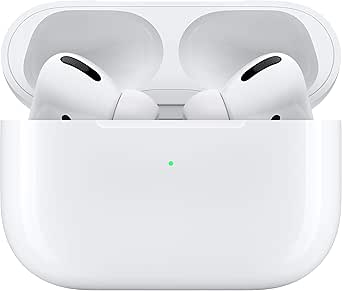
Apple AirPods Pro

Samsung Odyssey OLED G8 34-Inch Curved Ultra WQHD Gaming Monitor

Bose QuietComfort Ultra Headphones (2nd Gen), Wireless Noise-Cancelling Over-Ear Headphones, Driftwood Sand
As an affiliate, we earn on qualifying purchases.
From Session Context to Persistent Files
AI agents typically work with information available in their current context window. Meyer says that when a session ends, the agent no longer has that session’s information unless it has been saved elsewhere. He describes his motivation as avoiding the repeated work of explaining project history, terminology and earlier decisions whenever he starts a new session.
Rather than relying on a separate memory feature for each agent tool, Meyer chose one shared collection that he can read and edit. Its index-first retrieval approach is designed to limit how many files the system opens for a query, while its Git history records changes. The article presents this as a personal workflow, not a product announcement or evidence that all agents need the same architecture.
““I got tired of being their memory. So I built them one.””
— Thorsten Meyer
Limits of the Reported Results
The 97.4% top-1 score is Meyer’s own measure. The article does not specify the test set, scoring period, evaluation method or an external verifier, so readers cannot tell how the result would compare with other memory systems or different workloads. The figures for pages, links and recalls are also a snapshot reported by Meyer on Nov. 21, 2026.
The account does not provide details on data security controls, backup and recovery arrangements, or how the scripts handle conflicting or outdated information. Meyer says the normal write process keeps pages, index entries and log records together, but it is not clear how the system behaves when facts are ambiguous or require substantial review. The article also says the design is for one owner, leaving its suitability for teams untested.
Further Testing and Maintenance
Meyer’s article does not announce a release schedule, product launch or planned independent test. For now, the next steps described are part of the system’s ongoing operation: reviewing captured session information, deciding what should become a lasting memory, and checking the health and activity of its pages and services.
Any broader assessment would need more information about the recall test, how errors are corrected over time, and how the design handles multiple users. Until those details are available, the figures are best read as a dated account of one personal system, not a general benchmark for AI-agent memory.
Key Questions
What is Meyer’s Second Brain?
It is a personal knowledge base shared by Meyer’s AI agents. It stores related facts in Markdown files and uses an index to help agents find relevant pages.
How do agents retrieve information?
According to Meyer, recall.py scores entries in the index, opens the best-matching page and returns the relevant section with its source. The approach is designed to avoid searching every file for each request.
What does the 97.4% figure mean?
Meyer says it is the system’s top-1 recall score: how often the first page selected is the right one. The article does not give the test details or an independent validation.
Can a team use the same setup?
The article does not establish that. Meyer describes the system as built for one owner, not a team, and does not report testing it with multiple users.
What information was reported about its size?
As of Nov. 21, 2026, Meyer reported 1,278 pages, 1,761 links and 1,363 recalls. These are figures from his article, not independently audited totals.
Source: ThorstenMeyerAI.com