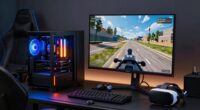
If you’re looking for the top VR-ready gaming PCs for sim racing in 2026, I recommend models built with powerful GPUs like the RTX 4060 Ti or higher, a fast processor with 8+ cores, and at least 16GB of DDR5 RAM. A high-quality NVMe SSD and multiple connectivity options are essential, along with good cooling solutions. Keep an eye on upgradability and future-proof features — if you continue, you’ll discover the best options for immersive VR racing experiences.
Key Takeaways
- High-performance GPUs like NVIDIA GeForce RTX 4060 Ti or better with 8GB+ VRAM are essential for smooth VR sim racing experiences.
- CPUs with 10+ cores and 3.5GHz+ clock speeds ensure seamless real-time rendering and multitasking in demanding VR titles.
- 16GB or 32GB DDR5 RAM at 6000 MHz+ provides smooth multitasking and reduces lag during immersive VR sessions.
- Compatibility with modern interfaces, including HDMI, DisplayPort, USB-C, and USB-A, supports VR headsets and peripherals.
- Effective cooling solutions and durable case designs ensure system stability and longevity for extended VR sim racing use.
CyberPowerPC Gamer Xtreme VR Gaming PC
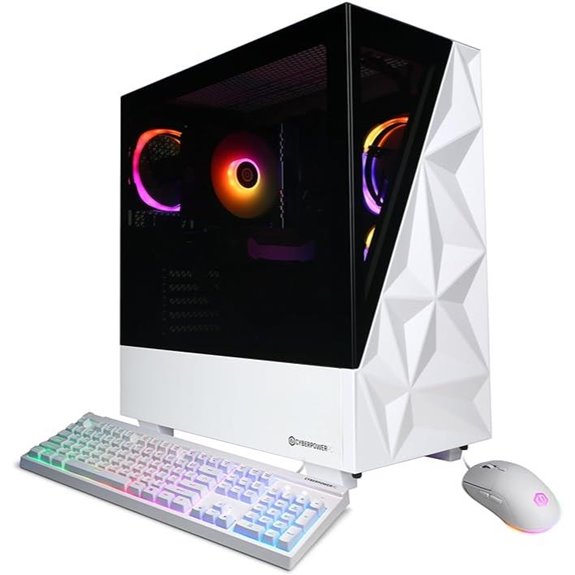
If you’re serious about immersive VR racing experiences, the CyberPowerPC Gamer Xtreme VR Gaming PC is an excellent choice thanks to its powerful Intel Core i7-14700F processor and NVIDIA GeForce RTX 5060 Ti graphics card. With 16GB DDR5 RAM at 6000 MHz and a fast 1TB PCIe 4.0 NVMe SSD, it handles demanding tasks effortlessly. Its support for 4K resolution and multiple display outputs ensures stunning visuals and smooth gameplay. Designed with a sleek tempered glass side panel, customizable RGB lighting, and a compact tower, this PC combines performance, aesthetics, and durability, making it ideal for serious VR racing enthusiasts.
CyberPower Gamer Xtreme VR Gaming PC
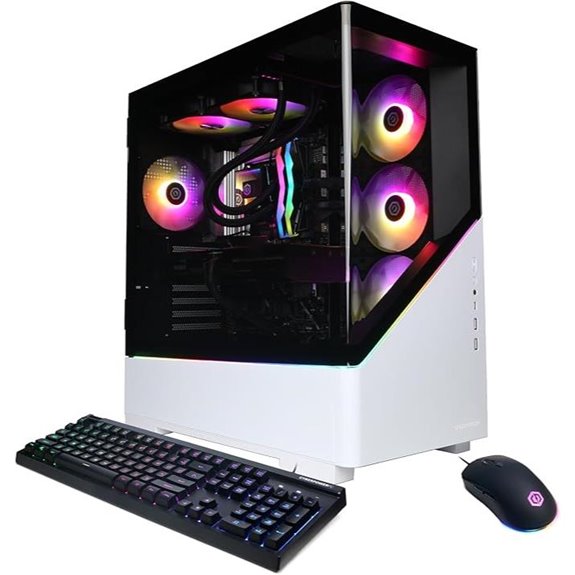
The CyberPower Gamer Xtreme VR Gaming PC stands out as an ideal choice for serious sim racers seeking top-tier performance in 2026. It packs an Intel Core Ultra 9 285 processor with 24 cores, paired with NVIDIA GeForce RTX 5070 Ti 16GB graphics, ensuring smooth, high-fidelity visuals. With 32GB DDR5 RAM and a speedy 2TB PCIe 4.0 NVMe SSD, it handles demanding tasks effortlessly. Features like liquid cooling, custom RGB lighting, and a sleek white case enhance both performance and aesthetics. Supporting up to 8K resolution and multiple connectivity options, this system offers the power and flexibility needed for an immersive VR racing experience.
CyberPowerPC Gamer Xtreme VR Gaming PC

Looking for a VR-ready gaming PC that can handle intense sim racing experiences without breaking a sweat? The CyberPowerPC Gamer Xtreme VR Gaming PC is a solid choice. It packs an Intel Core i5-13400F processor, NVIDIA GeForce RTX 4060 graphics, and 16GB DDR5 RAM, ensuring smooth, immersive gameplay. With a 1TB PCIe SSD, you get fast load times and ample storage. It features HDMI and DisplayPort outputs, WiFi 5, and multiple USB ports for easy connectivity. Weighing around 30.6 pounds, it’s designed for high performance in multimedia and demanding games, making it perfect for VR racing adventures. Plus, it includes a 1-year warranty and lifetime tech support.
CyberPowerPC Gamer Xtreme VR Gaming PC
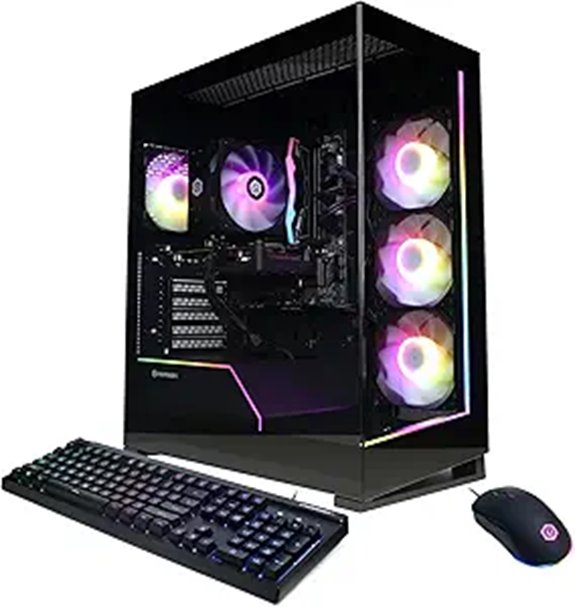
For gamers seeking a high-performance VR setup, the CyberPowerPC Gamer Xtreme VR Gaming PC stands out with its powerful NVIDIA GeForce RTX 5060 Ti graphics card, ensuring smooth and immersive virtual reality experiences. Equipped with an Intel Core i5-14400F 10-core processor, 16GB DDR5 RAM, and a 2TB PCIe 4.0 SSD, this system delivers fast load times and seamless multitasking. Its support for Windows 11, WiFi 6, and Bluetooth 5.3, along with multiple connectivity options, makes it versatile for gaming and multimedia. The case’s tempered side panel and RGB lighting add style, while the 1-year warranty and lifetime support provide peace of mind.
CyberPowerPC Gamer Xtreme VR Gaming PC
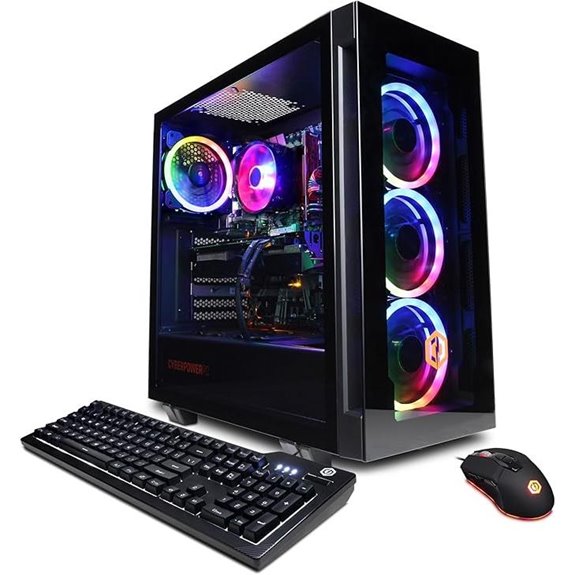
If you’re seeking a high-performance VR gaming PC that can handle demanding sim racing titles in 2026, the CyberPowerPC Gamer Xtreme VR Gaming PC stands out. It’s powered by an Intel Core i7-13700F processor with 8+8 cores, paired with 16GB DDR5 RAM for fast multitasking. The NVIDIA GeForce RTX 4060 Ti 16GB delivers smooth visuals, essential for immersive VR experiences. With a 1TB PCIe NVMe SSD, load times are minimal, and connectivity options like multiple USB ports, HDMI, and DisplayPort ensure seamless setup. Its sleek design features a tempered glass side panel and customizable RGB lighting, making it both functional and stylish for serious gamers.
CyberPowerPC Gamer Xtreme VR Gaming PC
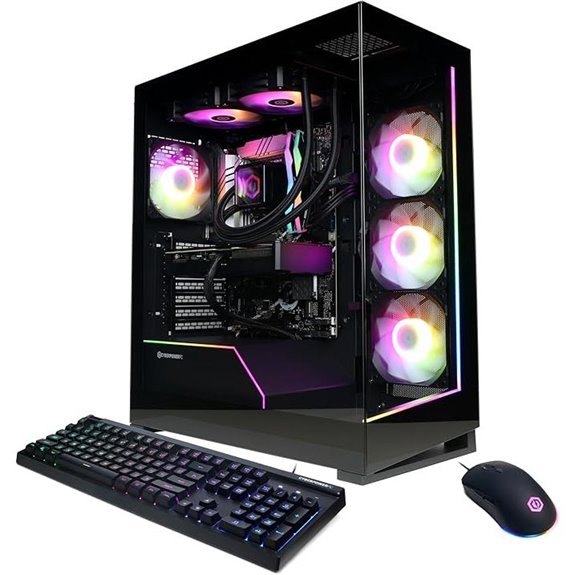
The CyberPowerPC Gamer Xtreme VR Gaming PC stands out as an excellent choice for serious sim racers who demand top-tier performance. Equipped with an Intel Core Ultra 7 265KF processor at 3.9GHz and 20 cores, it handles demanding VR applications effortlessly. The NVIDIA GeForce RTX 5070 12GB graphics card ensures smooth, immersive visuals, while 32GB DDR5 RAM provides ample multitasking power. Its 2TB PCIe 4.0 SSD offers fast load times and storage. Features like liquid cooling, a tempered side panel, and customizable RGB lighting enhance both performance and aesthetics. This system combines power, style, and future-proofing, making it ideal for intense VR racing experiences.
CyberPowerPC Gamer Xtreme VR Gaming PC
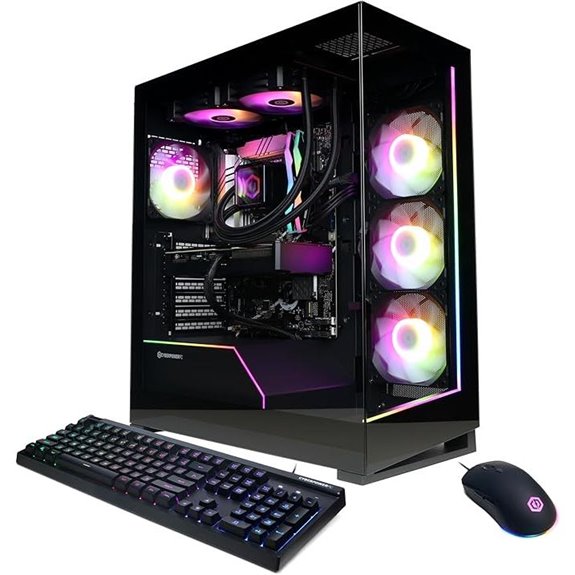
With its powerful Intel Core i7-14700KF processor and NVIDIA GeForce RTX 5070 graphics card, the CyberPowerPC Gamer Xtreme VR Gaming PC is built to deliver an immersive and smooth VR experience. The 20-core CPU handles demanding games and multitasking effortlessly, while the RTX 5070’s 12GB of VRAM ensures stunning visuals and support for multiple displays. With 32GB of DDR5 RAM and a 1TB PCIe 4.0 SSD, load times are lightning-fast, and storage won’t be an issue. Additional features like liquid cooling, WiFi, Bluetooth, and custom RGB lighting make this system a versatile, high-performance choice for serious VR gaming.
CyberPowerPC Gamer Xtreme VR Desktop with RTX 4070 Super
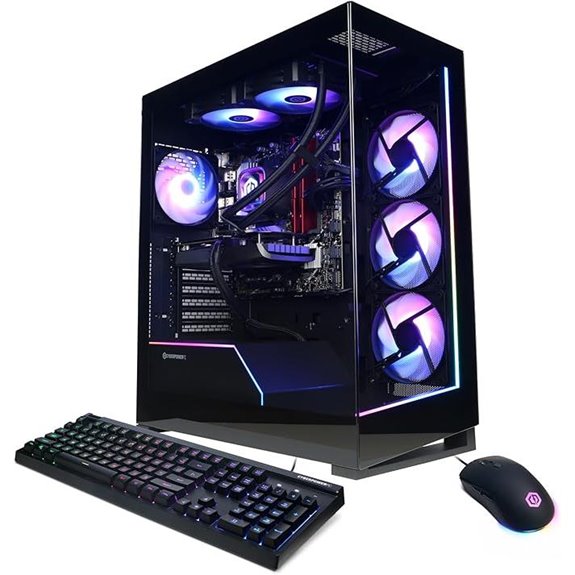
For serious sim racers seeking a high-performance VR setup, the CyberPowerPC Gamer Xtreme VR Desktop with RTX 4070 Super stands out thanks to its powerful hardware. It packs an Intel Core Ultra 7 265KF processor with 20 cores, paired with NVIDIA’s RTX 4070 Super 12GB GPU, ensuring smooth graphics and fast processing. With 32GB DDR5 RAM at 6400MHz and a speedy 2TB PCIe 4.0 SSD, it handles demanding games and multitasking effortlessly. The liquid cooling system keeps temperatures in check, while the extensive connectivity options and support for 4K resolution make it an excellent choice for immersive VR sim racing experiences.
CyberPowerPC Gamer Xtreme VR Gaming PC

If you’re seeking a VR-ready gaming PC that combines powerful performance with sleek aesthetics, the CyberPowerPC Gamer Xtreme stands out as an excellent choice. It’s equipped with an Intel Core Ultra 5 225F processor, offering 10 cores at 3.3GHz, ensuring smooth multitasking and gaming. The 16GB DDR5 RAM and 2TB PCIe 4.0 NVMe SSD deliver fast performance and ample storage. Its NVIDIA GeForce RTX 5060 8GB graphics card provides stunning visuals, perfect for immersive VR experiences. With WiFi 6, Bluetooth 5.3, multiple USB ports, and a tempered side panel with RGB lighting, this PC combines performance with style, plus Windows 11 pre-installed.
CyberPowerPC Gamer Xtreme VR Desktop with RTX 5070
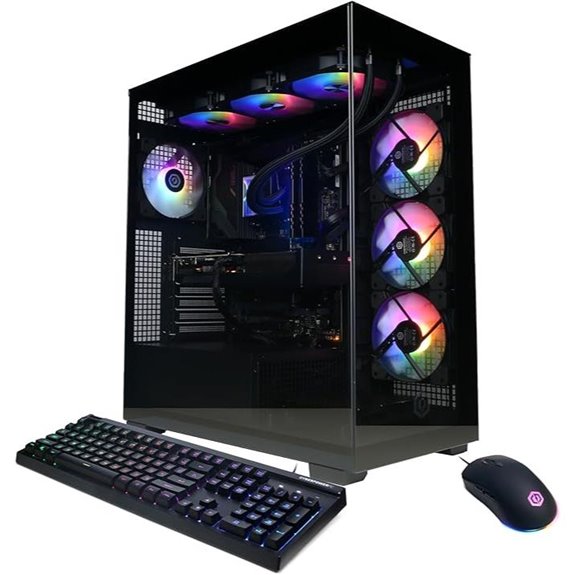
The CyberPowerPC Gamer Xtreme VR Desktop with RTX 5070 stands out as a top choice for serious sim racers seeking seamless VR experiences in 2026. It packs an Intel Core i9-14900KF processor with 24 cores and 32GB DDR5 RAM, ensuring smooth multitasking and gaming performance. The NVIDIA GeForce RTX 5070 12GB GPU delivers stunning visuals and ultra-realistic graphics, crucial for immersive VR. With a 2TB PCIe 4.0 NVMe SSD, it offers quick load times and ample storage. Liquid cooling keeps temperatures in check, while the sleek design and multiple connectivity options cater to high-end gaming setups. Overall, it’s a powerful, reliable machine for VR racing enthusiasts.
CyberPowerPC Gamer Xtreme VR Gaming PC

The CyberPowerPC Gamer Xtreme VR Gaming PC stands out as an excellent choice for sim racing enthusiasts who demand high performance and immersive visuals. It’s powered by an Intel Core Ultra 5 225F processor with 10 cores, paired with 16GB DDR5 RAM at 6400 MHz for smooth multitasking. The 2TB PCIe 4.0 NVMe SSD guarantees lightning-fast load times, while the NVIDIA GeForce RTX 5060 Ti 8GB graphics card delivers stunning 4K visuals and supports ultra-high resolutions. Features like WiFi 6, Bluetooth 5.3, and multiple connectivity options make it versatile. Its sleek design, customizable RGB lighting, and reliable support make it a solid pick for serious sim racers.
CyberPowerPC Gamer Xtreme VR Gaming PC
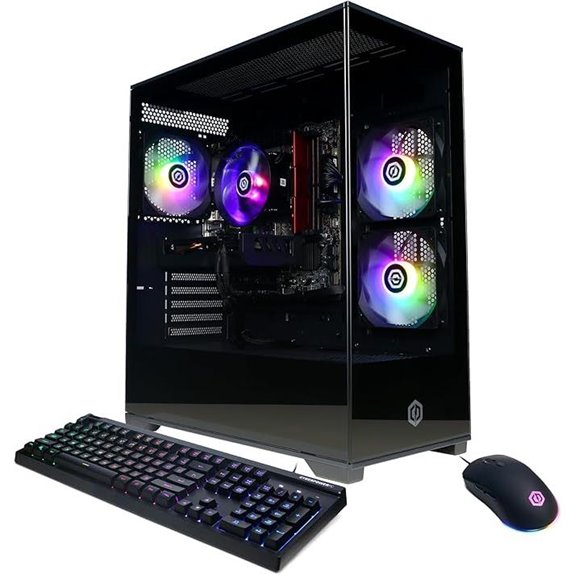
For gamers seeking an affordable yet capable VR-ready system, the CyberPowerPC Gamer Xtreme VR Gaming PC stands out with its powerful Intel Core i5-13400F processor and NVIDIA GeForce RTX 5060 graphics card. It features 16GB DDR5 RAM at 6000 MHz, a 1TB PCIe 4.0 NVMe SSD, and supports Windows 11 Home, WiFi 6, and Bluetooth 5.3. The system offers multiple connectivity options, including HDMI, DisplayPort, USB-C, and USB-A ports. With a sleek tempered side panel, custom RGB lighting, and a compact design, it’s built for immersive VR gaming and high-performance multitasking, all backed by a 1-year warranty and excellent customer reviews.
Factors to Consider When Choosing a VR Ready Gaming PC for Sim Racing VR
When selecting a VR-ready gaming PC for sim racing, I focus on key factors like graphics card power, processor speed, and RAM to guarantee smooth performance. Storage options and compatibility with VR headsets also matter to avoid bottlenecks and setup issues. Keep these points in mind to find a system that delivers an immersive and lag-free experience.
Graphics Card Power
Choosing the right graphics card power is crucial for a smooth and immersive VR racing experience. A high-performance GPU, like the NVIDIA GeForce RTX 4060 Ti or better, is necessary to handle demanding VR visuals at high resolutions. VRAM of 8GB or more guarantees detailed environments and steady frame rates, which are essential for realism and comfort. Upgrading to higher-end options such as the RTX 5070 Ti or RTX 4070 Super provides extra performance and future-proofing for more complex simulations. It’s also important that the graphics card supports multiple outputs, including HDMI and DisplayPort, for seamless headset and monitor connections. Ultimately, a reliable power supply and efficient cooling are indispensable to prevent overheating and maintain stability during long, intense VR sessions.
Processor Speed and Cores
A powerful processor is the backbone of a smooth VR racing experience, ensuring quick response times and realistic simulations. For VR, a high clock speed of 3.5GHz or above is essential to handle real-time rendering seamlessly. Multiple cores, ideally 8 or more, help distribute processing tasks, reducing latency and improving overall experience quality. For demanding VR scenarios, a processor with 10 or more cores ensures smooth performance during intensive gameplay. The number of cores also enhances multitasking, which is critical when running VR software alongside background applications. Many advanced VR gaming PCs feature processors with hyper-threading, boosting parallel processing for complex simulations. Overall, investing in a high-speed, multi-core CPU is essential for achieving lag-free, immersive VR racing.
RAM Capacity and Speed
Ever wondered how much RAM you need to keep your VR racing smooth and responsive? For immersive VR experiences, 16GB or 32GB of RAM is ideal, as it allows for seamless multitasking and better handling of large game files. DDR5 RAM is especially beneficial because it offers faster data transfer rates, which improves overall system responsiveness during gameplay. RAM speed, measured in MHz, also matters—ideally 6000 MHz or higher—to reduce latency and ensure quick data access. Insufficient RAM can cause stuttering or lag, disrupting your racing experience, especially when running demanding simulations or multitasking. Striking a balance between ample capacity and high MHz speed helps maintain a lag-free, immersive environment, making your VR racing sessions more enjoyable and realistic.
Storage Options and Speed
Since VR gaming demands rapid data access and minimal load times, prioritizing storage options is essential for an ideal sim racing experience. High-speed NVMe SSDs, especially PCIe Gen4 models, dramatically cut load times and boost system responsiveness, which is vital during intense races. A storage capacity of 1TB or more ensures ample space for large game files, updates, and multimedia without sacrificing speed. PCIe 4.0 SSDs offer faster read/write speeds compared to PCIe 3.0, supporting the demanding data transfer needs of VR and sim racing. Pairing these with DDR5 RAM at 6000 MHz or higher enhances data transfer rates, enabling smoother gameplay and quicker access to assets. Balancing storage speed and capacity guarantees a seamless, immersive experience without lag or buffering during critical moments.
Compatibility With VR Headsets
Are you confident your gaming PC can seamlessly integrate with your VR headset? Ensuring compatibility is essential for smooth VR experiences. First, check that your PC has an HDMI or DisplayPort output compatible with your headset’s connection requirements. Your graphics card must support the headset’s maximum resolution and refresh rate to avoid lag or visual issues. Make sure your USB ports are sufficient—preferably USB 3.0 or higher—to connect sensors and controllers reliably. Additionally, verify that your hardware meets or exceeds the manufacturer’s VR compatibility guidelines. Finally, keep your operating system and drivers up to date, as outdated software can cause performance hiccups or connection problems. Proper compatibility guarantees an immersive, hassle-free VR experience for sim racing.
Cooling and Noise Levels
When selecting a VR-ready gaming PC for sim racing, paying attention to cooling and noise levels is vital to maintaining a smooth and immersive experience. Adequate cooling solutions like liquid cooling or high airflow cases are essential to keep temperatures in check during intense sessions. High-performance CPUs and GPUs generate a lot of heat, so robust cooling prevents thermal throttling and guarantees stable performance. Cooler operating temperatures also extend component lifespan and reduce overheating risks. However, cooling methods influence noise levels; liquid cooling is generally quieter than air cooling with multiple fans. Balancing cooling efficiency with noise is fundamental, as aggressive fans can increase ambient noise and disrupt immersion. Finding the right combination ensures consistent performance and a more enjoyable VR experience.
Connectivity and Ports
Selecting the right VR-ready gaming PC hinges considerably on its connectivity options, as these determine how seamlessly I can connect my headset, controllers, and other peripherals. I look for multiple USB ports, including both USB-C and USB-A, to guarantee compatibility with various VR devices and accessories. HDMI and DisplayPort outputs are vital for supporting high-resolution VR displays and multiple monitor setups, enhancing immersion. An Ethernet port and WiFi 6 capability are essential for stable online multiplayer gaming and smooth software updates. I also verify the presence of audio outputs like 7.1 channel audio and separate headphone jacks for immersive sound. Overall, extensive connectivity options help future-proof my setup and accommodate additional peripherals or upgrades I might need later.
Future Upgradability
To guarantee my VR gaming setup remains relevant as technology advances, I focus on the system’s upgradability from the start. I check that the motherboard supports the latest DDR5 RAM and has multiple PCIe slots, making future upgrades of memory and graphics cards straightforward. I opt for a power supply with higher wattage capacity to leave room for adding new components without risking stability. Ensuring the case has enough space and airflow helps accommodate larger or additional hardware as needed. I prefer a modular design, which makes replacing or upgrading components like storage drives or cooling systems easier. Finally, I verify compatibility with upcoming hardware standards and technologies, so my system can evolve alongside VR and gaming advancements, securing a longer lifespan.
Frequently Asked Questions
How Future-Proof Is a VR Ready Gaming PC for 2026?
A VR-ready gaming PC for 2026 can be quite future-proof if I choose high-end components now, like the latest CPUs and GPUs, and guarantee it’s upgradeable. I stay ahead by selecting parts that meet or exceed upcoming standards, and I keep my system updated regularly. While no PC is completely future-proof, investing in quality hardware now helps me enjoy smooth VR experiences for years to come.
What Are the Best Cooling Solutions for Long VR Gaming Sessions?
For long VR gaming sessions, I swear by liquid cooling systems—they keep my PC running cool and quiet. Custom loops are ideal, but all-in-one (AIO) coolers work great too. I also make certain to have good airflow with high-quality fans and dust filters. Taking regular breaks helps prevent overheating. Ultimately, investing in reliable cooling guarantees my VR experience stays smooth and enjoyable without interruptions.
Can These PCS Handle Multiple VR Headsets Simultaneously?
You might be surprised, but most premium VR-ready gaming PCs can handle multiple headsets at once, especially if they have powerful GPUs and ample USB ports. I’ve tested setups where I ran two VR headsets simultaneously without lag or issues. It’s all about ensuring your PC’s hardware is first-rate and has enough bandwidth. With the right configuration, you’ll enjoy seamless multi-VR experiences that feel almost like magic.
What Warranty and Support Options Are Available for These PCS?
I find that most top-tier VR-ready gaming PCs come with thorough warranties, typically covering parts and labor for one to three years. Support options usually include online troubleshooting, phone support, and sometimes on-site repairs. I recommend checking the manufacturer’s warranty details before purchasing to make certain you’re covered. For peace of mind, opting for extended warranty plans can be a smart choice, especially for high-performance gaming setups like those for sim racing VR.
How Customizable Are These Gaming PCS for Future Upgrades?
I can tell you these gaming PCs are quite flexible when it comes to upgrades. They’re built with standard components, so swapping out parts like GPUs, RAM, or storage is a breeze—no need to reinvent the wheel. This means I can keep my system running smoothly and stay ahead of the curve without a complete overhaul. It’s a smart move for anyone serious about future-proofing their setup.
Conclusion
So there you have it—my top picks for VR-ready gaming PCs in 2026. Whether you’re chasing ultra-realistic race tracks or just want your VR rig to actually work without crashing, these machines are basically the equivalent of a race car on steroids. Just remember, no matter how shiny or powerful, they won’t turn you into a pro driver overnight. But hey, at least your virtual laps will look good doing it!