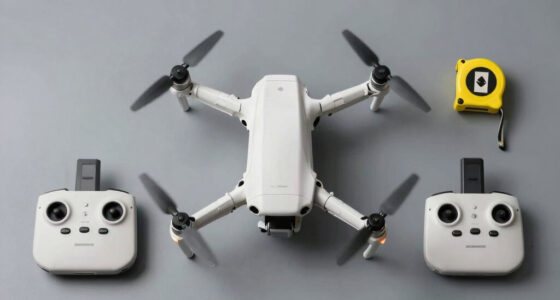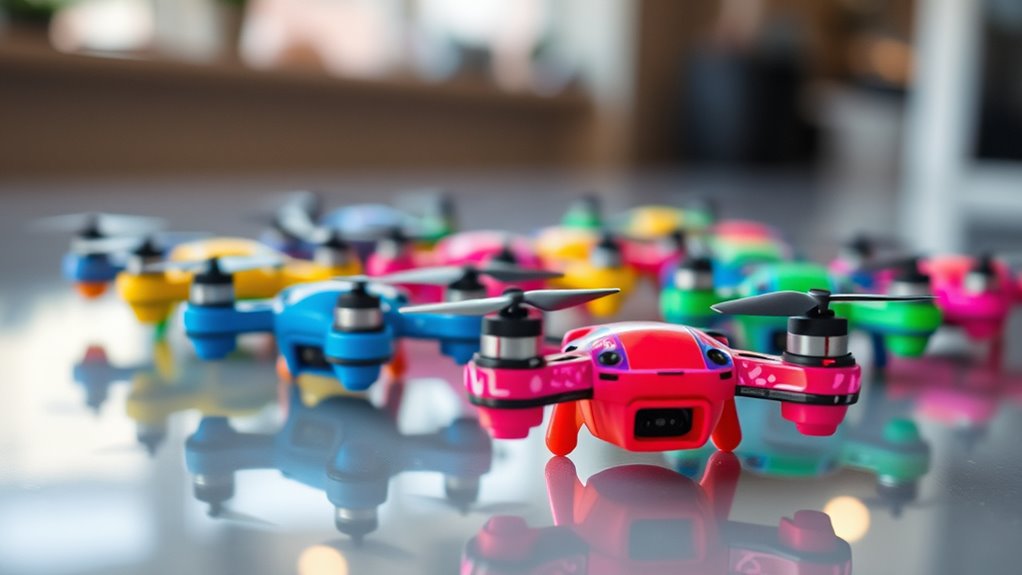
Finding the best tiny whoop drones 1s in 2026 means balancing performance, durability, and ease of use. The R8 ELRS Brushless Whoop stands out as the top overall pick for its powerful brushless motors and long flight times. For beginners, the Tiny Hawk Micro Drone offers a user-friendly experience, while the BETAFPV Meteor75 Pro appeals to those seeking a racing edge. Many options face tradeoffs between weight, flight stability, and features like camera quality or VTX power. Continue reading to see how these drones compare and which is best suited for your flying style.
Complete the kit



Key Takeaways
- Brushless motors in the R8 ELRS significantly boost power and flight time, making it ideal for serious flyers.
- The Tiny Hawk series balances ease of use with performance, perfect for beginners and casual pilots.
- Compact size and weight are consistent priorities, but they influence flight stability and durability.
- Camera quality varies widely, with higher-end models offering better FPV footage for freestyle or racing.
- Price ranges reflect feature sets; more expensive models often include advanced features like switchable VTX or ELRS support.


| tiny whoop drones 1 | Battery | Camera |
|---|---|---|
| R8 ELRS Brushless Whoop Quadco | 2 x 3.8V 450mAh | — |
| Tiny Hawk Micro Drone Free Sty | — | — |
| Tiny Hawk 2 Indoor FPV Racing | — | Runcam Nano 2 |
| Tiny Hawk Nanoscout FPV Drone | 1s | Runcam Nano 3 |
| Mobula 7 1S 75mm Micro FPV Who | 3 x 450mAh 1S LiPo | — |
| Happymodel Mobula6 2024 1S 65m | 1S LiHV (not included) | FX17-B 800TVL CMOS |
| BETAFPV Meteor75 Pro Matrix 1S | LAVA II 1S 580mAh | C03 FPV Micro, 1.45g |
More Details on Our Top Picks
R8 ELRS Brushless Whoop Quadcopter, Ultralight 1S 80mm Micro FPV Drone BNF with 6 Port Battery Charger, 2 Batteries, 12 Min Flight for Indoor/Outdoor Racing and Freestyle
The R8 ELRS Brushless Whoop stands out for its high-performance brushless motors and open Betaflight platform, making it ideal for experienced pilots who crave precise control and customization. Compared with the Tiny Hawk 2, it offers more agility and power, but at the expense of a steeper learning curve and shorter flight times. Its lightweight 26g frame ensures quick maneuvers, perfect for racing or freestyle, though it requires a compatible ELRS transmitter and goggles, which adds to the setup complexity. This drone is less suitable for beginners or casual flyers who prefer plug-and-play simplicity.
Pros:- Lightweight and durable design for indoor and outdoor use
- High power-to-weight ratio for sharp maneuverability
- Open Betaflight platform for extensive tuning and customization
Cons:- Requires own ELRS transmitter and goggles (not included)
- Limited flight time per battery (3-6 mins)
Best for: Skilled FPV pilots who want a highly customizable, fast, and agile drone for racing or freestyle.
Not ideal for: Beginners or casual flyers looking for an easy-to-fly, ready-to-go drone with longer battery life.
- Frame Size:80mm
- Weight:26g
- Motors:0802 20000KV brushless
- Battery:2 x 3.8V 450mAh
- Flight Time:3-6 minutes
- Controller Compatibility:ELRS 2.4G
Our verdict“This pick is best for experienced pilots seeking maximum control and speed in a lightweight micro FPV drone.”
Tiny Hawk Micro Drone Free Style 2 FPV Racing Outdoor Quad Ready To Fly Kit with Goggles and Controller for Beginners and Pros
The Tiny Hawk 2 delivers a balanced experience for both beginners and seasoned pilots, thanks to its durable carbon fiber frame and included gear. Compared with the Mobula 7, it offers a more complete package with goggles and controller out of the box, making it easier for newcomers to get started. While its lightweight 5.8g frame is ideal for outdoor racing, it lacks detailed specs on battery life, which could limit extended flights. Its simplicity makes it a practical choice, but more advanced pilots seeking high-speed performance may find it less capable compared to the R8 ELRS.
Pros:- Lightweight and highly durable for outdoor racing
- Includes goggles and controller for immediate flying
- Suitable for both beginners and experienced pilots
Cons:- Limited information on battery life and flight time
- Lacks detailed camera or video features
Best for: Beginners or hobbyists looking for a ready-to-fly FPV drone with minimal setup and included gear.
Not ideal for: Advanced racers or pilots seeking maximum speed and customization options, as it is more beginner-friendly.
- Frame Material:Carbon fiber
- Weight:5.8g
- Type:FPV racing drone
- Use:Outdoor racing
- Includes:Goggles, Controller
Our verdict“This drone offers excellent value and ease of use for newcomers and casual flyers who want a ready-to-fly FPV experience.”
Tiny Hawk 2 Indoor FPV Racing Drone with Runcam Nano 2 Camera, 16000KV Motors, Switchable VTX (25/100/200mW), Adjustable Camera Angle
The Tiny Hawk 2 excels within indoor environments, featuring a high-quality Runcam Nano 2 camera and switchable VTX for flexible range management. Its 16000KV motors and improved frame design prioritize speed and agility, making it a strong choice for pilots who want fast, crisp video transmission. Compared with the Mobula 7, it offers better camera quality and more adjustable features, yet it’s primarily suited for indoor use and can be complex to set up, especially for those unfamiliar with FPV tuning. Its limited battery options and indoor focus mean it’s less ideal for outdoor or casual flying.
Pros:- High-quality Runcam Nano 2 camera with crisp visuals
- Switchable VTX power for range flexibility
- Adjustable camera angle for customized flying
Cons:- Primarily designed for indoor use, limiting outdoor versatility
- Setup may be complex for newcomers
Best for: Indoor racers and videographers who want a high-speed, high-quality FPV experience with adjustable features.
Not ideal for: Beginners or outdoor flyers, as it is designed specifically for indoor speed and agility with complex setup requirements.
- Camera:Runcam Nano 2
- Video Transmitter (VTX):Switchable 25/100/200mW
- Motors:16000KV
- Frame:Redesigned for durability
- Features:Adjustable camera angle
- Connectivity:USB
Our verdict“This drone is ideal for indoor speed enthusiasts who prioritize video quality and adjustable features over simplicity.”
Tiny Hawk Nanoscout FPV Drone BNF ELRS 1s 25mw-400mw 65mm Quadcopter with Runcam Nano 3
The Tiny Hawk Nanoscout offers a compact, versatile flying platform with ELRS compatibility and variable power options, making it suitable for both indoor and outdoor use. Compared with the Mobula 7, it boasts a smaller 65mm size and a high-quality Runcam Nano 3 camera, which enhances video clarity. Its plastic frame is durable enough for casual crashes, but the limited battery capacity and potential setup complexity might challenge less experienced users. Its small size makes it perfect for tight spaces, but longer flights are limited by its tiny batteries.
Pros:- Compact size for indoor/outdoor versatility
- ELRS compatibility for reliable control
- High-quality FPV camera for clear video
Cons:- Limited battery capacity for longer flights
- Setup may be complex for new users
Best for: Pilots seeking a small, portable FPV drone suitable for indoor and outdoor flying with flexible power settings.
Not ideal for: Beginners or those looking for long flight durations, as small batteries restrict extended flying sessions.
- Size:65mm
- Battery:1s
- Camera:Runcam Nano 3
- Frequency Range:25mw-400mw
- Connectivity:ELRS
Our verdict“This drone is well-suited for pilots who prioritize portability and versatility in a small FPV frame, despite limited flight time.”
Mobula 7 1S 75mm Micro FPV Whoop Drone with RS080 Motor and 5-in-1 AIO Flight Controller
The Mobula 7 combines power, ease of setup, and versatility, making it a strong choice for newcomers and casual pilots. Its 75mm frame houses reliable brushless motors and a 5-in-1 AIO flight controller, simplifying wiring and setup. Compared with the R8 ELRS, it offers a more beginner-friendly experience with longer battery life and straightforward configuration via Web-UI. However, its 1S voltage limits raw power, which may not satisfy those seeking high-speed racing performance. It’s perfect for flying indoors and outdoors, but advanced pilots wanting maximum agility might prefer the lighter, more responsive R8 ELRS.
Pros:- Compact and lightweight for indoor/outdoor use
- Includes multiple batteries for longer sessions
- Easy setup via Web-UI for all skill levels
Cons:- Limited to 1S power, restricting high-speed potential
- Battery life per flight can be short without additional packs
Best for: Beginners or hobbyists looking for an easy-to-assemble, versatile FPV drone with decent power and flight time.
Not ideal for: Experienced racers seeking high-speed, highly tuned performance in a tiny frame.
- Motor:RS0802 20000KV brushless
- Battery:3 x 450mAh 1S LiPo
- Flight Controller:5-in-1 AIO
- Transmitter:T8L Radio Controller
- Material:Nylon, Plastic
- Control Range:Up to 400mW
Our verdict“This drone offers a straightforward, versatile flying platform ideal for newcomers to FPV racing or casual flying.”
Happymodel Mobula6 2024 1S 65mm Ultra-Light Micro FPV Whoop Drone BNF with SuperX ELRS 5-IN-1 AIO
The Happymodel Mobula6 2024 stands out for its ultra-lightweight design, weighing only 17.7g, which makes it exceptional for agile racing and freestyle in tight spaces. Its adjustable VTX offers flexibility for different environments, unlike heavier models like the Betafpv Meteor75 Pro, which sacrifices some flight time for power. The integrated 5-in-1 AIO simplifies setup, but its limited control range of 100m may restrict more ambitious outdoor flights. Compared to the Mobula7, this drone is more nimble indoors, yet it lacks GPS or return-to-home features, which some pilots might find limiting for outdoor use. Its high-efficiency brushless motors provide smooth performance, but the absence of a battery included means an additional purchase is needed. This pick makes the most sense for experienced pilots seeking a lightweight, versatile drone for both racing and freestyle, especially indoors.
Pros:- Extremely lightweight at only 17.7g, ideal for racing and freestyle
- Adjustable VTX for optimized video transmission in various environments
- Integrated 5-in-1 AIO simplifies build and maintenance
- High-efficiency brushless motors ensure smooth flight
Cons:- No battery included, requiring an additional purchase
- Limited control range of 100m can restrict outdoor use
- Lacks GPS or return-to-home features
Best for: Advanced indoor and outdoor racers who prioritize weight and maneuverability
Not ideal for: Beginners or those needing GPS and longer control range for outdoor flying
- Weight:17.7g
- Size:65mm
- VTX Power:25mW to 400mW
- Camera:FX17-B 800TVL CMOS
- Motors:SE0702 28000KV
- Battery:1S LiHV (not included)
Our verdict“This drone is perfect for experienced pilots seeking the lightest, most agile 1S FPV drone for indoor and close-range outdoor racing.”
BETAFPV Meteor75 Pro Matrix 1S Brushless Whoop Quadcopter for FPV Racing
The BETAFPV Meteor75 Pro offers a potent combination of power and durability, making it a strong choice for pilots who want a more responsive experience than the lightweight Mobula6. Its up to 6.5 minutes of flight time with the included LAVA II battery balances performance and endurance, though this is still shorter than some larger racing drones. The Matrix 5-in-1 flight controller provides a robust platform for aggressive flying, but its higher VTX power increases heat and cuts into flight time compared to the Mobula6’s adjustable setup. Built for quick assembly with solder-free motor plugs, it favors those who prefer durability and ease of repair over ultimate weight savings. Its slightly heavier frame and limited flight time may be drawbacks for beginners or those seeking prolonged outdoor flights, but seasoned racers will appreciate the responsiveness. This drone is tailored for those who prioritize a powerful, durable FPV experience in tight racing conditions.
Pros:- Powerful and responsive flight performance for racing
- Durable Matrix 5-in-1 flight controller with integrated VTX
- Solder-free motor plugs facilitate quick repairs and upgrades
- Lightweight design suitable for indoor and outdoor FPV racing
Cons:- Higher VTX power increases heat and reduces overall flight time
- Limited flight time around 6.5 minutes
- Requires calibration and re-binding for optimal operation
Best for: Intermediate to advanced pilots seeking a durable, responsive FPV racing drone
Not ideal for: Beginners or pilots who need longer flight times and minimal heat generation
- Flight Time:Up to 6.5 minutes
- Motor:1102 22000KV
- Camera:C03 FPV Micro, 1.45g
- VTX Power:25-400mW
- Battery:LAVA II 1S 580mAh
- Prop Size:45mm 3-blade
Our verdict“This drone is best suited for pilots who want a durable, high-performance FPV racer that can handle aggressive flying, accepting shorter flight durations for responsiveness.”

How We Picked
I evaluated these tiny whoop drones based on key factors that matter most to flyers: flight performance, build quality, ease of setup, and value for money. Drones with brushless motors scored higher for their increased power and longevity, while user-friendly features like pre-installed receivers and comprehensive kits influenced suitability for beginners. We also considered size, weight, and versatility—important for indoor racing and outdoor use alike. Drones were ranked by how well they balance these factors, with emphasis on real-world usability and long-term reliability over simple specs.| tiny whoop drones 1 | Camera |
|---|---|
| R8 ELRS Brushless Whoop Quadco | — |
| Tiny Hawk Micro Drone Free Sty | — |
| Tiny Hawk 2 Indoor FPV Racing | Runcam Nano 2 |
| Tiny Hawk Nanoscout FPV Drone | Runcam Nano 3 |
| Mobula 7 1S 75mm Micro FPV Who | — |
| Happymodel Mobula6 2024 1S 65m | FX17-B 800TVL CMOS |
| BETAFPV Meteor75 Pro Matrix 1S | C03 FPV Micro, 1.45g |
Factors to Consider When Choosing Tiny Whoop Drones 1s
When choosing a tiny whoop drone 1s, consider several critical factors that impact your flying experience. First, motor type—brushless motors typically offer better power and durability but come at a higher cost and complexity. Second, size and weight influence agility, stability, and portability—lighter models are easier to carry but may sacrifice durability. Third, camera quality matters if you plan to freestyle or race, with higher resolution and adjustable angles providing a better FPV experience. Fourth, flight time and battery options directly affect how long you can fly before recharging, so consider models with efficient power systems. Lastly, ease of setup and compatibility with your preferred FPV gear can save time and frustration, especially for newcomers.Motor Type and Power
Brushless motors in tiny whoop drones deliver more torque and efficiency compared to brushed motors, translating into longer flights and better handling, especially in racing or freestyle scenarios. However, they tend to increase the drone’s cost and complexity. For casual flying or beginners, brushed motors might suffice, but if you’re serious about performance, a brushless setup is worth the investment. Keep in mind that brushless motors can generate more heat and require proper cooling and maintenance, which could be a drawback for some users.
Size, Weight, and Durability
The size and weight of your drone directly influence agility and crash resilience. Smaller, lighter models are nimble and ideal for indoor racing, but they tend to be more fragile and susceptible to damage from crashes. Conversely, slightly larger models may be more durable and easier to repair, but could sacrifice some maneuverability. Choosing a drone with a good balance for your typical flying environment ensures better overall experience and longevity.
Camera and FPV Features
For freestyle or racing, FPV camera quality and adjustable angles can make a significant difference. Higher-end models with better sensors, like the Runcam Nano 2 or Nano 3, provide clearer footage and more immersive flight experiences. Switchable VTX power options give you control over transmission range, which is vital for outdoor racing. However, better cameras and VTX features often increase weight slightly and come with a higher price tag, so weigh these benefits against your specific flying needs.
Battery Life and Charging
Flight time is a common limitation in tiny whoops, often ranging from 5 to 12 minutes depending on the setup. Models with larger or more efficient batteries extend flying sessions but can add weight. Fast-charging capabilities and the availability of multiple batteries improve overall flying hours, especially during longer sessions. Consider whether your flying style benefits from quick swaps or longer, uninterrupted flights when selecting a drone.
Ease of Setup and Compatibility
Pre-installed receivers like ELRS or R-XSR simplify the process for beginners or those upgrading their setup. Compatibility with popular FPV goggles and controllers also impacts ease of use. Some drones come as ready-to-fly kits, saving time and reducing setup errors, while others may require assembly or firmware configuration. Your comfort level with tech and customization should guide your choice to avoid frustration and streamline your flying experience.
Frequently Asked Questions
Can I upgrade the motors on a tiny whoop drone 1s?
Yes, many tiny whoop drones support motor upgrades, especially those with brushless setups. Upgrading motors can improve power, flight time, and handling, but it requires compatibility checks for size and connectors. Be aware that installing higher KV motors might increase heat and drain batteries faster. Proper tuning and balance are essential to avoid negative impacts on flight stability, so weigh the benefits against potential added complexity.
Are 1s tiny whoop drones suitable for outdoor flying?
While many 1s tiny whoops are designed primarily for indoor use, some models with higher VTX power and better antennas can handle outdoor environments reasonably well. However, wind and larger open spaces demand more stable and powerful setups, often found in higher-tier models. For regular outdoor flying, look for drones with switchable VTX power, robust construction, and higher-quality FPV gear to ensure reliable operation.
What is the typical lifespan of a tiny whoop drone 1s?
The lifespan depends heavily on usage, maintenance, and build quality. Proper care and avoiding crashes can extend a drone’s life to hundreds of flights. Brushless models tend to last longer due to fewer wear parts, but all small drones are susceptible to damage from impacts. Regular motor and battery maintenance and gentle handling are key to maximizing your drone’s longevity.
Is it worth paying more for a tiny whoop with ELRS?
Investing in a tiny whoop with ELRS (ExpressLRS) provides better range, lower latency, and more reliable control, especially for outdoor racing or advanced freestyle. While these models are usually more expensive, the performance gains often justify the cost if you prioritize precise control and extended range. For casual indoor flying, simpler receivers may suffice, making ELRS less critical for basic use.
How important is camera quality in a tiny whoop drone?
Camera quality becomes increasingly important if you plan to freestyle or race, as clearer footage enhances the FPV experience. Higher-resolution cameras with adjustable angles improve maneuverability and immersion. However, better cameras add weight and cost, and may require more delicate handling. For casual or beginner pilots, basic FPV cameras often meet their needs without the added expense or complexity.