If you’re looking for the best iMacs for video editing in 2025, I recommend models with a powerful M4 chip, a high-resolution 4.5K or 6K Retina display, and at least 32GB of memory for smooth multitasking. The latest iMacs combine sleek design, fast Thunderbolt 4 ports, and excellent graphics hardware to handle demanding workflows. Stay tuned, as I’ll share the top options that deliver power, performance, and precision for professional editing.
Key Takeaways
- Look for iMacs with a 10-core CPU and GPU for smooth rendering and multitasking during complex video editing workflows.
- Prioritize models with a high-resolution Retina 4.5K display supporting wide color gamuts for accurate color grading.
- Choose iMacs with at least 16GB RAM, ideally 32GB or more, to handle large files and multiple applications seamlessly.
- Opt for configurations with fast SSD storage (512GB or higher) and multiple Thunderbolt 4 ports for external drives and high-res displays.
- Ensure the iMac features a sleek, portable design with advanced connectivity (Wi-Fi 6E, Bluetooth 5.3) for flexible, professional editing setups.
Apple 2024 iMac Desktop Computer with M4 Chip
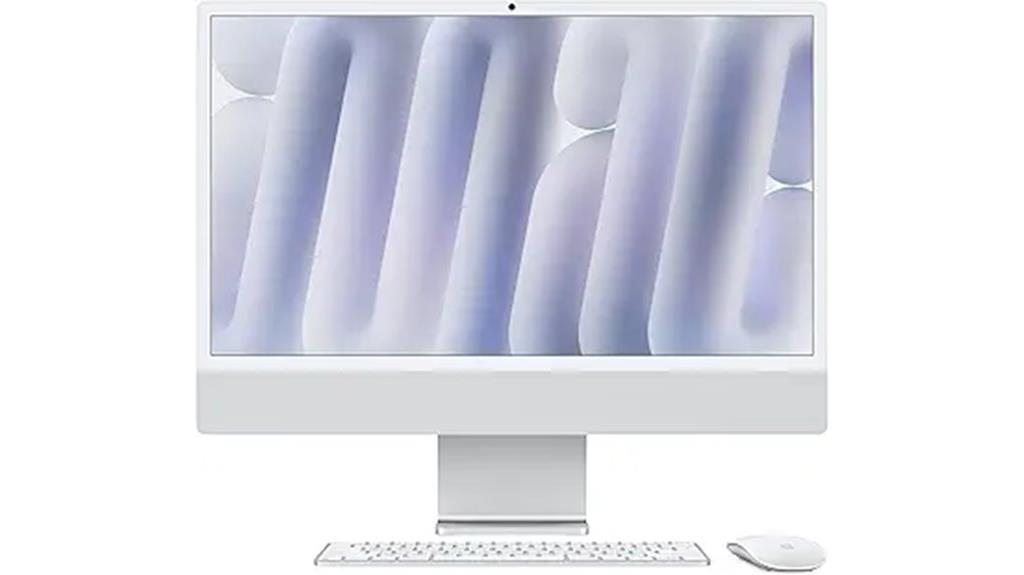
If you’re looking for a powerful all-in-one desktop for video editing, the Apple 2024 iMac with the M4 chip is an excellent choice. Its sleek, ultra-thin design comes in seven vibrant colors, with a stunning 24-inch Retina 4.5K display supporting a billion colors and 500 nits brightness, delivering immersive visuals. Powered by the M4 chip with a 10-core CPU and GPU, it offers blazing-fast performance for editing, multitasking, and rendering. With 16GB of unified memory and 512GB SSD storage, you get quick access to files and ample space. Plus, its connectivity options—Thunderbolt 4, Wi-Fi 6E, and Bluetooth 5.3—make expanding your workspace seamless.
Best For: creative professionals and power users seeking a sleek, high-performance all-in-one desktop for video editing, multitasking, and immersive visuals.
Pros:
- Stunning 24-inch Retina 4.5K display with vibrant colors and high brightness
- Powerful M4 chip with 10-core CPU and GPU for fast, efficient performance
- Seamless connectivity options including Thunderbolt 4, Wi-Fi 6E, and Bluetooth 5.3
Cons:
- Limited to 512GB SSD storage, which may be insufficient for large media files
- Only available in a fixed size of 24 inches, lacking larger display options
- Premium price point might be a consideration for budget-conscious buyers
Apple 2024 iMac Desktop Computer with M4 Chip
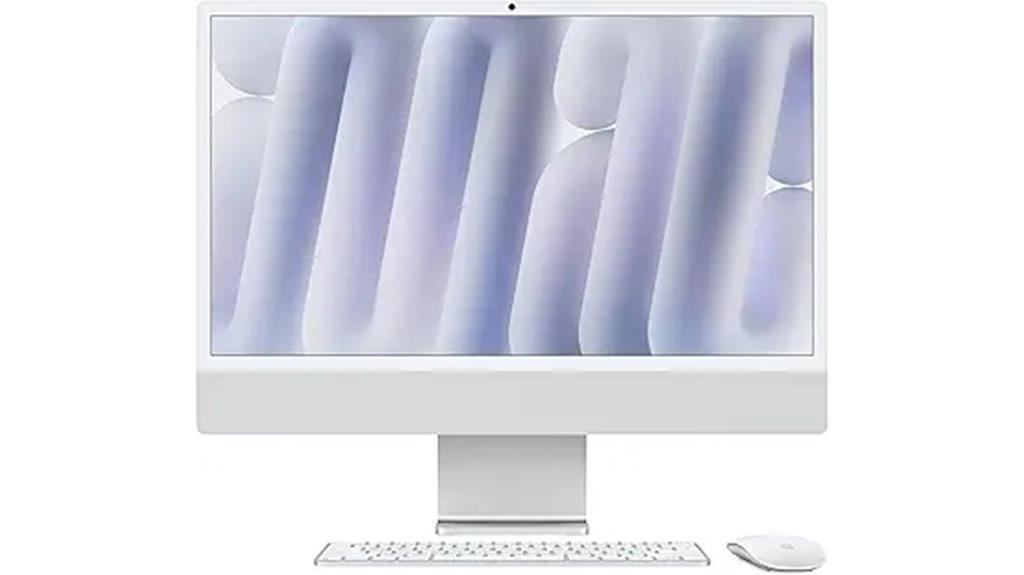
The Apple 2024 iMac Desktop Computer with M4 Chip stands out as an excellent choice for video editors who need powerful performance in a sleek, all-in-one package. Its 24-inch Retina 4.5K display delivers stunning visuals with vibrant colors and high brightness, perfect for detailed editing. Powered by the M4 chip with a 10-core CPU and GPU, it handles demanding tasks smoothly. With 16GB of unified memory and 512GB SSD storage, multitasking and file management are effortless. Plus, its elegant design in seven vibrant colors, along with robust connectivity options, makes it both functional and stylish for creative workflows.
Best For: creative professionals and video editors who need a powerful, stylish all-in-one desktop with a stunning display and seamless connectivity.
Pros:
- Vibrant 24-inch Retina 4.5K display with high brightness and color accuracy
- Powered by the efficient M4 chip with a 10-core CPU and GPU for demanding tasks
- Elegant, ultra-thin design available in seven vibrant colors
Cons:
- Limited to 512GB SSD storage, which may require external drives for large projects
- No dedicated graphics card option, potentially limiting high-end gaming or intensive 3D work
- Premium price point may be a consideration for budget-conscious users
Apple 2024 iMac Desktop Computer with M4 Chip
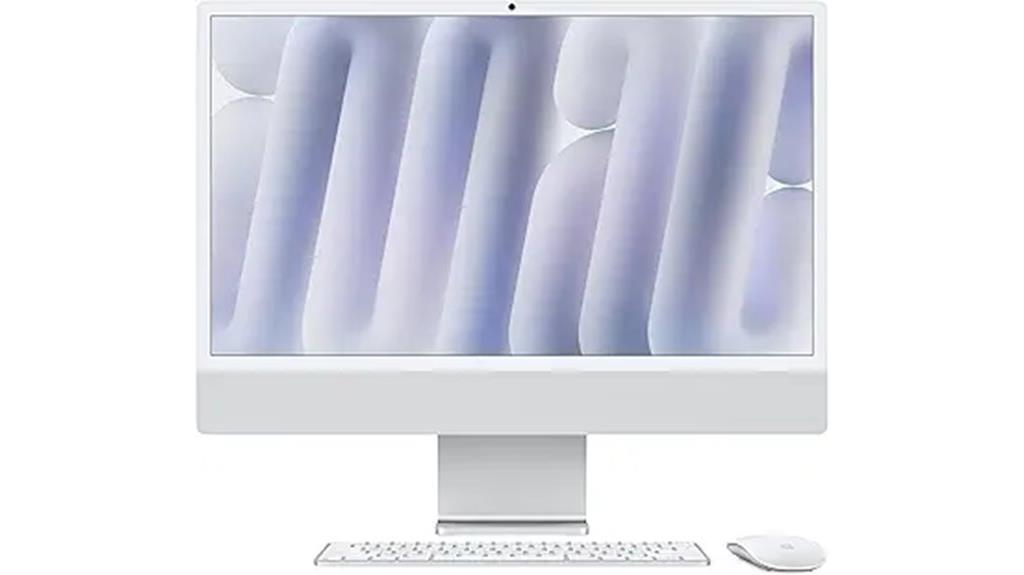
For video editors seeking powerful performance in a sleek design, the Apple 2024 iMac with M4 chip stands out thanks to its 10-core CPU and GPU, delivering fast rendering and smooth multitasking. Its 24-inch 4.5K Retina display offers vibrant visuals with support for a billion colors, perfect for detailed editing. The ultra-thin all-in-one design comes in seven vibrant colors, blending style with functionality. With 16GB of unified memory and a 256GB SSD, it handles demanding creative workflows with ease. Seamless integration with the Apple ecosystem and connectivity options, including Thunderbolt 4 and support for 6K displays, make this iMac a versatile choice for professional video editing.
Best For: creative professionals and video editors seeking a powerful, sleek all-in-one desktop with vibrant visuals and seamless Apple ecosystem integration.
Pros:
- Powerful M4 chip with 10-core CPU and GPU for fast rendering and multitasking
- Stunning 24-inch 4.5K Retina display with support for a billion colors
- Elegant, ultra-thin design available in seven vibrant colors
Cons:
- Limited storage options starting at 256GB SSD may require external drives for large projects
- Higher price point compared to other all-in-one desktops with similar specs
- Limited upgradability due to integrated design
Factors to Consider When Choosing an Imac for Video Editing
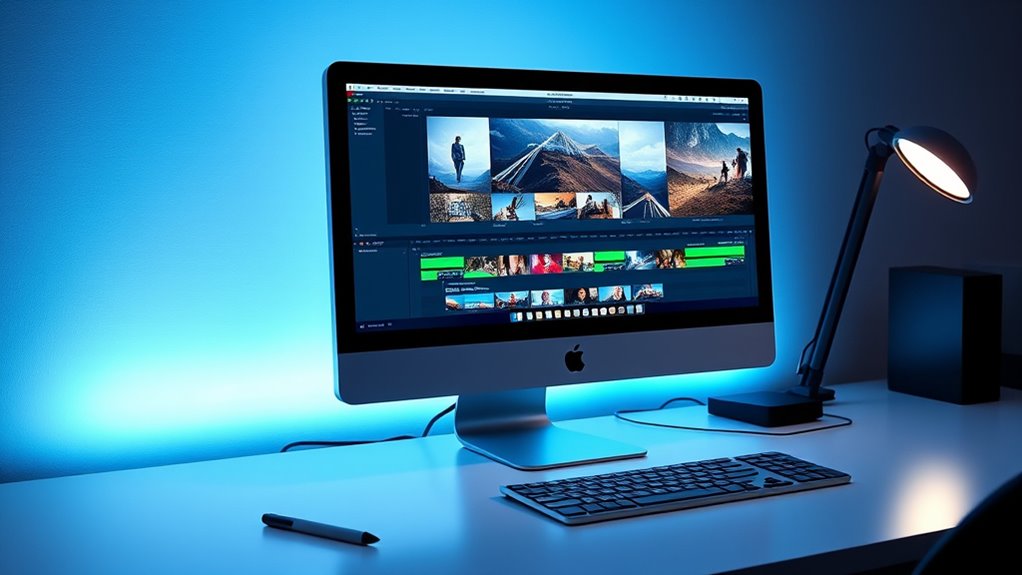
When choosing an iMac for video editing, I focus on processing power, display quality, and memory capacity to guarantee smooth performance. Storage space and graphics performance also matter, especially for handling large files and demanding editing tasks. Considering these factors helps me pick a model that meets my editing needs effectively.
Processing Power
Choosing an iMac with powerful processing capabilities is vital for smooth video editing. A fast, multi-core CPU like a 10-core processor markedly speeds up rendering and exporting, cutting down waiting times. It also guarantees real-time playback remains smooth, reducing lag during complex edits. With increased processing power, you can run resource-intensive software and apply effects without sacrificing performance. Plus, a robust processor handles multitasking seamlessly, so you can work on multiple projects or applications at once without slowdown. This efficiency means less frustration and more productivity. Ultimately, investing in a high-performance processor allows for a more efficient workflow and smoother editing experience, making it an essential factor when selecting an iMac for demanding video projects.
Display Quality
Have you ever noticed how crucial a high-quality display is for precise video editing? A 4.5K Retina screen offers the sharpness needed to see every detail clearly. Support for a wide color gamut, up to 1 billion colors, ensures accurate and vibrant color reproduction, which is essential for color grading. Brightness levels of at least 500 nits improve visibility in different lighting conditions and help maintain color accuracy. An anti-reflective or Nano-Texture Glass finish reduces glare, making long editing sessions more comfortable. Additionally, high contrast ratios enhance the distinction between dark and light areas, allowing for better control over shadows and highlights. Overall, a top-tier display elevates the quality and accuracy of your video editing workflow.
Memory Capacity
Memory capacity is a critical factor in selecting an iMac for video editing because it directly impacts performance and workflow efficiency. Video editing involves working with large files and real-time playback, which demands ample RAM. I recommend at least 16GB for casual editing, but professionals should aim for 32GB or more to guarantee smooth multitasking and handling demanding projects. More memory allows editing software to run seamlessly alongside other applications, reducing lag and preventing slowdowns. It also minimizes disk swapping, which can considerably improve rendering times and overall editing speed. When choosing an iMac, prioritizing models with higher memory options future-proofs your setup and ensures you won’t need to upgrade prematurely. Adequate RAM is essential for maintaining efficiency during intensive editing sessions.
Storage Space
Sufficient storage space is essential for smooth video editing, as it allows you to keep large files and project data directly on your iMac without constantly relying on external drives. For professional workflows, I recommend at least 512GB of storage, or more, to comfortably handle high-resolution footage and multiple projects. SSD storage is a must because it offers faster read/write speeds, which considerably cut down rendering and access times. Running out of space can disrupt your workflow, forcing you to transfer files constantly and causing delays. To future-proof your setup, consider models with expandable or larger storage options, ensuring you won’t need to upgrade anytime soon. Adequate storage is the backbone of efficient, uninterrupted video editing.
Graphics Performance
Since high-quality video editing demands powerful graphics hardware, choosing an iMac with a strong GPU is essential for smooth performance. A 10-core GPU or higher greatly speeds up rendering and provides seamless real-time previews, which are critical when working with 4K or higher resolution footage. Supporting multiple high-resolution external displays requires a robust graphics card capable of handling increased visual data efficiently. VRAM capacity plays a fundamental role in processing complex visual effects and large video files without lag or stuttering. Optimized graphics hardware ensures better playback, faster export times, and more efficient handling of demanding post-production tasks. Prioritizing these graphics features helps guarantee your iMac can keep up with the most intensive editing workflows, delivering a smoother, more productive editing experience.
Connectivity Options
Choosing the right connectivity options is essential for a smooth video editing experience on an iMac. I look for models with multiple Thunderbolt 4 ports, ideally supporting at least two 6K displays, to handle complex workflows. Fast data transfer is vital, so I confirm support for Thunderbolt 4, ensuring quick access to large video files. Wi-Fi 6E and Bluetooth 5.3 are must-haves for seamless peripheral connections and rapid data sharing. Adequate USB ports are also important for external storage, audio interfaces, and other peripherals I rely on daily. The ease of connecting external monitors and accessories directly impacts my productivity. Overall, I prioritize a variety of high-speed, versatile ports to create a flexible, efficient editing setup that meets all my connectivity needs.
Software Compatibility
When selecting an iMac for video editing, I make sure its operating system supports the latest versions of my editing software. Compatibility is essential to access new features, updates, and bug fixes. I also verify that the iMac’s hardware, such as GPU and RAM, meets the minimum requirements of my editing applications to guarantee smooth performance. Additionally, I check if the ports and connectivity options support external devices like high-resolution monitors, external drives, and peripherals indispensable for my workflow. The display’s resolution and color accuracy, such as Retina 4.5K or higher, are critical for precise color grading. Finally, I confirm the iMac supports the necessary codecs and media formats required for my projects, avoiding any playback or export issues down the line.
Portability and Design
Having confirmed that an iMac’s hardware and software support my editing needs, I also consider how its design impacts my workflow. A slim, lightweight design makes it easy to move the iMac between locations, which is perfect for editing on the go or setting up different workspaces. Its compact form factor saves desk space and helps keep my workspace clean and organized. The durable, sturdy construction ensures the iMac can withstand movement without damage, giving me peace of mind. The high-resolution Retina display integrated into the all-in-one design eliminates the need for external monitors, maintaining portability without sacrificing quality. Plus, its sleek, colorful aesthetics add a professional touch to my workspace, blending style with functionality seamlessly.
Frequently Asked Questions
How Does the New M4 Chip Improve Video Editing Performance?
The new M4 chip considerably boosts my video editing performance by offering faster processing speeds and enhanced graphics capabilities. I notice quicker rendering times and smoother playback, even with high-resolution footage. The improved neural engine accelerates AI-based tasks like scene detection and color grading. Overall, the M4 chip makes editing more efficient and seamless, allowing me to focus on creativity without worrying about lag or slow performance.
What Display Features Are Essential for Professional Video Editing?
Honestly, a crystal-clear, color-accurate display is no longer a luxury but a necessity for professional video editing. I look for a high-resolution Retina screen with wide P3 color gamut and True Tone technology. A glossy finish helps me see every detail, and HDR support guarantees I capture every nuance. Without these features, my edits would be as dull as a black-and-white film—so, yes, they’re essential.
How Does Storage Capacity Impact Editing Workflow Efficiency?
Storage capacity directly impacts my editing workflow by determining how many projects, raw footage, and assets I can keep readily accessible. When I have ample space, I avoid constant transfers, delays, or external drives, which boosts my efficiency. Insufficient storage forces me to spend time managing files or upgrading drives, distracting me from creative work. So, having enough storage is essential for smooth, uninterrupted editing sessions.
Are There Specific Ports or Connectivity Options Needed for Editing Setups?
Think of your iMac as a digital symphony; the right ports are its conductor’s baton. I look for Thunderbolt 4, USB-C, and HDMI options to connect external drives, high-quality monitors, and peripherals seamlessly. These ports guarantee my editing workflow isn’t a tangled mess but a smooth, harmonious process. Adequate connectivity options keep my creative momentum flowing without interruptions, making my editing sessions efficient and stress-free.
How Do External GPUS Influence Imac Performance for Video Editing?
External GPUs considerably boost my iMac’s video editing performance by providing extra graphics power, especially for rendering complex projects. They help reduce lag, improve playback, and speed up export times. I’ve noticed smoother editing and more efficient workflows when I connect an external GPU, making my iMac much more capable of handling demanding editing tasks. It’s a great way to upgrade performance without replacing the entire system.
Conclusion
So, there you have it—your perfect iMac for video editing in 2025. Who would’ve thought that choosing a computer would be so complicated? With all the power and performance options, it’s almost like picking a new car—except you’re really just trying to make videos look amazing. But hey, at least now you’re armed with the best choices to make your editing life easier (or at least more fun). Happy editing!