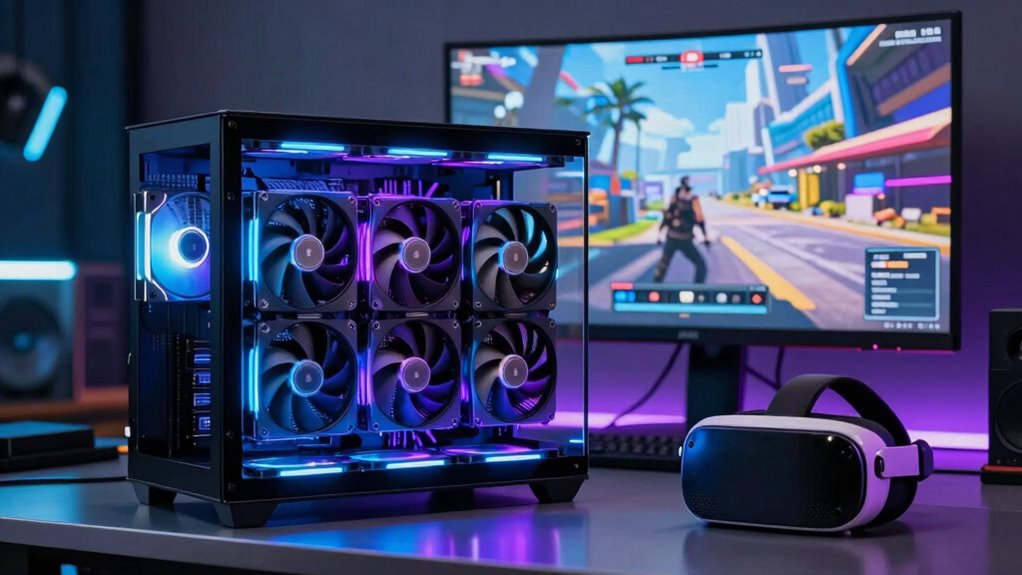

If you’re looking for the best GPUs for immersive VR with supersampling in 2026, I recommend the ZOTAC Gaming GEFORCE 5070 Solid OC, the powerful ZOTAC GeForce RTX 5090, along with the CyberPowerPC Gamer Xtreme VR featuring the RTX 5060 Ti. These models offer high VRAM, advanced ray tracing, and excellent supersampling support. Keep in mind, system compatibility matters too—stay tuned to discover more about the top choices for next-gen VR performance.
Key Takeaways
- High VRAM (12-16GB) GPUs like the ZOTAC GeForce RTX 5090 ensure smooth supersampling and future-proof VR performance.
- Latest architectures such as NVIDIA Blackwell or AMD RDNA 3 provide enhanced ray tracing and VR capabilities.
- Support for HDMI 2.1b and PCIe 5.0 guarantees compatibility with upcoming VR headsets and high-resolution displays.
- Advanced cooling and stable power supplies are essential for maintaining optimal performance during intense VR sessions.
- Top models like the ZOTAC Gaming GEFORCE 5070 Solid OC deliver immersive visuals with high frame rates and supersampling support.
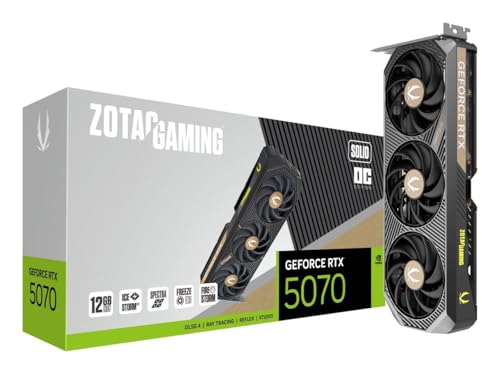
| ZOTAC Gaming GEFORCE 5070 Solid OC 12GB 192BITS GDDR7 GPU – ZT-B50700J-10P | 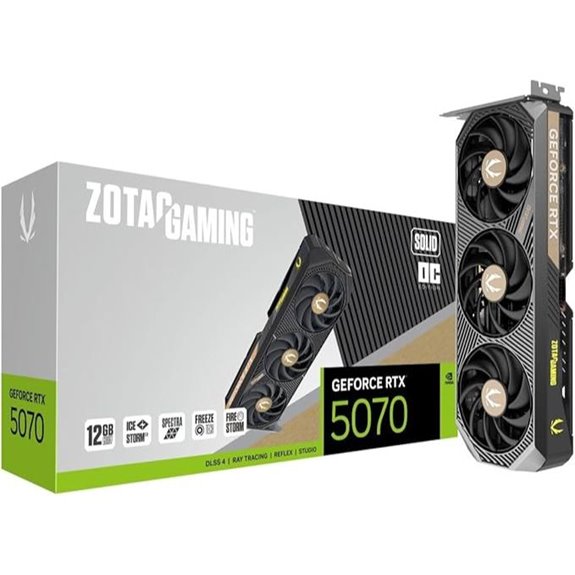 | High-Performance Powerhouse | Memory Type: GDDR7 | Memory Capacity: 12GB | Display Support: 8K (7680×4320) | VIEW LATEST PRICE | See Our Full Breakdown |
| CyberPowerPC Gamer Xtreme VR Desktop | 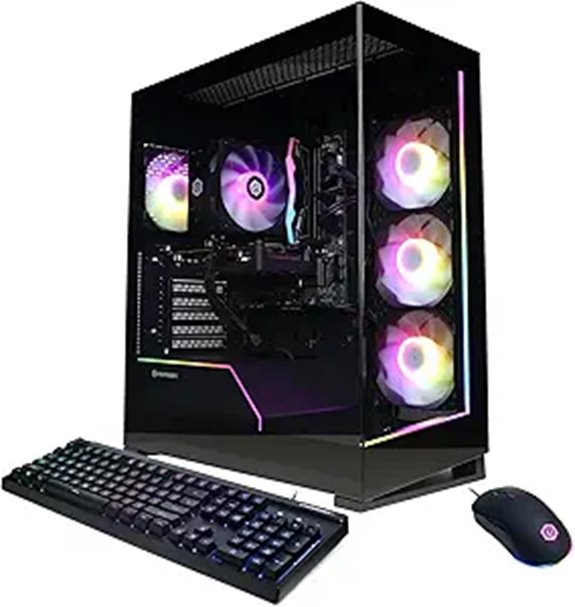 | Best Pre-Built VR Ready | Memory Type: GDDR6 | Memory Capacity: 16GB | Display Support: 8K (7680×4320) | VIEW LATEST PRICE | See Our Full Breakdown |
| ASUS GeForce RTX 2060 6GB Phoenix Graphics Card |  | Budget VR Upgrade | Memory Type: GDDR6 | Memory Capacity: 6GB | Display Support: 4 monitors (up to 4K each) | VIEW LATEST PRICE | See Our Full Breakdown |
| ZOTAC GeForce RTX 5090 Gaming Graphics Card | 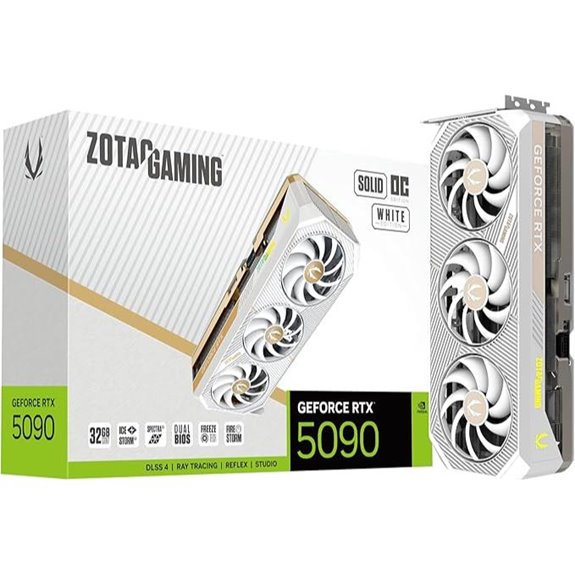 | Top-Tier 8K Gaming | Memory Type: GDDR7 | Memory Capacity: 32GB | Display Support: 8K (7680×4320) | VIEW LATEST PRICE | See Our Full Breakdown |
More Details on Our Top Picks
-

CyberPowerPC Gamer Xtreme VR Gaming PC, Intel Core Ultra 5 225F 3.3GHz, GeForce RTX 5060 Ti 8GB, 16GB DDR5, 2TB PCIe 4.0 SSD, WiFi Ready & Windows 11 Home (GXiVR8060A35)
System: Intel Core Ultra 5 225F 3.3GHz 10 Cores | Intel B860 Chipset | 16GB DDR5 | 2TB...
As an affiliate, we earn on qualifying purchases.
ZOTAC Gaming GEFORCE 5070 Solid OC 12GB 192BITS GDDR7 GPU – ZT-B50700J-10P
If you’re looking for a GPU that can handle demanding VR experiences with ease, the ZOTAC Gaming GEFORCE 5070 Solid OC is an excellent choice, especially for those who want smooth supersampling at high resolutions. Equipped with NVIDIA’s Blackwell architecture, it features 12GB of GDDR7 memory and a 192-bit interface, delivering high bandwidth and speed. Its 3.5 GHz graphics coprocessor supports up to 8K resolution, making it perfect for immersive VR and demanding creative tasks. Weighing around 3.3 pounds, it’s designed for high performance and reliability. Available since March 2025, it offers solid customer reviews and competitive pricing on Amazon.
- Memory Type:GDDR7
- Memory Capacity:12GB
- Display Support:8K (7680×4320)
- Interface/Connectivity:PCIe 4.0
- Cooling System:Standard cooling
- RGB/Design Elements:No RGB
- Additional Feature:Blackwell architecture design
- Additional Feature:4K and 8K support
- Additional Feature:Competitive market pricing
-

ASUS GeForce RTX 2060 6GB Phoenix Fan Edition VR Ready HDMI DP DVI Graphics Card (Ph-RTX2060-6G) (Renewed)
Powered by NVIDIA Turing with 1710 MHz Boost Clock, 1920 CUDA cores and 6GB GDDR6 memory in a...
As an affiliate, we earn on qualifying purchases.
CyberPowerPC Gamer Xtreme VR Desktop
The CyberPowerPC Gamer Xtreme VR Desktop stands out as an excellent choice for serious gamers and VR enthusiasts who demand high performance and smooth visuals. It features an Intel Core Ultra 5 225F processor with 10 cores, 16GB DDR5 RAM at 6400 MHz, and a 2TB PCIe 4.0 NVMe SSD for rapid storage. The NVIDIA GeForce RTX 5060 Ti 8GB GPU handles 4K gaming and VR with ease. Designed for multimedia and intense tasks, it includes WiFi 6, Bluetooth 5.3, multiple ports, and customizable RGB lighting. Its robust hardware and sleek design make it ideal for immersive VR experiences and demanding gaming sessions.
- Memory Type:GDDR6
- Memory Capacity:16GB
- Display Support:8K (7680×4320)
- Interface/Connectivity:PCIe 4.0
- Cooling System:Advanced cooling with heatsinks and fans
- RGB/Design Elements:Custom RGB lighting
- Additional Feature:Custom RGB lighting
- Additional Feature:Tempered side panel
- Additional Feature:1-year parts & labor
-

ZOTAC Gaming GeForce RTX 5090 Solid OC White Edition DLSS 4 32GB GDDR7 512-bit 28 Gbps PCIE 5.0 Gaming Graphics Card, IceStorm 3.0 Advanced Cooling, Spectra 2.0 ARGB Lighting, ZT-B50900Q-10P
Powered by the NVIDIA Blackwell architecture and DLSS 4
As an affiliate, we earn on qualifying purchases.
ASUS GeForce RTX 2060 6GB Phoenix Graphics Card
For gamers seeking a reliable graphics card that balances performance and durability, the ASUS GeForce RTX 2060 6GB Phoenix stands out as a solid choice for VR with supersampling. Powered by NVIDIA’s Turing architecture, it offers a 1710 MHz boost clock, 1920 CUDA cores, and 6GB of GDDR6 memory, providing smooth visuals. Its Auto Extreme manufacturing and aerospace-grade components guarantee durability, while the Phoenix double ball bearing fan delivers superior airflow and longer lifespan. Support for up to four monitors and features like real-time performance monitoring make it versatile. Although discontinued, the refurbished model offers great value, especially for immersive VR experiences with supersampling.
- Memory Type:GDDR6
- Memory Capacity:6GB
- Display Support:4 monitors (up to 4K each)
- Interface/Connectivity:PCIe 3.0 (discontinued, but supported)
- Cooling System:Double ball bearing fan with enhanced cooling
- RGB/Design Elements:RGB software support
- Additional Feature:Auto Extreme manufacturing
- Additional Feature:Discontinued model
- Additional Feature:Amazon Renewed quality
ZOTAC GeForce RTX 5090 Gaming Graphics Card
Designed for gamers demanding top-tier performance, the ZOTAC GeForce RTX 5090 Gaming Graphics Card stands out with its NVIDIA Blackwell architecture and 32GB of GDDR7 memory, enabling stunning 8K visuals and smooth VR experiences. Its 512-bit bus and 28 Gbps bandwidth, combined with PCIe 5.0, deliver exceptional speed and responsiveness. The advanced IceStorm 3.0 cooling with vapor chamber and BladeLink fans keeps temperatures in check during intense gaming. Featuring Spectra 2.0 ARGB lighting and a sleek white design, it balances beauty and power. With support for multiple displays, VR readiness, and cutting-edge connectivity options, this card is built to elevate your immersive gaming adventures.
- Memory Type:GDDR7
- Memory Capacity:32GB
- Display Support:8K (7680×4320)
- Interface/Connectivity:PCIe 5.0
- Cooling System:IceStorm 3.0 with vapor chamber and multiple fans
- RGB/Design Elements:Spectra 2.0 ARGB lighting
- Additional Feature:White aesthetic design
- Additional Feature:Spectra ARGB lighting
- Additional Feature:Massive cooling system
Factors to Consider When Choosing a GPU for VR With Supersampling
When selecting a GPU for VR with supersampling, I look at performance benchmarks to guarantee smooth gameplay and high frame rates. I also consider VRAM capacity to handle demanding textures and the importance of ray tracing support for realistic visuals. Ultimately, compatibility with my headset and supersampling features are vital for an immersive experience.
VR Performance Benchmarks
VR performance benchmarks are essential tools for evaluating a GPU’s ability to deliver smooth, immersive experiences, especially when supersampling increases rendering demands. These benchmarks typically measure frame rates, latency, and visual fidelity to gauge how well a GPU performs in VR environments. High frame rates, often above 90 FPS, are critical to prevent motion sickness and ensure seamless immersion during supersampling. Popular tools like 3DMark VRMark and SPECviewperf provide standardized scores, allowing comparisons across different GPUs and workloads. Effective benchmarking helps identify which GPUs can handle high-resolution VR with supersampling enabled without sacrificing performance. Consistent results across titles and applications give me confidence that a GPU can meet the demanding requirements of an immersive VR experience, making benchmarks a crucial factor in my decision-making process.
VRAM Capacity Needs
Choosing the right GPU for VR with supersampling means paying close attention to VRAM capacity, since higher resolutions and detailed textures demand more memory to keep performance smooth. For most VR applications using supersampling, a minimum of 8GB VRAM is recommended, but 12GB or more is ideal for handling ultra-high resolutions and complex scenes. Insufficient VRAM causes stuttering, reduced frame rates, and diminished visual quality, especially at 4K or higher with supersampling enabled. As supersampling markedly amplifies memory needs for textures, buffers, and frame data, the amount of VRAM required increases accordingly. For future-proofing, opting for GPUs with at least 12-16GB VRAM ensures you’re prepared for upcoming titles and more demanding supersampling techniques, maintaining a smooth, immersive experience.
Ray Tracing Support
Have you ever wondered how ray tracing can elevate your VR experience? It’s all about realism—accurately simulating light, reflections, and shadows to create more immersive worlds. GPUs with dedicated ray tracing cores handle these complex calculations efficiently, helping keep latency low and frame rates high even with supersampling enabled. The level of ray tracing detail directly affects visual quality, so choosing a GPU that supports hardware-accelerated ray tracing is vital. Not all cards do, so verifying this feature ensures compatibility with advanced VR lighting effects. Keep in mind, the GPU’s core count and memory bandwidth influence ray tracing performance, especially when processing the extra demands of supersampling. A GPU with strong ray tracing support is indispensable for achieving the most realistic and comfortable VR experience.
Compatibility With Headsets
To guarantee your GPU delivers a seamless and immersive VR experience with supersampling, it’s essential to verify that it’s compatible with your headset’s connection and performance requirements. First, confirm the GPU supports HDMI 2.0 or DisplayPort 1.4/2.1, as these are standard for most VR headsets. Check that the GPU meets your headset’s recommended minimum graphics and resolution specifications. It’s also important to verify that your GPU has enough output ports and bandwidth to handle multiple displays or high-resolution VR outputs simultaneously. Additionally, confirm that the GPU can support your headset’s refresh rate and latency needs for smooth performance. Finally, consider whether the GPU can handle the intensive processing demands of supersampling without sacrificing compatibility or visual quality.
Supersampling Capabilities
The key to maximizing VR visuals with supersampling lies in understanding a GPU’s ability to render images at higher resolutions and then downscale them for sharper, more detailed images. A GPU with strong supersampling support can considerably improve visual clarity, reduce aliasing, and boost immersion. The level of supersampling it can handle depends mainly on its VRAM capacity and processing power; more VRAM allows for more aggressive settings. GPUs supporting advanced techniques like DLSS or FSR can enhance supersampling performance without sacrificing frame rates. Additionally, the architecture and driver optimization play essential roles in ensuring efficient rendering and high-quality visuals. When choosing a GPU, I look for one that balances high supersampling support with robust processing capabilities to deliver the best VR experience.
Power Supply Requirements
Choosing the right GPU for VR with supersampling means guaranteeing your power supply can handle the increased demands. For mid-range GPUs, a PSU with at least 500W capacity usually suffices, but high-end models often require 750W or more for stable performance. It’s essential to verify that your PSU has the necessary 6+2 pin PCIe connectors to power your GPU properly. I recommend selecting a PSU with an 80 Plus Gold or higher efficiency rating to ensure stable power delivery and reduce heat during intense VR sessions. Additionally, check that the amperage on the 12V rail meets or exceeds the GPU manufacturer’s specs for reliable operation. To future-proof your setup, choose a PSU with 20-30% extra headroom to accommodate upgrades or overclocking.
Cooling and Thermals
Effective cooling solutions are crucial when selecting a GPU for VR with supersampling, as they directly impact performance and longevity. High-quality cooling methods like vapor chambers and multiple high airflow fans help keep temperatures in check during demanding VR workloads. Lower GPU temps prevent thermal throttling, ensuring consistent performance and smooth frame rates essential for immersive VR experiences. Proper thermal management also avoids overheating, which can cause artifacts, crashes, or hardware damage during extended sessions. GPUs with advanced cooling technologies, such as active fan control and temperature monitoring, maximize thermal performance while minimizing noise. Additionally, good airflow management within your PC case—using well-placed intake and exhaust fans—further enhances cooling efficiency and stability, keeping your GPU running at its best during intensive VR supersampling tasks.
Future-Proofing Features
When selecting a GPU for VR with supersampling, considering future-proofing features is crucial to guarantee your system remains relevant as technology advances. I look for models supporting the latest standards like PCIe 5.0 and HDMI 2.1b, which offer improved bandwidth and compatibility for upcoming hardware and displays. High-speed VRAM, ideally 16GB or more, ensures smooth performance with increasing supersampling resolutions in future VR titles. Choosing GPUs based on advanced architectures like NVIDIA’s Blackwell or AMD’s RDNA 3 provides better support for future VR features and performance enhancements. Support for emerging technologies like DLSS 4 or FSR 3 can boost supersampling efficiency and visual fidelity. Additionally, robust cooling and power delivery systems are essential to sustain high performance as VR workloads become more demanding over time.
Frequently Asked Questions
How Does GPU Cooling Impact VR Performance With Supersampling?
GPU cooling directly impacts VR performance with supersampling because effective cooling keeps the GPU operating at ideal speeds, preventing thermal throttling. When my GPU stays cool, I notice smoother visuals and higher frame rates, which are vital for immersive VR experiences. Overheating causes performance drops and latency issues, ruining immersion. So, investing in good cooling solutions guarantees I get the best VR performance with supersampling, making every session more enjoyable.
Are There Specific VR Headsets Better Suited for High-End GPUS?
Think of your VR headset as a vessel, and the GPU as its fuel. High-end headsets like the Valve Index or HTC Vive Pro 2 are better suited for powerful GPUs because they demand top-tier performance and clarity. These headsets are designed with higher resolutions and refresh rates, maximizing the potential of high-end GPUs. If you want ultimate immersion, choosing a headset that complements your GPU’s strength is key.
What Is the Typical Lifespan of a GPU Used for VR Gaming?
Typically, a GPU used for VR gaming lasts around 3 to 5 years, depending on how demanding your games are and how often you upgrade. I’ve found that high-end GPUs tend to stay relevant longer if you’re into the latest titles and immersive experiences. Regular driver updates and careful maintenance can extend their lifespan. Still, technology evolves fast, so I usually plan for upgrades every few years to keep up with new VR demands.
How Does GPU Driver Updates Affect VR Experience Quality?
They say “a chain is only as strong as its weakest link,” and that’s true for GPU driver updates. When I update my drivers, I notice smoother VR experiences, fewer glitches, and better compatibility with new games. Sometimes, updates fix bugs or improve performance, making my VR immersion more seamless. Keeping drivers current guarantees I get the best out of my GPU, making every VR session more immersive and enjoyable.
Can GPU Overclocking Improve VR Performance Without Stability Issues?
Overclocking my GPU can boost VR performance, but it’s a balancing act. I’ve found that a mild overclock helps improve frame rates and reduces latency without causing stability issues, as long as I tweak settings gradually and monitor temperatures. However, pushing too far can lead to crashes or artifacts, so I always prioritize stability over raw speed. Testing and patience are key for a smoother, more immersive VR experience.
Conclusion
Choosing the right GPU for VR with supersampling is vital, especially as 80% of gamers report better immersion with higher resolutions. The ZOTAC Gaming GEFORCE 5070 and RTX 5090 stand out for their power and clarity, making your experiences more lifelike. Upgrading could transform your VR sessions from good to extraordinary, and with technology advancing rapidly, investing now means staying ahead in immersive gameplay. Ready to elevate your VR game?