

📊 Full opportunity report: Nine Emerging AI Technologies To Watch In 2026 on ThorstenMeyerAI.com — validation score, market gap, and execution plan.
Open a free Amazon Business account
Business pricing, bulk buying and tax-exempt orders.
Create a free accountAs an affiliate, we earn on qualifying purchases.
TL;DR
In 2026, nine emerging AI technologies are gaining attention for their potential to transform industries. This report highlights confirmed advancements and ongoing research, explaining their significance and what remains uncertain. For a comprehensive overview, see the original analysis.
Researchers and industry leaders are tracking nine emerging AI technologies in 2026 that could significantly impact sectors such as healthcare, manufacturing, and cybersecurity. These developments are confirmed through recent publications, industry reports, and expert analyses, indicating a clear trajectory toward broader adoption within the year.
The nine AI technologies include advanced generative models, autonomous systems, explainable AI, AI-powered cybersecurity tools, edge AI devices, multimodal AI, AI for drug discovery, AI-driven automation in manufacturing, and ethical AI frameworks. Many of these are already in pilot phases or early deployment, with some being integrated into commercial products.
For example, generative AI models like GPT-4 are expanding into specialized domains such as legal and medical advice, with ongoing research aiming to improve accuracy and reduce biases. Autonomous systems are advancing in logistics and transportation, with pilot programs in autonomous vehicles and drones showing promising results.
While these are confirmed trends, some claims about their full capabilities and market dominance are still speculative, pending further validation and regulatory approval.
The 9 picks
- 1
 Bambu Lab P1S Combo 3D Printer with Auto Bed Leveling and Multi-Color PrintingView on Amazon →
 - 2
 Creality K2 Combo 3D Printer with Multicolor Printing, Auto Leveling, and Sma…View on Amazon →
 - 3
 FlashForge Adventurer 5M Pro 3D Printer with Auto Printing System, 600mm/s Hi…View on Amazon →
 - 4
 Anycubic Kobra X Multicolor 3D Printer with 19-Color Capability and AI Monito…View on Amazon →
 - 5
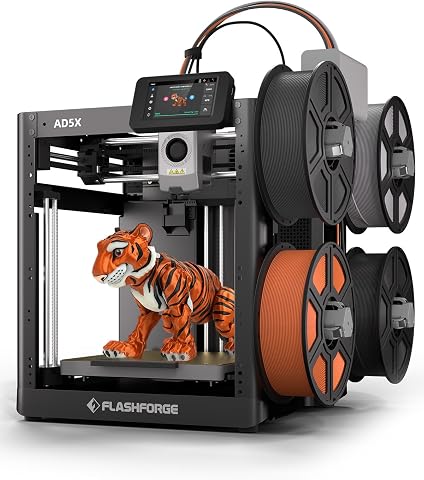 FLASHFORGE AD5X Multi-Color 3D Printer, CoreXY, 600mm/s High-Speed, Auto Leve…View on Amazon →
 - 6
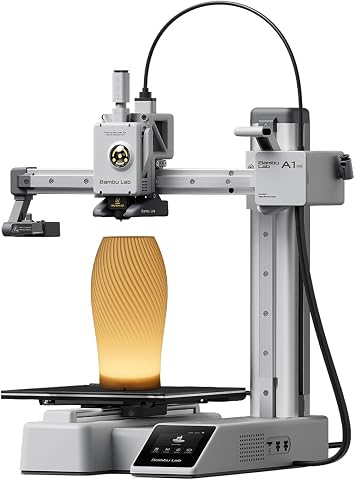 Bambu Lab A1 Mini 3D Printer + LED Lamp Kit, Beginner-Friendly, Quiet OperationView on Amazon →
 - 7
 FlashForge Adventurer 5M 3D Printer with Auto Leveling and High-Speed PrintingView on Amazon →
 - 8
 Creality Ender 3 V3 SE 3D Printer, 250mm/s Faster Print Speed, CR Touch Auto…View on Amazon →
 - 9
 3D Printer with Auto Leveling, 280°C Direct Extruder, CoreXY Metal Structure,…View on Amazon →
Why 2026’s AI Innovations Matter for Society
The emergence of these nine AI technologies could reshape multiple industries, improve efficiency, and enable new services. For instance, AI in healthcare promises faster drug discovery and personalized treatments, potentially saving lives. Autonomous systems may revolutionize logistics and reduce costs, while explainable AI enhances transparency and trust in critical applications.
However, these advancements also raise concerns about ethical use, job displacement, and security risks. Understanding which technologies are confirmed and their potential impacts helps policymakers, businesses, and consumers prepare for the changes ahead.
Recent Trends and Research in AI for 2026
Over the past few years, AI has experienced rapid growth driven by advances in machine learning, increased computational power, and expanding datasets. Major tech companies and research institutions have invested heavily in AI R&D, resulting in breakthroughs such as large language models and multimodal AI systems.
In 2025, several pilot programs and early deployments demonstrated the practical viability of these emerging technologies, setting the stage for wider adoption in 2026. Regulatory discussions and ethical frameworks are also evolving, aiming to guide responsible AI development.
While some claims about future capabilities are still speculative, the confirmed progress in core areas like generative models and autonomous systems underscores the momentum toward mainstream use.
“The technologies emerging in 2026 are not just incremental improvements—they represent a fundamental shift in how AI integrates into daily life and industry.”
— Dr. Susan Lee, AI researcher at MIT
Unconfirmed Capabilities and Regulatory Challenges
While many of these nine AI technologies show promising signs, their full capabilities and integration timelines remain uncertain. Some claims about their readiness for large-scale deployment are based on early-stage research or pilot programs, which may face unforeseen technical or regulatory hurdles.
Specifically, issues around AI safety, ethical use, and legal compliance are still being addressed, and it is unclear how quickly regulatory frameworks will adapt to these innovations.
Next Steps for AI Development and Adoption in 2026
In the coming months, expect further validation of these technologies through pilot programs and industry partnerships. Regulatory bodies are likely to accelerate discussions on AI safety and ethics, influencing deployment timelines. Researchers will continue refining models to improve reliability, transparency, and safety.
Stakeholders should monitor developments closely, especially in areas like autonomous systems and explainable AI, to prepare for integration into their operations and comply with evolving regulations.
Key Questions
Which of the nine AI technologies are closest to widespread adoption?
Generative AI models like GPT-4 and autonomous systems in logistics are among the closest to broad deployment, supported by ongoing pilot programs and industry interest.
What are the main risks associated with these emerging AI technologies?
Risks include ethical concerns, potential biases, security vulnerabilities, and regulatory delays. Ensuring safe and responsible deployment is a priority for developers and regulators.
How will these AI innovations impact jobs and industries?
Some sectors may see automation replacing certain roles, while new opportunities will emerge in AI development, oversight, and related fields. The overall impact depends on regulatory and societal responses.
Are there any international efforts to regulate these AI technologies?
Yes, several countries and international organizations are actively working on frameworks to ensure AI safety, ethics, and accountability, though global consensus is still evolving.
Source: ThorstenMeyerAI.com
Flea & tick season Picks
flea and tick prevention
As an affiliate, we earn on qualifying purchases.