TL;DR

Get the latest gadgets delivered free with Prime
- Fast, free delivery on millions of items
- Prime Video, Amazon Music and more included
- Member-only deals all year
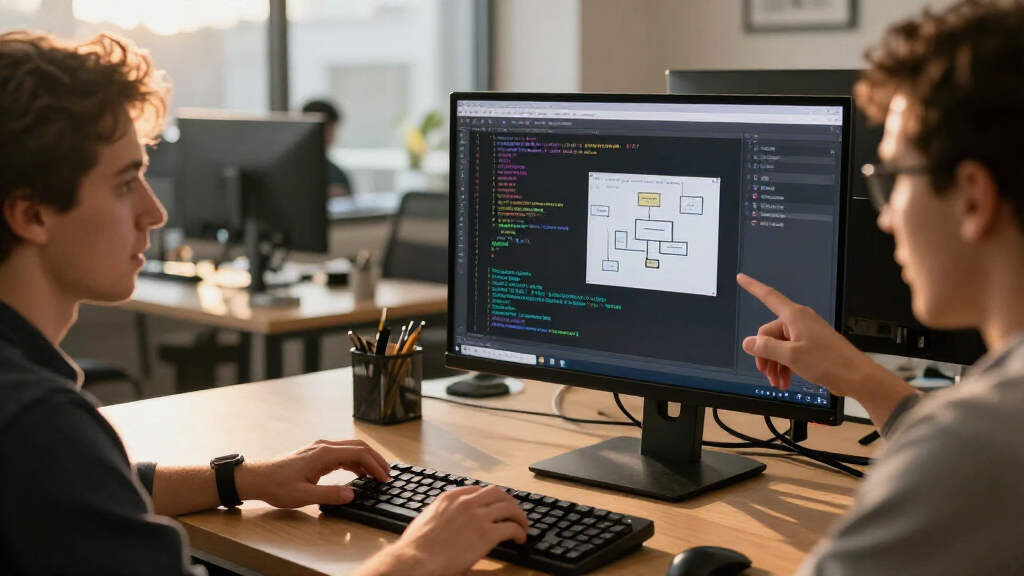
The Pragmatic Engineer published a podcast conversation with Titus Winters, a former Google engineer and lead author of Software Engineering at Google, about large-scale refactoring, testing, code review and computer science education. The episode also examines AI’s effects on engineering work, though several claims in the source are Winters’ observations rather than independently verified industry data.
The Pragmatic Engineer has published a podcast interview with Titus Winters, a former Google engineer and lead author of Software Engineering at Google, examining the company’s approach to maintaining large codebases and Winters’ arguments for changing computer science education. The conversation also addresses AI’s effects on software productivity and reliability, a subject Winters discusses through observations from engineers rather than a presented industry-wide study.
Winters spent more than a decade at Google, where he led the company’s readability program and helped build Abseil, Google’s open-source foundational C++ libraries. He is now a senior principal scientist at Adobe, focused on developer experience and productivity, according to The Pragmatic Engineer. The podcast’s host describes Winters as a contributor to the ACM/IEEE undergraduate computer science curriculum guidelines.
The interview recounts a 2010 effort to refactor Google’s C++ codebase, which the source says then contained nearly 250 million lines and was worked on by about 10,000 engineers. Winters said a team of roughly a dozen people used language-parsing techniques to identify code patterns, generate edits and roll out changes in batches. The work also led his team to create tools that included the clang-format toolkit, according to the report.
The discussion also covers Google’s requirements for tests and code review. The source says Google mandated a test for every change after its Search product struggled to ship more frequently than quarterly around 2007. At the time Winters left Google, it reports, more than 10,000 engineers were enrolled in the readability program. In the interview, he connects these practices to the ability to change software safely, and discusses what should be taught to future engineers.
Engineering Practices Meet CS Education
The interview links day-to-day engineering safeguards with a broader question: whether computer science courses prepare graduates for work on large, evolving software systems. Testing, code review and automated refactoring are not only tools for catching mistakes; Winters presents them as ways to make changes safer and more manageable. That perspective is relevant to teams facing growing codebases and pressure to ship quickly.
The discussion is also timely for readers tracking AI-assisted coding. The source reports Winters’ view that code output has risen while outages have also increased and feature delivery has remained static at some companies he speaks with. Those observations raise a practical concern: faster code generation does not necessarily mean more reliable software or greater product output. They should be read as reported experience, not as a measured conclusion about the entire industry.
For students and educators, the curriculum discussion matters because software engineering work includes collaboration, maintenance and reviewing changes—not only writing algorithms or producing new code. The episode offers Winters’ perspective on where education and workplace practice may need to meet, but the source does not set out a finalized curriculum proposal.
Products Worth Considering

Sony WH-1000XM6 Wireless Noise-Canceling Over-Ear Headphones, Blue, Bundle

Jackery HomePower 3000 Portable Power Station with Two 200W Solar Panels

Samsung 27 Odyssey OLED G5 (G50SF) QHD QD-OLED Gaming Monitor
As an affiliate, we earn on qualifying purchases.
Google’s Scale and Review System
The interview’s examples come from Google’s engineering environment, where many teams contribute to shared systems. The source says the 2010 C++ refactor affected a codebase of close to 250 million lines, making a manual, file-by-file cleanup impractical. The team instead parsed build targets, matched exact patterns in syntax trees, generated edits and deployed them in stages. This approach preceded today’s large language models, according to the report.
Google’s review model, as described in the source, required sign-off from both a project or file owner and a language-specific readability reviewer. The program grew from early mentoring practices into a formal process. The source also recounts a separate operational problem: Search’s release cadence had slowed to quarterly around 2007, prompting a company-wide testing requirement. These details frame Winters’ argument that engineering systems need safeguards as well as coding capacity.
“We were replacing the foundation of the Empire State Building. We were not allowed to close the building or block traffic. Oh, and we discovered nuclear waste in the basement.”
— Titus Winters, recalling the 2010 Google refactor
AI Effects Need Broader Evidence
The source material does not specify the podcast’s publication date, provide a complete transcript or detail the proposed changes to the ACM/IEEE curriculum guidelines. It also does not identify the companies, sample size or measurement period behind Winters’ account of outages rising about 30% alongside increased code output and static feature delivery. The baseline for that outage figure is not given, so it cannot establish an industry-wide trend or a causal effect of AI.
The supplied report ends partway through its discussion of AI, so it does not include Winters’ full account of potential benefits or the host’s complete presentation of the episode’s takeaways. It is also unclear whether the curriculum work has produced published revisions, a formal recommendation or a timetable for adoption. Those points should not be inferred from the interview summary alone.
Curriculum Changes Remain Open
The source describes the interview and Winters’ work on updating undergraduate computer science curriculum guidance, but gives no date for a committee decision, draft release or adoption process. The next concrete development to watch is whether the relevant ACM/IEEE groups publish revised guidance and explain how it addresses software engineering practice and AI tools.
For the AI productivity debate, more informative evidence would include studies that define their comparison periods and baselines, and separately measure code output, reliability and features delivered. The episode provides Winters’ experience and views; the supplied material does not report a new benchmark or company-wide policy announcement.
Key Questions
What is the news development?
The Pragmatic Engineer released a podcast interview with Titus Winters about Google’s engineering practices, computer science education and AI’s effects on software work.
What did Winters do at Google?
Winters spent more than a decade at Google, where he led the readability program and helped build Abseil, an open-source C++ library collection, according to the source.
What was the Google refactoring project?
The report describes a 2010 project to update code across a C++ codebase of nearly 250 million lines. A team used parsing and generated edits to make changes in batches while the systems remained in use.
Does the report prove AI is increasing software outages?
No. The source attributes an approximate 30% rise in outages to Winters’ conversations with engineers, but supplies no sample, period or comparison baseline. It is an observation, not proof of an industry-wide trend or cause.
Are new computer science curriculum rules confirmed?
The source says Winters has worked on updating ACM/IEEE undergraduate curriculum guidelines, but it does not provide a finalized proposal, publication date or adoption decision.
Source: newsletter.pragmaticengineer.com