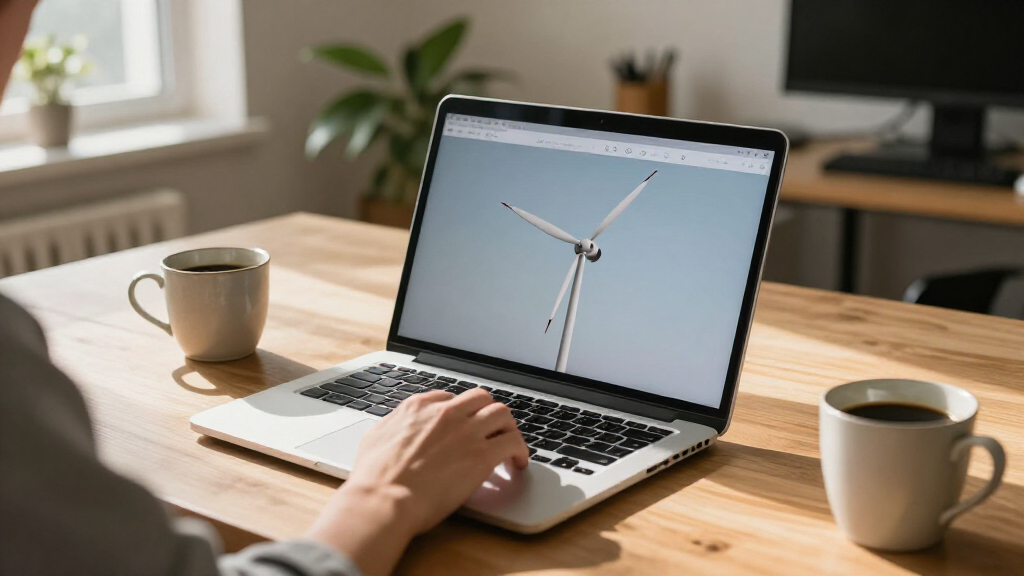

🔍 Read the full analysis: “TURBINE — WERK 9”: How An SVG Rotor Responds To Scrolling on ThorstenMeyerAI.com

Get the latest gadgets delivered free — and shop member deals
- Fast, free delivery on millions of items
- Access to Prime Big Deal Days deals on October 6–7
- Prime Video, Amazon Music and more included
TL;DR
TURBINE — WERK 9 presents a web experience built around a rotor graphic that responds to a visitor’s scrolling. The project is described as an interactive field guide, but details such as its technical implementation, performance and accessibility are not provided.
TURBINE — WERK 9 is an interactive browser experience built around a scroll-driven SVG rotor, whose movement changes as visitors scroll down the page. Presented by ThorstenMeyerAI.com as a field guide to an industrial-feeling place, the project pairs the rotor animation with its industrial visual theme.
The project is presented as an alternative to a conventional webpage. It invites visitors to move through an interactive field guide while a rotor graphic responds to their scrolling. The interaction makes scrolling part of the visual presentation as visitors move through the page.
The description identifies the central visual element as an SVG rotor made from vector paths. It says the browser, those paths and the visitor’s scrolling combine to create the response. However, it does not specify the code or animation technique used, how much the rotor turns, or whether the motion varies across devices. It also does not provide performance measurements or detail the experience’s accessibility features.
ThorstenMeyerAI.com describes the work as a design case study covering the rotor’s motion, the organization of its visual system and the effort to give a browser-based space a physical feel. The live room is presented as available to visit, alongside a longer design teardown. The available description does not include a release date, development timeline, named team members or information about the project’s commissioning.
Interactive Field Guide · ThorstenMeyerAI.com
TURBINE — WERK 9How an SVG Rotor Responds to Scrolling
A browser experience shaped around an industrial-style rotor. As visitors move through the page, scrolling becomes part of the visual presentation—linking a simple navigation action with an animated vector graphic.
01 / Experience
A page with a sense of motion
Presented as an interactive field guide, TURBINE — WERK 9 invites visitors to explore a browser space with an industrial visual language.
01 · Explore
Field guide framing
The experience is presented as a place to move through, offering an alternative to a conventional brochure-style webpage.
02 · Respond
Scroll meets rotor
The rotor’s movement changes as visitors scroll down the page, making navigation part of the visual experience.
03 · Evoke
Industrial atmosphere
The project pairs its animated graphic with an industrial-feeling visual system and an attempt to suggest physical space in a browser.
02 / Interaction model
From scroll input to visual response
The published description names the ingredients, while leaving the exact animation method and mapping open.
The description does not state how scroll position maps to rotation, how far the rotor turns, or whether its motion varies by device. No performance or usability results are reported.
03 / What is documented
Known details—and open questions
The presentation describes the concept and intended feel. It leaves implementation, testing and access details unanswered.
Described in the presentation
- A browser-based interactive field guide presented by ThorstenMeyerAI.com.
- An SVG rotor whose movement responds to visitor scrolling.
- A design case study about rotor motion, visual-system organization and physical atmosphere in a browser.
- A live room and a longer design teardown are presented as places to explore the work.
Not specified in the available account
- Launch date, named designers or developers, commissioning details or development timeline.
- Animation code, precise scroll-to-rotation relationship or additional inputs.
- Performance measurements, browser compatibility or user-testing results.
- Keyboard and assistive-technology behavior, reduced-motion support or device-specific behavior.
04 / Traceability
Where the experience leads
The project’s presentation points visitors toward the interactive work and a deeper account of its design.
Field notes / FAQ
Key questions
A concise guide to what the project description confirms.
What is TURBINE — WERK 9?
An interactive browser-based field guide presented by ThorstenMeyerAI.com, centered on a rotor graphic that responds to scrolling.
How does the rotor respond?
The description connects browser-based SVG vector paths with scroll input, but does not explain the precise animation method.
Can visitors try it?
The presentation links to a live room as a place to visit. It gives no additional availability details in the supplied description.
What remains unknown?
Technical and performance data, launch timing, team details, testing and accessibility behavior are not provided.
Takeaway: TURBINE — WERK 9 presents scrolling as part of an industrial-inspired web experience. Its central idea is clear; the mechanics and visitor-support details remain open in the available account.
How Scrolling Shapes the Experience
The project uses scrolling to control the movement of an industrial-style rotor as visitors progress through the page. This links a navigation action with an animated visual element. The project description presents the interaction as part of the field-guide format.
The example combines vector artwork and interaction in a browser. SVG represents the rotor’s shapes, while scroll input controls its response. The project’s description presents this as a design approach; it does not report that the technique improves usability or produces particular performance results.
The available information does not include technical details or user-testing results. It therefore describes the project’s concept and intended feel, but does not establish how the interaction performs across devices or for people using different input methods.
As an affiliate, we earn on qualifying purchases.
From Field Guide to Browser
ThorstenMeyerAI.com introduces TURBINE — WERK 9 with a question about whether a webpage can behave less like a brochure and more like a machine visitors can explore. The project pairs an industrial visual language with an interactive page structure. Its field-guide framing presents the site as an experience for visitors to explore.
The project description also addresses the challenge of translating the impression of a physical place into a browser experience. It says the case study explains how the team shaped the rotor’s movement and organized the visual system, but the available material does not describe the location or machinery behind the design. The published account focuses on the web interaction and its presentation, rather than documenting a tour of a specific physical site.
“What if a web page behaved less like a brochure and more like a machine you could walk around?”
— ThorstenMeyerAI.com
As an affiliate, we earn on qualifying purchases.
What the Project Details Leave Open
The published description does not state when the experience launched, who designed or developed it, or whether it is a commissioned project or an independent work. It describes the rotor as scroll-driven but does not explain the precise relationship between scroll position and rotation, or whether the animation uses additional input.
There are also no reported tests, user feedback, browser compatibility details, loading figures or accessibility notes. It is not clear how the interaction behaves for visitors who use a keyboard, assistive technology, reduced-motion settings or a device without a conventional scroll wheel. Those points should not be assumed either way from the project’s short presentation.
interactive SVG rotor for websites
As an affiliate, we earn on qualifying purchases.
As an affiliate, we earn on qualifying purchases.
The Live Room and Design Teardown
ThorstenMeyerAI.com directs visitors to a live room and a fuller design teardown. The teardown is described as covering how the rotor’s motion was shaped, how the visual system was arranged and how the team approached the feeling of a physical space in a browser. Those materials may provide the implementation and design details not included in the initial project description.
No schedule for further publication or future updates is given. The presentation confirms the interactive experience and leaves questions about its development, testing and accessibility unanswered.
Source: ThorstenMeyerAI.com
browser-based interactive field guide
As an affiliate, we earn on qualifying purchases.
As an affiliate, we earn on qualifying purchases.
Key Questions
What is TURBINE — WERK 9?
It is an interactive browser-based field guide presented by ThorstenMeyerAI.com. Its central visual feature is a rotor graphic that responds to a visitor’s scrolling.
How does the rotor respond to scrolling?
The project description says the experience combines the browser, SVG vector paths and scroll input. It does not explain the exact animation method or how scrolling maps to the rotor’s movement.
Can visitors try the experience?
ThorstenMeyerAI.com links to a live room for the project. The description does not give availability details beyond presenting it as a place to visit.
What information is not yet provided?
The presentation does not identify the designers or developers, provide technical or performance data, or discuss accessibility and testing. It also does not specify a launch date.
Source: ThorstenMeyerAI.com
Halloween Picks
halloween
As an affiliate, we earn on qualifying purchases.