
While FAA rules provide a baseline for drone safety and registration, your state and local laws often add specific requirements, such as privacy restrictions, Remote ID rules, or flying over private property. Ignoring these can lead to fines or legal issues, so it’s vital to stay informed about regional regulations. By understanding local laws, you can fly responsibly and avoid conflicts in your community—discover more about what to contemplate in your area below.
Key Takeaways
- Local laws may impose additional restrictions on drone usage beyond FAA regulations, such as privacy and flight zones.
- Remote ID requirements can vary locally, requiring drones to broadcast identification data beyond federal standards.
- State and municipal registration processes may differ from FAA, making local registration compliance essential.
- Privacy laws at the local level can restrict drone flights over private property or recording without consent.
- Understanding and following local regulations helps prevent legal issues, fines, and community conflicts.
Are you aware of the rules that govern drone use in your area? Even if you’re familiar with FAA regulations, it’s vital to understand that state and local laws can add extra layers of rules that you need to follow. These laws often address issues like Remote ID requirements and privacy concerns, which aren’t always covered by federal regulations. Ignoring them can lead to fines or legal trouble, so it’s worth taking the time to research what’s specific to your location.
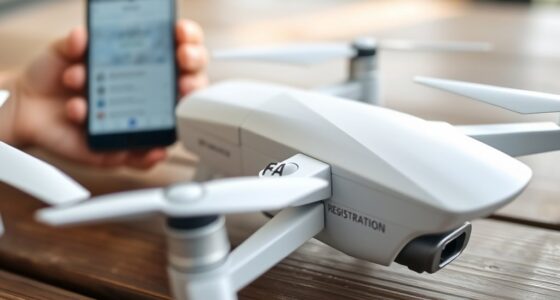
Remote ID is a key aspect of local drone laws. It’s a system that requires drones to broadcast their identification and location data during flight. While the FAA has mandated Remote ID for certain drones, many states and municipalities have their own rules about how this data should be handled or displayed. Some areas might require you to register your drone with local authorities or use specific equipment to transmit Remote ID signals. Failing to comply with these local rules can mean your drone isn’t considered legal to fly, even if it meets federal standards. Keep in mind that local authorities may also have their own registration or reporting procedures, which could differ from the FAA’s requirements. Staying informed about these details guarantees you’re flying legally and helps avoid penalties.
Remote ID rules vary locally; check registration and equipment requirements to stay compliant and avoid penalties.
Additionally, understanding the contrast ratio of your drone’s camera system can be crucial for capturing clear images in various lighting conditions, especially when flying in low-light environments. Privacy concerns are another significant factor in state and local drone laws. Many communities worry about drones invading personal privacy, especially in residential or sensitive areas. Local regulations might restrict flying over private property or require you to obtain permission before capturing images or videos. Some jurisdictions have enacted ordinances that prohibit recording or photographing individuals without their consent, which can impact hobbyists and commercial operators alike. It’s essential to know where you’re allowed to fly and what kind of data you can collect. Respect for privacy isn’t just about avoiding legal trouble; it’s about maintaining good relationships with your community. Being transparent about your drone activities and adhering to local privacy laws shows respect and helps prevent conflicts or complaints.
In essence, even if you’re familiar with FAA rules, don’t overlook the importance of understanding local laws related to Remote ID and privacy. These rules are designed to protect privacy rights, promote safe flying, and ensure everyone’s comfort in shared airspace. Take the time to check with local authorities, community ordinances, or drone clubs to get a clear picture of what’s expected in your area. By doing so, you’ll not only stay compliant but also enjoy flying your drone responsibly, without the worry of running into legal issues.
Frequently Asked Questions
How Do I Find Local Drone Regulations in My Area?
To find local drone regulations in your area, start by checking community ordinances online or at your local government office. Look for rules related to drone registration and flying restrictions. You can also visit your city or county’s official website, where they often list specific drone laws. Connecting with local drone clubs or hobbyist groups can provide helpful insights and updates on any recent regulation changes in your community.
Are There Restrictions for Commercial Drone Use Locally?
Imagine a locked gate blocking your path—local restrictions for commercial drone use often act like that. You need to check for drone privacy laws and environmental restrictions that can limit your flight zones. These rules safeguard people’s privacy and protect natural habitats, so verify you review local ordinances and obtain necessary permits. Staying informed keeps you flying legally and responsibly, avoiding fines or confiscation.
Can State Laws Override FAA Regulations?
Yes, state laws can override FAA regulations through the principle of state sovereignty, especially when they address local concerns like privacy or safety. However, federal rules generally take precedence on interstate and national levels. You should stay aware of local enforcement actions and specific state statutes, as they may impose additional restrictions or requirements that you must follow alongside FAA rules for compliant drone operation.
What Are the Penalties for Violating Local Drone Laws?
Violating local drone laws can lead to hefty fines, criminal charges, or even confiscation of your drone, turning your flight dreams into legal nightmares. Ignoring drone privacy and community safety laws is like throwing a pebble into a calm pond, stirring up trouble. Authorities prioritize community safety and privacy, so penalties serve as stern warnings to respect these boundaries. Stay compliant, or risk disrupting both your peace of mind and your reputation.
How Do I Stay Updated on Changing Drone Legislation?
You stay updated on changing drone legislation by subscribing to official sources like FAA alerts, state, and local government websites. Regularly check for updates on drone registration requirements and privacy concerns, as laws shift frequently. Joining online drone communities or forums can also help, offering real-time insights and experiences. Keeping informed guarantees you’re compliant with evolving rules and helps you avoid penalties while respecting privacy laws.
Conclusion
Remember, while FAA rules set the baseline, over 20 states and numerous local jurisdictions have their own drone laws. In fact, a recent survey found that 65% of drone operators are unaware of local regulations, risking fines or legal issues. Stay informed about both federal and local rules to avoid surprises. By doing so, you’ll fly responsibly and keep your drone adventures safe and legal everywhere you go.